
Transforming Spaces Before They Exist: The Real Power of 3D Rendering in Interior Design
Interior design has evolved far beyond sketches, mood boards, and imagination. Today, clients expect clarity, accuracy, and confidence before committing to a project. This shift has made 3D Rendering Interior Design an essential tool rather than a luxury. Designers now use advanced visualization techniques to present ideas with precision and realism. Through detailed digital environments, stakeholders can explore spaces before construction begins. As a result, decision-making becomes faster, collaboration improves, and costly errors reduce significantly. This blog explores the benefits of 3D rendering in interior design projects, explaining how it transforms creativity, communication, and execution across residential, commercial, and hospitality spaces.
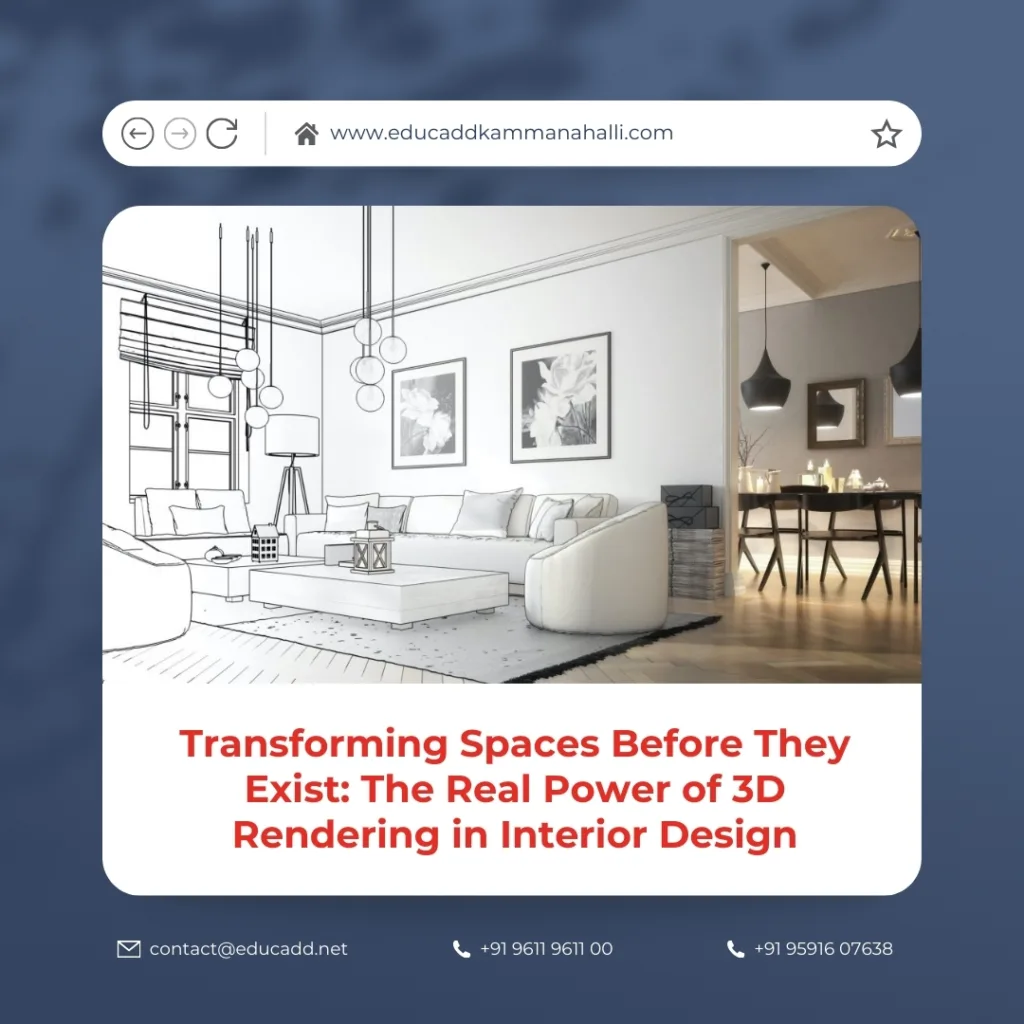
3D Rendering Interior Design
1. Bringing Design Concepts to Life with Visual Accuracy
One of the strongest benefits of 3D Rendering Interior Design lies in its ability to convert abstract ideas into realistic visuals. Traditional 2D drawings often leave room for interpretation. Clients may struggle to visualize proportions, depth, or material combinations. With 3D rendering, designers present fully developed spaces that show lighting, textures, furniture placement, and color harmony. These visuals mirror real-world environments closely. As a result, clients instantly understand the proposed design. This clarity builds trust and strengthens designer-client relationships from the very beginning of the project.
2. Enhancing Client Communication and Understanding
Clear communication remains critical in interior design projects. Verbal explanations and flat drawings rarely convey emotional impact. 3D rendering in interior design bridges this gap by offering immersive visuals that communicate intent without confusion. Clients can see how spaces will feel, not just how they will look. Because visuals speak universally, misunderstandings reduce drastically. Designers no longer need to over-explain concepts. Instead, rendered images guide discussions, align expectations, and ensure everyone shares the same vision throughout the project lifecycle.
3. Improving Design Approval Speed and Decision Making
Delays often occur when clients hesitate or request multiple revisions due to uncertainty. 3D rendering in interior design accelerates approvals by presenting complete, polished visuals early in the process. When clients clearly see the final outcome, they feel confident approving layouts, materials, and color schemes. This confidence shortens feedback loops. Consequently, projects move forward without unnecessary pauses. Faster approvals also help designers manage timelines efficiently and focus on execution rather than repeated redesigns.
4. Reducing Costly Design Errors Before Execution
Mistakes in interior design can lead to expensive rework during construction. Incorrect measurements, poor layout planning, or unsuitable material choices can disrupt budgets. 3D rendering in interior design minimizes such risks by allowing designers to test ideas virtually. They can evaluate spacing, furniture scale, lighting placement, and circulation flow in advance. Identifying issues early saves time and money. Clients benefit from fewer surprises, while designers maintain professional credibility and project control.
5. Enabling Better Space Planning and Layout Optimization
Effective space utilization defines successful interior design. Designers must balance aesthetics with functionality. Through 3D rendering in interior design, professionals analyze layouts in realistic proportions. They can experiment with multiple configurations quickly. This flexibility helps designers optimize movement paths, storage solutions, and furniture arrangements. As a result, spaces feel more comfortable and purposeful. Rendered layouts also help clients understand how each area functions within the overall design concept.
6. Showcasing Materials, Textures, and Finishes Realistically
Selecting materials often challenges clients who cannot visualize combinations from samples alone. 3D Rendering Interior Design solves this issue by displaying materials exactly as they appear in real conditions. Designers can simulate wood grains, marble patterns, fabrics, metals, and glass finishes with precision. Lighting effects further enhance realism. Clients can compare options instantly and choose confidently. This process reduces material changes later and ensures consistency between design intent and final execution.
7. Supporting Lighting Design and Ambience Planning
Lighting plays a vital role in shaping interior experiences. However, its impact remains difficult to predict using drawings. With 3D Rendering Interior Design, designers simulate natural and artificial lighting accurately. They can study how light interacts with surfaces throughout the day. This insight helps create balanced, inviting environments. Clients can experience different moods, from warm residential spaces to vibrant commercial interiors. Better lighting visualization leads to smarter fixture placement and improved ambience control.
8. Strengthening Design Presentations and Marketing Efforts
For interior designers and firms, presentation quality influences project acquisition. 3D rendering in interior design elevates proposals by delivering visually compelling presentations. High-quality renders impress clients and stakeholders instantly. Designers also use these visuals for portfolios, websites, and social media marketing. Strong imagery communicates professionalism and creativity. As a result, designers attract premium clients and stand out in competitive markets without relying solely on completed projects.
9. Enabling Virtual Walkthroughs and Immersive Experiences
Modern rendering tools support interactive walkthroughs and 360-degree views. These experiences go beyond static images. 3D rendering in interior design allows clients to explore spaces virtually, observing details from every angle. This immersion increases emotional connection with the design. Clients feel involved and engaged throughout the process. Walkthroughs also help identify potential concerns that static visuals might miss, ensuring a smoother execution phase.
10. Facilitating Collaboration Among Design and Construction Teams
Interior projects often involve architects, contractors, engineers, and vendors. Coordination challenges can arise when teams rely on separate documents. 3D rendering in interior design creates a shared visual reference for all stakeholders. Everyone works from the same model, reducing miscommunication. Contractors understand design intent clearly, while suppliers align materials accurately. This collaboration improves workflow efficiency and minimizes on-site conflicts during construction.
11. Allowing Easy Design Modifications and Experimentation
Design preferences evolve, and clients may request changes mid-process. 3D rendering supports quick modifications without restarting from scratch. Designers can adjust colors, layouts, or furnishings digitally and present updated visuals instantly. This flexibility encourages experimentation while maintaining control over timelines and costs. Clients appreciate the ability to explore alternatives without financial risk, which enhances overall satisfaction.
12. Increasing Client Confidence and Emotional Engagement
Interior design decisions often involve significant financial and emotional investment. 3D rendering reassures clients by eliminating uncertainty. Seeing realistic outcomes builds confidence and excitement. Clients feel emotionally connected to the space even before construction begins. This emotional engagement strengthens long-term relationships and increases the likelihood of referrals and repeat projects.
13. Supporting Sustainable and Smart Design Decisions
Sustainability has become a priority in modern interiors. 3D rendering in interior design helps designers evaluate energy efficiency, natural lighting usage, and material sustainability. Visual simulations support eco-friendly choices without compromising aesthetics. Designers can demonstrate how sustainable elements integrate seamlessly into the design. This transparency helps clients make responsible decisions aligned with environmental goals.
14. Future-Proofing Interior Design Practices
The interior design industry continues to evolve rapidly. Designers who adopt 3D rendering stay ahead of trends and client expectations. As technology advances, rendering integrates with virtual reality, AI, and smart design tools. Professionals who embrace these tools future-proof their services. They deliver higher value, adapt faster, and maintain relevance in an increasingly digital design landscape.
Conclusion
The benefits of 3D rendering in interior design projects extend far beyond visual appeal. From improving communication and reducing errors to enhancing creativity and client confidence, 3D rendering reshapes how interiors are imagined and delivered. It empowers designers to present ideas clearly, optimize functionality, and execute projects efficiently. As client expectations grow and competition intensifies, 3D Rendering Interior Design stands as a strategic advantage rather than an optional add-on. Designers who integrate this technology position themselves for long-term success, delivering spaces that feel right long before they are built.

