
Benefits of 3D Scanning for Product Redesign: Transforming Innovation with Precision Engineering
In today’s highly competitive manufacturing environment, companies constantly seek ways to improve existing products while reducing development costs and accelerating innovation. One technology that has significantly transformed the redesign process is 3D Scanning Product Redesign. By capturing accurate digital representations of physical objects, 3D scanning allows engineers, designers, and manufacturers to analyze, modify, and enhance products with exceptional precision. As businesses strive to create better-performing products while shortening development cycles, 3D scanning has emerged as a powerful solution that bridges the gap between physical products and digital design environments.
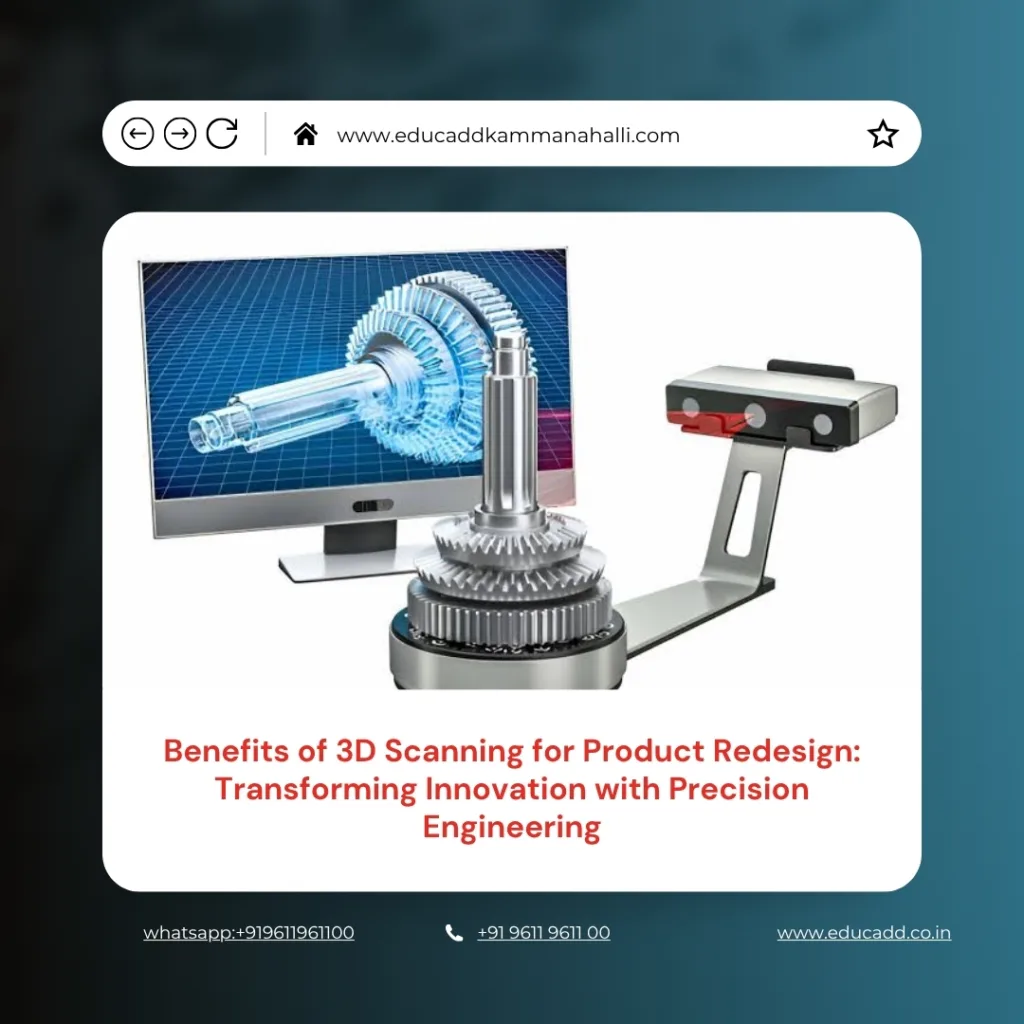
3D Scanning Product Redesign
From automotive components to consumer electronics and industrial equipment, organizations are increasingly leveraging this technology to improve redesign efficiency, minimize errors, and achieve superior product quality.
Understanding the Role of 3D Scanning Product Redesign
Product redesign involves improving an existing product to enhance functionality, performance, aesthetics, or manufacturability. Traditionally, redesign projects relied heavily on manual measurements and physical prototypes, which often consumed considerable time and resources. However, 3D scanning has revolutionized this process by creating highly accurate digital models of physical objects within minutes.
Modern 3D scanners capture millions of data points from an object’s surface, generating detailed point clouds and mesh models. These digital representations serve as the foundation for redesign activities. As a result, engineers gain a complete understanding of existing product dimensions, features, and geometries before making modifications.
Enhancing Accuracy and Reducing Measurement Errors
One of the most significant advantages of 3D Scanning Product Redesign is the exceptional level of accuracy it provides. Traditional measurement methods may introduce inconsistencies, especially when dealing with complex shapes and intricate surfaces. In contrast, 3D scanning captures precise geometric information with remarkable detail.
This accuracy enables design teams to work with reliable data throughout the redesign process. Consequently, fewer design errors occur during development, reducing the likelihood of costly corrections later. Moreover, accurate digital models ensure that redesigned components fit properly with existing assemblies and systems.
Accelerating Reverse Engineering Processes
Reverse engineering often plays a critical role in product redesign projects. Many organizations need to recreate products when original design files are unavailable or outdated. In such situations, 3D scanning serves as an efficient reverse engineering tool.
By converting physical products into digital models, engineers can quickly analyze existing designs and identify opportunities for improvement.
Key advantages include:
- Rapid creation of CAD-ready digital models.
- Faster identification of design modifications and upgrades.
As a result, companies can significantly reduce the time required to recreate and redesign legacy products while maintaining high accuracy standards.
Reducing Product Development Time
Time-to-market has become a crucial factor in today’s competitive industries. Businesses that can redesign and launch improved products faster often gain substantial market advantages. Fortunately, 3D scanning streamlines many stages of the redesign workflow.
Instead of spending days or weeks gathering measurements manually, teams can capture complete product data in a matter of hours. Furthermore, digital models can be immediately imported into CAD software for analysis and redesign activities. This seamless integration accelerates development timelines and allows companies to respond quickly to market demands.
Improving Design Flexibility and Creativity
Designers often face limitations when working with incomplete or inaccurate product data. However, 3D scanning provides comprehensive digital representations that unlock new possibilities for innovation. Once a product has been scanned, designers can explore various redesign concepts without repeatedly handling the physical object.
This flexibility encourages experimentation and creativity throughout the development process. Engineers can test alternative geometries, optimize structural elements, and evaluate multiple design iterations efficiently. Consequently, organizations can develop more innovative products while minimizing design risks.
Supporting Complex Geometry Analysis
Many modern products contain intricate geometries that are difficult to measure using traditional techniques. Components in aerospace, automotive, medical, and industrial sectors frequently include curved surfaces, organic shapes, and detailed features.
3D Scanning Product Redesign captures these complex geometries with exceptional precision. Therefore, engineers gain access to detailed digital models that accurately represent every aspect of the product. This capability simplifies redesign tasks and ensures that even the most challenging components can be analyzed and modified effectively.
Enhancing Product Quality and Performance
A successful redesign project aims to improve product quality and overall performance. 3D scanning contributes significantly to this objective by providing detailed insights into existing product characteristics. Engineers can identify design weaknesses, dimensional inconsistencies, and performance limitations more effectively.
With accurate digital data available, redesign teams can optimize structural integrity, improve ergonomics, and enhance functionality. As a result, the final product often delivers superior performance, greater reliability, and increased customer satisfaction.
Facilitating Seamless CAD Integration
Computer-Aided Design software remains at the core of modern product development processes. One major benefit of 3D scanning for product redesign is its compatibility with leading CAD platforms. Scanned data can be converted into CAD models that designers can modify, analyze, and optimize.
This integration eliminates the need for extensive manual modeling and reduces design preparation time. Additionally, engineers can focus more on innovation rather than spending valuable hours recreating existing geometries from scratch.
Reducing Development Costs
Cost reduction remains a primary objective for most manufacturing organizations. Product redesign projects can become expensive when inaccurate measurements, multiple prototypes, and design revisions are involved. Fortunately, 3D scanning helps control these expenses.
Accurate digital models reduce the need for repeated physical measurements and unnecessary prototype production. Moreover, design teams can identify and resolve issues earlier in the development cycle.
Cost-saving benefits include:
- Fewer prototype iterations and testing cycles.
- Reduced labor costs associated with manual measurements.
These advantages contribute to more efficient product development and improved return on investment.
Improving Collaboration Across Teams
Modern product redesign projects often involve multidisciplinary teams working across different departments and locations. Effective collaboration is essential for project success. 3D scanning supports teamwork by providing a shared digital representation of the product.
Engineers, designers, quality specialists, and manufacturing personnel can access the same accurate data throughout the project lifecycle. Consequently, communication improves, misunderstandings decrease, and decision-making becomes more efficient. This collaborative environment helps organizations achieve redesign objectives more effectively.
Supporting Quality Control and Validation
Quality assurance plays a vital role in ensuring that redesigned products meet performance and manufacturing requirements. 3D scanning contributes to quality control by enabling detailed comparisons between original products, redesigned models, and manufactured components.
Engineers can perform dimensional inspections and deviation analyses with exceptional precision. Furthermore, scanned data helps verify whether redesign modifications have been implemented correctly. This validation process reduces production risks and supports consistent product quality.
Enabling Legacy Product Modernization
Many industries continue to rely on older equipment and components that lack digital design documentation. Modernizing these products can be challenging without accurate engineering data. Fortunately, 3D scanning provides an effective solution for capturing and digitizing legacy products.
Once scanned, older components can be analyzed, redesigned, and upgraded using modern engineering tools. This capability extends product lifecycles, improves operational efficiency, and reduces the need for complete system replacements. Consequently, organizations can preserve valuable assets while benefiting from technological advancements.
Advancing Sustainable Product Development
Sustainability has become an important consideration in modern product design and manufacturing. Companies increasingly seek methods that reduce waste, conserve resources, and improve environmental performance. 3D scanning supports sustainable product redesign by enabling more efficient development processes.
Accurate digital models reduce material waste associated with prototype production and design errors. In addition, redesign teams can optimize product structures to use fewer materials while maintaining performance standards. These improvements contribute to environmentally responsible manufacturing practices and support long-term sustainability goals.
Future Opportunities of 3D Scanning Product Redesign
As technology continues to evolve, the capabilities of 3D scanning are expanding rapidly. Advanced scanners now offer higher accuracy, faster data capture speeds, and improved portability. Furthermore, integration with artificial intelligence, digital twins, and automated design systems is creating new opportunities for innovation.
In the future, organizations will likely use 3D scanning as a central component of intelligent product development ecosystems. Designers and engineers will benefit from even faster redesign workflows, deeper product insights, and greater automation. Therefore, businesses that adopt 3D scanning today position themselves for long-term competitive advantages.
Conclusion
The benefits of 3D Scanning Product Redesign extend far beyond simple measurement and data collection. This transformative technology enables organizations to improve accuracy, accelerate reverse engineering, reduce development costs, enhance collaboration, and deliver higher-quality products. Additionally, it supports sustainability initiatives, facilitates legacy product modernization, and promotes innovation across industries. As manufacturing and product development continue to evolve, 3D scanning will remain an essential tool for companies seeking efficient and reliable redesign solutions. Organizations that embrace this technology can streamline their workflows, improve market responsiveness, and achieve greater success in an increasingly competitive global marketplace.

