
Mastering Modern E-Commerce: Powerful Marketing Tools & Smart Techniques for Higher Online Growth
The digital marketplace has evolved into one of the most competitive environments in the world. Every brand is fighting for attention, and only those who understand the right tools and techniques can rise above the noise. Learning Modern E-commerce Marketing Tools is not just helpful—it is essential for success. Whether you’re building a new online store or scaling an existing one, the right strategies can boost visibility, engagement, conversions, and long-term loyalty.
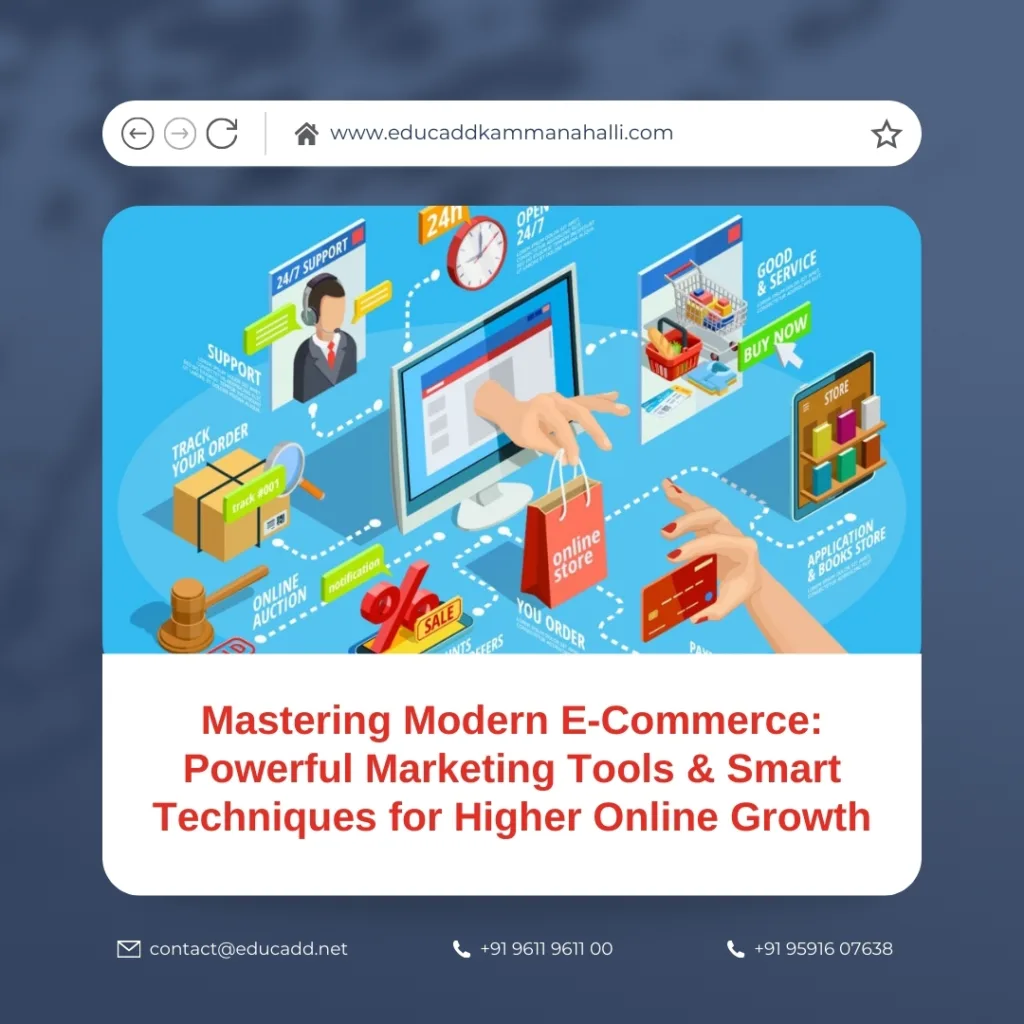
Modern E-commerce Marketing Tools
This blog explores the most effective tools and techniques that drive strong results in the e-commerce space. You will learn how to attract your audience, convert visitors, and create a marketing system that keeps working for you continuously.
1. Leveraging Essential E-Commerce Marketing Tools for Business Growth
Modern E-commerce Marketing Tools run on efficiency, automation, and data. Therefore, the first step to growth is selecting the right marketing tools. These tools help you manage campaigns, analyze performance, and create better experiences for your audience.
Analytics platforms are the backbone of every online store. Tools such as Google Analytics, Google Search Console, and platform-specific dashboards help brands understand user behavior. They track browsing patterns, product engagement, and customer journeys. With these insights, marketers can make decisions that increase revenue and reduce wasted spending.
Email marketing tools also play a major role in e-commerce success. Platforms like Mailchimp, Klaviyo, and HubSpot allow brands to build personalized campaigns. These personalized emails often drive the highest ROI in digital marketing. Automation features make it easier to send timely messages that guide customers from interest to purchase.
In addition, customer support tools enhance user experience. Live chat systems and AI-powered chatbots answer queries instantly, which boosts trust and reduces drop-offs. These tools keep visitors engaged and help them shop with confidence.
Social media management tools have become equally important. Platforms such as Buffer, Hootsuite, and Meta Business Suite help manage posts, track trends, and analyze engagement. With these tools, brands can maintain consistent visibility across platforms.
When businesses combine these tools with strong strategies, they build a complete marketing ecosystem that works smoothly from discovery to conversion.
2. Using SEO and Content Strategies to Attract Quality Traffic
Search engine optimization remains one of the most powerful techniques in e-commerce marketing. SEO helps online stores rank higher on search engines, which increases organic traffic. High-quality traffic usually converts better because users search with clear intent.
On-page SEO forms the foundation of visibility. It includes optimizing product titles, meta descriptions, URLs, and images. Clear keyword placement improves rankings while enhancing user experience. Product descriptions also play a key role. They should be informative, engaging, and optimized with targeted keywords.
Content marketing strengthens the SEO strategy further. Blog posts, buying guides, product comparisons, and storytelling content attract visitors at different stages of their decision journey. When brands answer customer questions through content, they increase trust and brand authority.
Technical SEO keeps the website healthy and functional. Fast loading speed, mobile-friendly pages, secure checkout, and structured data help search engines understand and prioritize your store. Every improvement creates a smoother shopping journey.
Backlink strategies add credibility to your site. Collaborating with bloggers, publications, and influencers generates quality backlinks, which are important ranking signals. When combined with strong on-page SEO, backlinks greatly enhance overall visibility.
Businesses that invest in SEO and content consistently gain long-term traffic and more stable revenue streams.
3. Enhancing Social Media Marketing to Boost Visibility and Sales
Social media remains one of the most effective channels for e-commerce brands. It allows businesses to display products, engage followers, and build credibility. Strategic content attracts both new and returning customers.
Visual content is especially important. Eye-catching images, short videos, and demo clips help customers understand products quickly. Platforms such as Instagram, Facebook, Pinterest, and YouTube are ideal for visual storytelling. Brands that use creative visuals often gain higher engagement.
Influencer partnerships also support growth. Influencers can drive targeted traffic to your store because their followers trust their recommendations. Micro-influencers are especially effective because they maintain strong relationships with their niche audiences. Simple collaborations often lead to quick visibility gains.
Paid advertising on social media accelerates results. With advanced targeting, businesses can reach users based on interest, behavior, or demographics. Retargeting ads remind visitors about abandoned carts, viewed products, or ongoing offers. This improves conversion rates significantly.
Community engagement is another important factor. Responding to comments, creating interactive polls, and sharing user-generated content helps brands build loyal online communities. Customers feel more connected when they see real engagement.
Overall, social media shapes brand awareness and drives continuous traffic, making it a vital tool in every e-commerce strategy.
4. Implementing Conversion Optimization Techniques for Higher Sales
Attracting traffic is only useful if visitors convert into buyers. Conversion rate optimization (CRO) focuses on making this process smoother. Small improvements across your store can produce major revenue growth.
Clear product pages are essential. They should highlight benefits, features, comparison details, and customer stories. When customers receive complete information, they feel confident about purchases. High-quality images and videos increase trust as well.
User experience strongly influences conversion. Simple navigation, clean layouts, and mobile-first design help customers explore products with ease. Page speed matters, too. Slow websites often lose customers before they take action.
Optimized checkout flow reduces friction and cart abandonment. One-page checkout, multiple payment options, and guest checkout make purchases faster. Displaying trust badges also helps users feel safe while entering their details.
A/B testing helps marketers understand what works best. Testing variations of headlines, layouts, buttons, and images helps identify the highest-performing version. With continuous testing, brands consistently improve results.
Reviews and social proof create strong influence. Real experiences from customers help new buyers make decisions quickly. Ratings also increase brand credibility and reduce hesitation.
By using these techniques, businesses convert more traffic into paying customers without increasing advertising costs.
5. Retention, Loyalty, and Automation Tools for Long-Term Success
Winning a customer is just the beginning. Long-term growth comes from retaining customers and turning them into loyal buyers. Retention strategies reduce marketing costs and increase lifetime value.
Loyalty programs motivate repeat purchases. Reward points, exclusive discounts, and early access encourage customers to shop again. These programs work well because they create a sense of privilege and appreciation.
Email automation plays a significant role in retention. Welcome series, re-engagement emails, and personalized offers help maintain customer interest. When messages arrive at the right time, customers feel valued and understood.
Remarketing strategies also bring back customers who left without completing a purchase. Personalized ads showcasing viewed products often encourage users to return. This technique works well in combination with email campaigns.
Customer support tools make communication smoother. Fast support builds trust and increases customer satisfaction. Positive experiences encourage customers to return and refer others.
Finally, subscription models create recurring revenue. Brands offering consumable or routine-use items benefit from automated replenishment. This reduces customer effort while increasing consistency in sales.
Businesses that focus on loyalty and retention gain stability, stronger customer relationships, and long-term performance.
Conclusion
The e-commerce landscape moves quickly, and only brands with strong marketing systems can keep up. Learning Modern E-commerce Marketing Tools helps businesses build visibility, attract targeted customers, convert more visitors, and retain loyal buyers. When you combine analytics, SEO, content, social media, automation, and CRO strategies, you create a powerful engine for sustainable online growth.
As competition rises, adopting these tools and methods is no longer optional—it is essential. With the right approach, every online store can achieve steady success and long-term profitability.

