
Design Faster, Smarter, and Better with Parametric Modeling at EduCADD
In today’s fast-paced design and engineering world, speed alone is not enough. Professionals must also deliver accuracy, flexibility, and innovation. Traditional design methods often slow teams down when revisions arise or project requirements change. This is where Parametric Modeling Course EduCADD transforms the entire design process. It allows designers to build intelligent models that adapt instantly to change, saving time while improving quality.
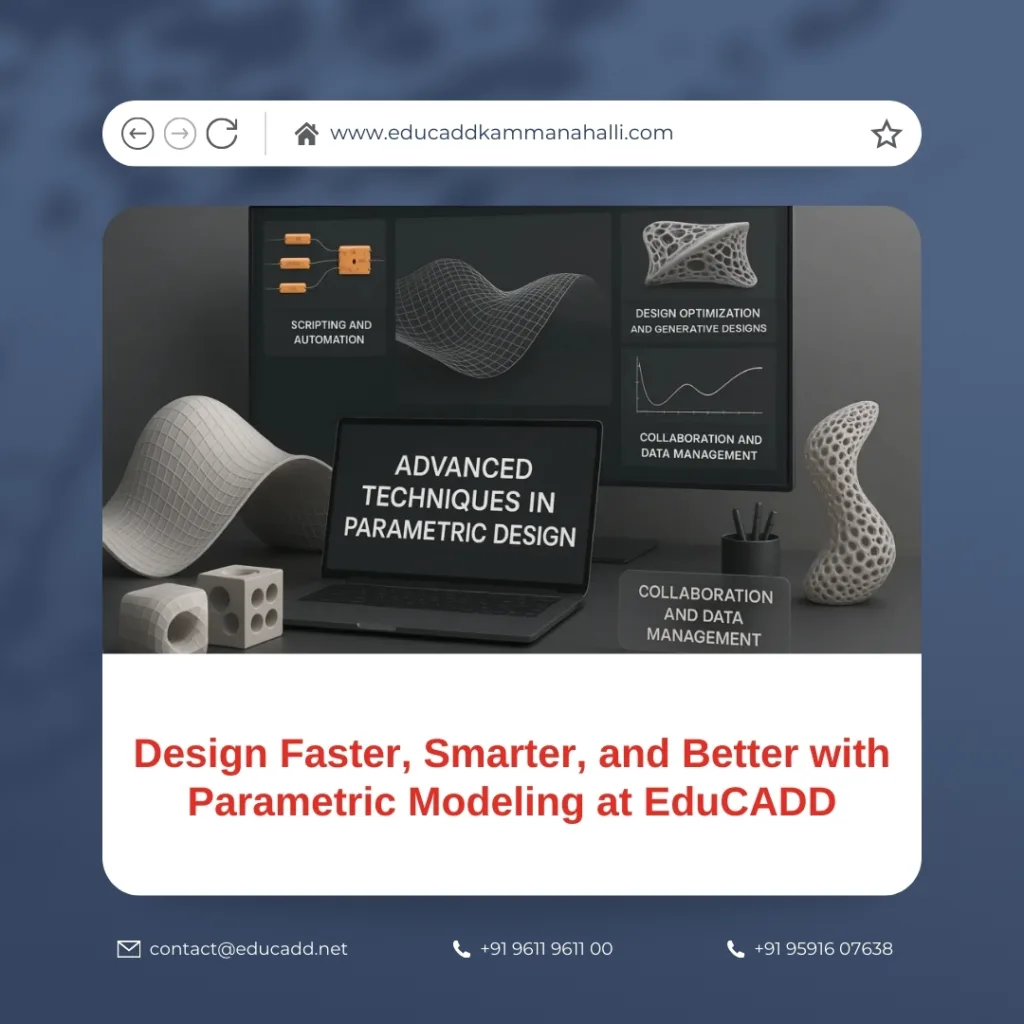
Parametric Modeling Course EduCADD
At EduCADD, parametric modeling is taught with a strong focus on real-world application. Learners do not just study tools; they master a design mindset that accelerates productivity and reduces errors. This blog explores how parametric modeling enables faster design, why it matters across industries, and how EduCADD equips learners with job-ready skills to stay ahead.
1. Understanding Parametric Modeling: The Foundation of Smart Design
Parametric Modeling Course EduCADD approach where geometry is driven by parameters, constraints, and relationships. Instead of drawing static shapes, designers define rules. When one dimension changes, related elements update automatically. This intelligence makes models dynamic rather than rigid.
This approach reduces repetitive work significantly. Designers no longer need to redraw components after every modification. Instead, they adjust parameters and let the model update itself. As a result, projects move faster and remain consistent throughout the design lifecycle.
Parametric modeling also improves accuracy. Relationships between components maintain design intent. Errors caused by manual adjustments decrease. This advantage becomes critical in large or complex projects where even minor mistakes lead to delays.
At EduCADD, learners start with core parametric concepts before moving into advanced workflows. This structured learning ensures a strong foundation. Students gain confidence early and build skills progressively.
2. Why Parametric Modeling Accelerates the Design Process
Speed is one of the strongest benefits of parametric modeling. Designers can create flexible templates instead of fixed drawings. Once the base model is ready, multiple variations can be produced quickly. This approach proves invaluable when clients request frequent changes.
Parametric modeling also supports faster decision-making. Designers can test multiple design options without rebuilding models. This flexibility allows teams to evaluate performance, aesthetics, and feasibility early. As a result, projects move forward with clarity.
Collaboration improves as well. Parametric models maintain consistency across teams. When updates occur, everyone works on the latest version. This reduces confusion and rework.
EduCADD emphasizes workflow optimization while teaching parametric modeling. Learners understand not only how tools work but also how to design efficiently under real project conditions. This practical focus sets EduCADD apart.
3. Industry Applications of Parametric Modeling Across Domains
Parametric modeling plays a vital role in multiple industries. In architecture, it enables adaptive building designs that respond to environmental and functional changes. Architects can adjust layouts quickly while preserving design intent.
In mechanical engineering, parametric modeling supports precise component design. Engineers can manage assemblies efficiently and update parts without breaking relationships. This capability shortens product development cycles.
The construction industry benefits as well. Parametric modeling integrates seamlessly with BIM workflows. Designers can coordinate structural, architectural, and MEP elements more effectively. This coordination reduces clashes and improves project delivery.
EduCADD aligns its parametric modeling curriculum with industry needs. Learners gain exposure to real-world scenarios. This relevance enhances employability and prepares students for professional challenges.
4. Tools and Technologies Used in Parametric Modeling
Modern parametric modeling relies on powerful software tools. Applications like AutoCAD, Revit, SolidWorks, and Fusion 360 support parametric workflows. These tools allow designers to define constraints, formulas, and dependencies with precision.
Understanding the tool alone is not enough. Designers must know when and why to apply parametric logic. Incorrect constraints can slow performance or complicate models. Therefore, strategic thinking plays a key role.
EduCADD focuses on both software mastery and design logic. Trainers explain best practices and common pitfalls. Learners practice building clean, efficient models. This balanced approach ensures long-term success rather than short-term tool knowledge.
5. How EduCADD Teaches Parametric Modeling Effectively
EduCADD follows a learner-centric training methodology. Courses begin with basic concepts and gradually move toward advanced applications. This progression helps learners absorb knowledge without feeling overwhelmed.
Hands-on practice forms the core of training. Students work on real-time projects that reflect industry standards. This exposure builds confidence and reinforces concepts.
Experienced trainers guide learners throughout the journey. They share insights from actual industry experience. This practical perspective bridges the gap between theory and application.
EduCADD also supports learners with flexible learning options. Both classroom and online modes ensure accessibility. This adaptability allows professionals and students to upskill without disrupting schedules.
6. Career Advantages of Learning Parametric Modeling
Professionals skilled in parametric modeling enjoy strong career advantages. Employers value designers who can work faster without compromising quality. Parametric modeling demonstrates both technical expertise and strategic thinking.
These skills open doors to roles in design, engineering, architecture, and construction. Many organizations seek professionals who can handle design changes efficiently. Parametric modeling expertise meets this demand directly.
EduCADD certifications add credibility to a learner’s profile. They validate skills and improve job prospects. Many learners experience career growth after completing parametric modeling courses. This outcome reflects the practical strength of EduCADD training.
7. The Future of Design Lies in Parametric Thinking
Design is evolving rapidly. Automation, AI, and generative design rely heavily on parametric foundations. Designers who understand parametric modeling stay relevant in this changing landscape.
Parametric thinking encourages problem-solving and adaptability. These qualities remain valuable regardless of technology shifts. As industries demand faster and smarter solutions, parametric modeling continues to gain importance.
EduCADD prepares learners for this future. By focusing on core principles and practical skills, it ensures long-term relevance. Learners do not just follow trends; they lead them.
Conclusion
Parametric Modeling Course EduCADD is no longer optional. It is essential for professionals who want to design faster, smarter, and with confidence. This approach reduces rework, improves accuracy, and supports innovation across industries.
EduCADD stands out as a trusted learning partner in parametric modeling education. Its industry-aligned curriculum, expert trainers, and hands-on approach create real value for learners. By mastering parametric modeling at EduCADD, designers unlock efficiency, adaptability, and career growth.
If you aim to stay competitive and future-ready, parametric modeling is the skill to master. EduCADD provides the path to achieve it with clarity and confidence.

