
Interior Design Project Management Made Simple: A Complete Step-by-Step Blueprint for Successful Spaces
Interior design is no longer only about aesthetics. Today, it is a structured process that blends creativity, coordination, budgeting, timelines, and client communication. This is where Interior Design Project Management plays a vital role. Without a clear project management framework, even the most creative designs can face delays, budget overruns, and client dissatisfaction.
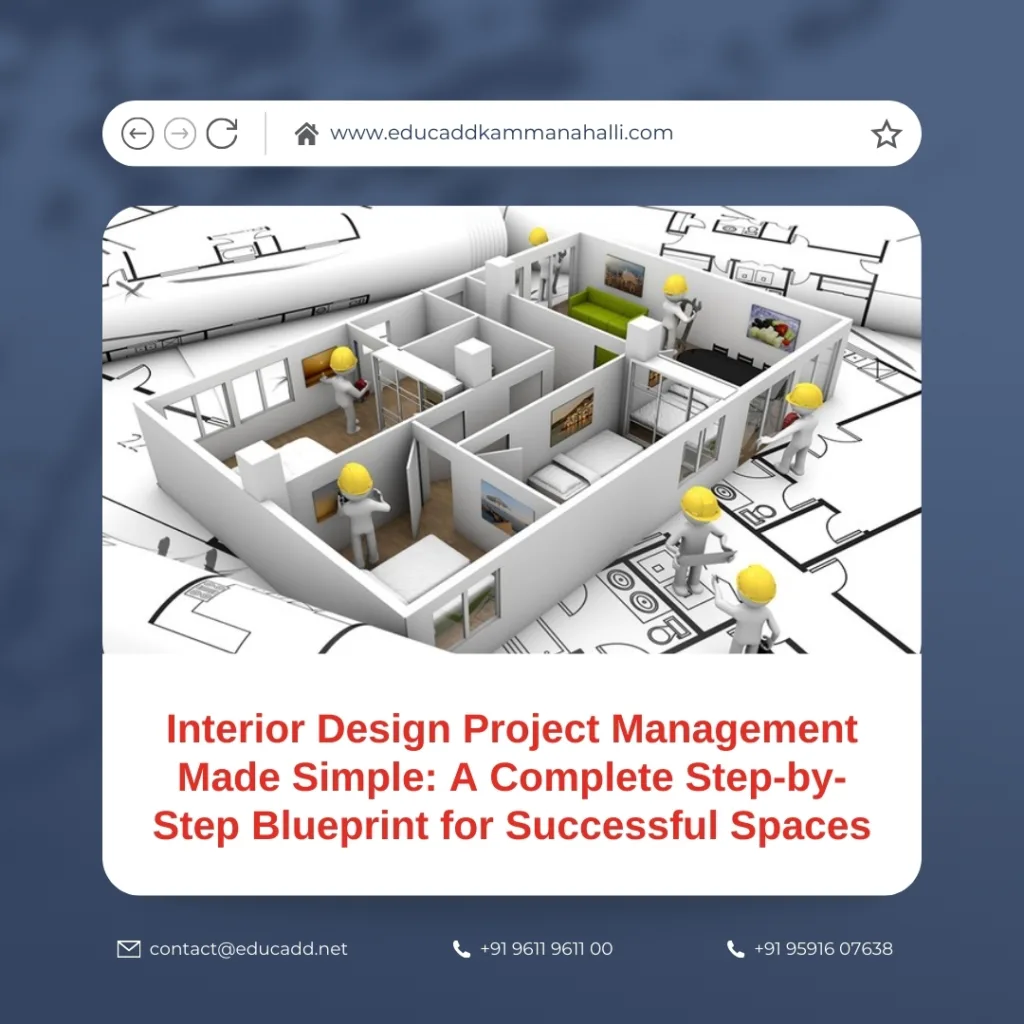
Interior Design Project Management
This step-by-step guide explains how interior design project management works from concept to completion. It walks through each phase in detail, helping designers, firms, and stakeholders manage projects efficiently while maintaining design quality. Whether you handle residential, commercial, or hospitality projects, this guide provides a practical roadmap for consistent success.
1. Understanding Interior Design Project Management
Interior design project management refers to the systematic planning, coordination, and execution of interior design projects. It ensures that every stage of the design process aligns with the client’s goals, budget, and timeline. Instead of treating design as an isolated creative task, project management integrates design with execution.
At its core, interior design project management focuses on scope definition, resource allocation, scheduling, risk control, and quality assurance. Designers act as project leaders who balance creative vision with operational efficiency. As projects grow in complexity, structured management becomes essential to avoid confusion and costly rework.
2. Client Briefing and Requirement Analysis
The foundation of successful interior design project management starts with a detailed client briefing. During this stage, designers gather information about functional needs, aesthetic preferences, lifestyle patterns, and budget expectations. Clear communication at this point prevents misunderstandings later.
Designers should ask structured questions and document every requirement. Additionally, understanding the client’s long-term expectations helps align design decisions with practical outcomes. This phase sets the direction for the entire project and influences every decision that follows.
3. Site Analysis and Existing Condition Assessment
After finalizing the brief, the next step involves conducting a thorough site analysis. This includes measuring dimensions, studying structural constraints, and evaluating electrical, plumbing, and HVAC systems. Site conditions often influence design feasibility and material selection.
Interior design project management emphasizes accuracy at this stage. Incorrect measurements or overlooked constraints can disrupt timelines later. Designers should collaborate with engineers and contractors early to validate technical details and identify potential challenges.
4. Concept Development and Design Strategy
Concept development transforms ideas into a clear design direction. Designers create mood boards, layout concepts, color palettes, and material themes that reflect the client’s vision. This stage bridges creativity with practicality.
Effective interior design project ensures that concepts align with budget and execution capabilities. Designers should validate feasibility while presenting creative solutions. Regular client feedback during this phase reduces revisions and speeds up approvals.
5. Space Planning and Functional Layouts
Space planning focuses on optimizing movement, functionality, and comfort. Designers create detailed layouts that define furniture placement, circulation paths, and zoning. Good space planning enhances usability and aesthetic balance.
From a project management perspective, this step ensures efficient use of available space while meeting regulatory requirements. Designers must consider ergonomics, safety standards, and accessibility guidelines to avoid future modifications.
6. Detailed Design Development and Documentation
Once layouts are approved, designers move into detailed design development. This stage includes drawings, elevations, lighting plans, furniture details, and material specifications. Accuracy becomes critical at this point.
Interior design project relies heavily on documentation. Clear drawings reduce execution errors and improve coordination among contractors. Well-prepared documentation also helps control costs and maintain design intent throughout the project lifecycle.
7. Budget Planning and Cost Estimation
Budget planning is one of the most sensitive aspects of interior design project management. Designers must estimate costs for materials, labor, furniture, and contingencies. Transparent budgeting builds trust with clients.
During this stage, designers should compare alternatives and suggest value-engineering options when needed. Continuous budget tracking ensures financial discipline and prevents unpleasant surprises during execution.
8. Vendor Selection and Procurement Management
Procurement involves selecting vendors, suppliers, and contractors who meet quality and timeline expectations. Designers often coordinate with multiple vendors simultaneously.
Strong interior design project management ensures timely procurement and quality control. Clear contracts, delivery schedules, and communication channels help avoid delays. Designers must also track lead times for custom furniture and imported materials.
9. Project Scheduling and Timeline Control
Scheduling defines the sequence of activities from demolition to final installation. A realistic timeline balances efficiency with quality. Designers must coordinate tasks across trades to prevent overlaps and idle time.
Interior design project uses structured schedules to track progress. Regular updates help identify delays early. When issues arise, proactive rescheduling minimizes impact on the final delivery date.
10. Coordination with Contractors and Consultants
Interior projects require close coordination with contractors, electricians, plumbers, carpenters, and other specialists. Designers act as the central communication link among all parties.
Effective project management ensures that everyone follows approved drawings and specifications. Regular site meetings and progress reviews help maintain alignment and resolve conflicts quickly.
11. Quality Control and Site Supervision
Quality control ensures that executed work matches the approved design. Designers must inspect workmanship, finishes, and installations at every stage.
Interior design project emphasizes proactive supervision. Addressing issues early prevents rework and protects timelines. Consistent quality checks also reinforce the designer’s professional credibility.
12. Risk Management and Problem Solving
Every interior project faces risks such as material delays, design changes, or unforeseen site conditions. Risk management involves identifying potential issues and planning responses in advance.
Experienced designers use interior design project management strategies to handle challenges calmly. Clear documentation, contingency planning, and open communication help resolve problems without escalating costs or stress.
13. Client Communication and Approval Management
Consistent client communication is critical throughout the project lifecycle. Designers must provide updates, seek approvals, and explain changes clearly.
Interior design project management values transparency. When clients understand progress and challenges, they remain confident in the process. Well-managed communication reduces conflicts and strengthens long-term relationships.
14. Project Handover and Final Documentation
The final stage includes inspections, snag lists, and handover documentation. Designers ensure that all work meets agreed standards before project closure.
A structured handover reflects strong interior design project management. Providing maintenance guidelines, warranties, and as-built drawings adds long-term value for clients and completes the project professionally.
Conclusion
Interior Design Project Management transforms creative ideas into well-executed spaces through structure, planning, and coordination. It connects design vision with practical execution while maintaining control over time, cost, and quality. By following a step-by-step approach, designers can reduce risks, improve efficiency, and deliver consistent results.
In today’s competitive design industry, mastering interior design project management is no longer optional. It is the key to client satisfaction, professional growth, and sustainable success. When creativity and management work together, interior spaces achieve both beauty and functionality.

