
From Concept to Reality: Interior Design Visualization Using 3D Software
Interior design has always balanced creativity with practicality. However, modern expectations demand more than mood boards and hand-drawn sketches. Clients today want clarity, realism, and confidence before investing in a space. This is where Interior Design Visualization Software has transformed the industry. Designers can now convert abstract ideas into visually immersive experiences that communicate intent with precision. Instead of guessing how a room might look, clients can see, feel, and understand the design before execution begins. This shift has elevated design communication, reduced errors, and strengthened client trust. As technology evolves, 3D visualization has become an essential skill rather than an optional enhancement.
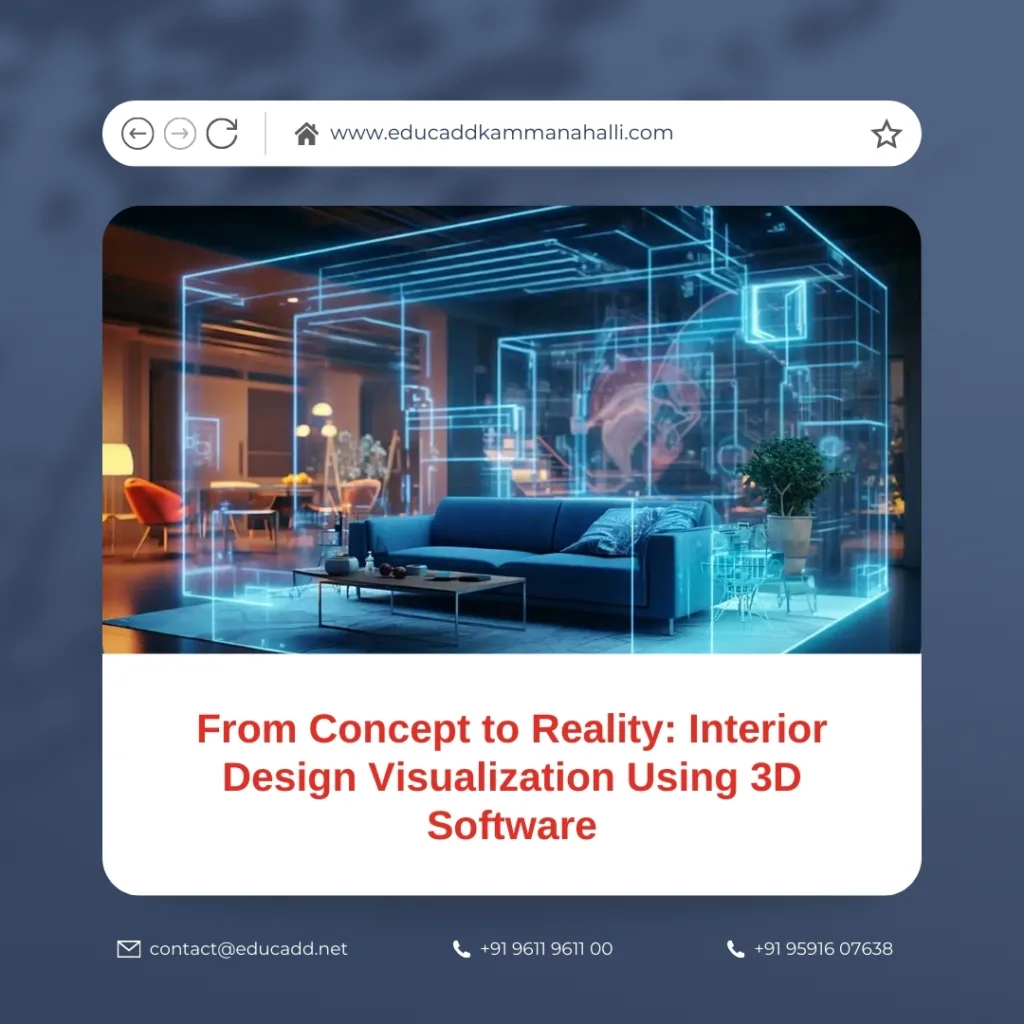
Interior Design Visualization Software
1. Understanding Interior Design Visualization in the Digital Era
Interior Design Visualization Software refers to the process of creating realistic digital representations of interior spaces using advanced 3D software. Designers use these tools to model rooms, furniture, lighting, textures, and materials with remarkable accuracy. Unlike traditional drawings, 3D visualization provides depth, scale, and spatial context. This method allows designers to present ideas clearly while maintaining artistic flexibility. As a result, both designers and clients gain a shared visual language. The digital era has made visualization faster, more detailed, and highly adaptable, enabling designers to explore multiple design directions without physical constraints.
2. The Role of 3D Software in Modern Interior Design
3D software acts as the backbone of contemporary interior design workflows. Tools such as AutoCAD, SketchUp, 3ds Max, Blender, and Revit allow designers to build precise models while experimenting creatively. These platforms support accurate measurements, realistic lighting simulations, and detailed material applications. Designers can adjust layouts instantly, refine color palettes, and test furniture placement efficiently. Because of this flexibility, decision-making becomes faster and more informed. Moreover, 3D software bridges the gap between conceptual design and execution, ensuring that what gets built matches the original vision closely.
3. From Flat Drawings to Immersive Visual Experiences
Traditional 2D drawings often leave room for interpretation, which can lead to misunderstandings. Interior design visualization using 3D software eliminates this uncertainty. By transforming flat plans into three-dimensional spaces, designers create immersive visual experiences. Clients can view interiors from multiple angles, understand proportions, and visualize movement within the space. This immersive approach strengthens emotional connection and helps clients feel confident about their choices. Consequently, approvals happen faster, and revisions reduce significantly.
4. Enhancing Client Communication and Design Approval
Clear communication defines successful interior design projects. 3D visualization enhances this communication by presenting ideas visually rather than verbally. Clients often struggle to interpret technical drawings, but they instantly understand realistic renders. Designers can walk clients through the space, explain design choices, and respond to feedback in real time. Because clients see exactly what they will receive, trust increases. This transparency minimizes last-minute changes and ensures smoother project execution.
5. Accuracy and Realism Through Advanced Rendering Techniques
Modern 3D software delivers astonishing realism through advanced rendering engines. These engines simulate natural light, shadows, reflections, and textures accurately. Materials such as wood, marble, glass, and fabrics appear lifelike in renders. Designers can adjust lighting conditions to show how spaces look during different times of the day. This level of realism helps clients make informed decisions regarding finishes and layouts. Accuracy also reduces costly on-site errors, saving both time and resources.
6. Space Planning and Functional Optimization
Interior design visualization using 3D software plays a crucial role in space planning. Designers can analyze circulation paths, furniture placement, and spatial flow efficiently. By visualizing how people move within a space, designers optimize functionality without compromising aesthetics. This approach proves especially valuable for compact homes, offices, and commercial spaces. Designers can test multiple configurations before finalizing the most effective layout. As a result, the finished space feels balanced, comfortable, and purpose-driven.
7. Experimenting with Colors, Materials, and Textures
One of the biggest advantages of 3D visualization lies in experimentation. Designers can explore different color schemes, materials, and textures without physical samples. Changing wall colors, flooring types, or furniture finishes takes only minutes. This flexibility encourages creativity while maintaining cost efficiency. Clients can compare options side by side and select what resonates most. Through visualization, designers ensure harmony between elements, achieving cohesive and visually appealing interiors.
8. Lighting Design and Mood Creation
Lighting defines the mood and functionality of an interior space. 3D software enables designers to simulate both natural and artificial lighting accurately. Designers can test different lighting fixtures, intensities, and placements to achieve the desired ambiance. Visualization helps demonstrate how lighting affects colors, textures, and spatial perception. This process ensures that the final lighting design enhances comfort while supporting the intended atmosphere. Well-planned lighting also improves energy efficiency and user experience.
9. Cost Efficiency and Reduced Design Revisions
Interior design projects often face budget constraints and timeline pressures. 3D visualization addresses both challenges effectively. By identifying design issues early, designers prevent costly changes during execution. Clients finalize decisions before construction begins, reducing material wastage and labor costs. Because visualization provides clarity, the number of revisions decreases significantly. This efficiency benefits designers, clients, and contractors alike, leading to smoother project delivery.
10. Supporting Collaboration Between Designers and Contractors
Successful interiors require seamless collaboration between designers, contractors, and vendors. 3D models serve as a shared reference point for all stakeholders. Contractors understand design intent clearly, which improves execution accuracy. Vendors can estimate quantities and costs more precisely. This collaborative approach minimizes miscommunication and ensures consistency across the project lifecycle. As a result, interior design visualization using 3D software strengthens teamwork and accountability.
11. Virtual Walkthroughs and Client Engagement
Virtual walkthroughs take interior design visualization to the next level. Using 3D software, designers create interactive experiences that allow clients to explore spaces virtually. Clients can navigate rooms, view details up close, and experience scale realistically. This engagement builds excitement and emotional connection with the design. Virtual walkthroughs also help designers stand out in competitive markets by offering immersive presentations that leave lasting impressions.
12. Applications Across Residential, Commercial, and Retail Spaces
3D interior visualization benefits a wide range of projects. In residential design, it helps homeowners visualize personalized spaces. In commercial environments, visualization supports functional planning and brand alignment. Retail designers use 3D renders to showcase layouts that enhance customer experience. Each sector benefits from improved clarity, faster approvals, and optimized design solutions. The versatility of 3D software makes it indispensable across interior design disciplines.
13. Skill Development and Career Opportunities in 3D Visualization
As demand for interior design visualization grows, so do career opportunities. Designers skilled in 3D software gain a competitive advantage. Many professionals specialize solely in visualization, working with architects and interior designers globally. Learning these tools enhances creative expression and technical competence. With continuous technological advancements, skilled visualizers remain in high demand across the design industry.
14. The Future of Interior Design Visualization Using 3D Software
The future of interior design visualization looks promising and innovative. Emerging technologies such as virtual reality, augmented reality, and AI-driven rendering will further enhance realism and interactivity. Designers will create even more immersive experiences, allowing clients to interact with spaces dynamically. As software becomes more intuitive, visualization will integrate seamlessly into every design stage. This evolution will redefine how designers conceptualize, present, and execute interior spaces.
Conclusion
Interior Design Visualization Software has revolutionized how designers communicate ideas and deliver value. It transforms imagination into tangible, accurate, and emotionally engaging experiences. By enhancing clarity, reducing errors, and improving collaboration, 3D visualization elevates the entire design process. Clients gain confidence, designers achieve precision, and projects succeed more efficiently. As technology continues to evolve, interior design visualization will remain at the heart of innovative, client-centric design solutions.

