
Mastering High-Converting Landing Pages for Digital Campaign Success
In today’s competitive digital landscape, every marketing campaign hinges on one critical element: High-Converting Landing Pages. A well-crafted landing page can turn casual visitors into loyal customers, boost engagement, and dramatically increase conversion rates. Digital campaigns, whether run on social media, Google Ads, or email marketing, rely heavily on these focused web pages to capture leads and drive measurable results. Unlike a general website page, landing pages are designed with a singular goal in mind—conversion. Understanding how to build high-converting landing pages is no longer optional; it is essential for marketers, business owners, and digital strategists aiming to maximize ROI.
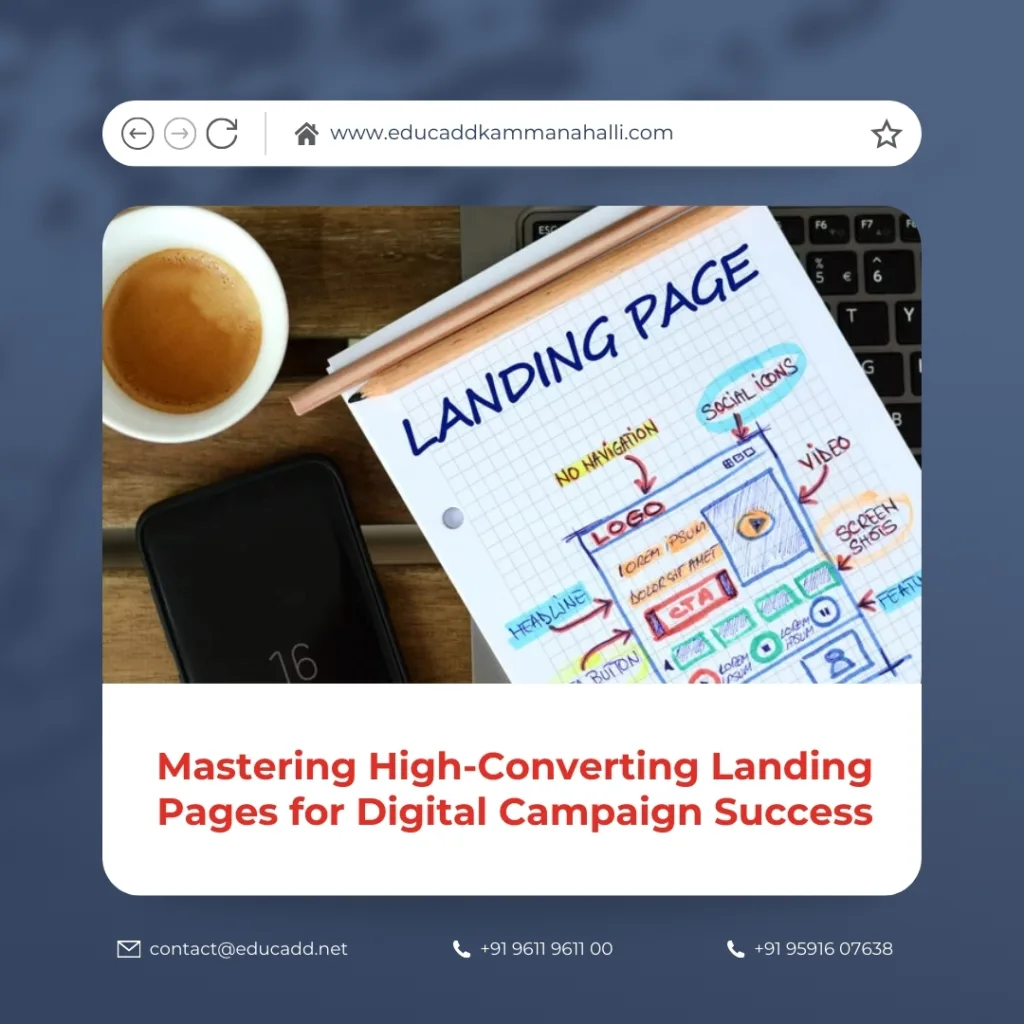
High-Converting Landing Pages
1. Understanding the Purpose of a Landing Page
High-Converting Landing Pages differ from standard website pages because they are purpose-driven. While a homepage or blog post offers information about a brand, a landing page focuses on a single objective, such as collecting email addresses, selling a product, or prompting a service inquiry. Clarity of purpose is key. Every element, from the headline to the call-to-action (CTA), should guide visitors toward completing the desired action. Misaligned messaging or cluttered design can confuse users and reduce conversions. A high-converting landing page aligns content, design, and user experience toward a single, measurable goal.
2. Crafting Headlines That Grab Attention
The headline is the first interaction visitors have with your landing page. A powerful headline captures attention and immediately communicates the value proposition. Use concise, benefit-driven language that tells visitors what they will gain. For instance, instead of a generic “Sign Up Today,” try “Unlock Exclusive Marketing Insights in Minutes.” Headlines should be clear, relevant, and compelling enough to keep visitors engaged. Paired with a strong subheadline, they set the tone for the entire page.
3. Writing Persuasive Copy That Converts
The copy on your landing page should be concise, persuasive, and focused entirely on the visitor’s needs. Avoid jargon or overly complex sentences. Break text into short paragraphs or bullet points to improve readability. Highlight the benefits of your offer, not just the features. For example, rather than listing technical specifications, emphasize how the product or service solves a problem or makes life easier. Use active voice predominantly, keeping passive constructions below 10% to maintain a sense of urgency and clarity.
4. Designing Visually Engaging Layouts
Visual design directly impacts user behavior on landing pages. A clean, organized layout guides the visitor’s eye and encourages action. Use white space strategically to highlight key elements such as CTAs, headings, and images. Avoid clutter, as too many distractions can reduce conversions. Incorporate high-quality images, relevant icons, and graphics that support the message. Design should complement content, not overshadow it. A visually balanced page improves trust and keeps visitors focused on completing the desired action.
5. Optimizing Call-to-Action Buttons
The call-to-action is arguably the most crucial element of a landing page. A high-converting CTA is clear, visible, and action-oriented. Use contrasting colors to make the button stand out and concise text like “Get Your Free Guide” or “Start Your Trial Now.” Placement also matters: ensure CTAs are above the fold and repeated strategically throughout the page without overwhelming the visitor. Testing different CTA versions through A/B testing can reveal which phrasing, color, or placement drives the highest conversion rates.
6. Building Trust Through Social Proof
Visitors are more likely to convert when they trust your brand. Social proof elements like testimonials, reviews, case studies, and client logos can significantly boost credibility. Include real names, photos, or statistics to make social proof authentic and relatable. Highlighting positive experiences reassures visitors and reduces hesitation. When combined with clear messaging and a strong CTA, social proof becomes a powerful motivator for conversions.
7. Incorporating Lead Capture Forms Strategically
Forms are essential for capturing visitor information, but their design impacts conversion rates. Keep forms simple and request only necessary information. Long, complicated forms can deter users from completing them. Use inline validation, clear field labels, and visually distinct submit buttons to make the process seamless. Placing forms strategically, ideally above the fold or alongside compelling copy, ensures visitors notice them without feeling forced.
8. Using Visual Hierarchy to Guide Visitors
A strong visual hierarchy helps guide visitors’ attention naturally through the page. Headings, subheadings, images, and CTAs should be arranged to lead the eye from one key element to the next. Use size, color, and placement strategically to emphasize priority content. For instance, a larger headline draws attention first, followed by a supporting image, concise benefits, and finally the CTA. A clear visual flow reduces cognitive load and increases the likelihood of conversion.
9. Optimizing for Mobile Conversions
Mobile traffic accounts for a significant portion of online users, making mobile optimization crucial. Landing pages must be fully responsive, ensuring that all elements resize and reorganize seamlessly on smaller screens. Buttons should remain tappable, forms easy to fill, and content readable without zooming. Mobile-first design improves user experience and positively impacts conversion rates, as a page that is difficult to navigate on a phone can drive potential leads away.
10. Speed and Performance Matter
Page load speed directly affects conversions. Slow-loading landing pages frustrate visitors and increase bounce rates. Optimize images, reduce unnecessary scripts, and leverage caching to enhance performance. Tools like Google PageSpeed Insights can help identify areas for improvement. A fast-loading landing page ensures visitors remain engaged, improving the chances of completing the desired action and boosting overall campaign effectiveness.
11. A/B Testing for Continuous Improvement
Even a well-designed landing page requires testing. A/B testing involves comparing different versions of a page to identify which elements perform best. Test variations of headlines, CTAs, images, copy, and layout. Collect data on visitor behavior and conversion rates to make informed decisions. Continuous optimization through testing ensures the landing page evolves based on real user behavior, maximizing ROI for digital campaigns.
12. Tracking Conversions and Analytics
Tracking conversions is essential to evaluate landing page performance. Implement analytics tools like Google Analytics or dedicated conversion tracking software to monitor visitor behavior. Measure metrics such as bounce rate, session duration, form submissions, and sales. Analyzing this data provides insights into what works and what needs improvement. Conversion tracking allows marketers to refine campaigns, allocate budgets effectively, and make data-driven decisions.
13. Aligning Landing Pages With Campaign Goals
Landing pages must align with the broader goals of the digital campaign. Whether the objective is lead generation, product sales, or event registration, every element should support that goal. Ensure messaging, visuals, and offers are consistent with the ad, email, or social post that drives traffic. Misalignment can lead to confusion and lost conversions. Cohesive, goal-oriented pages strengthen campaign effectiveness and enhance user experience.
14. Leveraging Psychological Triggers
Understanding human psychology can dramatically improve landing page performance. Use scarcity by highlighting limited-time offers, social proof to build trust, and reciprocity by offering free resources. Emotional triggers, such as fear of missing out or desire for gain, motivate action. When combined with clear design and strong messaging, these psychological techniques can significantly increase conversions and enhance campaign success.
Conclusion
Creating High-Converting Landing Pages is both an art and a science. Every component, from headlines to CTAs, copy to visuals, must work in harmony to guide visitors toward a single objective. Optimizing for user experience, mobile responsiveness, speed, and credibility enhances performance, while A/B testing and analytics allow continuous improvement. Digital campaigns thrive when landing pages are designed thoughtfully, with clear goals and compelling messaging. By mastering these principles, businesses can transform traffic into tangible results, maximizing the value of every marketing effort.

