
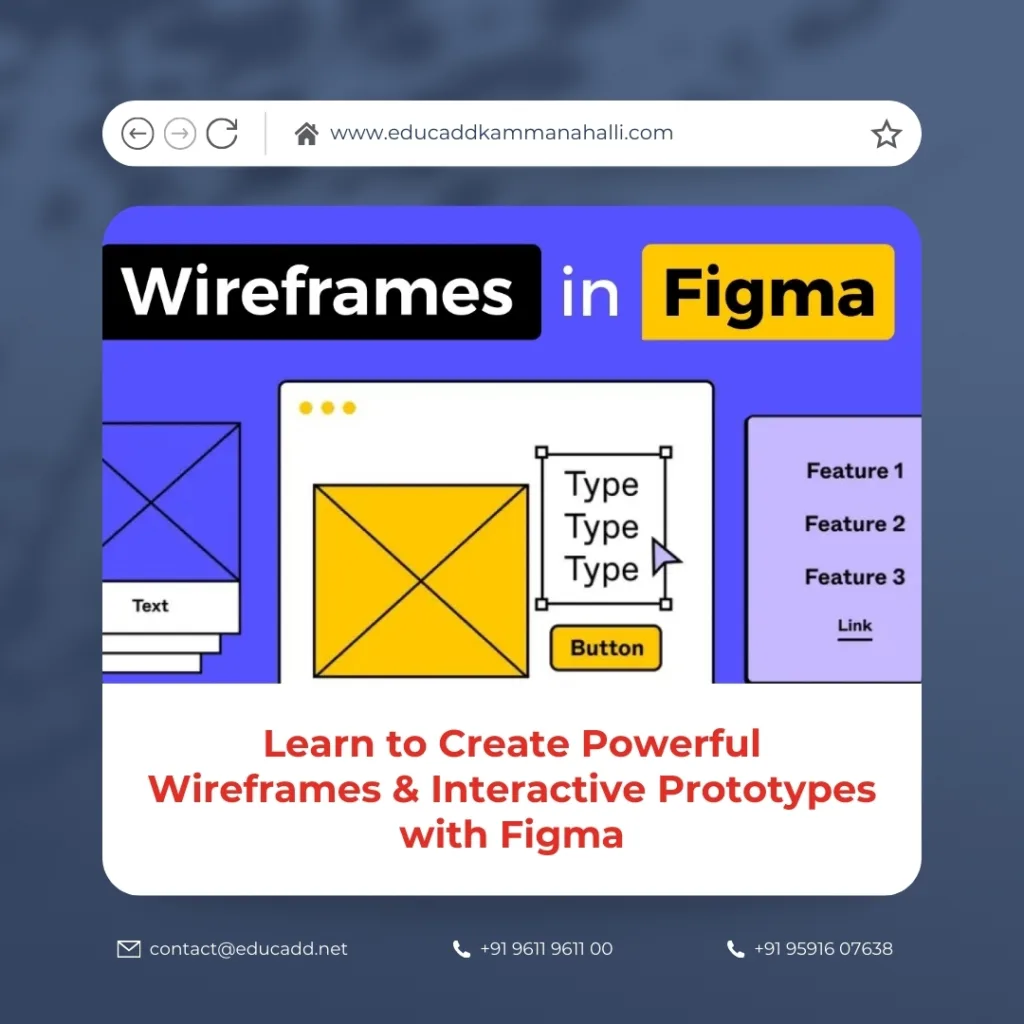
Learn to Create Powerful Wireframes & Interactive Prototypes with Figma
In today’s digital-first world, great design is no longer optional—it is essential. Every successful website, mobile app, or digital product begins with a clear visual plan. This is where wireframing and prototyping play a critical role. They help designers transform abstract ideas into structured, user-friendly experiences. Among all modern design tools, Figma Wireframing Prototyping Course has emerged as the industry standard for prototypes efficiently and collaboratively.
Figma Wireframing Prototyping Course
Learning to create wireframes and prototypes with Figma empowers designers, developers, marketers, and product managers alike. It allows teams to visualize concepts, test ideas early, reduce errors, and deliver better user experiences. This comprehensive guide will walk you through everything you need to know—from fundamentals to advanced practices—so you can confidently design with purpose and precision.
1. Understanding Wireframes and Prototypes in UX Design
Figma Wireframing Prototyping Course form the foundation of user experience design. A wireframe represents the skeletal structure of a digital interface. It focuses on layout, hierarchy, and functionality rather than colors or visuals. Wireframes help teams agree on structure before investing time in detailed design.
Prototypes, on the other hand, bring wireframes to life. They simulate user interactions such as clicks, transitions, and navigation flows. Prototypes allow stakeholders to experience how a product will function before development begins. As a result, teams can identify usability issues early and make informed decisions.
Together, wireframes and prototypes reduce confusion, improve collaboration, and ensure design clarity. When created using Figma, these elements become even more powerful due to real-time collaboration and cloud-based access.
2. Why Figma Is the Preferred Tool for Wireframing and Prototyping
Figma has transformed the way design teams work. Unlike traditional desktop tools, Figma operates entirely in the browser. This allows users to design, share, and collaborate without installation barriers. Teams can work together in real time, regardless of location.
Additionally, Figma supports both wireframing and prototyping within a single platform. Designers do not need to switch tools, which improves efficiency. Figma also integrates seamlessly with developer handoff, making design implementation smoother.
Because of its accessibility, scalability, and collaborative features, Figma has become a must-have skill for modern UX and UI professionals.
3. Getting Started with the Figma Interface
Before creating wireframes, it is essential to understand the Figma workspace. The interface is clean and intuitive, which makes learning faster even for beginners. The canvas sits at the center, where designs take shape. On the left panel, you manage pages, layers, and assets. On the right panel, you control properties such as size, alignment, and constraints.
Frames in Figma act as containers for screens and layouts. You can choose preset frame sizes for mobile, tablet, or desktop designs. This helps maintain consistency across devices. Additionally, Figma’s grid and layout tools assist in creating structured designs.
Once you become comfortable with the interface, wireframing becomes a smooth and logical process.
4. Creating Low-Fidelity Wireframes in Figma
Low-fidelity wireframes focus on structure rather than aesthetics. They use simple shapes, placeholder text, and minimal styling. The goal is to define layout and user flow without distractions.
In Figma, designers typically start with rectangles for sections, lines for dividers, and text blocks for content placement. Components such as buttons and navigation menus are represented in their simplest form. This approach encourages quick iteration and feedback.
Low-fidelity wireframes help teams align early. They allow stakeholders to focus on functionality and user needs rather than visual preferences. As a result, design decisions become more strategic and user-centered.
5. Transitioning to High-Fidelity Wireframes
Once the structure is approved, designers move toward high-fidelity wireframes. These wireframes include more detail, such as accurate spacing, typography, and basic color usage. They serve as a bridge between rough concepts and final UI design.
Figma makes this transition seamless. Designers can apply text styles, grids, and reusable components to refine layouts. High-fidelity wireframes provide clarity for developers and stakeholders, reducing ambiguity during development.
At this stage, usability becomes more evident. Designers can evaluate content hierarchy, readability, and accessibility before moving to prototyping.
6. Using Components and Design Systems Effectively
One of Figma’s strongest features is its component system. Components allow designers to create reusable elements such as buttons, headers, and input fields. When a component updates, all instances update automatically.
This approach ensures consistency across wireframes and prototypes. It also saves time during revisions. Design systems built in Figma help teams scale designs efficiently while maintaining brand standards.
For professionals working on large projects, mastering components and design systems is essential. It improves collaboration and reduces design inconsistencies significantly.
7. Designing User Flows with Wireframes
User flows map the journey a user takes within a product. Wireframes help visualize these journeys clearly. By arranging screens and connecting them logically, designers can ensure smooth navigation and intuitive interactions.
Figma supports flow visualization through frames and connectors. Designers can lay out screens side by side and demonstrate transitions visually. This method improves communication with developers and stakeholders.
Clear user flows reduce friction and enhance usability. They also help teams identify missing steps or unnecessary complexity early in the design process.
8. Introduction to Prototyping in Figma
Prototyping transforms static wireframes into interactive experiences. In Figma Wireframing Prototyping Course does not require additional tools or coding knowledge. Designers can link frames, define interactions, and add animations easily.
Prototypes allow teams to test usability and validate ideas. Users can click through screens, simulate real actions, and provide meaningful feedback. This process reduces costly changes during development.
Figma’s prototyping features support both simple transitions and advanced interactions, making it suitable for projects of all sizes.
9. Creating Interactive Prototypes for User Testing
Interactive prototypes play a crucial role in user testing. They help designers observe how users interact with a product. Feedback collected at this stage informs design improvements and enhances user satisfaction.
With Figma, designers can create realistic interactions such as hover states, button clicks, and overlays. These interactions improve the testing experience and provide deeper insights.
By refining prototypes based on testing results, teams ensure that the final product aligns with user expectations and business goals.
10. Collaboration and Feedback in Figma
Collaboration is at the heart of Figma’s design philosophy. Multiple users can work on the same file simultaneously. Changes appear in real time, which eliminates version control issues.
Stakeholders can leave comments directly on designs. Designers can respond and make updates quickly. This streamlined feedback process improves efficiency and reduces miscommunication.
For remote teams, Figma acts as a shared design workspace that keeps everyone aligned throughout the project lifecycle.
11. Handoff from Design to Development
Effective handoff ensures that designs translate accurately into code. Figma simplifies this process by providing developers with access to design specifications, measurements, and assets.
Developers can inspect elements, extract CSS properties, and download resources directly. This reduces dependency on designers and speeds up development timelines.
Clear wireframes and prototypes minimize misunderstandings, leading to smoother execution and better final outcomes.
12. Best Practices for Wireframing and Prototyping
Successful wireframing and prototyping require a strategic approach. Designers should start simple, focus on user needs, and iterate frequently. Consistency and clarity should guide every decision.
Using grids, components, and design systems improves structure and scalability. Regular feedback ensures designs remain aligned with goals.
By following best practices, designers create wireframes and prototypes that are both functional and impactful.
13. Career Benefits of Learning Figma for Wireframing and Prototyping
Figma skills are in high demand across industries. Employers seek professionals who can visualize ideas quickly and collaborate effectively. Learning to create wireframes and prototypes with Figma enhances career opportunities in UX design, UI design, product design, and digital marketing.
Professionals with Figma expertise contribute more strategically to projects. They communicate ideas clearly and reduce development risks.
As digital products continue to grow, Figma remains a valuable skill for long-term career growth.
14. Common Mistakes to Avoid When Using Figma
While Figma is powerful, beginners often make avoidable mistakes. Overdesigning wireframes too early can slow progress. Ignoring user feedback can lead to usability issues.
Designers should also avoid inconsistent components and unclear navigation flows. Proper planning and iteration prevent these problems.
By learning from common mistakes, designers improve efficiency and deliver better results.
Conclusion
Learning to create Figma Wireframing Prototyping Course is a vital skill in modern digital design. It enables professionals to transform ideas into structured, interactive experiences that users love. From low-fidelity wireframes to advanced prototypes, Figma supports every stage of the design process.
By mastering Figma, you gain the ability to collaborate effectively, test ideas early, and deliver user-centered solutions with confidence. Whether you are a beginner or an experienced professional, investing time in wireframing and prototyping with Figma will elevate your design capabilities and open new career opportunities in the evolving digital landscape.

