
Electrical CADD for Smart Buildings & Energy Systems: Powering the Future of Intelligent Infrastructure
Modern buildings no longer function as simple physical spaces. They operate as intelligent environments that respond to people, climate, and energy demand in real time. Behind this transformation lies Electrical CADD Smart Buildings & Energy Systems. This powerful design approach combines computer-aided drafting with advanced electrical planning to create safe, efficient, and intelligent infrastructures.
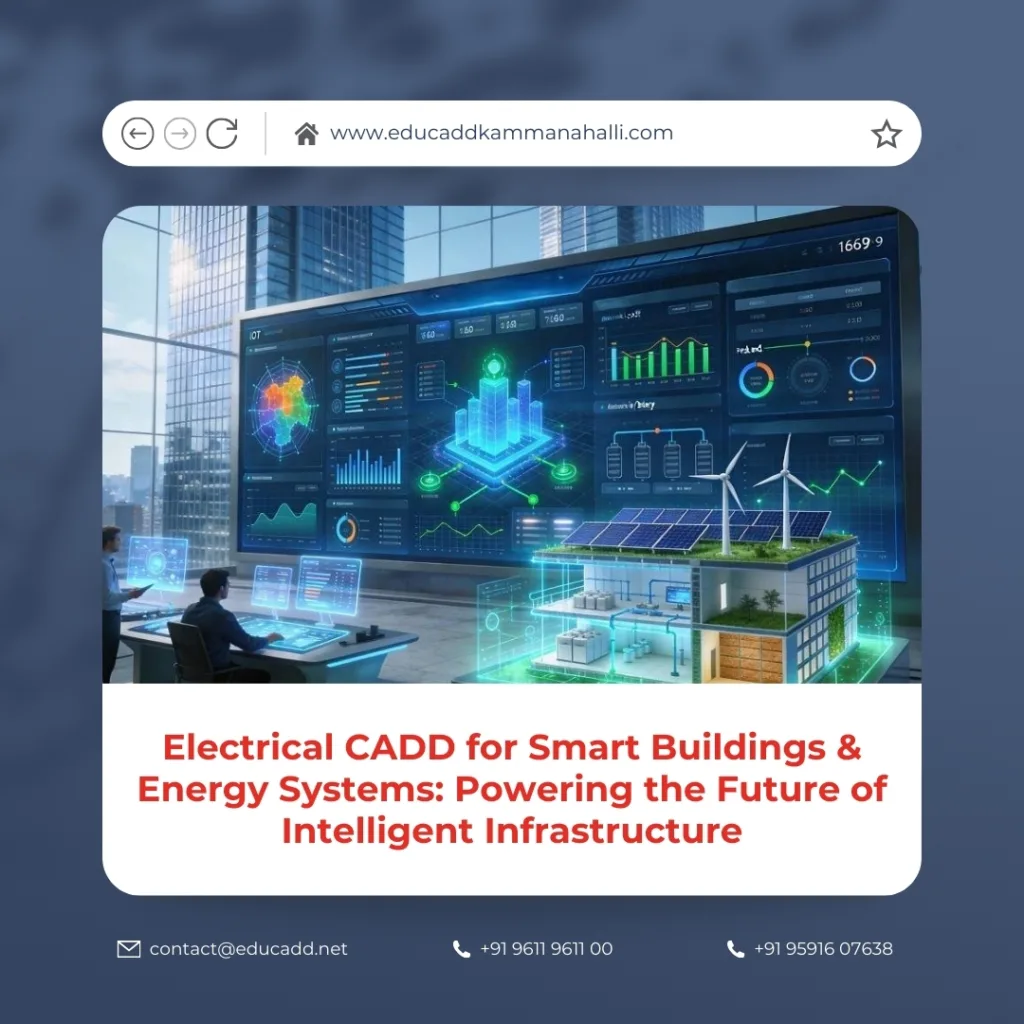
Electrical CADD Smart Buildings
Electrical engineers, designers, and consultants now rely on digital drafting tools to plan power distribution, lighting automation, renewable integration, fire alarms, and building management systems. As smart technologies evolve, precision becomes critical. Therefore, Electrical CADD for Smart Buildings & Energy Systems enables professionals to visualize, simulate, and optimize every electrical component before construction begins. This blog explores how this technology reshapes modern construction and energy efficiency.
1. Understanding Electrical CADD in the Modern Era
Electrical CADD Smart Buildings and Drafting systems used to create detailed electrical drawings. Unlike traditional drafting, CADD tools allow designers to build accurate digital models of circuits, panels, and distribution systems.
In smart buildings, electrical systems connect with automation platforms, IoT devices, and energy management systems. Therefore, engineers need highly detailed schematics that reduce errors and improve coordination. Electrical CADD for Smart Buildings & Energy Systems supports multi-layered drawings, intelligent symbol libraries, and automated updates.
Moreover, digital drafting enhances clarity. Engineers can revise layouts quickly, generate reports instantly, and detect clashes before installation. As a result, projects move faster and remain within budget.
2. The Evolution of Smart Buildings
Smart buildings integrate technology to monitor and control lighting, HVAC, security, and energy consumption. These systems depend on accurate electrical planning. Without a strong electrical backbone, automation cannot function effectively.
Earlier buildings relied on isolated systems. However, modern infrastructure demands interconnected networks. Electrical CADD for Smart Buildings & Energy Systems ensures that wiring diagrams support sensors, communication cables, and smart panels seamlessly.
Additionally, engineers can simulate energy loads and verify distribution efficiency. This proactive design reduces operational failures. Consequently, building owners gain reliability and long-term savings.
3. Core Components of Electrical Design in Smart Infrastructure
Smart buildings require more than simple wiring diagrams. Designers must plan structured cabling, lighting automation, renewable energy connections, backup power systems, and surge protection.
Electrical CADD for Smart Buildings & Energy Systems helps engineers organize these components into clear and coordinated layouts. For example, lighting systems integrate motion sensors and daylight harvesting controls. Similarly, power panels connect with monitoring devices that track consumption patterns.
By using digital drafting tools, designers ensure that every circuit supports performance goals. Furthermore, accurate load calculations prevent overloading and enhance safety.
4. Integration with Energy Management Systems
Energy efficiency stands at the center of smart infrastructure. Building owners aim to reduce operational costs and carbon emissions. Therefore, electrical systems must connect with energy management platforms.
Electrical CADD for Smart Buildings & Energy Systems allows engineers to map connections between panels, meters, and control devices. Through intelligent schematics, designers visualize real-time data flow.
Additionally, CADD software enables simulation of energy usage patterns. Engineers can adjust transformer sizes, cable ratings, and distribution layouts before installation begins. This approach eliminates guesswork and ensures optimized energy performance.
5. Renewable Energy Integration in Smart Buildings
Solar panels, wind systems, and battery storage now form essential parts of modern construction. However, renewable integration demands precise electrical planning.
Electrical CADD Smart Buildings & Energy Systems supports grid-tied and off-grid system design. Engineers can design inverter connections, battery banks, and distribution panels within a unified digital model.
Moreover, drafting tools help calculate fault levels and short-circuit capacity. This analysis ensures system safety. When renewable sources integrate correctly, buildings achieve energy independence and sustainability goals.
6. Lighting Automation and Control Systems
Lighting plays a crucial role in smart building efficiency. Automated lighting adjusts intensity based on occupancy and daylight levels. However, such systems require detailed control wiring and network planning.
Electrical CADD for Smart Buildings & Energy Systems enables designers to create layered lighting layouts. They can differentiate power circuits, control circuits, and communication lines.
Furthermore, engineers can assign programmable logic controllers to lighting zones. Through digital visualization, they verify that controls align with architectural layouts. As a result, occupants experience comfort while owners reduce energy waste.
7. Safety Systems and Electrical Coordination
Safety remains a top priority in intelligent infrastructure. Fire alarms, emergency lighting, access control, and surveillance systems must integrate with the electrical network.
Electrical CADD for Smart Buildings & Energy Systems supports comprehensive safety planning. Designers create detailed single-line diagrams and riser diagrams that show system interconnections.
Additionally, coordination studies prevent system conflicts. For example, protective devices must operate selectively to isolate faults without shutting down entire buildings. Digital drafting tools help engineers analyze these scenarios effectively.
8. Power Distribution Optimization
Power distribution forms the backbone of every building. In smart infrastructure, distribution must support fluctuating loads from automation devices and data systems.
Electrical CADD for Smart Buildings & Energy Systems allows engineers to design balanced load distribution across phases. They can evaluate transformer capacity and cable sizing accurately.
Moreover, software-generated reports provide voltage drop analysis and load summaries. This data-driven approach ensures efficiency. When distribution systems operate optimally, equipment life increases and maintenance costs decrease.
9. BIM Collaboration and Interdisciplinary Coordination
Modern construction relies on collaboration between architects, structural engineers, and MEP professionals. Electrical designs must align with mechanical ducts, plumbing lines, and structural elements.
Electrical CADD for Smart Buildings & Energy Systems integrates seamlessly with Building Information Modeling platforms. Designers can share models and detect clashes before construction begins.
This collaboration reduces rework and delays. Furthermore, coordinated planning improves site safety and project timelines. Digital integration therefore strengthens overall project delivery.
10. Smart Grid Connectivity and Load Management
Smart buildings often connect with smart grids. These grids monitor electricity demand and adjust supply accordingly. To support this integration, electrical systems require advanced metering and communication networks.
Electrical CADD for Smart Buildings & Energy Systems enables engineers to design smart meters, demand response panels, and automated load shedding systems.
Additionally, designers can create control logic diagrams that show how buildings respond during peak demand periods. This proactive design supports grid stability and lowers energy costs.
11. Data Centers and Intelligent Commercial Spaces
Commercial spaces and data centers demand uninterrupted power supply. Even minor interruptions can cause significant losses.
Electrical CADD for Smart Buildings & Energy Systems assists engineers in designing redundant power systems, including UPS units and generator backups. Through digital modeling, they simulate load conditions and verify reliability.
Furthermore, detailed panel schedules help maintenance teams manage circuits effectively. Intelligent drafting ensures that mission-critical environments operate without disruption.
12. Sustainability and Green Building Standards
Green building certifications emphasize energy efficiency and sustainable practices. Electrical design directly influences certification outcomes.
Electrical CADD for Smart Buildings & Energy Systems supports compliance with energy codes and sustainability guidelines. Designers can document energy-efficient lighting layouts, renewable integration, and monitoring systems.
Additionally, digital documentation simplifies audits and inspections. By aligning electrical planning with sustainability goals, engineers contribute to environmental protection and long-term cost savings.
13. Career Opportunities in Electrical CADD
The demand for skilled electrical designers continues to grow. Smart cities and intelligent infrastructure projects require professionals who understand both drafting tools and energy systems.
Electrical CADD for Smart Buildings & Energy Systems offers career pathways in consulting firms, construction companies, and renewable energy sectors. Professionals who master digital drafting software gain competitive advantages.
Moreover, continuous learning enhances expertise. As technology evolves, designers who adapt to new tools and automation trends remain valuable assets in the industry.
14. Future Trends in Electrical CADD and Smart Systems
Technology continues to reshape electrical design practices. Artificial intelligence now supports load forecasting and predictive maintenance. Cloud-based collaboration platforms enhance project coordination.
Electrical CADD for Smart Buildings & Energy Systems will increasingly integrate automation, data analytics, and IoT platforms. Engineers will design adaptive systems that respond dynamically to environmental changes.
Furthermore, digital twins will allow real-time monitoring of building performance. These innovations will transform electrical planning into a proactive and intelligent discipline.
Conclusion
Electrical CADD Smart Buildings & Energy Systems stands at the heart of modern construction and sustainable development. It enables engineers to design accurate, efficient, and intelligent electrical networks that support automation, renewable integration, and smart grid connectivity. Through digital precision, professionals reduce errors, enhance collaboration, and optimize energy performance.
As cities expand and sustainability becomes essential, electrical drafting evolves beyond traditional diagrams. It becomes the strategic foundation of intelligent infrastructure. Organizations that invest in skilled professionals and advanced CADD tools position themselves at the forefront of innovation. Ultimately, Electrical CADD for Smart Buildings & Energy Systems empowers the creation of buildings that think, adapt, and perform efficiently for generations to come.

