
Earned Value Management (EVM) in Primavera P6: The Ultimate Guide to Controlling Project Cost and Schedule Performance
Primavera P6 Earned Value management requires far more than simply creating schedules and assigning tasks. Organizations today demand measurable performance, real-time insights, and reliable forecasting that help them stay within budget while meeting deadlines. Without a structured performance measurement system, even well-planned projects can experience cost overruns, schedule delays, and inefficient resource utilization.
This is where Primavera P6 Earned Value becomes an essential tool for project managers. EVM combines scope, schedule, and cost data into a single integrated performance measurement system. Instead of relying only on planned schedules or actual spending, it helps managers understand how much value the project has truly earned compared to what was planned and what has been spent.
Primavera P6, one of the most powerful project management software platforms used worldwide, provides built-in capabilities to track earned value metrics, analyze project health, and forecast final outcomes. When organizations implement EVM within Primavera P6, they gain the ability to detect problems early, improve cost control, and make data-driven decisions throughout the project lifecycle.
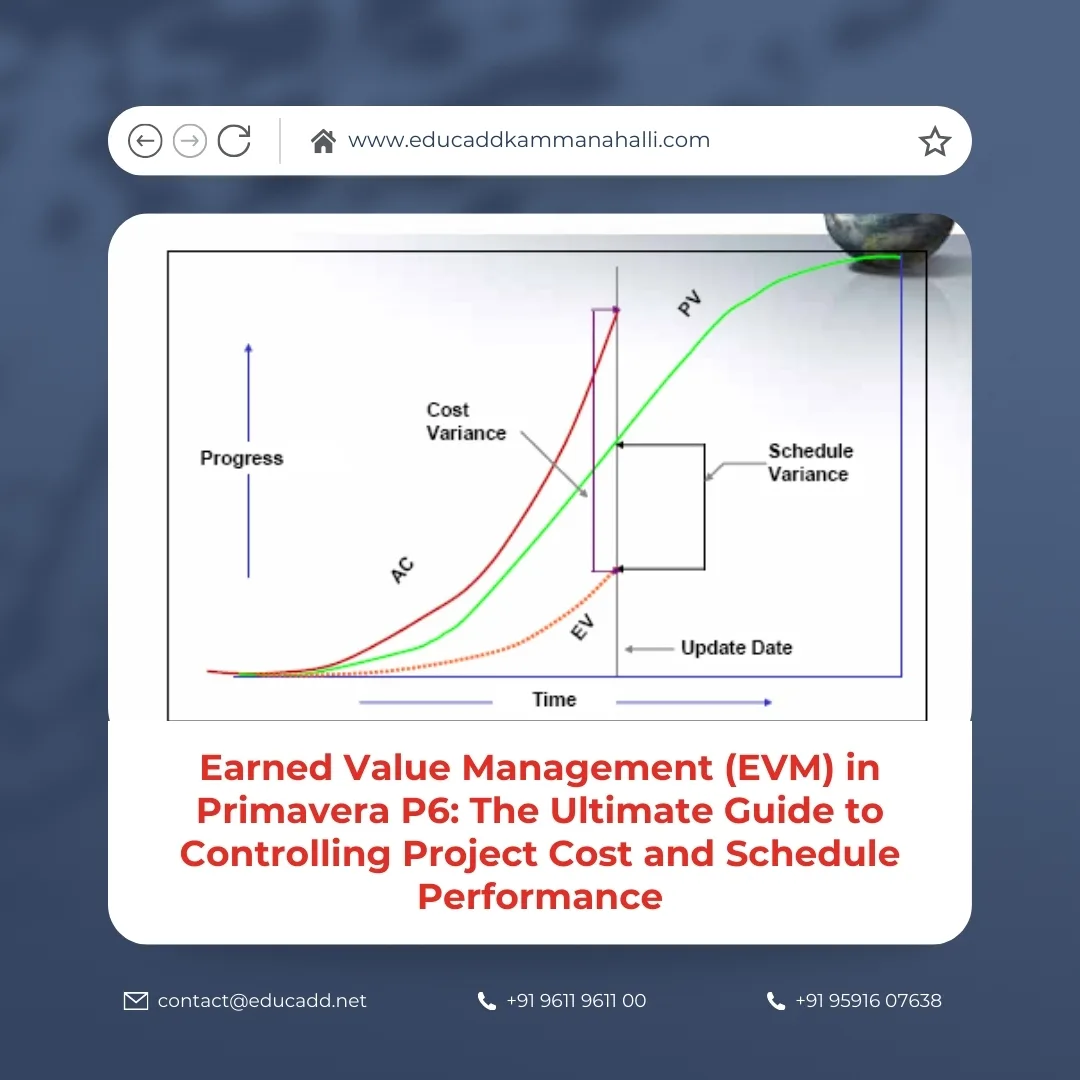
Primavera P6 Earned Value
This comprehensive guide explores how Primavera P6 Earned Value works, why it is critical for project success, and how project teams can use it effectively to monitor performance, control costs, and improve project outcomes.
Understanding the Concept of Earned Value Management
Earned Value Management (EVM) is a structured project management technique that measures project performance by integrating scope, cost, and schedule information. Traditional project tracking often focuses only on planned schedules or actual expenditures. However, these approaches do not clearly show whether the work completed actually matches the resources spent.
EVM solves this problem by introducing a performance measurement system that compares three critical elements: planned work, actual work completed, and the cost incurred to achieve that work. By evaluating these elements together, project managers can determine whether a project is ahead or behind schedule and whether it is under or over budget.
The concept of Primavera P6 Earned Value allows project teams to quantify progress using measurable indicators rather than subjective opinions. For example, if a project planned to complete 40 percent of the work but has actually completed only 30 percent while spending 50 percent of the budget, EVM clearly highlights the performance gap.
Organizations across industries such as construction, engineering, infrastructure, oil and gas, and IT rely on EVM because it provides objective performance measurement. When integrated with Primavera P6, it becomes even more powerful since the software automatically calculates earned value metrics based on schedule progress and cost data.
Why Earned Value Management Is Essential in Project Management
Project managers constantly face the challenge of balancing scope, time, and cost. Without accurate performance metrics, they may struggle to identify problems until it is too late to take corrective action. Earned Value Management provides early warning indicators that help managers respond quickly to potential risks.
One of the primary advantages of Earned Value Management in Primavera P6 is its ability to provide real-time performance visibility. Managers can instantly compare planned progress with actual achievements and spending. This transparency allows organizations to maintain strong financial control and prevent costly project delays.
Another important benefit is improved forecasting capability. EVM not only shows the current performance status but also predicts future outcomes based on existing trends. If the project continues at the same performance level, managers can estimate the final project cost and completion date.
Additionally, EVM strengthens communication among stakeholders. Instead of vague status updates, project teams can present clear performance indicators supported by quantitative data. This builds trust among clients, sponsors, and management teams while ensuring that everyone understands the project’s progress.
Overview of Primavera P6 in Project Performance Management
Primavera P6 is widely recognized as one of the most advanced project management software tools used in large and complex projects. Organizations rely on this platform to manage thousands of activities, resources, and schedules efficiently.
The strength of Primavera P6 lies in its ability to integrate planning, scheduling, resource management, and performance monitoring into a single system. When project teams implement Earned Value Management in Primavera P6, they can track project performance with remarkable accuracy.
Primavera P6 allows project managers to assign budgets, track costs, measure progress, and generate earned value metrics automatically. The software also provides dashboards and reports that visualize project health, making it easier for decision-makers to evaluate performance.
Another key advantage is scalability. Whether managing a small project or a massive infrastructure program involving multiple contractors, Primavera P6 can handle complex scheduling structures and large datasets while maintaining performance visibility through EVM metrics.
Key Components of Earned Value Management
To understand Earned Value Management in Primavera P6, it is important to become familiar with its core components. These elements form the foundation of EVM calculations and performance measurement.
The first component is Planned Value (PV). Planned Value represents the authorized budget assigned to scheduled work. It shows how much work should have been completed at a particular point in time according to the project plan.
The second component is Earned Value (EV). Earned Value represents the budgeted cost of the work that has actually been completed. It indicates how much value the project has generated based on progress achieved.
The third component is Actual Cost (AC). Actual Cost represents the real amount of money spent on completing the work performed during the project.
By comparing these three values, project managers can evaluate performance and determine whether the project is performing as expected. Primavera P6 automatically calculates these values based on schedule progress and cost inputs.
Important Earned Value Metrics Used in Primavera P6
Once the basic EVM components are available, Primavera P6 calculates several performance indicators that help project managers analyze project health.
One of the most important metrics is Schedule Variance (SV). Schedule Variance measures the difference between earned value and planned value. If the result is positive, the project is ahead of schedule. If the result is negative, the project is behind schedule.
Another critical metric is Cost Variance (CV). Cost Variance measures the difference between earned value and actual cost. A positive result indicates that the project is under budget, while a negative result shows cost overruns.
Primavera P6 also calculates Schedule Performance Index (SPI) and Cost Performance Index (CPI). These indices provide ratios that represent efficiency levels. An SPI greater than one means the project progresses faster than planned, while a CPI greater than one indicates efficient cost performance.
By analyzing these metrics regularly, project managers can identify performance trends and implement corrective actions before small issues become major problems.
Setting Up Earned Value Management in Primavera P6
Implementing Earned Value Management in Primavera P6 requires proper configuration within the project environment. Project managers must first define the project budget, resource assignments, and baseline schedule.
The baseline schedule acts as the reference point for performance measurement. It captures the original project plan, including activity durations, costs, and resource allocations. Primavera P6 compares current project progress against this baseline to calculate earned value metrics.
Next, project managers assign budgets and cost accounts to activities. These budgets represent the planned cost of completing each activity within the project. Once progress updates occur, Primavera P6 calculates earned value automatically based on the defined earning rules.
Organizations must also define progress measurement methods such as physical percent complete, duration percent complete, or units percent complete. Choosing the appropriate method ensures accurate earned value calculations and reliable performance reports.
Tracking Project Performance Using EVM in Primavera P6
Once the EVM system is configured, project teams can begin tracking project performance. Regular updates are essential because earned value metrics depend on accurate progress and cost data.
Project managers update activity progress, resource usage, and cost information in Primavera P6 at scheduled intervals, often weekly or monthly. As soon as the data is updated, the software recalculates earned value indicators and displays the results in performance reports.
The advantage of Earned Value Management in Primavera P6 is that it provides immediate visibility into project health. Managers can quickly identify whether the project remains on schedule and within budget.
Performance dashboards, charts, and reports make it easier to communicate results to stakeholders. These insights allow teams to make informed decisions and adjust project strategies when necessary.
Forecasting Project Outcomes with Earned Value Analysis
One of the most powerful capabilities of EVM is its ability to forecast future project performance. By analyzing current trends, Primavera P6 predicts the likely final cost and completion date.
The Estimate at Completion (EAC) metric calculates the expected total cost of the project if current performance continues. This helps organizations understand whether they will exceed the original budget.
Similarly, Estimate to Complete (ETC) calculates the additional cost required to finish the remaining work. These forecasts allow project managers to prepare financial plans and adjust resource allocations accordingly.
Through Primavera P6 Earned Value, organizations can shift from reactive problem solving to proactive decision making. Instead of waiting until the end of the project to evaluate performance, managers can identify potential issues early and implement corrective actions.
Benefits of Using Earned Value Management in Primavera P6
Organizations that implement Earned Value Management in Primavera P6 gain several strategic advantages in project execution and performance monitoring.
First, EVM improves project visibility by providing clear performance indicators. Project managers can easily evaluate whether the project aligns with its original plan.
Second, it strengthens cost control. Since earned value metrics highlight budget deviations early, teams can respond quickly before expenses escalate.
Third, EVM enhances schedule management. By analyzing schedule variance and performance indices, managers can identify delays and take corrective measures.
Another important benefit is improved accountability. When teams track measurable performance indicators, it becomes easier to evaluate individual and team contributions to project success.
Challenges in Implementing Earned Value Management
Although Earned Value Management in Primavera P6 offers significant benefits, organizations may encounter challenges during implementation. One common challenge involves inaccurate data inputs.
If project teams fail to update progress regularly or provide incorrect cost information, earned value metrics may produce misleading results. Therefore, organizations must establish strong data management practices.
Another challenge is the complexity of EVM calculations. Project managers who lack proper training may struggle to interpret earned value indicators correctly. Without clear understanding, they may misinterpret performance results and make poor decisions.
Resistance to change can also affect EVM adoption. Some teams may prefer traditional project tracking methods and hesitate to adopt new performance measurement systems. Providing training and demonstrating the benefits of EVM can help overcome this resistance.
Best Practices for Effective EVM Implementation in Primavera P6
To maximize the benefits of Earned Value Management in Primavera P6, organizations should follow several best practices during implementation and execution.
First, establish a clear baseline schedule and ensure it accurately reflects project scope, costs, and resource allocations. The baseline must remain stable because it serves as the reference for performance measurement.
Second, update project progress regularly. Consistent data updates ensure that earned value metrics reflect the true project status.
Third, train project managers and team members in EVM principles. When everyone understands how earned value metrics work, they can interpret performance indicators correctly and make better decisions.
Organizations should also integrate EVM reports into regular project review meetings. Discussing performance indicators with stakeholders encourages transparency and accountability while improving collaboration across teams.
The Future of Earned Value Management in Digital Project Management
As digital transformation continues to reshape project management practices, Earned Value Management in Primavera P6 will remain an essential performance measurement system. However, new technologies are enhancing the way organizations use EVM.
Advanced analytics and artificial intelligence now allow project managers to analyze large datasets and detect performance patterns more efficiently. These technologies can enhance forecasting accuracy and provide deeper insights into project risks.
Cloud-based collaboration platforms also improve data sharing and communication among project teams. When teams update project progress in real time, earned value metrics become more accurate and useful.
The future of project management will likely involve integrating EVM with predictive analytics, digital dashboards, and automated reporting systems. These innovations will further strengthen decision-making capabilities and improve project outcomes across industries.
Conclusion
Earned Value Management has become one of the most powerful techniques for measuring project performance and ensuring successful project delivery. By integrating cost, schedule, and scope data, EVM provides a comprehensive view of project health that traditional tracking methods cannot achieve.
When organizations implement Primavera P6 Earned Value, they gain a robust system for monitoring progress, controlling costs, and forecasting future outcomes. The software automatically calculates key performance indicators, enabling project managers to make informed decisions based on accurate data.
Although implementing EVM requires careful planning, training, and consistent data updates, the benefits far outweigh the challenges. Improved transparency, stronger cost control, and early risk detection make EVM an invaluable tool for modern project management.
As projects grow more complex and competitive pressures increase, organizations must rely on advanced performance measurement techniques. By mastering Earned Value Management in Primavera P6, project managers can enhance efficiency, improve accountability, and ensure that projects deliver value on time and within budget.

