
Mastering Multi-Project Management with Primavera P6: Strategies to Deliver Complex Portfolios with Confidence
Managing a single project is challenging enough, but when multiple projects run simultaneously, complexity rises sharply. Deadlines overlap, resources become constrained, and priorities constantly shift. This is where Primavera P6 Project stands out as a powerful solution. It enables organizations to plan, execute, and control multiple projects within a unified framework. With the right approach, businesses can improve visibility, optimize resources, and ensure timely delivery across their entire portfolio. This blog explores how to effectively manage multiple projects using Primavera P6, offering practical insights, structured strategies, and real-world applicability for professionals aiming to enhance their project management capabilities.
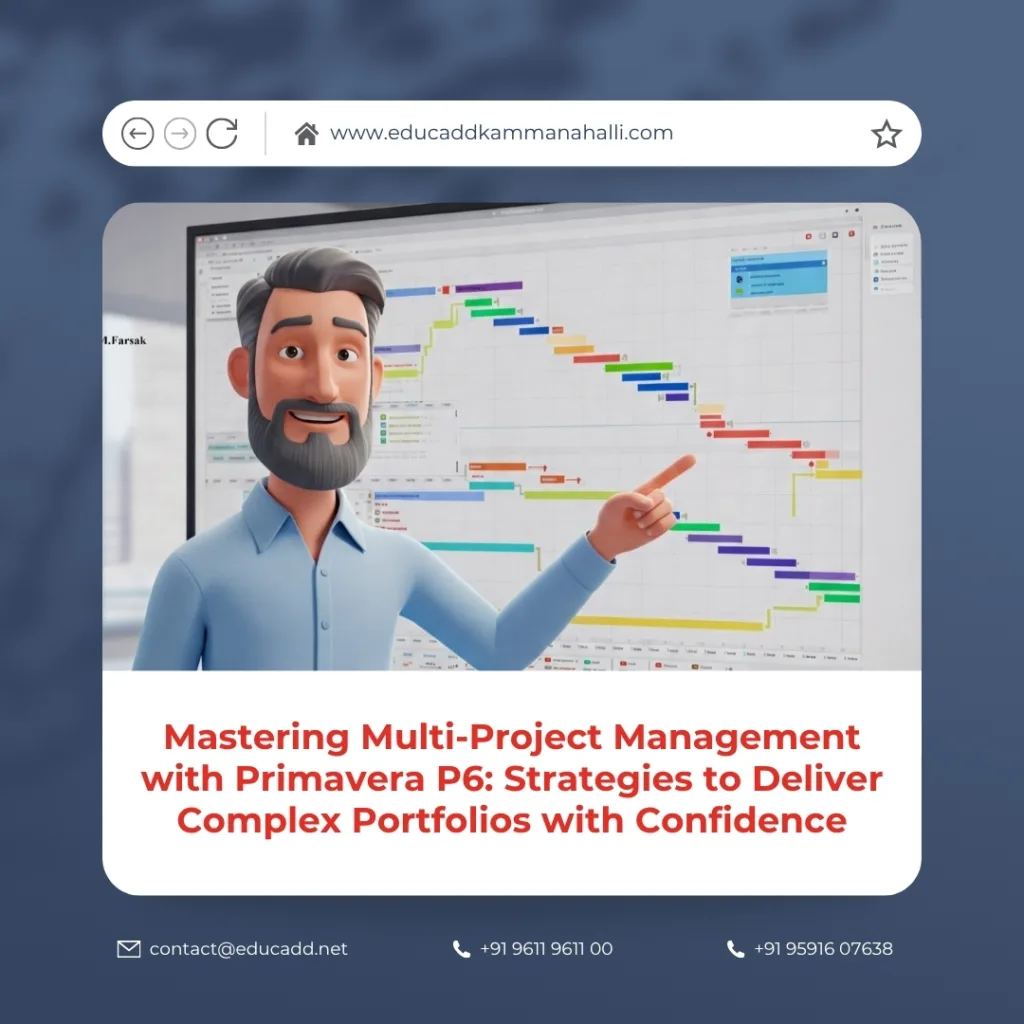
Primavera P6 Project
Understanding Multi-Project Management in Today’s Environment
Multi-project management involves handling several projects at once while ensuring alignment with organizational goals. Unlike single-project management, this approach demands strong coordination, clear communication, and precise tracking systems. In modern industries such as construction, engineering, and IT, projects are rarely isolated. Instead, they share resources, timelines, and dependencies.
Primavera P6 simplifies this complexity by providing a centralized platform where all projects can be monitored together. It allows managers to identify conflicts early and make informed decisions. As a result, teams can avoid delays and reduce inefficiencies. Moreover, organizations gain a strategic advantage by maintaining better control over their entire project portfolio.
Why Primavera P6 is Ideal for Managing Multiple Projects
Primavera P6 Project is specifically designed for enterprise-level project management. Its robust architecture supports the handling of thousands of activities across multiple projects without compromising performance. One of its biggest strengths is its ability to integrate schedules, resources, and costs into a single system.
Additionally, it offers real-time updates, which help managers respond quickly to changes. With features like global resource management and portfolio analysis, Primavera P6 ensures that every project aligns with business objectives. This level of control is essential for organizations aiming to scale operations while maintaining quality and efficiency.
Structuring Projects with Enterprise Project Structure (EPS)
The Enterprise Project Structure (EPS) is the backbone of multi-project management in Primavera P6. It organizes projects into a hierarchical framework, making it easier to manage large portfolios. Each level of the EPS can represent different departments, regions, or business units.
By using EPS effectively, organizations can categorize projects logically and assign responsibilities clearly. This structure also improves reporting and tracking, as managers can analyze performance at different levels. Consequently, decision-making becomes faster and more accurate.
Resource Management Across Multiple Projects
Resource allocation is one of the most critical aspects of multi-project management. When resources are shared across projects, conflicts can arise if not managed properly. Primavera P6 provides advanced tools to allocate, level, and optimize resources efficiently.
Managers can identify over-allocated resources and redistribute workloads to maintain balance. This ensures that no team member is overwhelmed while others remain underutilized. Furthermore, effective resource management leads to improved productivity and reduced project delays.
Prioritizing Projects for Better Outcomes
Not all projects carry the same importance. Some contribute directly to revenue, while others support long-term goals. Primavera P6 allows managers to prioritize projects based on strategic value, urgency, and resource availability.
This prioritization ensures that critical projects receive the attention they deserve. It also helps in making trade-off decisions when resources are limited. By focusing on high-impact projects, organizations can maximize returns and maintain competitive advantage.
Managing Dependencies Between Projects
In multi-project environments, projects often depend on each other. A delay in one project can impact several others. Primavera P6 enables users to define and manage these dependencies clearly.
With dependency tracking, managers can anticipate potential risks and take proactive measures. This reduces the chances of cascading delays and ensures smoother project execution. As a result, teams can maintain consistency and reliability across all projects.
Enhancing Collaboration and Communication
Effective communication is essential when multiple teams work on different projects simultaneously. Primavera P6 Project facilitates collaboration by providing a shared platform for all stakeholders. Everyone can access updated schedules, reports, and data in real time.
This transparency improves coordination and reduces misunderstandings. Teams can align their efforts more effectively, leading to better outcomes. Moreover, clear communication helps in resolving issues quickly, preventing minor problems from becoming major obstacles.
Tracking Progress and Performance Metrics
Monitoring progress across multiple projects can be overwhelming without the right tools. Primavera P6 offers comprehensive tracking features that provide insights into project performance. Managers can compare planned versus actual progress and identify deviations early.
Key performance indicators (KPIs) such as schedule variance and cost variance help in evaluating project health. These metrics enable data-driven decision-making, ensuring that projects stay on track. Continuous monitoring also helps in maintaining accountability across teams.
Risk Management in Multi-Project Environments
Risk is an inherent part of any project, but it becomes more complex when multiple projects are involved. Primavera P6 helps in identifying, analyzing, and mitigating risks effectively. Managers can assess the impact of risks on different projects and prioritize mitigation strategies accordingly.
- Early risk identification minimizes potential disruptions
- Proactive mitigation strategies improve project stability
By addressing risks early, organizations can avoid costly delays and ensure smoother execution. This proactive approach enhances overall project success rates.
Cost Control and Budget Management
Managing budgets across multiple projects requires precision and discipline. Primavera P6 integrates cost management with scheduling, allowing managers to track expenses in real time. This ensures that projects remain within budget.
With detailed cost analysis, organizations can identify areas of overspending and take corrective actions. Effective cost control not only improves financial performance but also enhances stakeholder confidence. It ensures that resources are used efficiently and responsibly.
Leveraging Reports and Dashboards for Insights
Data-driven decision-making is crucial in multi-project management. Primavera P6 provides powerful reporting and dashboard features that offer clear insights into project performance. Managers can generate customized reports to analyze various aspects of their projects.
These reports help in identifying trends, evaluating progress, and making informed decisions. Visual dashboards make complex data easy to understand, enabling quicker responses. As a result, organizations can maintain better control over their project portfolios.
Best Practices for Multi-Project Success
To maximize the benefits of Primavera P6, organizations should follow proven best practices. These practices ensure consistency, efficiency, and better outcomes across all projects.
- Maintain standardized templates for all projects
- Regularly update schedules and review progress
By implementing these practices, teams can improve coordination and reduce errors. Consistency in processes leads to better predictability and higher success rates.
Overcoming Common Challenges
Despite its advantages, multi-project management comes with challenges. These include resource conflicts, communication gaps, and shifting priorities. However, with Primavera P6, these challenges can be managed effectively.
By using its advanced features, managers can address issues proactively. Continuous training and process improvement also play a key role in overcoming obstacles. With the right approach, organizations can turn challenges into opportunities for growth.
The Future of Multi-Project Management with Primavera P6
As industries evolve, the need for efficient multi-project management will continue to grow. Primavera P6 Project is expected to play a crucial role in this transformation. Its ability to integrate with emerging technologies such as AI and data analytics makes it a future-ready solution.
Organizations that adopt Primavera P6 will be better equipped to handle complex projects and dynamic environments. By leveraging its capabilities, they can achieve greater efficiency, improved collaboration, and enhanced project outcomes.
Conclusion
Managing multiple projects is no longer an option but a necessity in today’s competitive landscape. Primavera P6 Project provides a comprehensive solution that enables organizations to handle this complexity with confidence. From resource management to risk mitigation, it offers tools that ensure every project aligns with strategic goals.
By implementing structured approaches and best practices, businesses can unlock the full potential of Primavera P6. The result is improved efficiency, better decision-making, and successful project delivery. Ultimately, mastering multi-project management with Primavera P6 empowers organizations to achieve sustained growth and long-term success.

