
Designing Memorable Spaces: Powerful Hospitality Interior Design Concepts That Elevate Guest Experience
Hospitality Interior Design Concepts play a crucial role in shaping how guests perceive and remember a space. Whether it is a luxury hotel, a boutique resort, a fine-dining restaurant, or a cozy café, the design speaks before the service begins. Today, guests expect more than just comfort; they look for immersive environments that reflect personality, culture, and innovation. As a result, interior design in the hospitality sector has evolved into a strategic tool that blends aesthetics with functionality.
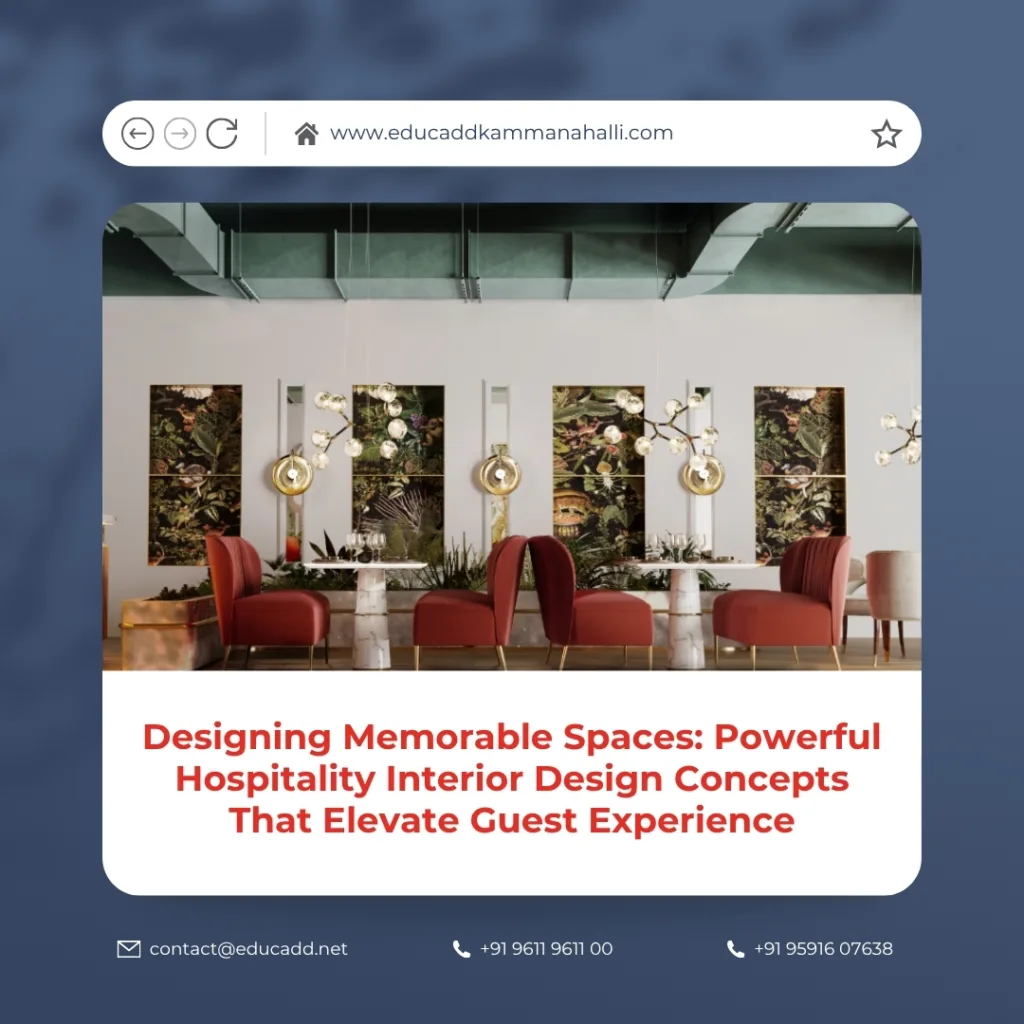
Hospitality Interior Design Concepts
Moreover, thoughtful design influences mood, enhances comfort, and builds emotional connections. It helps brands stand out in a highly competitive market. In this blog, we will explore powerful Hospitality Interior Design Concepts that not only elevate visual appeal but also improve guest satisfaction and business performance.
1. Creating a Strong First Impression Through Entrance Design
The entrance sets the tone for the entire hospitality experience. Guests often form opinions within seconds, so the design must be impactful and welcoming. A grand lobby with statement lighting, elegant furniture, and a cohesive theme immediately captures attention.
Additionally, designers focus on spatial flow and visual hierarchy to guide guests naturally. Elements like feature walls, artwork, and textured finishes can create a sense of curiosity. When executed well, the entrance becomes a memorable introduction to the brand’s identity.
2. Theme-Based Design for a Cohesive Experience
A strong theme ties every element together and creates a seamless experience. Hospitality spaces often use themes inspired by nature, culture, history, or modern minimalism. This approach ensures that every corner reflects a consistent story.
Furthermore, themed interiors help guests connect emotionally with the space. For example, a coastal resort may use light colors, natural textures, and ocean-inspired décor. As a result, the environment feels authentic and immersive rather than generic.
3. Importance of Lighting in Hospitality Interiors
Lighting is one of the most powerful tools in interior design. It shapes ambiance, highlights features, and enhances functionality. Warm lighting creates a cozy atmosphere, while bright lighting suits energetic environments like cafés or co-working lounges.
In addition, layered lighting—combining ambient, task, and accent lighting—adds depth and flexibility. Designers often use statement chandeliers, LED strips, and wall sconces to create visual interest. Proper lighting design ensures that the space looks inviting at all times of the day.
4. Space Planning for Comfort and Functionality
Effective space planning ensures that guests can move comfortably while enjoying privacy. Hospitality interiors must balance aesthetics with practicality. Poor layout can lead to overcrowding or underutilized spaces.
Designers carefully arrange furniture, pathways, and zones to enhance usability. For instance, restaurants often separate dining areas into intimate sections and larger group seating. This thoughtful planning improves guest experience and operational efficiency.
5. Use of Colors to Influence Mood
Color psychology plays a vital role in hospitality design. Different colors evoke different emotions and behaviors. Warm tones like red and orange stimulate appetite, making them ideal for restaurants. Cool tones like blue and green promote relaxation, which suits hotels and spas.
Moreover, a well-balanced color palette creates harmony and visual appeal. Designers often combine neutral backgrounds with bold accents to maintain elegance without overwhelming the space.
6. Furniture Selection for Style and Comfort
Furniture is not just about appearance; it directly impacts comfort and usability. In hospitality spaces, furniture must be durable, ergonomic, and visually appealing. Guests expect comfort without compromising style.
Key considerations include:
- Choosing materials that withstand heavy use
- Selecting designs that align with the overall theme
Additionally, modular and flexible furniture allows spaces to adapt to different needs. This versatility enhances both guest satisfaction and operational efficiency.
7. Incorporating Local Culture and Identity
Modern Hospitality Interior Design Concepts local culture. Incorporating regional art, materials, and craftsmanship adds authenticity. It also creates a unique identity that cannot be replicated elsewhere.
For example, using traditional textiles, handcrafted décor, or locally sourced materials connects guests to the destination. As a result, the experience becomes more meaningful and memorable.
8. Sustainability in Hospitality Interior Design
Sustainability is no longer optional; it is a necessity. Eco-friendly design reduces environmental impact while appealing to conscious travelers. Many hospitality brands now prioritize green practices in their interiors.
Some sustainable design strategies include:
- Using recycled and natural materials
- Installing energy-efficient lighting and fixtures
In addition, indoor plants and biophilic design elements improve air quality and create a calming environment. Sustainable interiors not only benefit the planet but also enhance brand reputation.
9. Technology Integration for Modern Experiences
Technology has transformed hospitality design. Smart rooms, automated lighting, and digital interfaces provide convenience and personalization. Guests appreciate seamless control over their environment.
Furthermore, integrating technology without disrupting aesthetics is essential. Designers often conceal devices within furniture or walls. This approach maintains a clean and sophisticated look while offering advanced functionality.
10. Designing Multi-Functional Spaces
Flexibility is key in modern hospitality interiors. Spaces are often designed to serve multiple purposes. For instance, a lobby can function as a lounge, workspace, or social hub.
This adaptability maximizes space utilization and meets diverse guest needs. Designers use movable partitions, modular furniture, and adaptable layouts to achieve this goal. As a result, the space remains dynamic and efficient.
11. Texture and Material Selection for Depth
Textures add character and richness to interiors. Combining different materials such as wood, metal, glass, and fabric creates visual depth. It also enhances the tactile experience for guests.
For example, a mix of soft upholstery, polished surfaces, and natural finishes creates contrast and balance. Thoughtful material selection ensures durability while maintaining aesthetic appeal.
12. Branding Through Interior Design
Interior design is a powerful branding tool. Every element—from color schemes to furniture—should reflect the brand’s identity. Consistent design reinforces recognition and builds trust.
Hotels and restaurants often use signature elements like logos, patterns, or unique décor styles. This consistency creates a strong visual identity that guests remember and associate with quality.
13. Acoustic Design for a Pleasant Environment
Noise control is often overlooked but essential in hospitality design. Poor acoustics can disrupt comfort and reduce satisfaction. Therefore, designers focus on sound management to create a pleasant environment.
Materials like carpets, curtains, and acoustic panels help absorb noise. Proper layout planning also minimizes sound disturbances. As a result, guests can relax and enjoy their experience without distractions.
14. Personalization and Guest-Centric Design
Today’s guests value personalized experiences. Hospitality interiors are designed to cater to diverse preferences and needs. Customizable lighting, flexible seating, and tailored décor enhance comfort.
Moreover, attention to detail makes a significant difference. Small elements like curated artwork, unique room layouts, and thoughtful amenities create a sense of exclusivity. Guest-centric design ensures that every visitor feels valued.
Conclusion
Hospitality Interior Design Concepts have evolved into a blend of art, science, and strategy. Every detail, from lighting and color to furniture and layout, contributes to the overall guest experience. When these elements work together, they create spaces that are not only visually stunning but also highly functional.
In a competitive industry, exceptional design becomes a key differentiator. It attracts guests, enhances satisfaction, and encourages repeat visits. By embracing innovative concepts, sustainability, and personalization, hospitality spaces can leave a lasting impression. Ultimately, great design transforms ordinary spaces into unforgettable experiences that guests cherish long after their visit ends.

