
Mastering Switchgear & Substation Drawings Using Electrical CADD for Precision Power Engineering
In today’s rapidly evolving power sector, accuracy and efficiency are no longer optional—they are essential. Switchgear Substation CADD Drawings form the backbone of electrical infrastructure, ensuring safe power distribution and reliable system performance. As projects grow in complexity, traditional drafting methods struggle to keep up with modern demands. This is where Electrical CADD (Computer-Aided Design and Drafting) transforms the workflow.
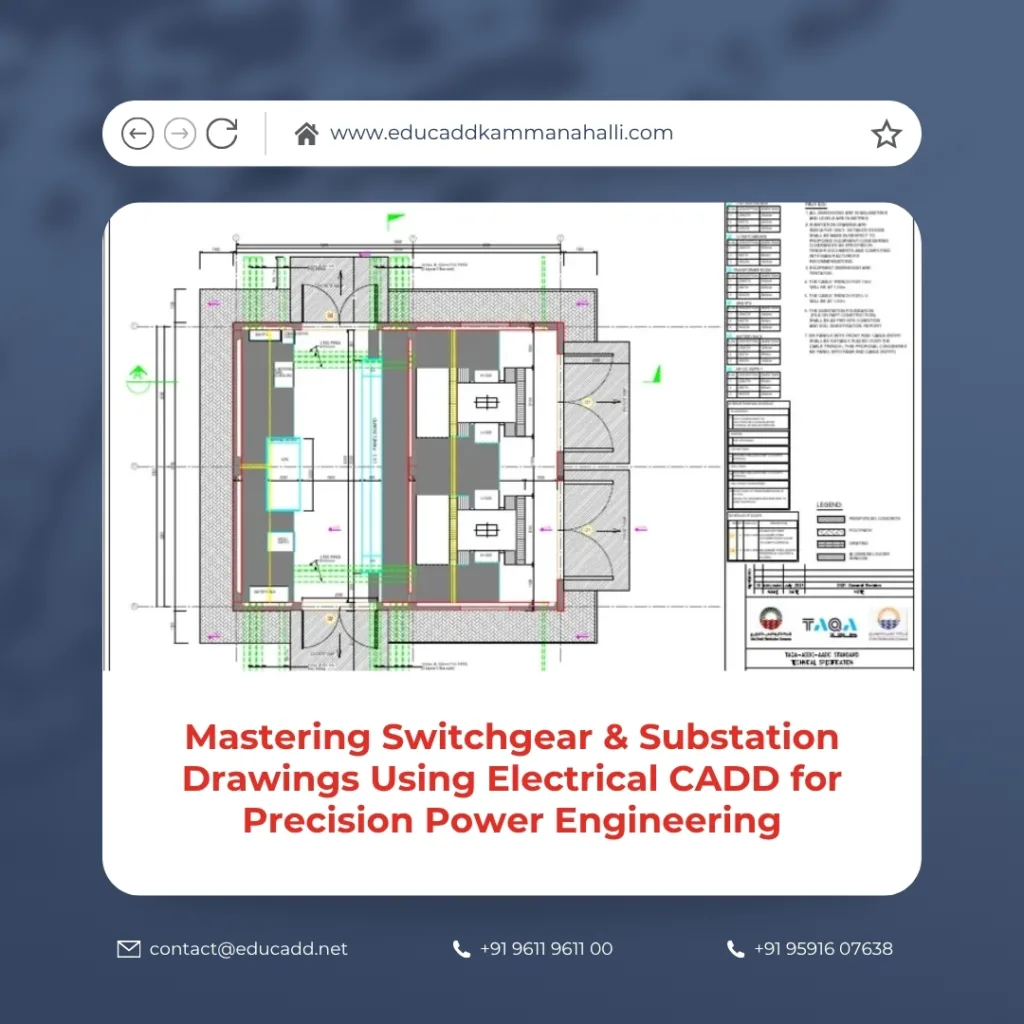
Switchgear Substation CADD Drawings
Electrical CADD enables engineers and designers to create highly accurate, scalable, and standardized drawings for switchgear and substations. It not only enhances productivity but also minimizes errors and improves collaboration among teams. With increasing reliance on automation and smart grid systems, mastering Electrical CADD has become a critical skill in the electrical engineering domain. This blog explores the complete landscape of switchgear and substation drawings using Electrical CADD, offering deep insights into techniques, benefits, workflows, and best practices.
1. Understanding Switchgear and Substation Systems
Switchgear Substation CADD Drawings are vital components of electrical power systems. Switchgear includes devices like circuit breakers, isolators, and relays that control and protect electrical circuits. Substations, on the other hand, are facilities that transform voltage levels and manage power flow between generation and distribution networks.
A clear understanding of these systems is essential before creating drawings. Each component has a specific function and must be represented accurately in design documents. Electrical CADD allows designers to map out these systems in a structured and visually clear manner. It ensures that every connection, component, and safety feature is properly documented.
2. Importance of Electrical CADD in Modern Engineering
Electrical CADD has revolutionized the way engineers design and document electrical systems. Manual drafting often leads to inconsistencies and delays, whereas CADD tools provide precision and speed.
With Electrical CADD, designers can easily modify layouts, reuse templates, and maintain consistency across projects. It also supports layering, which helps in organizing complex drawings. As a result, teams can collaborate more effectively, and project timelines are significantly reduced.
3. Key Components of Switchgear Drawings
Switchgear Substation CADD Drawings include detailed representations of electrical panels and protection systems. These drawings are critical for installation, operation, and maintenance.
Some essential elements include:
- Single Line Diagrams (SLD)
- Wiring Schematics
- Panel Layouts
- Control Circuit Diagrams
Each component must be drawn with clarity and precision. Electrical CADD tools provide standardized symbols and libraries, ensuring uniformity across designs.
4. Substation Drawing Essentials
Switchgear Substation CADD Drawings are more complex due to the scale and number of components involved. These drawings include layouts for transformers, busbars, feeders, and grounding systems.
Designers must consider spatial arrangement, safety clearances, and operational efficiency. Electrical CADD helps in visualizing these aspects in detail. It allows engineers to simulate layouts and make adjustments before implementation, reducing costly errors.
5. Types of Drawings Used in Electrical CADD
Various types of drawings are used in switchgear and substation design. Each serves a specific purpose and provides unique insights into the system.
Common drawing types include:
- General Arrangement Drawings (GA)
- Single Line Diagrams (SLD)
- Wiring Diagrams
- Cable Schedules
These drawings work together to provide a comprehensive understanding of the system. Electrical CADD ensures that all drawings are interconnected and consistent.
6. Benefits of Using Electrical CADD
Electrical CADD offers numerous advantages that enhance design quality and efficiency. It streamlines workflows and reduces manual effort.
Key benefits include:
- Improved accuracy and reduced errors
- Faster design and revision processes
Additionally, it supports better documentation and compliance with industry standards. This makes it easier to manage large-scale projects and meet client expectations.
7. Workflow for Creating Switchgear Drawings
Creating switchgear drawings involves a systematic workflow. It starts with understanding project requirements and ends with final documentation.
The process includes data collection, layout planning, component selection, and drafting. Electrical CADD tools simplify each step by providing templates and automation features. Designers can quickly generate detailed drawings and make revisions as needed.
8. Designing Substation Layouts Using CADD
Substation layout design requires careful planning and attention to detail. Engineers must consider equipment placement, accessibility, and safety regulations.
Electrical CADD allows designers to create scalable layouts with precise measurements. It also enables easy modifications, which is crucial during the design phase. With proper planning, designers can optimize space and improve system efficiency.
9. Role of Standardization in Electrical Drawings
Standardization plays a crucial role in electrical design. It ensures consistency and clarity across all drawings.
Electrical CADD tools come with predefined symbols and templates that follow international standards. This reduces confusion and improves communication among stakeholders. Standardized drawings are easier to interpret and implement, which enhances overall project quality.
10. Common Challenges and How to Overcome Them
Despite its advantages, Electrical CADD comes with certain challenges. These include software complexity, data management, and coordination issues.
However, these challenges can be addressed through proper training and workflow optimization. Regular updates and use of standardized templates also help in minimizing errors. With the right approach, designers can overcome these obstacles and achieve efficient results.
11. Integration with Other Engineering Tools
Electrical CADD does not work in isolation. It integrates with other tools such as BIM and simulation software.
This integration allows for better coordination between different engineering disciplines. It also enables real-time data sharing and analysis. As a result, projects become more efficient and well-coordinated.
12. Best Practices for High-Quality Drawings
To achieve high-quality drawings, designers must follow certain best practices. These practices ensure accuracy, clarity, and consistency.
Important practices include:
- Using proper layering and naming conventions
- Regularly reviewing and validating drawings
Additionally, designers should maintain proper documentation and version control. This helps in tracking changes and avoiding confusion during project execution.
13. Future Trends in Electrical CADD
The future of Electrical CADD is driven by innovation and automation. Emerging technologies are transforming the way electrical systems are designed.
Artificial intelligence and cloud-based platforms are becoming more common. These technologies enable faster design processes and improved collaboration. As the industry evolves, Electrical CADD will continue to play a vital role in shaping modern power systems.
14. Skill Development for Electrical CADD Professionals
To excel in Electrical CADD, professionals must continuously upgrade their skills. This includes learning new software tools and staying updated with industry standards.
Practical experience is equally important. Working on real-world projects helps in understanding design challenges and improving problem-solving skills. With the right training and dedication, professionals can build a successful career in this field.
Conclusion
Switchgear Substation CADD Drawings are critical elements of electrical engineering projects. With the growing complexity of power systems, the need for precise and efficient design tools has never been greater. Electrical CADD offers a powerful solution, enabling engineers to create accurate, standardized, and scalable drawings.
By mastering Electrical CADD, professionals can enhance their productivity and contribute to the development of reliable power infrastructure. From improving design accuracy to enabling seamless collaboration, the benefits are undeniable. As technology continues to evolve, those who embrace Electrical CADD will be better equipped to meet the challenges of modern engineering and drive innovation in the power sector.

