
How AI is Transforming Construction Design Software: A Complete Future-Ready Guide
The construction industry is undergoing a major digital transformation, and at the center of this change is artificial intelligence (AI). From concept design to project delivery, AI Construction Design Software is redefining how engineers, architects, and designers approach their work. Traditional methods that relied heavily on manual calculations and repetitive drafting are now being replaced by intelligent systems that learn, adapt, and optimize outcomes in real time. This shift is not only improving efficiency but also enhancing creativity, accuracy, and sustainability across projects.
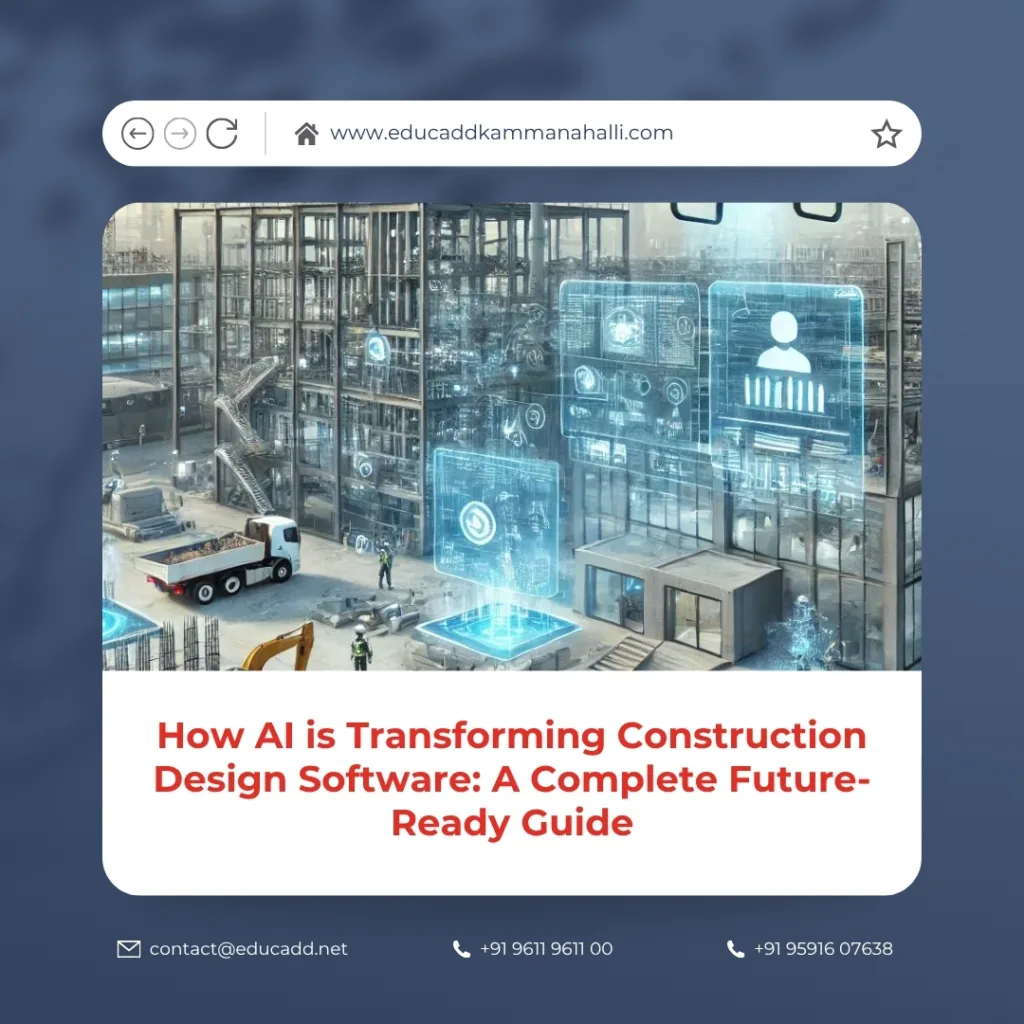
AI Construction Design Software
In today’s competitive landscape, construction firms are expected to deliver faster results without compromising quality. AI-powered tools are helping professionals meet these demands by automating routine tasks, predicting potential issues, and offering data-driven insights. As a result, the role of design software has evolved from a simple drafting tool to a powerful decision-making platform. This blog explores how AI Construction Design Software and shaping the future of the industry.
1. The Evolution of Construction Design Software
Construction design software has come a long way from basic computer-aided drafting tools. Initially, software solutions focused on digitizing manual drawings, allowing professionals to create precise 2D and 3D models. However, these systems still required significant human input and expertise. With the introduction of AI, the functionality of design software has expanded significantly.
Modern AI-driven platforms can analyze vast amounts of data, recognize patterns, and suggest optimized design solutions. This evolution has reduced the time required for design iterations and improved overall project outcomes. As a result, professionals can now focus more on innovation rather than repetitive tasks.
2. Understanding AI in Construction Design
AI in construction design refers to the use of machine learning algorithms, predictive analytics, and automation tools to enhance the design process. These technologies enable software to learn from past projects and apply that knowledge to new designs. Consequently, the design process becomes smarter and more efficient over time.
AI systems can process complex datasets, including site conditions, material properties, and environmental factors. By doing so, they provide valuable insights that help designers make informed decisions. This capability ensures that projects are not only efficient but also sustainable and cost-effective.
3. Enhancing Design Accuracy and Precision
One of the most significant advantages of AI in construction design software is improved accuracy. Human errors in calculations or design elements can lead to costly delays and rework. AI minimizes these risks by performing precise calculations and validating designs automatically.
Additionally, AI tools can detect inconsistencies and clashes in design models before construction begins. This proactive approach helps prevent errors and ensures that projects are executed smoothly. As a result, teams can achieve higher levels of precision and reliability.
4. Automation of Repetitive Tasks
AI is transforming how routine tasks are handled in construction design. Tasks such as drafting, dimensioning, and material estimation can now be automated, saving valuable time for professionals. This automation allows designers to focus on more complex and creative aspects of their work.
Moreover, AI-powered software can generate multiple design options based on predefined parameters. This capability speeds up the decision-making process and enables teams to explore innovative solutions without additional effort.
5. Generative Design and Innovation
Generative design is one of the most exciting applications of AI in construction. This technology allows software to create multiple design alternatives based on specific goals and constraints. Designers can then evaluate these options and choose the best solution.
- AI explores thousands of design possibilities within minutes
- It optimizes designs for cost, performance, and sustainability
By leveraging generative design, construction professionals can achieve highly efficient and innovative outcomes. This approach not only enhances creativity but also improves overall project performance.
6. Real-Time Collaboration and Data Integration
AI-powered design software enables seamless collaboration among project stakeholders. Teams can work on the same model in real time, ensuring that everyone is aligned throughout the project lifecycle. This level of integration reduces communication gaps and enhances productivity.
Furthermore, AI systems can integrate data from various sources, including IoT devices and project management tools. This integration provides a comprehensive view of the project, allowing teams to make informed decisions quickly.
7. Predictive Analytics for Better Decision-Making
Predictive analytics is another key benefit of AI in construction design software. By analyzing historical data, AI can predict potential risks and challenges before they occur. This foresight allows teams to take preventive measures and avoid costly delays.
AI-driven insights also help in resource planning and scheduling. As a result, projects can be completed on time and within budget. This capability is particularly valuable in large-scale construction projects where even minor delays can have significant impacts.
8. Improved Sustainability and Energy Efficiency
Sustainability has become a major focus in the construction industry, and AI is playing a crucial role in achieving it. AI-powered design tools can analyze environmental factors and suggest eco-friendly design solutions. These solutions help reduce energy consumption and minimize environmental impact.
- AI evaluates energy performance during the design phase
- It recommends materials that reduce carbon footprint
By incorporating sustainability into the design process, construction firms can meet regulatory requirements and contribute to a greener future.
9. Cost Optimization and Budget Control
Managing costs is one of the biggest challenges in construction projects. AI helps address this issue by providing accurate cost estimates and identifying potential savings opportunities. Design software equipped with AI can analyze various factors, including material costs and labor requirements.
This level of analysis ensures that budgets are managed effectively. Additionally, AI can suggest cost-efficient alternatives without compromising quality. As a result, projects become more financially viable.
10. Risk Management and Safety Improvements
AI is enhancing safety standards in construction design by identifying potential hazards early in the process. Design software can simulate different scenarios and highlight areas of concern. This proactive approach helps reduce risks and ensures safer project execution.
Moreover, AI can analyze past incidents and provide recommendations to prevent similar issues. This capability improves overall safety and reduces the likelihood of accidents on construction sites.
11. Integration with Building Information Modeling (BIM)
Building Information Modeling (BIM) has already transformed construction design, and AI is taking it to the next level. AI-enhanced BIM systems can analyze complex data and provide actionable insights. This integration improves coordination among different disciplines involved in a project.
AI also enables automated clash detection and design validation within BIM models. This functionality ensures that designs are accurate and ready for execution. As a result, project timelines are shortened, and efficiency is increased.
12. Challenges in Implementing AI in Construction Design
Despite its benefits, implementing AI in construction design software comes with challenges. High initial costs and the need for skilled professionals can be barriers for some organizations. Additionally, integrating AI with existing systems may require significant effort.
However, these challenges can be overcome with proper planning and investment. As technology continues to evolve, AI solutions are becoming more accessible and affordable. This trend is encouraging more companies to adopt AI-driven design tools.
13. Future Trends in AI-Powered Design Software
The future of AI in construction design looks promising, with continuous advancements in technology. Emerging trends such as digital twins, augmented reality, and advanced robotics are expected to further enhance design capabilities. These innovations will enable more accurate simulations and better project outcomes.
AI is also expected to become more intuitive, making it easier for professionals to use advanced tools. As a result, the adoption of AI in construction design will continue to grow, transforming the industry even further.
14. Why Businesses Must Adopt AI in Design Software
Adopting AI in construction design software is no longer optional; it is essential for staying competitive. Companies that embrace AI can achieve higher efficiency, better quality, and improved profitability. On the other hand, those that resist change risk falling behind in a rapidly evolving industry.
AI provides a strategic advantage by enabling faster decision-making and more accurate designs. This advantage is crucial in meeting the demands of modern construction projects. Therefore, businesses must invest in AI-driven solutions to ensure long-term success.
Conclusion
AI Construction Design Software is revolutionizing the way projects are planned and executed. From improving accuracy and efficiency to enhancing sustainability and safety, AI is transforming every aspect of the design process. While challenges exist, the benefits far outweigh the limitations, making AI an essential tool for the future of construction.
As technology continues to evolve, the integration of AI in design software will become even more advanced. Construction professionals who embrace this change will be better equipped to handle complex projects and deliver exceptional results. Ultimately, AI is not just a trend; it is the foundation of a smarter, more efficient construction industry.

