
Master Your Future with a Mechanical CAD Certification Course: The Ultimate Career Transformation Guide
The world of engineering and design is evolving rapidly, and professionals are expected to stay ahead with the latest tools and technologies. One of the most powerful skills that modern engineers and designers can acquire is proficiency in Mechanical CAD. A Mechanical CAD Certification Course is not just a learning program; it is a gateway to a thriving career filled with innovation, precision, and global opportunities.
Today, industries such as automotive, aerospace, manufacturing, and product design heavily depend on CAD software to create accurate models, improve efficiency, and reduce costs. As a result, the demand for skilled CAD professionals continues to grow steadily. By enrolling in a Mechanical CAD certification course, individuals can build a strong foundation, enhance their technical expertise, and unlock new career paths.
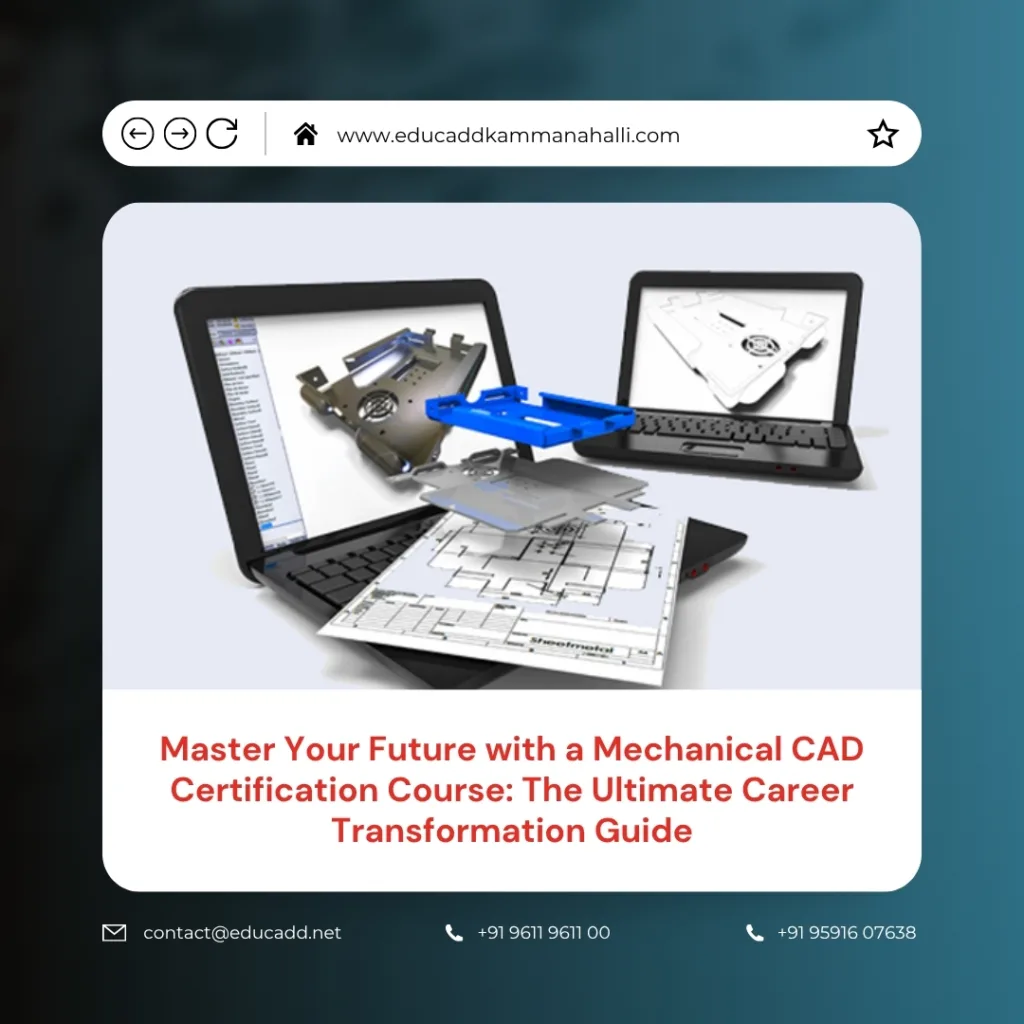
Mechanical CAD Certification Course
This comprehensive guide explores everything you need to know about Mechanical CAD certification—from its importance and benefits to career prospects and industry relevance. Whether you are a student, a working professional, or someone looking to switch careers, this blog will help you understand why this certification is a smart investment in your future.
What is a Mechanical CAD Certification Course?
A Mechanical CAD Certification Course is a specialized training program designed to teach individuals how to use computer-aided design software for mechanical engineering applications. These courses focus on creating detailed 2D drawings and 3D models that are used in manufacturing and product development.
Students learn how to design components, assemblies, and systems with high precision. The course also covers drafting standards, material properties, and real-world engineering practices. As learners progress, they gain hands-on experience through practical projects and simulations.
Moreover, certification validates your skills and demonstrates your competence to employers. It proves that you are capable of handling industry-level design tasks efficiently. With structured learning and expert guidance, this course ensures that you are job-ready by the end of the program.
Why Mechanical CAD Skills Are in High Demand
The demand for Mechanical CAD professionals has increased significantly due to rapid industrial growth. Companies are constantly looking for skilled designers who can create accurate models and improve production processes.
In modern industries, manual drafting has been replaced by digital design tools. This shift has made CAD skills essential for engineers and designers. Additionally, globalization has created opportunities for professionals to work on international projects.
Another important factor is the need for innovation. Companies aim to develop better products in less time, and CAD tools help achieve this goal. As a result, professionals with CAD expertise are highly valued in the job market.
Core Modules Covered in the Course
A Mechanical CAD Certification Course typically includes a wide range of modules that build technical expertise step by step. These modules are carefully designed to cover both fundamental and advanced concepts.
Students begin with basic drafting techniques and gradually move toward complex 3D modeling. They also learn about assembly design, simulation, and analysis. Many courses include software training in industry-standard tools.
Key modules often include:
- 2D drafting and detailing
- 3D modeling and surface design
- Assembly modeling and motion analysis
- Engineering drawing standards
These modules ensure that learners gain a comprehensive understanding of CAD tools and their applications in real-world scenarios.
Top Software Tools You Will Learn
One of the highlights of a Mechanical CAD Certification Course is the exposure to industry-standard software. These tools are widely used across various engineering sectors.
Students are trained in popular software such as AutoCAD, SolidWorks, CATIA, and Creo. Each tool has its own unique features and applications. Learning multiple tools increases your versatility and employability.
For instance, AutoCAD is widely used for 2D drafting, while SolidWorks excels in 3D modeling and simulation. CATIA is commonly used in aerospace and automotive industries. By mastering these tools, you can work on diverse projects with confidence.
Benefits of Enrolling in a Mechanical CAD Certification Course
Enrolling in a Mechanical CAD certification course offers numerous benefits that go beyond technical knowledge. It helps individuals grow both professionally and personally.
Firstly, it enhances your design skills and improves your understanding of engineering concepts. Secondly, it increases your chances of securing high-paying jobs in reputed companies. Thirdly, it boosts your confidence by allowing you to work on real-world projects.
Additionally, certified professionals often receive better career opportunities and promotions. Employers prefer candidates who have validated skills and practical experience. Therefore, this certification acts as a strong foundation for long-term career growth.
Career Opportunities After Certification
A Mechanical CAD Certification Course opens doors to a wide range of career opportunities. Graduates can work in various industries such as manufacturing, automotive, aerospace, and construction.
Some of the popular job roles include:
- Mechanical Design Engineer
- CAD Designer
- Product Development Engineer
- Drafting Engineer
These roles involve designing components, creating models, and collaborating with teams to develop innovative solutions. With experience, professionals can move into senior positions and leadership roles.
Industries That Hire CAD Professionals
Mechanical CAD professionals are in demand across multiple industries. Each sector requires skilled designers to create efficient and reliable products.
The automotive industry uses CAD tools for designing vehicle components. The aerospace sector relies on CAD for precision engineering. Manufacturing companies use CAD to optimize production processes.
Additionally, industries such as robotics, consumer electronics, and energy also require CAD expertise. This diversity ensures that professionals have a wide range of career options to choose from.
Skills You Will Gain from the Course
A Mechanical CAD Certification Course equips learners with a variety of technical and soft skills. These skills are essential for success in the engineering field.
Students develop strong problem-solving abilities and attention to detail. They also learn how to interpret technical drawings and create accurate models. Communication skills are improved through teamwork and project collaboration.
Furthermore, time management and critical thinking skills are enhanced. These abilities help professionals handle complex projects and meet deadlines effectively.
Importance of Practical Training and Projects
Practical training plays a crucial role in a Mechanical CAD Certification Course. It allows students to apply theoretical knowledge in real-world scenarios.
Through hands-on projects, learners gain experience in designing components and assemblies. They also learn how to troubleshoot issues and optimize designs. This practical exposure builds confidence and prepares them for industry challenges.
In addition, working on projects helps students create a strong portfolio. A well-designed portfolio showcases your skills and increases your chances of getting hired.
How Certification Boosts Your Career Growth
Certification acts as a powerful tool for career advancement. It validates your skills and sets you apart from other candidates in the job market.
Employers often prefer certified professionals because they require less training. This makes them more valuable to organizations. Moreover, certification demonstrates your commitment to continuous learning and professional development.
As a result, certified individuals often receive better job offers and higher salaries. They also have more opportunities to work on challenging and innovative projects.
Choosing the Right Mechanical CAD Course
Selecting the right course is essential for achieving your career goals. There are several factors to consider when choosing a Mechanical CAD Certification Course.
Firstly, check the course curriculum and ensure it covers industry-relevant topics. Secondly, look for experienced instructors who can provide practical insights. Thirdly, consider the availability of hands-on training and projects.
Additionally, certification from a recognized institution adds value to your resume. Therefore, it is important to choose a course that offers quality education and industry exposure.
Future Trends in Mechanical CAD
The future of Mechanical CAD is shaped by technological advancements such as automation, artificial intelligence, and cloud computing. These innovations are transforming the way designs are created and managed.
For example, AI-powered tools can optimize designs and reduce errors. Cloud-based platforms enable collaboration among teams located in different parts of the world. These trends are making CAD tools more efficient and accessible.
As technology continues to evolve, the demand for skilled CAD professionals will increase further. Therefore, staying updated with the latest trends is essential for long-term success.
Why Now is the Best Time to Learn Mechanical CAD
The current job market offers excellent opportunities for CAD professionals. Industries are actively seeking skilled designers to meet growing demands.
Moreover, the availability of advanced training programs has made learning CAD more accessible than ever. Individuals can choose from online and offline courses based on their preferences.
Investing in a Mechanical CAD Certification Course today can lead to a rewarding career in the future. With the right skills and dedication, you can achieve professional success and financial stability.
Conclusion
A Mechanical CAD Certification Course is more than just a qualification; it is a stepping stone toward a successful and fulfilling career in engineering and design. It equips you with the skills, knowledge, and confidence needed to excel in a competitive industry.
From mastering advanced software tools to working on real-world projects, this course provides comprehensive training that prepares you for the challenges of modern engineering. It also opens doors to diverse career opportunities across multiple industries.
As the demand for skilled CAD professionals continues to rise, there has never been a better time to invest in your future. By choosing the right course and dedicating yourself to learning, you can build a strong career and achieve your professional goals.

