
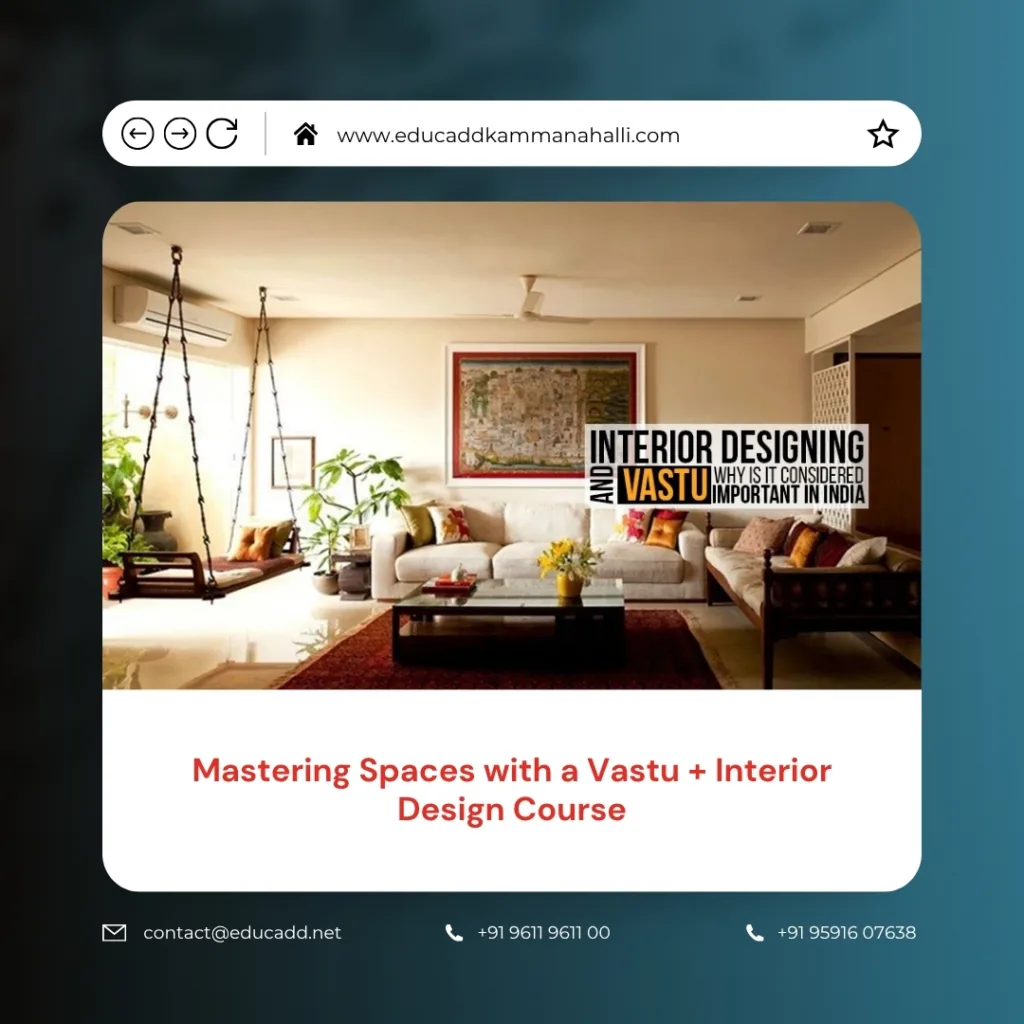
Mastering Spaces with a Vastu + Interior Design Course
Modern homes and commercial spaces demand more than attractive furniture and colorful walls. People now look for interiors that create peace, balance, productivity, and positive energy. This growing trend has increased the importance of combining traditional Vastu Interior Design Course. As a result, a Vastu + Interior Design course has become one of the most valuable career programs for creative students and working professionals.
Today, interior spaces influence emotions, mental health, work performance, and lifestyle quality. While interior design focuses on beauty, comfort, and functionality, Vastu adds harmony and spiritual balance to every corner of a building. Together, they create spaces that feel visually appealing and emotionally uplifting. Therefore, students who learn both skills gain a strong advantage in the competitive design industry.
Vastu Interior Design Course
A professional Vastu Interior Design Course teaches students how to blend creativity with scientific planning. It develops technical abilities, design thinking, practical execution, and client-handling skills. In addition, students learn software tools, material selection, lighting concepts, furniture planning, and Vastu-based layouts that improve energy flow.
The following sections explain the importance of this course, essential skills, career opportunities, industry demand, learning methods, and future growth in detail.
Why Vastu Interior Design Course Work Perfectly Together
Interior design creates visually attractive and comfortable environments, while Vastu focuses on positive energy and directional balance. When these two disciplines combine, they produce spaces that support happiness, health, productivity, and prosperity.
Modern clients do not want homes that only look beautiful. They also want interiors that provide mental peace and positive vibrations. Therefore, designers who understand Vastu principles can offer complete design solutions instead of basic decoration services.
A Vastu + Interior Design course teaches students how to integrate both concepts without compromising style or functionality. As a result, designers become capable of delivering practical and emotionally satisfying interiors.
Growing Demand for Vastu-Based Interior Designers
The design industry has experienced massive growth during recent years. Urban development, rising income levels, and changing lifestyle preferences have increased the demand for professional interior designers. Along with this trend, awareness of Vastu principles has also expanded significantly.
Today, homeowners frequently consult Vastu experts before purchasing property or renovating interiors. Likewise, commercial builders often incorporate Vastu recommendations into project planning to attract buyers and investors.
Because of this growing awareness, professionals with combined expertise enjoy excellent market opportunities. Clients prefer one expert who understands both interior aesthetics and Vastu concepts instead of hiring separate consultants.
Several factors contribute to this rising demand:
- Modern families want homes that combine luxury with positivity.
- Businesses seek productive and balanced office environments.
Additionally, social media platforms and real estate marketing have increased public interest in Vastu-friendly interiors. Many people now search online for Vastu-based bedroom ideas, office layouts, kitchen planning, and living room arrangements.
Therefore, completing a Vastu + Interior Design course can help students enter a rapidly expanding industry with strong long-term potential.
Essential Skills You Learn in a Vastu + Interior Design Course
A professional course focuses on technical knowledge, practical skills, and creative development. Students gain a complete understanding of design concepts, spatial planning, and Vastu applications.
The program generally includes training in:
- Space planning and layout development
- Furniture arrangement techniques
- Color psychology and combinations
- Lighting concepts and ambience creation
- Material selection and textures
- Vastu directions and elemental balance
- Residential and commercial design
- 2D drafting and 3D visualization
- Client presentation methods
- Project management fundamentals
Apart from technical skills, students also improve communication, creativity, observation, and problem-solving abilities. These qualities help designers understand client expectations and deliver customized solutions.
As students practice live projects and case studies, they gain confidence in handling real-world assignments. Consequently, they become industry-ready professionals capable of managing projects independently.
Importance of Space Planning in Modern Interiors
Space planning is one of the most important aspects of interior design. A beautiful room loses its effectiveness if movement becomes uncomfortable or functionality suffers. Therefore, proper planning ensures that every area serves its intended purpose efficiently.
A Vastu + Interior Design course teaches students how to organize spaces intelligently while maintaining positive energy flow. Designers learn how furniture placement, room orientation, and circulation patterns influence daily activities.
Good space planning also supports better lighting and ventilation. Natural light improves mood and energy efficiency, while proper airflow creates healthier living conditions. Therefore, designers who understand both functionality and Vastu principles can produce balanced and efficient interiors.
How Vastu Principles Influence Interior Design
Vastu Shastra is an ancient Indian architectural science that focuses on directional balance and energy alignment. It guides the placement of rooms, furniture, colors, and objects to create positivity within a space.
In modern interior design, Vastu principles help designers create emotionally comfortable and spiritually uplifting environments. While some people view Vastu as traditional belief, many clients appreciate its practical impact on mental peace and organization.
Moreover, Vastu encourages clutter-free spaces because excessive clutter can create stress and block positive energy. As a result, designers focus on organized layouts and efficient storage planning.
A professional course teaches students how to apply Vastu practically without limiting creativity. Instead of rigid implementation, modern designers learn flexible methods that suit contemporary lifestyles and architectural structures.
Career Opportunities After Completing the Course
A Vastu Interior Design Course opens doors to multiple career paths across residential, commercial, and industrial sectors. Since the construction and real estate industries continue to grow, trained professionals remain in high demand.
Graduates can work as:
- Interior Designers
- Vastu Consultants
- Residential Space Planners
- Commercial Interior Experts
- Furniture Designers
- Lighting Consultants
- 3D Visualization Specialists
- Design Coordinators
- Freelance Consultants
- Project Supervisors
Moreover, the hospitality industry, retail sector, educational institutions, healthcare facilities, and corporate offices regularly require interior design services. Consequently, professionals can choose specialized fields according to their interests and expertise.
Role of Technology in Modern Interior Design
Technology has transformed the interior design industry dramatically. Earlier, designers relied mainly on hand sketches and physical presentations. However, modern software tools now allow professionals to create highly realistic and accurate visualizations.
A Vastu + Interior Design course includes training in advanced software applications that simplify design development and project execution. Students learn to create 2D plans, 3D models, virtual walkthroughs, and photorealistic renderings.
Furthermore, virtual reality and augmented reality technologies are becoming popular in premium interior projects. These innovations help clients experience spaces interactively before construction starts.
Therefore, students who gain strong software knowledge during training achieve better career opportunities and professional growth.
Importance of Creativity in Interior Design
Creativity forms the foundation of successful interior design. Every client has different preferences, lifestyles, and expectations. Consequently, designers must create unique spaces that reflect individual personalities and functional needs.
A Vastu + Interior Design course encourages students to think creatively while respecting practical limitations. Designers learn how to combine colors, textures, lighting, furniture, and decorative elements to create visually engaging environments.
Importantly, creativity improves client satisfaction because customized interiors feel more personal and meaningful. Therefore, students must continuously develop observation skills, design awareness, and artistic confidence throughout their learning journey.
Practical Training and Live Project Exposure
Theoretical knowledge alone cannot create successful interior designers. Practical exposure is equally important because real projects involve technical challenges, client communication, budgeting, and execution management.
Practical training offers several advantages:
- Students gain confidence in handling real projects.
- Industry exposure improves professional understanding.
Site visits also help students learn construction methods, material applications, electrical planning, and finishing techniques. Consequently, they develop better coordination skills with contractors and vendors.
Mock presentations and portfolio development sessions further prepare students for interviews and freelance opportunities. Therefore, practical training becomes a major factor in building successful careers.
Benefits of Choosing a Professional Training Institute
Selecting the right institute plays a major role in career development. A reputed training center provides experienced faculty, updated curriculum, practical exposure, and placement assistance.
Placement assistance also benefits students significantly. Many institutes maintain industry connections with architects, construction firms, and interior companies. Consequently, students gain better access to internships and employment opportunities.
Additionally, professional learning environments encourage networking and collaborative growth. Students interact with peers, industry experts, and visiting professionals, which expands their understanding of the design field.
Sustainable Design and Eco-Friendly Interiors
Sustainability has become an important focus in modern interior design. Clients now prefer eco-friendly interiors that reduce environmental impact while maintaining comfort and aesthetics.
A Vastu + Interior Design course introduces students to sustainable design concepts such as energy efficiency, natural lighting, eco-friendly materials, and waste reduction strategies.
As environmental awareness continues to grow, designers with knowledge of sustainable practices will gain stronger career opportunities in future markets.
Entrepreneurial Opportunities in Interior Design
Many students choose interior design because it offers excellent entrepreneurial possibilities. After gaining experience, professionals can establish independent businesses and build strong personal brands.
A Vastu + Interior Design course develops technical and managerial skills that support entrepreneurship. Designers learn project coordination, budgeting, vendor communication, and client relationship management.
Successful entrepreneurs continuously upgrade their skills, follow market trends, and maintain strong professional networks. Therefore, dedication and consistent learning remain essential for long-term growth.
Future Scope of Vastu and Interior Design
The future of the Vastu and interior design industry appears highly promising. Urban expansion, smart homes, luxury living trends, and commercial development continue to increase demand for skilled professionals.
People increasingly understand the importance of functional and emotionally balanced spaces. Consequently, interior design is no longer considered a luxury service alone. It has become an essential requirement for modern lifestyles.
Students entering this field today can expect diverse opportunities, creative satisfaction, financial growth, and long-term professional success.
Conclusion
A Vastu Interior Design Course offers far more than technical education. It provides a pathway to creativity, professional growth, and meaningful career opportunities. By combining modern interior aesthetics with traditional Vastu principles, students gain the ability to design spaces that are functional, visually attractive, and emotionally balanced.
The increasing demand for positive and well-planned interiors has created excellent opportunities across residential, commercial, and industrial sectors. Homeowners, businesses, architects, and developers actively search for professionals who understand both design innovation and energy alignment.
Professional training equips students with technical software skills, practical exposure, industry knowledge, and confidence required for successful careers. Whether someone chooses employment, freelancing, or entrepreneurship, the possibilities remain extensive and rewarding.

