
Build a Creative Career with Interior Design Classes with Internship
The Interior Design Internship Classes is growing faster than ever. Today, modern homes, luxury apartments, commercial offices, retail stores, and hospitality spaces all require skilled designers who can create functional and attractive interiors. Because of this rising demand, many students now prefer interior design classes with internship opportunities that offer practical learning along with classroom training. These programs help students gain technical knowledge, creative confidence, and real industry exposure at the same time.
Unlike traditional courses that focus only on theory, internship-based training prepares students for actual work environments. Students learn how to handle client projects, manage design software, understand space planning, and work with modern materials. Moreover, internships help learners understand current market trends and improve their communication skills. As a result, students become job-ready immediately after course completion.
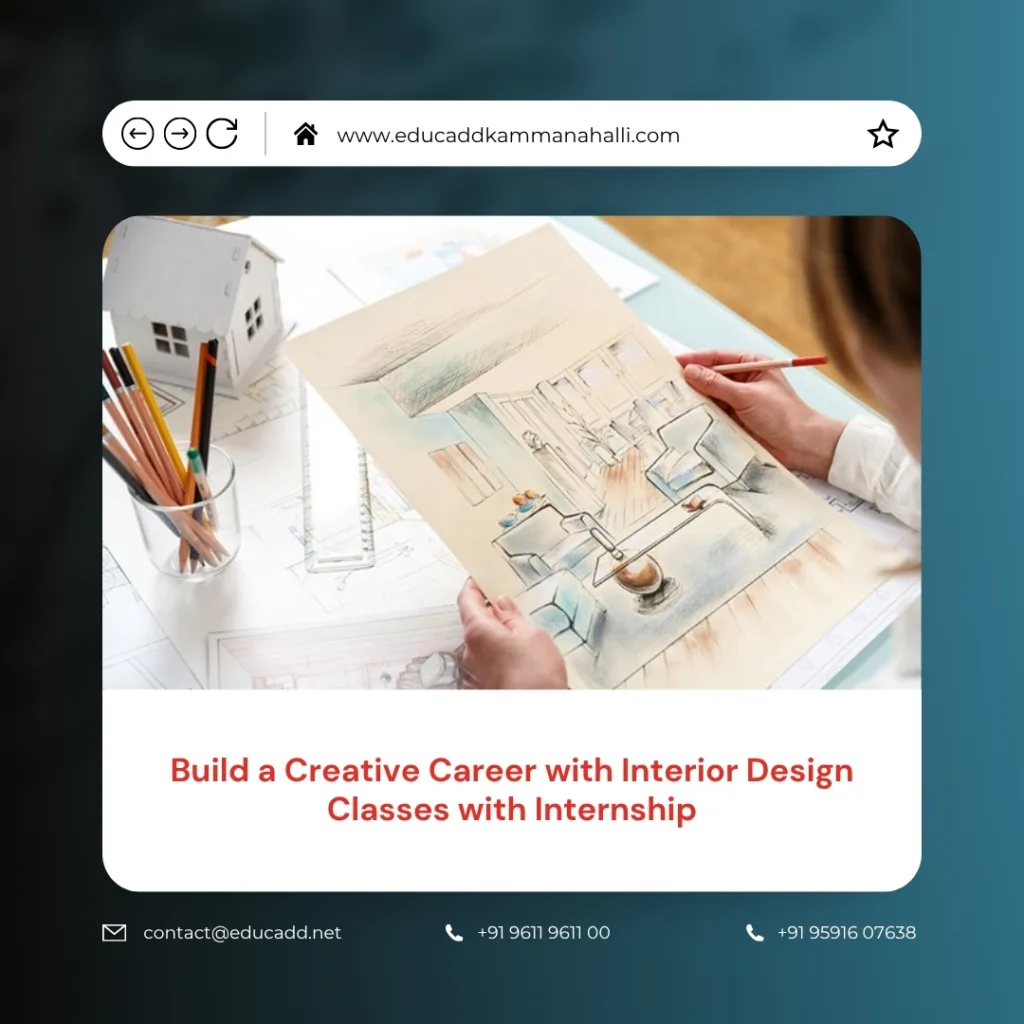
Interior Design Internship Classes
Choosing the Interior Design Internship Classes with internship can shape a successful future in the design industry. Whether you are a beginner, working professional, or creative student, these courses provide the perfect platform to develop practical skills and build a strong portfolio.
Why Interior Design is Becoming a Popular Career Choice
Interior design has transformed into one of the most exciting creative professions in recent years. Earlier, people focused mainly on construction and furniture. However, modern clients now demand stylish, functional, and comfortable interiors that reflect personality and lifestyle. Therefore, skilled interior designers are in high demand across residential and commercial sectors.
Students prefer this career because it combines creativity with technical expertise. Interior designers work on colors, lighting, textures, furniture layouts, and space planning. In addition, they collaborate with architects, contractors, and clients to create beautiful environments.
Another major reason for the popularity of interior design classes with internship is the availability of excellent career opportunities. Students can work in:
- Residential interior design firms
- Commercial design companies
- Furniture and décor industries
- Real estate and construction firms
- Freelance interior design projects
Furthermore, many designers later start their own businesses after gaining experience. This flexibility makes interior design an attractive profession for creative individuals.
Importance of Choosing Interior Design Internship Classes
Many students make the mistake of joining courses that focus only on theoretical concepts. Although theory is important, practical exposure matters even more in the design industry. That is why interior design classes with internship provide better learning experiences compared to regular classroom programs.
Internships allow students to apply their knowledge in real projects. During training, learners understand client requirements, project deadlines, budgeting, and site execution. They also learn how professional designers handle challenges during interior projects.
Practical exposure improves confidence significantly. Students who work on live assignments during internships become more comfortable using design software and presenting ideas. Consequently, they perform better during job interviews and client meetings.
Additionally, internships help students build industry connections. Many training institutes collaborate with architecture firms and design studios. Therefore, students often receive placement opportunities after completing their internship programs.
Skills Students Learn During Interior Design Training
Professional Interior Design Internship Classes focus on developing both technical and creative abilities. These programs help students understand design principles while also improving their practical execution skills.
Students learn space planning, furniture arrangement, lighting concepts, material selection, and color psychology. At the same time, they gain hands-on experience using advanced design software that professionals use daily.
Popular skills taught during interior design training include:
- 2D drafting and floor planning
- 3D modeling and visualization
- Furniture and lighting design
- Residential and commercial space planning
- Client presentation techniques
Moreover, students develop communication and teamwork abilities during internships. These soft skills play a major role in professional success.
Role of Design Software in Interior Design Courses
Technology has changed the interior design industry completely. Today, professionals use advanced software tools to create layouts, renderings, and realistic visualizations. Therefore, interior design classes with internship usually include software training as an essential part of the curriculum.
Students learn applications such as AutoCAD, SketchUp, 3ds Max, Revit, and Photoshop. These tools help designers create accurate drawings and realistic 3D presentations. Furthermore, software knowledge increases job opportunities because most companies require technical expertise.
Learning design software also improves creativity. Students can experiment with layouts, textures, lighting, and furniture arrangements before actual implementation. As a result, they can present better concepts to clients.
Practical software training during internships gives learners additional confidence. Students work on real-time projects and understand professional workflows used in the industry.
Benefits of Internship Opportunities in Interior Design Courses
Internships are one of the biggest advantages of professional design training programs. They help students bridge the gap between classroom education and practical work environments. Therefore, students who join interior design classes with internship gain valuable industry exposure.
Internship programs teach students how to handle site visits, client discussions, vendor coordination, and project management. They also provide experience in working under deadlines and solving real-time problems.
The major benefits of internships include:
- Exposure to live interior projects
- Improved communication and presentation skills
- Better understanding of client requirements
- Enhanced confidence and professionalism
- Higher placement opportunities after course completion
Additionally, internships allow students to build strong portfolios. A professional portfolio helps designers showcase their creativity and technical expertise during interviews.
Career Opportunities After Completing Interior Design Classes
The interior design industry offers diverse career opportunities for trained professionals. Students who complete interior design classes with internship can choose from multiple job roles depending on their interests and skills.
Many graduates work as residential interior designers who specialize in home interiors. Others prefer commercial projects such as office spaces, hotels, restaurants, and retail stores. Some students also work in furniture design and space planning companies.
Popular career roles include interior designer, 3D visualizer, CAD designer, project coordinator, and design consultant. Moreover, experienced professionals often become freelancers or entrepreneurs.
The demand for skilled interior designers continues to rise because urban development and real estate projects are increasing rapidly. Consequently, trained professionals can expect strong career growth and attractive salary packages.
How Practical Learning Improves Creativity
Creativity is the foundation of interior design. However, creativity develops better through practical exposure rather than theory alone. This is why interior design classes with internship provide superior learning experiences.
When students work on live projects, they learn how to convert ideas into functional designs. They understand space limitations, client preferences, material availability, and budget constraints. As a result, they become more innovative and solution-oriented.
Practical learning also helps students explore different design styles such as modern, contemporary, minimalist, industrial, and traditional interiors. Exposure to multiple projects improves adaptability and creative thinking.
Furthermore, internships encourage students to observe professional designers closely. This experience helps learners understand how experienced professionals handle complex projects creatively.
Importance of Portfolio Development in Interior Design
A strong portfolio is essential for every interior designer. Employers and clients usually evaluate portfolios before hiring designers for projects. Therefore, professional interior design classes with internship focus heavily on portfolio development.
Students create design concepts, floor plans, 3D models, mood boards, and presentation sheets during training. These projects become valuable additions to their portfolios. Additionally, internship projects add practical credibility to student work.
A well-designed portfolio demonstrates creativity, technical skills, and problem-solving abilities. It also reflects the designer’s style and professional approach.
Moreover, students with impressive portfolios often receive better placement opportunities. Companies prefer candidates who can showcase practical project experience rather than theoretical knowledge alone.
Why Industry Exposure Matters for Interior Designers
Industry exposure helps students understand how the professional design world operates. Classroom learning provides knowledge, but real-world experience develops practical understanding. Therefore, interior design classes with internship are highly valuable for aspiring designers.
During internships, students observe project execution from beginning to completion. They learn about materials, site management, vendor coordination, and client communication. This exposure helps them become industry-ready professionals.
Industry experience also improves decision-making abilities. Students learn how to manage unexpected challenges during projects. Consequently, they become more confident and efficient in professional environments.
Additionally, internships help students understand current market trends and customer expectations. Staying updated with industry trends is essential for long-term success in interior design careers.
Choosing the Right Interior Design Institute
Selecting the right training institute is one of the most important decisions for aspiring interior designers. A good institute provides quality education, practical training, software knowledge, and internship support.
Students should evaluate course curriculum, faculty experience, infrastructure, and placement assistance before enrolling. Institutes offering interior design classes with internship usually provide better career preparation.
Important factors to consider while choosing an institute include:
- Experienced trainers and industry professionals
- Modern computer labs and software access
- Live project exposure and internships
- Placement assistance and portfolio guidance
- Positive student reviews and reputation
Moreover, students should choose institutes that focus on practical learning rather than only theoretical teaching.
How Interior Design Courses Build Professional Confidence
Confidence plays a major role in every successful design career. Interior designers regularly communicate with clients, contractors, vendors, and architects. Therefore, students must develop strong professional confidence during training.
Interior design classes with internship help students improve communication and presentation skills. Learners present design ideas, explain concepts, and participate in project discussions during internships.
Practical exposure also reduces fear and hesitation. Students become familiar with real project environments and professional workflows. Consequently, they feel more prepared for future careers.
Additionally, group projects and classroom activities encourage teamwork and leadership abilities. These qualities help students perform effectively in professional settings.
Future Scope of Interior Design Careers
The future of interior design looks extremely promising. Urbanization, modern lifestyles, and increasing interest in luxury interiors continue to drive industry growth. Therefore, trained professionals from interior design classes with internship can expect excellent career opportunities.
The demand for sustainable and smart interior solutions is also increasing. Designers who understand eco-friendly materials and modern technologies will have greater advantages in the future.
Many interior designers now work on international projects through online platforms and remote collaborations. This global exposure creates additional career possibilities for skilled professionals.
Furthermore, social media platforms have expanded opportunities for designers to showcase their creativity and attract clients worldwide. As a result, interior design has become both a stable and rewarding profession.
Why Students Prefer Internship-Based Interior Design Programs
Students today prefer skill-oriented education that provides direct career benefits. Traditional classroom learning often lacks practical exposure. However, interior design classes with internship help students gain real-world experience alongside academic training.
Internship-based programs improve employability because students already understand professional work environments before entering the job market. Companies also prefer candidates with practical project exposure.
Another reason students prefer these programs is faster career growth. Internship experience strengthens resumes and portfolios significantly. Therefore, students receive better opportunities after course completion.
Additionally, internship-based learning creates a smooth transition from education to employment. Students become familiar with workplace expectations and industry standards during training itself.
Conclusion
Interior design is a creative and rewarding profession that offers excellent career opportunities for passionate individuals. However, success in this industry requires more than theoretical knowledge. Practical skills, software expertise, communication abilities, and industry exposure all play vital roles in professional growth. That is why choosing Interior Design Internship Classes can make a major difference in a student’s career journey.
These programs help students gain hands-on experience through live projects, internships, and software training. They also improve creativity, confidence, and portfolio quality. Moreover, internships provide valuable industry exposure that prepares learners for real-world challenges.
As the demand for modern interior spaces continues to grow, skilled interior designers will remain highly valuable across residential and commercial sectors. Therefore, students who invest in quality interior design education today can build a successful and exciting future in the design industry.

