
Virtual Testing vs Physical Prototyping: The Smartest Way to Build Better Products Faster
The modern product development industry has changed rapidly in recent years. Companies no longer depend only on traditional trial-and-error methods to create successful products. Instead, businesses now combine advanced digital technologies with practical engineering techniques to improve speed, reduce cost, and enhance product quality. In this transformation, the debate between Virtual Testing vs Prototyping has become more important than ever.
Manufacturers, construction firms, automotive companies, aerospace industries, and product designers continuously search for ways to improve efficiency without sacrificing performance. Virtual testing offers a digital environment where engineers can simulate product behavior before manufacturing begins. On the other hand, physical prototyping allows teams to test actual models in real-world conditions. Both methods provide valuable insights, yet each comes with different advantages and limitations.
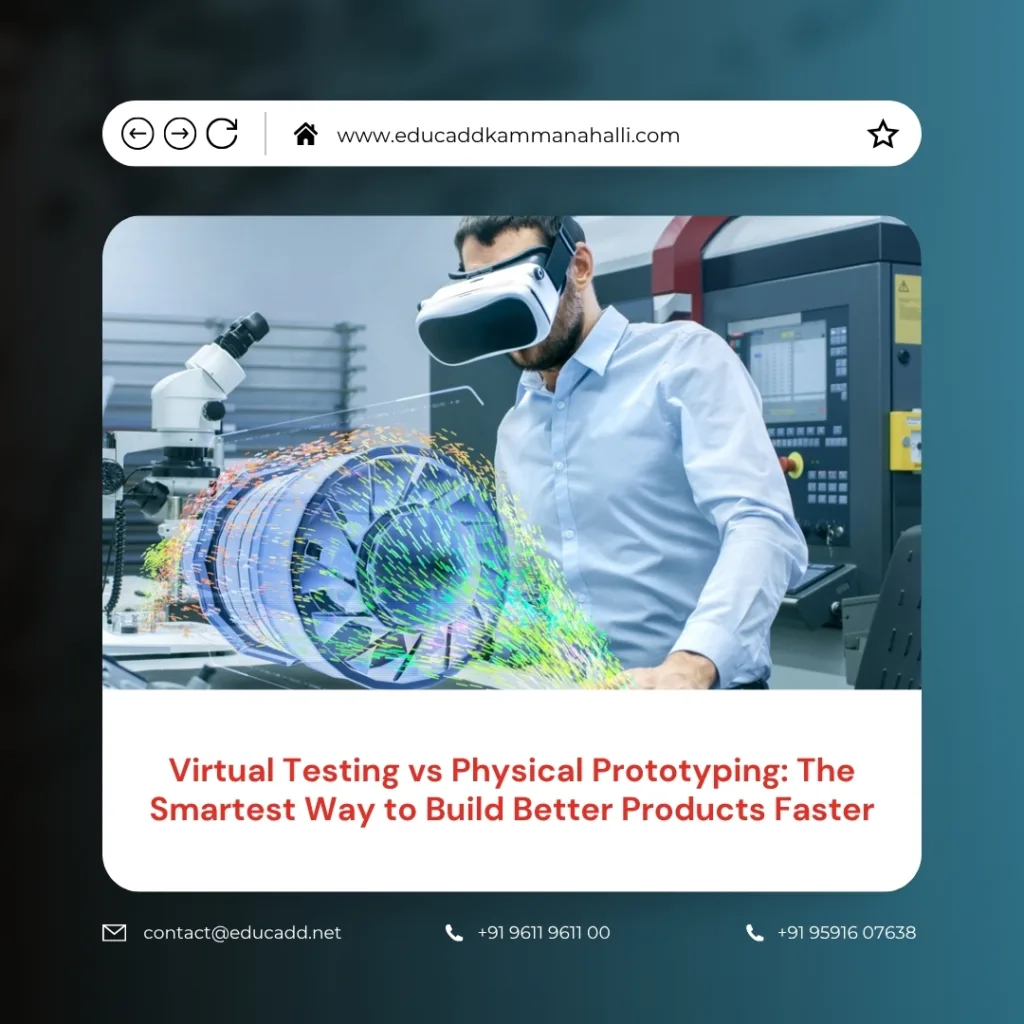
Virtual Testing vs Prototyping
Today, industries focus heavily on reducing development cycles while maintaining innovation. As competition increases, businesses must decide whether to invest more in digital simulation tools or continue relying on physical models. Understanding the strengths and weaknesses of both approaches helps organizations make smarter decisions throughout the product development process.
Understanding Virtual Testing in Modern Engineering
Virtual testing refers to the process of evaluating a product digitally using simulation software and computer-generated models. Engineers create digital twins or 3D models to study how a product behaves under different conditions such as heat, pressure, vibration, stress, or airflow. This method has become extremely popular because it saves time and reduces material waste.
Industries such as automotive manufacturing and aerospace engineering use virtual testing extensively. For example, car manufacturers test crash performance digitally before building actual vehicles. Similarly, aircraft designers simulate airflow and fuel efficiency long before physical production starts.
Moreover, advanced simulation software now provides highly accurate results. Artificial intelligence and machine learning also improve predictive analysis, making digital testing more reliable than ever before.
The Importance of Physical Prototyping in Product Development
Physical prototyping remains a critical part of engineering despite rapid digital advancements. A physical prototype is a real, tangible model created to evaluate product functionality, appearance, durability, and user interaction. Engineers often build prototypes using materials similar to the final product.
Physical models allow teams to observe real-world performance directly. Unlike simulations, they provide hands-on experience and reveal issues that software may not identify accurately. For instance, ergonomics, material texture, weight distribution, and user comfort become easier to analyze through actual prototypes.
Physical prototypes also help testing teams understand environmental influences better. Temperature variations, moisture exposure, wear and tear, and unexpected mechanical behavior often become visible only during practical testing.
How Virtual Testing Reduces Development Costs
One of the biggest advantages of virtual testing is cost reduction. Traditional physical prototyping requires materials, manufacturing equipment, labor, transportation, and repeated modifications. These expenses increase significantly during complex product development projects.
Virtual testing eliminates many of these costs because engineers can perform simulations digitally. A single software platform allows multiple tests without consuming raw materials or creating additional prototype versions.
Companies save money in several important ways:
- Reduced material wastage during product development
- Lower manufacturing and redesign expenses
Small businesses and startups particularly benefit from simulation technology because it reduces financial risk. Instead of investing heavily in multiple prototypes, they can validate ideas digitally before committing to production.
Why Physical Prototyping Still Builds Greater Confidence
Although virtual testing offers impressive advantages, physical prototyping continues to provide unmatched reliability in many scenarios. Real-world testing helps engineers verify whether simulation results match actual product performance.
Customers, investors, and engineering teams often trust physical demonstrations more than digital reports. A physical prototype allows direct inspection, functional testing, and operational evaluation under real conditions.
Certain product characteristics become difficult to simulate completely. These include:
- Human interaction and usability testing
- Real material behavior under unpredictable conditions
For example, medical equipment manufacturers frequently depend on physical prototypes to ensure patient safety. Similarly, consumer electronics companies create working models to evaluate user experience and product handling.
Speed and Efficiency in Virtual Testing
Speed plays a crucial role in modern product development. Businesses constantly seek methods that shorten production timelines without affecting quality. Virtual testing provides a major advantage in this area because simulations run much faster than physical prototype development.
Engineers can modify digital models within minutes and immediately analyze updated results. This rapid iteration process supports continuous improvement and innovation. Teams can test hundreds of design variations without waiting for manufacturing processes.
Cloud computing has further accelerated virtual testing capabilities. Engineers from different locations can collaborate on the same digital model simultaneously. This global collaboration improves productivity and reduces communication delays.
In highly competitive industries, reduced development time often creates a significant market advantage. Companies that deliver products earlier usually gain stronger customer attention and better business opportunities.
Accuracy Challenges in Digital Simulations
Despite major technological advancements, virtual testing still faces certain limitations. Simulation accuracy depends heavily on software quality, input data, and engineering assumptions. If incorrect parameters enter the system, simulation results may become misleading.
Complex real-world conditions remain difficult to reproduce digitally. Factors such as unexpected environmental influences, human behavior, and material imperfections can affect final product performance differently than predicted.
Engineers must understand that simulations are only as reliable as the data behind them. Therefore, experienced professionals carefully validate digital models using practical testing methods.
However, continuous advancements in artificial intelligence and computational power are improving simulation precision significantly. Over time, virtual testing continues becoming more dependable and realistic.
The Role of Physical Prototyping in Innovation
Physical prototyping encourages creativity and innovation in unique ways. Designers and engineers often discover new ideas while interacting with actual models. Hands-on experimentation stimulates problem-solving and helps teams visualize improvements more effectively.
Rapid prototyping technologies such as 3D printing have transformed this process dramatically. Engineers now create prototypes quickly and affordably compared to traditional manufacturing methods.
Physical prototypes also support customer feedback during product development. Users can interact with sample products and provide practical suggestions before final production begins. This feedback improves product usability and customer satisfaction.
Furthermore, prototype demonstrations strengthen communication between engineering teams, management, and clients. Tangible products often explain design concepts more clearly than digital renderings alone.
Virtual Testing in the Automotive Industry
The automotive industry represents one of the strongest examples of successful virtual testing implementation. Car manufacturers use advanced simulations to analyze crash safety, aerodynamics, fuel efficiency, engine performance, and structural durability.
Before producing physical vehicles, engineers test digital models under countless conditions. This process reduces development costs while improving vehicle safety and performance standards.
However, automotive companies still build physical prototypes for road testing and customer evaluation. Real driving conditions provide essential insights that complement digital analysis effectively.
Physical Prototyping in Aerospace Engineering
Aerospace engineering demands extremely high safety and reliability standards. Although virtual testing plays a major role in aircraft design, physical prototyping remains equally important.
Aircraft manufacturers conduct extensive wind tunnel testing using physical scale models to verify aerodynamic behavior. These tests validate simulation results and identify unexpected airflow characteristics.
Engine components, landing gear systems, and structural assemblies also undergo rigorous physical testing before approval. Engineers evaluate fatigue resistance, vibration tolerance, and environmental durability under real operating conditions.
Space exploration programs also use physical prototypes for mission-critical systems. Satellites, rockets, and spacecraft components must survive extreme conditions that simulations alone cannot fully predict.
Combining Virtual Testing vs Prototyping
Modern industries increasingly adopt a hybrid approach that combines virtual testing with physical prototyping. Instead of choosing one method exclusively, organizations integrate both techniques strategically throughout product development.
Virtual testing usually begins during early design stages. Engineers analyze concepts digitally, optimize structures, and eliminate obvious flaws quickly. Once simulations produce satisfactory results, physical prototypes validate real-world performance.
This combined approach delivers several important benefits:
- Faster product development with reduced costs
- Higher confidence in final product quality
The hybrid model also improves communication between design teams and manufacturing departments. Digital simulations provide detailed technical analysis, while physical prototypes demonstrate practical feasibility.
Impact on Sustainability and Environmental Responsibility
Sustainability has become a major concern across industries worldwide. Companies now focus on reducing waste, conserving resources, and minimizing environmental impact during product development.
Virtual testing supports sustainability by reducing material consumption significantly. Digital simulations eliminate the need for multiple prototype versions, which decreases manufacturing waste and energy usage.
Organizations that combine sustainable prototyping practices with advanced simulation tools create more environmentally responsible development processes. As green engineering becomes increasingly important, both methods will continue evolving toward greater sustainability.
Challenges Businesses Face While Choosing the Right Approach
Selecting between Virtual Testing vs Prototyping depends on several business factors. Budget limitations, project complexity, industry regulations, and product requirements all influence decision-making.
Large corporations often invest heavily in advanced simulation software because they handle complex engineering projects regularly. Smaller companies, however, may rely more on physical prototypes due to lower software investment requirements.
Industry regulations also affect testing strategies. Medical, aerospace, and automotive industries require extensive physical validation to meet strict safety standards.
Therefore, businesses must evaluate project goals carefully before selecting the most suitable development strategy.
The Future of Product Development Technologies
The future of engineering will likely involve even deeper integration between virtual testing and physical prototyping. Emerging technologies such as artificial intelligence, augmented reality, digital twins, and advanced robotics continue transforming product development processes.
Artificial intelligence now improves predictive simulations by analyzing massive datasets and identifying design patterns automatically. This advancement increases testing accuracy and reduces human error.
As technology advances further, the gap between virtual and physical testing may become smaller. Nevertheless, practical real-world validation will always remain important for ensuring product reliability and customer satisfaction.
Conclusion
The debate between Virtual Testing vs Prototyping does not have a single universal answer. Both methods offer unique advantages that support successful product development in different ways. Virtual testing provides speed, cost savings, flexibility, and efficient design optimization. Physical prototyping delivers real-world validation, user interaction insights, and practical reliability assessment.
Modern industries increasingly recognize that combining both approaches creates the strongest development strategy. Virtual simulations help engineers identify problems early, while physical prototypes confirm actual performance under realistic conditions.
Ultimately, the future of product development depends not on choosing between virtual testing and physical prototyping, but on integrating both intelligently to create smarter, safer, and more innovative products.

