
Educational Institution Interior Design Planning: Creating Inspiring Spaces for Modern Learning
Educational Interior Design Planning has become an essential part of modern campus development. Institutions now aim to create flexible, technology-friendly, and student-centered spaces that improve engagement and comfort. From reception areas to laboratories, every section of an educational institution requires strategic planning to support both functionality and aesthetics.
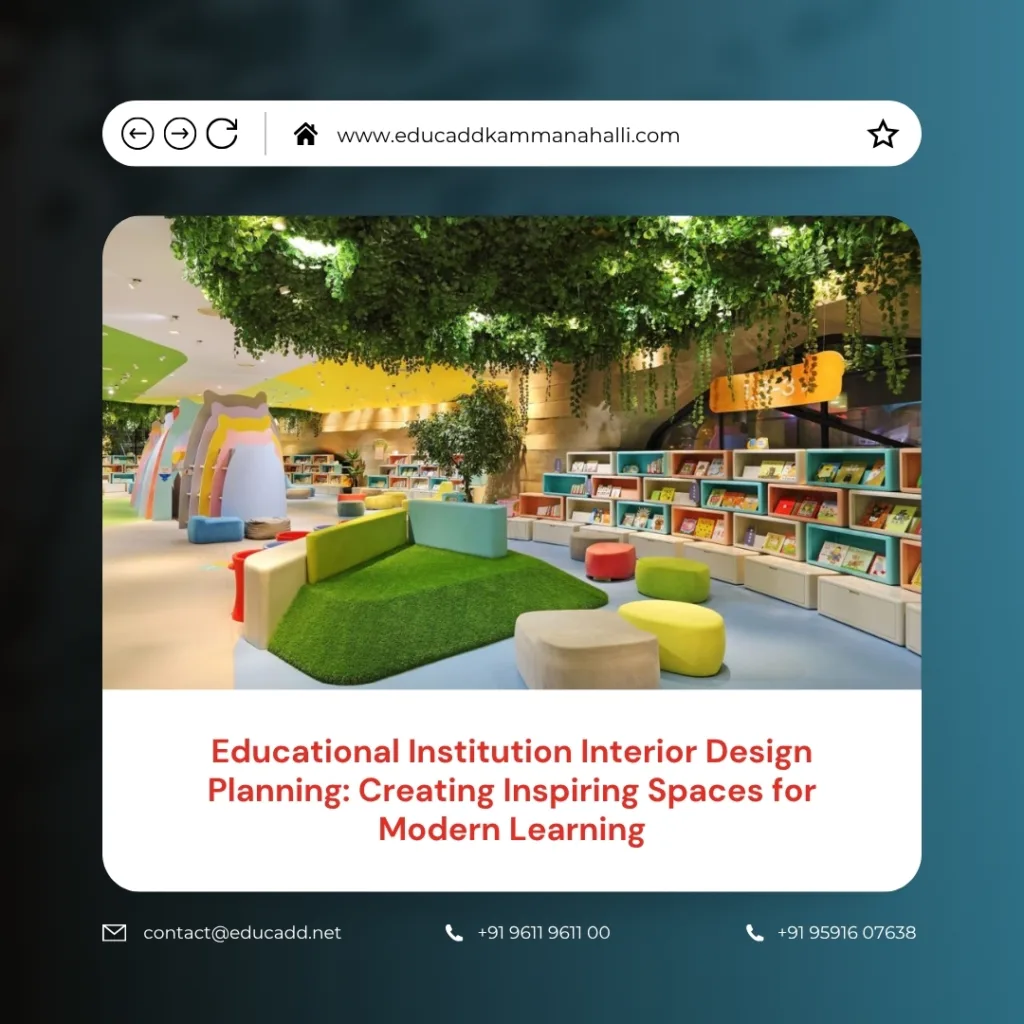
Educational Interior Design Planning
Modern educational interiors must balance design, safety, comfort, sustainability, and technological integration. At the same time, institutions need spaces that reflect their values and strengthen their brand identity. Whether it is a preschool, engineering college, design institute, or corporate training center, proper planning can transform ordinary spaces into inspiring educational environments.
This blog explores how Educational Interior Design Planning shapes modern learning spaces and why it plays a major role in academic success.
Importance of Educational Interior Design in Modern Institutions
Educational institutions are no longer limited to traditional classrooms with rows of desks. Today’s students expect interactive and engaging learning environments. Therefore, interior planning has become an important investment for educational organizations.
A thoughtfully designed institution improves concentration, communication, and student participation. Bright and organized interiors create a positive atmosphere that reduces stress and increases motivation. Furthermore, attractive interiors leave a strong impression on parents, visitors, and prospective students.
Educational institutions also compete to attract students in today’s market. Because of this, interior design helps institutions stand out by showcasing professionalism and innovation. Modern campuses with advanced interiors often improve admissions and student retention rates.
Additionally, faculty members work more efficiently in comfortable and organized environments. Teachers require spaces that support collaboration, preparation, and relaxation. As a result, proper interior planning benefits both students and staff members equally.
Space Planning for Better Learning Experiences
Space planning is the foundation of educational institution interior design. Without proper layout planning, even attractive interiors may fail to support effective learning.
Educational spaces should allow smooth movement while maintaining functionality. Classrooms must provide enough room for students, instructors, and equipment. At the same time, common areas should encourage collaboration and social interaction.
Interior designers carefully analyze student flow before planning layouts. Libraries, laboratories, cafeterias, and seminar halls must remain easily accessible. Efficient layouts minimize distractions and improve overall campus organization.
Some essential factors in educational space planning include:
- Proper circulation and movement within the campus
- Flexible furniture arrangements for different learning styles
Well-planned spaces improve functionality while creating a welcoming learning environment.
Classroom Interior Design and Student Engagement
Classrooms remain the heart of every educational institution. Therefore, classroom interior design directly affects learning quality and student engagement.
Modern classrooms focus on interaction instead of passive learning. Educational institutions now use flexible seating arrangements that support teamwork and communication. Circular seating, modular desks, and movable furniture allow instructors to adapt classrooms for various teaching methods.
Lighting also plays a critical role in classroom design. Natural light improves concentration and reduces eye strain. Therefore, institutions prefer large windows and open layouts whenever possible. In addition, artificial lighting should maintain brightness without causing discomfort.
Technology integration has also transformed classroom interiors. Smart boards, projectors, charging stations, and digital learning systems now form a standard part of educational spaces.
Designing Functional Libraries and Study Areas
Libraries have evolved from silent reading rooms into collaborative learning hubs. Educational institution interior design planning now focuses on creating libraries that support both individual and group learning.
Modern libraries include comfortable seating, digital workstations, discussion rooms, and quiet study corners. Institutions aim to create environments where students feel motivated to spend more time learning.
Furniture selection greatly affects user comfort. Ergonomic chairs and spacious desks improve productivity during long study sessions. Furthermore, flexible seating options allow students to choose spaces based on their preferences.
Proper zoning also improves library organization. Quiet study zones, collaborative sections, and multimedia areas should remain clearly separated to reduce distractions.
Importance of Reception and Administrative Areas
Reception areas create the first impression of an educational institution. Therefore, these spaces should reflect professionalism, trust, and institutional identity.
A well-designed reception area welcomes students, parents, and visitors while improving navigation throughout the campus. Comfortable seating, proper lighting, and organized layouts help create positive experiences.
Administrative offices also require functional interior planning. Staff members need organized workspaces that support communication and efficiency. Therefore, institutions often use open office concepts combined with private meeting areas.
Waiting areas should remain comfortable and visually appealing. Educational institutions often include:
- Informative digital displays and notice boards
- Comfortable seating with organized visitor management systems
These features improve user experience while maintaining operational efficiency.
Laboratory and Practical Training Space Design
Laboratories and practical training centers require highly specialized interior planning. Safety, accessibility, and functionality become the primary focus in these environments.
Engineering labs, medical labs, computer labs, and design studios each require customized layouts based on their activities. Designers must ensure smooth movement while providing enough workspace for equipment and students.
Technology integration enhances practical learning environments. Smart displays, simulation systems, and interactive equipment improve student engagement during practical sessions.
Modern practical training spaces also focus on flexibility. Institutions often redesign laboratories to support evolving technologies and future expansion requirements.
Role of Furniture in Educational Institution Interior Design
Furniture significantly affects comfort, posture, and productivity within educational institutions. Therefore, selecting the right furniture is a critical part of interior planning.
Educational furniture should remain durable, ergonomic, and adaptable. Students spend several hours daily in classrooms, libraries, and laboratories. Comfortable furniture supports better concentration and physical well-being.
Flexible furniture arrangements support different teaching styles. Modular desks and movable seating allow quick transitions between lectures, discussions, and group activities.
Furniture aesthetics also influence the learning atmosphere. Modern educational institutions prefer sleek and minimal designs that create organized environments.
Sustainability has become an important factor in furniture selection. Many institutions now choose eco-friendly materials and long-lasting furniture solutions to reduce environmental impact.
In addition, furniture should support accessibility for all students, including individuals with disabilities. Inclusive design ensures equal learning opportunities for everyone.
Technology Integration in Educational Interiors
Technology has become a core element of educational institution interior design planning. Institutions now require interiors that support digital learning, virtual collaboration, and smart classroom systems.
Smart classrooms improve interaction through projectors, digital boards, and wireless presentation systems. These technologies encourage active participation and modern teaching methods.
Educational Interior Design Planning also integrate charging stations and internet-enabled workspaces throughout campuses. Students increasingly depend on laptops, tablets, and mobile devices for learning activities.
Future-ready educational institutions continue investing in adaptable infrastructure that supports evolving technologies and hybrid learning models.
Sustainable Interior Design for Educational Campuses
Sustainability has become a major priority in modern educational institutions. Eco-friendly interior planning reduces environmental impact while creating healthier learning spaces.
Educational institutions now use sustainable materials such as recycled wood, low-VOC paints, and energy-efficient lighting systems. These materials improve indoor air quality and reduce maintenance costs.
Water-saving fixtures and smart energy systems further enhance sustainability efforts. Educational institutions increasingly adopt environmentally responsible practices to align with global sustainability goals.
Moreover, sustainable campuses strengthen institutional reputation and attract environmentally conscious students and parents.
Importance of Safety and Accessibility in Educational Interiors
Safety and accessibility remain fundamental aspects of educational institution interior design planning. Institutions must create environments that protect students, staff, and visitors at all times.
Emergency exits, fire alarms, and surveillance systems should remain strategically integrated into interior layouts. Educational institutions must comply with safety regulations while maintaining user-friendly environments.
Accessibility features ensure equal opportunities for all students. Ramps, elevators, accessible restrooms, and ergonomic furniture support inclusive education.
Educational institutions that prioritize safety and accessibility create more supportive and inclusive learning environments.
Creating Collaborative and Social Learning Spaces
Modern education encourages teamwork, creativity, and communication. Therefore, collaborative spaces have become essential in educational interiors.
Student lounges, discussion zones, and innovation hubs promote interaction beyond classrooms. These spaces encourage brainstorming, networking, and peer learning.
Comfortable seating arrangements and informal layouts create relaxed environments where students feel comfortable sharing ideas. Institutions often include café-style seating and breakout spaces for collaborative activities.
As educational approaches evolve, collaborative interiors continue shaping the future of learning environments.
Role of Branding in Educational Interior Design
Educational interiors should reflect the institution’s identity, mission, and values. Branding within interior design strengthens recognition and creates memorable experiences.
Institutions use logos, colors, graphics, and thematic elements throughout campuses to establish strong visual identity. Consistent branding enhances professionalism and trust. Wall graphics featuring achievements, motivational messages, and student success stories inspire learners while strengthening institutional culture.
Consequently, branding has become an integral part of educational institution interior design planning.
Future Trends in Educational Institution Interior Design
Educational interior design continues evolving with changing learning methods and technological advancements. Institutions now focus on creating adaptive and future-ready campuses.
Hybrid learning spaces are becoming increasingly popular. Educational institutions design classrooms that support both physical and virtual learning experiences simultaneously.
Biophilic design trends will also continue growing. Educational institutions increasingly recognize the psychological benefits of nature-inspired interiors.
Future educational interiors will prioritize personalization, sustainability, and technology integration to create engaging learning environments.
Conclusion
Educational Interior Design Planning plays a critical role in shaping modern learning experiences. Thoughtfully designed educational spaces improve student engagement, productivity, safety, and overall well-being. From classrooms and libraries to laboratories and collaborative zones, every area contributes to the success of an institution.
Modern educational institutions require interiors that balance functionality, aesthetics, sustainability, and technological integration. Institutions that invest in professional interior planning create inspiring environments that support academic excellence and institutional growth.
As education continues evolving, interior design will remain a powerful tool for transforming learning environments. Educational spaces must adapt to changing technologies, teaching methods, and student expectations. Therefore, institutions that prioritize innovative and student-centered interior planning will continue leading the future of education.

