
From Site to Screen: How Civil CADD Powers Modern Infrastructure Success
The construction and infrastructure industry has evolved dramatically over the past few decades. Traditional drafting methods that relied on manual drawings and lengthy revisions have largely disappeared. Today, digital design tools play a central role in planning, designing, and executing projects of every scale. Among these technologies, Civil CADD Infrastructure Success out as one of the most valuable solutions for engineers, architects, surveyors, and project managers.
Civil CADD Infrastructure Success the gap between physical construction sites and digital project environments. It transforms field measurements, design concepts, and engineering calculations into precise digital models that guide project development from start to finish. Whether professionals are designing roads, bridges, drainage systems, residential layouts, or commercial developments, Civil CADD provides the accuracy and efficiency required to meet modern construction demands. As infrastructure projects become more complex, the ability to visualize, analyze, and modify designs in real time has become essential. This is why Civil CADD continues to shape the future of engineering and construction by helping teams deliver projects faster, smarter, and more accurately.
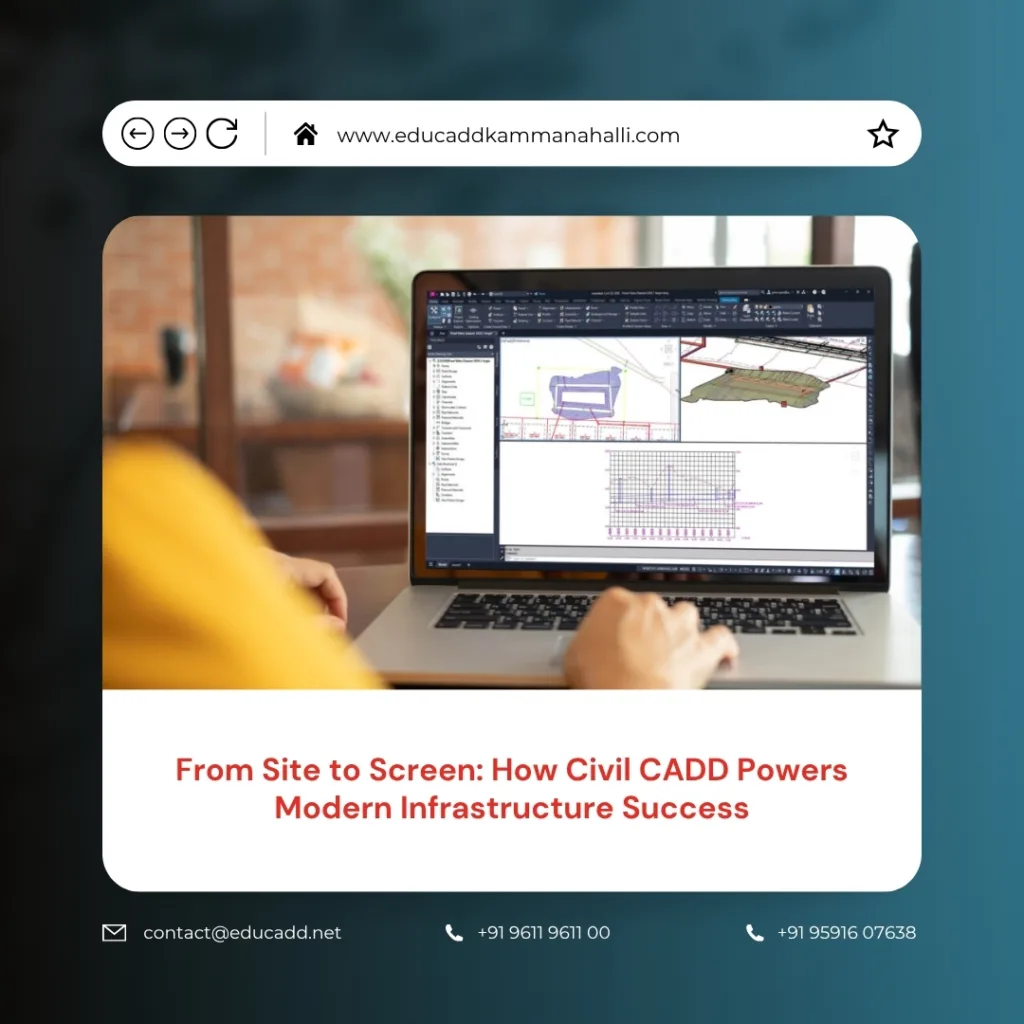
Civil CADD Infrastructure Success
Understanding the Role of Civil CADD in Modern Engineering
Civil CADD, or Computer-Aided Design and Drafting for civil engineering, serves as the foundation of digital project development. It allows engineers to create accurate technical drawings and engineering models while maintaining consistency across every stage of a project.
Instead of relying on hand-drawn blueprints, professionals use Civil CADD Infrastructure Success to generate highly detailed plans. These plans include dimensions, elevations, alignments, contours, and structural details. As a result, engineers can identify potential issues before construction begins. Moreover, digital drawings simplify collaboration among project stakeholders. Everyone involved gains access to the same accurate information, which reduces misunderstandings and improves project coordination. Consequently, Civil CADD has become an indispensable tool for modern engineering practices.
Transforming Site Data into Intelligent Digital Models
Every successful project begins with accurate site information. Surveyors collect field data related to topography, boundaries, elevations, and existing structures. Civil CADD converts this information into meaningful digital representations that engineers can use for design and analysis.
The software enables teams to create terrain models that accurately reflect real-world conditions. Engineers can study slopes, identify drainage patterns, and evaluate land suitability before making design decisions. Furthermore, these digital models improve planning efficiency because modifications can be implemented instantly. Rather than revisiting the site repeatedly, project teams can analyze conditions directly within the software environment. This capability saves valuable time and supports more informed decision-making throughout the project lifecycle.
Improving Accuracy in Infrastructure Design
Accuracy remains one of the most critical factors in civil engineering projects. Even small design errors can lead to significant delays, increased costs, and safety concerns. Civil CADD helps eliminate many of these risks through precision-based design tools.
Engineers can create detailed layouts with exact measurements and coordinates. The software automatically updates connected elements whenever modifications occur. Therefore, consistency remains intact throughout the design process. Additionally, advanced validation features help detect conflicts and discrepancies before construction starts. This proactive approach reduces costly rework and ensures that project specifications remain aligned with engineering standards. As a result, organizations achieve higher-quality outcomes while maintaining strict project timelines.
Enhancing Road and Highway Development
Road and highway projects require extensive planning, analysis, and coordination. Civil CADD simplifies these activities by providing specialized tools for transportation engineering applications.
Designers can develop road alignments, cross-sections, intersections, and profiles with exceptional precision. The software also assists in calculating earthwork quantities and evaluating roadway performance. Furthermore, engineers can test multiple design alternatives before selecting the most effective solution.
Key benefits for transportation projects include:
- Faster route planning and alignment optimization.
- Improved accuracy in earthwork and grading calculations.
These capabilities help transportation agencies deliver safer roads while minimizing construction costs and environmental impact.
Streamlining Land Development Projects
Land development projects often involve complex coordination between engineers, planners, architects, and government authorities. Civil CADD provides a unified platform that supports all phases of development.
Engineers can design residential communities, commercial complexes, industrial parks, and mixed-use developments with greater efficiency. The software enables precise lot layouts, utility planning, and grading design. Moreover, digital workflows facilitate easier communication among stakeholders. Since everyone works from the same data source, project updates become easier to manage. Consequently, development projects move from concept to construction with fewer delays and improved accuracy.
Supporting Effective Drainage and Utility Planning
Proper drainage and utility systems form the backbone of any successful infrastructure project. Civil CADD plays a crucial role in designing these essential networks.
Engineers use the software to model stormwater systems, sewer networks, water supply lines, and underground utilities. Detailed simulations help evaluate system performance under different conditions. Therefore, designers can identify potential issues before installation begins. In addition, accurate utility layouts reduce the likelihood of conflicts between underground services. This improves construction efficiency while minimizing costly adjustments during project execution. Effective planning ultimately leads to more reliable infrastructure systems that serve communities for decades.
Strengthening Collaboration Across Project Teams
Large construction projects involve multiple disciplines working together toward a common goal. Effective communication remains essential for project success. Civil CADD enhances collaboration by creating a centralized design environment.
Project teams can share drawings, design updates, and technical information instantly. Changes made by one department become visible to other stakeholders, reducing communication gaps. Furthermore, cloud-based integration allows remote access to project files from different locations. This flexibility supports modern project management practices and improves coordination among geographically dispersed teams. As a result, organizations experience smoother workflows and faster project delivery.
Accelerating Project Delivery Through Automation
Automation has become a major driver of productivity in engineering and construction. Civil CADD Infrastructure Success numerous automated features that reduce repetitive tasks and increase efficiency.
Engineers can automate dimensioning, annotation, quantity calculations, and report generation. These capabilities free professionals to focus on design optimization and problem-solving rather than routine drafting activities. Additionally, automated updates ensure that all project documents remain synchronized. This reduces manual errors and accelerates project completion. Consequently, organizations can manage larger workloads while maintaining high-quality standards across every project.
Improving Cost Management and Resource Planning
Budget control represents a significant challenge in construction projects. Civil CADD contributes to better financial management by providing accurate quantity estimates and resource calculations.
Engineers can evaluate material requirements, excavation volumes, and construction quantities during the design phase. This information supports more accurate budgeting and procurement planning. Furthermore, project managers can compare alternative design options to identify cost-effective solutions.
Some major financial advantages include:
- More precise quantity takeoffs and cost estimates.
- Reduced waste through optimized material planning.
These benefits help organizations maintain tighter budget control while maximizing project profitability and resource efficiency.
Enabling Sustainable Infrastructure Development
Sustainability has become a key priority in modern engineering. Governments, developers, and communities increasingly demand environmentally responsible infrastructure solutions. Civil CADD supports sustainability goals through advanced analysis and planning capabilities.
Engineers can evaluate environmental impacts, optimize grading plans, and reduce unnecessary material consumption. The software also supports efficient drainage design that minimizes erosion and protects natural ecosystems. Moreover, digital modeling reduces paper usage and streamlines project documentation. By enabling smarter design decisions, Civil CADD contributes to greener construction practices and more sustainable infrastructure development.
Supporting Smart City Initiatives
Smart cities depend on integrated infrastructure systems that improve urban living and resource management. Civil CADD plays an important role in planning and developing these advanced urban environments.
Engineers use digital models to design transportation networks, utility systems, public spaces, and urban infrastructure. The software enables data-driven decision-making that supports long-term city planning objectives. Furthermore, integration with modern technologies such as GIS and Building Information Modeling enhances project intelligence. These capabilities help cities create efficient, connected, and sustainable environments that meet the needs of growing populations.
Reducing Construction Risks Through Better Visualization
Visualization significantly improves project understanding and decision-making. Civil CADD allows engineers and stakeholders to view projects before construction begins.
Detailed models help identify design conflicts, safety concerns, and constructability challenges early in the process. Stakeholders can evaluate project outcomes and suggest improvements before resources are committed. Additionally, visual presentations improve communication with clients, regulatory authorities, and community members. This transparency reduces uncertainty and supports informed decision-making. Consequently, project teams can address risks proactively and improve overall project performance.
Integrating Civil CADD with Emerging Technologies
Technology continues to reshape the construction industry. Civil CADD remains at the forefront of this transformation through integration with innovative digital tools.
Modern Civil CADD platforms connect seamlessly with Building Information Modeling, Geographic Information Systems, drone surveying, and reality capture technologies. These integrations create comprehensive project ecosystems that support data sharing and advanced analysis. Furthermore, artificial intelligence and automation continue to expand software capabilities. As these technologies mature, Civil CADD will become even more powerful in supporting engineering excellence and project innovation.
Preparing Future Engineers for Digital Construction
The future of engineering depends on professionals who can effectively utilize digital technologies. Civil CADD training provides students and industry professionals with essential skills that align with modern construction practices.
Educational institutions increasingly incorporate Civil CADD into engineering curricula because employers seek candidates with strong digital design capabilities. Students gain practical experience in drafting, modeling, analysis, and project documentation. Moreover, exposure to industry-standard software enhances career opportunities and professional growth. As digital transformation accelerates across the construction sector, Civil CADD knowledge will remain a valuable asset for future engineers.
Conclusion
Civil CADD has revolutionized the way infrastructure projects move from concept to completion. By transforming site data into accurate digital models, it empowers engineers to design, analyze, and manage projects with exceptional precision. From transportation networks and land development to drainage systems and smart city initiatives, Civil CADD Infrastructure Success every stage of modern construction. Furthermore, its ability to improve collaboration, automate workflows, reduce costs, and enhance sustainability makes it an essential tool for today’s engineering professionals.
As the construction industry embraces digital transformation, the importance of Civil CADD will continue to grow. Organizations that leverage its capabilities gain a competitive advantage through faster project delivery, improved accuracy, and better decision-making. Ultimately, Civil CADD serves as the bridge that connects the physical construction site to the digital world, ensuring that modern infrastructure projects achieve greater efficiency, innovation, and long-term success.

