
SQL vs NoSQL Databases: Understanding the Key Differences That Shape Modern Applications
In today’s digital world, data powers almost every application, website, and business process. From online banking platforms to social media networks, organizations rely on databases to store, manage, and retrieve information efficiently. However, choosing the right database system remains one of the most important decisions in software development. This is where the debate of SQL vs NoSQL Databases becomes highly relevant.
As businesses generate larger volumes of data, database technologies continue to evolve. Traditional relational databases have served organizations for decades, while modern NoSQL databases have emerged to handle the demands of scalability, flexibility, and real-time processing. Therefore, understanding the differences between these database models helps developers, business owners, and IT professionals make informed decisions.
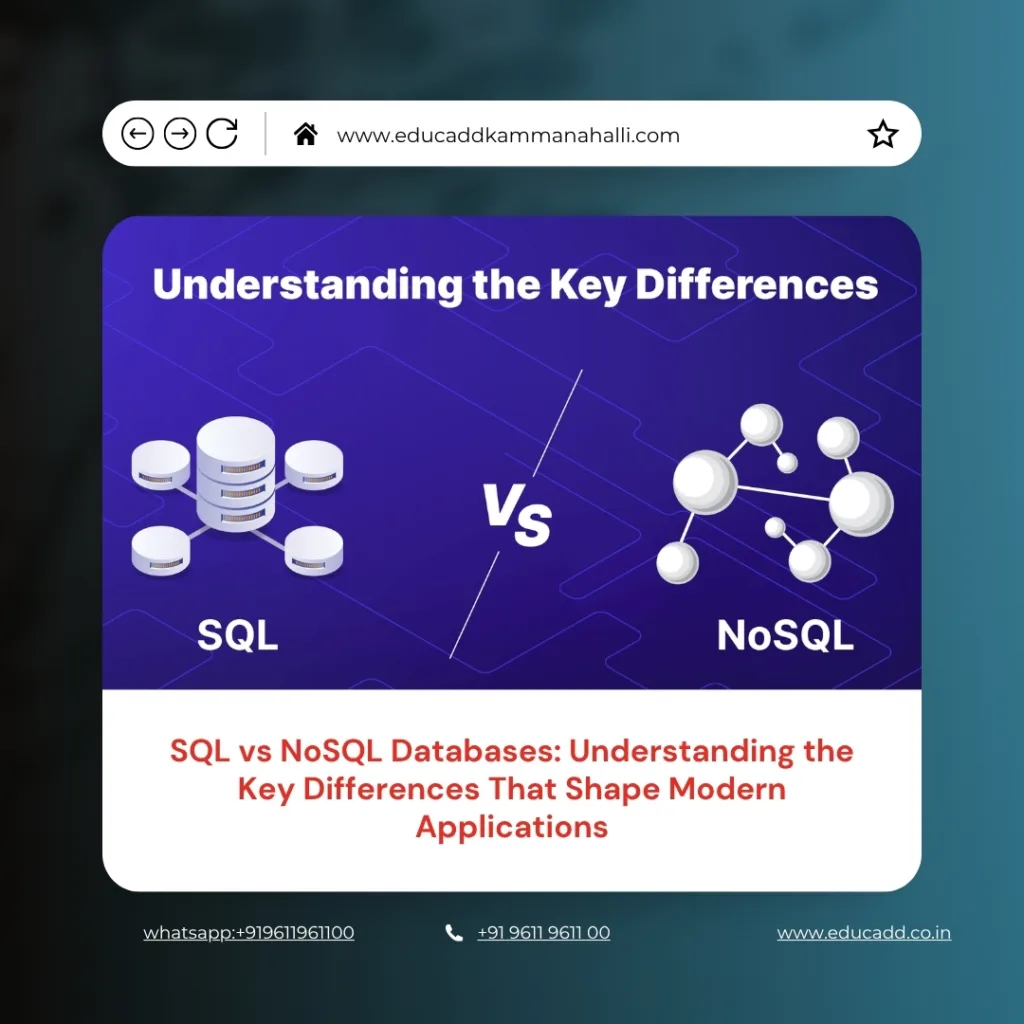
SQL vs NoSQL Databases
This comprehensive guide explores SQL vs NoSQL Databases in detail. It explains their architecture, strengths, limitations, use cases, and performance characteristics so you can determine which solution best fits your requirements.
What Are SQL Databases?
SQL databases, also known as relational databases, organize data into tables consisting of rows and columns. Each table contains related information, and relationships between tables help maintain data integrity. SQL stands for Structured Query Language, which developers use to interact with relational databases.
Popular SQL databases include MySQL, PostgreSQL, Microsoft SQL Server, and Oracle Database. These systems follow a predefined schema, meaning developers must define the structure before storing data. As a result, data remains highly organized and consistent.
Moreover, SQL databases are widely used in industries that require accurate transactions and strict data validation. Banking systems, healthcare applications, and enterprise resource planning software often depend on relational databases because they ensure reliable data management.
What Are NoSQL Databases?
NoSQL databases represent a different approach to data storage. Unlike relational databases, they do not rely on fixed table structures. Instead, they support flexible data models such as document stores, key-value stores, column-family databases, and graph databases.
Examples of NoSQL databases include MongoDB, Cassandra, Redis, and Couchbase. These platforms allow developers to store unstructured and semi-structured data without defining a rigid schema beforehand.
As modern applications generate diverse data types, NoSQL databases provide greater flexibility. Consequently, organizations handling large-scale datasets often choose NoSQL solutions to support rapid growth and evolving requirements.
Database Structure: The Fundamental Difference
One of the most significant differences between SQL and NoSQL databases lies in their structure. SQL databases organize data into tables with clearly defined relationships. Every record follows the same format, ensuring consistency throughout the system.
In contrast, NoSQL databases use flexible structures that allow records to vary. Developers can add new fields without modifying the entire database schema. Therefore, applications can evolve more quickly without requiring major structural changes.
This flexibility makes NoSQL particularly useful for businesses experiencing frequent changes in data requirements. Meanwhile, SQL remains ideal when consistency and structured relationships are critical.
Schema Design and Flexibility
Schema design plays a major role in the SQL vs NoSQL Databases comparison. SQL databases require a predefined schema before data entry. This approach ensures uniformity and prevents unexpected data inconsistencies.
However, modifying an SQL schema often requires careful planning because changes may affect multiple tables and relationships. As systems grow larger, schema updates can become more complex.
NoSQL databases, on the other hand, offer dynamic schemas. Developers can easily introduce new data fields without disrupting existing records. Consequently, startups and rapidly evolving applications often prefer NoSQL solutions because they support faster development cycles.
Scalability Approaches
Scalability determines how effectively a database handles increasing workloads. SQL databases traditionally scale vertically, meaning organizations add more CPU power, memory, or storage to a single server.
Although vertical scaling can improve performance, it eventually reaches hardware limitations. Furthermore, upgrading enterprise-grade servers often involves significant costs.
NoSQL databases generally scale horizontally. Instead of upgrading one server, organizations distribute data across multiple servers. This approach provides several advantages:
- Supports massive amounts of data growth.
- Improves system availability and fault tolerance.
As a result, NoSQL databases have become popular among large technology companies managing billions of records daily.
Performance Characteristics
Performance often depends on the application’s specific requirements. SQL databases excel when handling complex queries involving multiple table relationships. Their structured design allows efficient execution of joins and transactional operations.
However, performance may decline when databases grow extremely large and require extensive horizontal scaling.
NoSQL databases typically deliver faster performance for high-volume read and write operations. Since they avoid complex joins, data retrieval often becomes more efficient in distributed environments.
Therefore, organizations should evaluate workload patterns before selecting a database technology.
Data Consistency and Reliability
Data consistency represents another critical factor in database selection. SQL databases follow ACID principles:
- Atomicity
- Consistency
- Isolation
- Durability
These principles ensure every transaction completes accurately and reliably. For example, when transferring money between bank accounts, both debit and credit operations must occur successfully.
NoSQL databases often prioritize availability and scalability over strict consistency. Many systems follow the BASE model, which emphasizes eventual consistency. While this approach improves performance, it may allow temporary data discrepancies.
Consequently, industries requiring precise transactional accuracy usually favor SQL databases.
Query Language Differences
SQL databases use Structured Query Language as a universal standard. Developers can write commands for data retrieval, insertion, updating, and deletion using a consistent syntax across various platforms.
Because SQL has existed for decades, a large community of developers understands its principles. Additionally, extensive documentation and training resources make SQL easier to learn.
NoSQL databases do not follow a single query standard. Each platform often introduces its own methods for interacting with data. As a result, developers may need to learn database-specific approaches when working with NoSQL technologies.
Handling Large Volumes of Data
Modern businesses generate enormous quantities of information every second. Social media platforms, IoT devices, e-commerce websites, and streaming services continuously create massive datasets.
SQL databases can manage substantial data volumes effectively. However, performance challenges may arise when datasets reach extreme scales.
NoSQL databases were specifically designed to address large-scale data challenges. Their distributed architecture allows seamless expansion across multiple servers. Therefore, organizations expecting explosive growth frequently choose NoSQL solutions for long-term scalability.
Security and Compliance Considerations
Security remains a top priority for businesses managing sensitive information. SQL databases offer mature security features including user authentication, role-based access control, encryption, and auditing capabilities.
Many regulatory frameworks also align well with relational database architectures because they support detailed tracking and reporting requirements.
NoSQL databases have improved significantly in security over recent years. Nevertheless, security implementations may vary depending on the specific platform. Organizations must carefully evaluate compliance requirements before making a decision.
For highly regulated industries, SQL databases often provide a more straightforward path toward compliance.
Development Speed and Agility
Development speed can significantly impact project timelines. SQL databases require careful planning because developers must establish schemas before storing data.
Although this process improves organization, it can slow initial development efforts. Changes to requirements may also require schema modifications.
NoSQL databases enable faster iteration because developers can store data without extensive upfront planning. Consequently, agile development teams often prefer NoSQL systems for rapidly evolving products.
This flexibility helps businesses respond quickly to market demands and customer feedback.
Common SQL Database Use Cases
SQL databases continue to dominate many business-critical applications because of their reliability and consistency.
Typical SQL use cases include:
- Financial and banking systems
- Inventory management software
- Customer relationship management platforms
- Enterprise resource planning systems
- Healthcare record management
These applications depend on accurate transactions, structured relationships, and strong data integrity. Therefore, SQL remains the preferred choice for many traditional business environments.
Common NoSQL Database Use Cases
NoSQL databases excel in applications requiring flexibility, scalability, and high-speed processing.
Popular NoSQL use cases include:
- Social networking platforms
- Real-time analytics systems
- Content management applications
- Internet of Things ecosystems
- Recommendation engines
- Mobile applications
Because these systems frequently handle large volumes of diverse data, NoSQL provides the adaptability needed for modern workloads.
Choosing Between SQL vs NoSQL Databases
Selecting the right database depends on your specific business requirements. If your application requires structured data, complex relationships, and strong consistency, SQL databases often provide the best solution.
On the other hand, if you expect rapid growth, flexible data models, and large-scale distributed operations, NoSQL databases may offer greater advantages.
Rather than viewing the choice as a competition, organizations should evaluate factors such as scalability, performance, security, development speed, and long-term maintenance requirements. In many cases, businesses even combine both technologies to achieve optimal results.
Conclusion
The discussion surrounding SQL vs NoSQL Databases continues to evolve as technology advances and data requirements become more complex. SQL databases remain the foundation of many enterprise systems because they provide structured storage, strong consistency, and reliable transaction processing. Their proven track record makes them ideal for applications where accuracy and integrity are essential.
Meanwhile, NoSQL databases have transformed how organizations manage large-scale, rapidly changing datasets. Their flexible schemas, horizontal scalability, and high-performance capabilities make them well suited for modern web applications, cloud environments, and big data platforms.
Ultimately, neither approach is universally superior. The best choice depends on your application’s goals, workload patterns, and future growth expectations. By understanding the strengths and limitations of both technologies, businesses can make informed decisions that support long-term success and efficient data management. As digital transformation continues to accelerate, mastering the differences between SQL and NoSQL databases will remain a valuable skill for developers, IT professionals, and business leaders alike.

