
Design Smarter Infrastructure with an Advanced AutoCAD Civil Course
Infrastructure development has entered a new era where precision, speed, and digital collaboration determine project success. Engineers, surveyors, and designers now rely on advanced design software to create accurate drawings, manage large-scale projects, and reduce costly mistakes. An Advanced AutoCAD Civil Course provides the practical knowledge needed to handle modern civil engineering projects with confidence. It introduces learners to industry-standard tools that simplify drafting, improve productivity, and support better decision-making throughout every stage of project development.
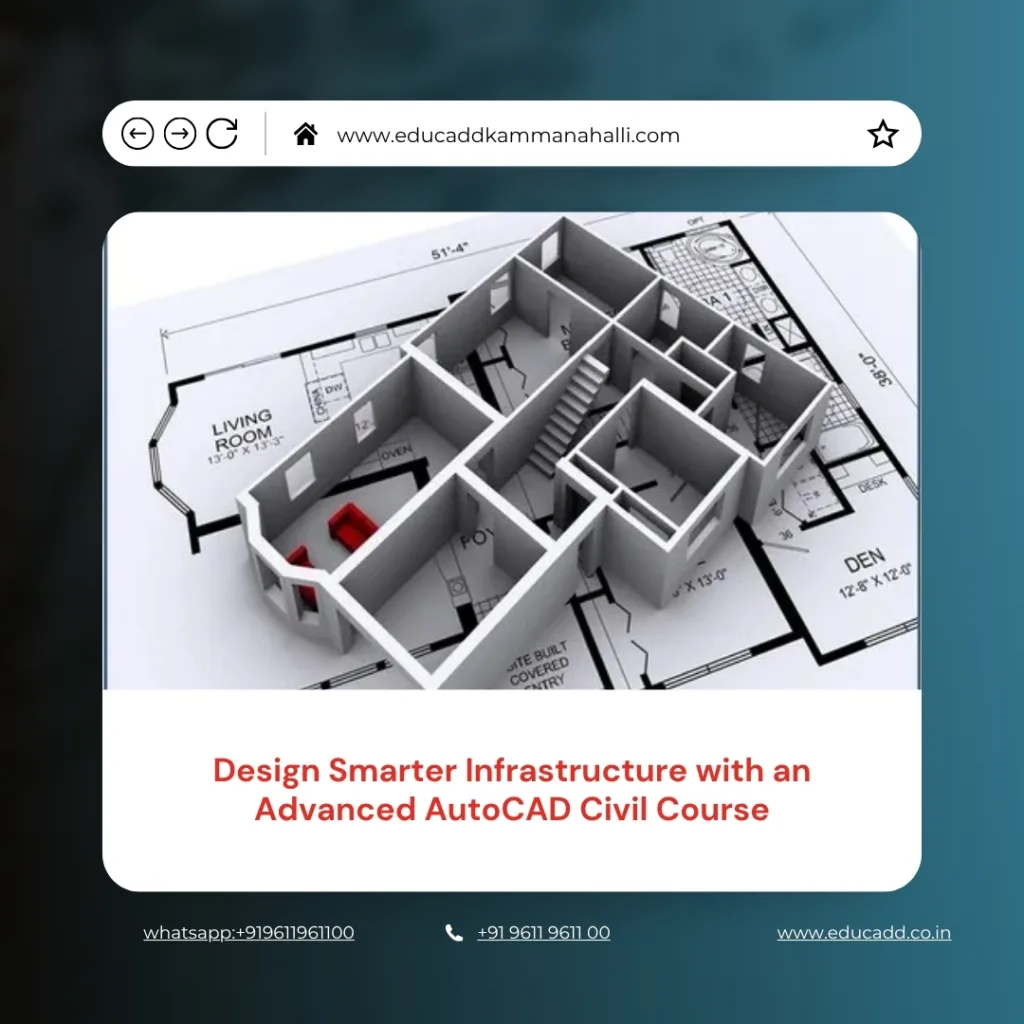
Advanced AutoCAD Civil Course
Whether you are a student, a working professional, or someone planning a career transition, mastering AutoCAD Civil creates valuable opportunities in today’s competitive engineering market.
Build a Strong Foundation in Civil Design
An Advanced AutoCAD Civil Course begins by introducing the core concepts of computer-aided drafting and civil engineering design. Students learn the software interface, drawing commands, coordinate systems, layers, annotations, and editing techniques. These basics create a solid foundation before moving toward advanced infrastructure design. As confidence grows, learners understand how digital drafting improves design quality while reducing manual errors. This structured learning approach helps beginners develop practical skills that employers value across the construction and infrastructure industries.
Learn Professional Drafting Techniques
Professional drafting requires both technical accuracy and organized documentation. During an Advanced AutoCAD Civil Course, students create site plans, layouts, profiles, cross-sections, grading plans, and construction drawings using industry standards. They also learn dimensioning, plotting, scaling, and template creation for consistent project documentation. These essential drafting techniques help learners produce professional-quality drawings that meet engineering requirements. As a result, they become capable of handling real project documentation with greater efficiency and precision.
Understand Survey Data and Terrain Modeling
Survey information serves as the backbone of every civil engineering project. Therefore, an Advanced AutoCAD Civil Course teaches students how to import survey data, process field measurements, and generate accurate terrain models. Learners create digital elevation models, contours, and surface analyses that support better planning decisions. Furthermore, understanding terrain helps engineers evaluate land conditions before beginning construction. This knowledge significantly improves design accuracy while reducing unexpected site challenges during project execution.
Master Road and Highway Design
Transportation infrastructure demands precise planning and accurate alignment. An Advanced AutoCAD Civil Course provides detailed training in road and highway design using intelligent design tools. Students create horizontal alignments, vertical profiles, corridors, intersections, and roadway assemblies with confidence. They also learn how to modify designs efficiently whenever project requirements change. Consequently, learners gain practical experience that prepares them for transportation engineering projects in both public and private sectors.
Develop Skills in Land Development Projects
Modern land development involves careful planning, efficient drainage, and optimized site utilization. Through an Advanced AutoCAD Civil Course, learners understand subdivision planning, parcel creation, grading design, utility layouts, and site development workflows. They also learn how to analyze land efficiently before preparing construction-ready documentation. Since urban expansion continues across many regions, professionals with land development expertise remain in high demand. This knowledge expands career opportunities across real estate, infrastructure, and consulting companies.
Create Efficient Drainage and Utility Networks
Effective drainage systems protect infrastructure and improve environmental sustainability. An AutoCAD Civil Course teaches students how to design stormwater drainage systems, underground utility networks, and pipe layouts using intelligent modeling tools. They learn hydraulic concepts alongside practical design workflows that improve project performance. Moreover, efficient drainage planning minimizes flooding risks while supporting long-term infrastructure reliability. These valuable skills make graduates more capable of handling complex civil engineering projects.
Improve Accuracy Through Intelligent Design Tools
Modern engineering software includes automation features that increase productivity and reduce repetitive tasks. During an AutoCAD Civil Course, students explore dynamic objects, automated labeling, intelligent alignments, and real-time design updates. These advanced tools automatically reflect design modifications throughout the project, saving valuable time. Consequently, engineers spend more effort improving project quality rather than correcting manual drafting errors. Intelligent workflows also strengthen collaboration among multidisciplinary project teams.
Gain Practical Experience with Industry Projects
Practical training bridges the gap between classroom learning and professional work. An AutoCAD Civil Course includes project-based exercises that simulate actual engineering assignments. Students prepare site layouts, transportation networks, grading plans, and infrastructure documentation while following professional workflows. These practical projects strengthen analytical thinking and improve technical confidence. Additionally, learners develop portfolios that showcase their design capabilities during job interviews and career advancement opportunities.
Explore Career Opportunities in Civil Engineering
The demand for skilled civil design professionals continues to grow because infrastructure investment remains strong worldwide. Completing an AutoCAD Civil Course opens career paths such as Civil CAD Designer, Infrastructure Engineer, Highway Designer, Survey Drafting Specialist, Site Planning Engineer, and Land Development Designer. Employers actively seek professionals who understand digital drafting and infrastructure modeling. Therefore, acquiring these technical skills significantly improves employability while supporting long-term career growth.
Increase Productivity Through Digital Collaboration
Engineering projects involve architects, structural engineers, surveyors, contractors, and project managers working together. An AutoCAD Civil Course teaches students how to manage shared drawings, coordinate design updates, and maintain organized project files. Effective collaboration reduces communication gaps and minimizes project delays. Furthermore, digital workflows enable teams to respond quickly to client changes without compromising design quality. Strong collaboration skills enhance both project efficiency and professional performance.
Stay Updated with Modern Engineering Standards
Engineering practices continue to evolve alongside technological advancements. An AutoCAD Civil Course familiarizes learners with current drafting standards, infrastructure guidelines, and digital documentation practices followed across the industry. Students understand how standardized workflows improve consistency and regulatory compliance. Moreover, keeping pace with evolving technologies helps professionals remain competitive throughout their careers. Continuous learning ensures long-term relevance in the rapidly changing engineering environment.
Why Employers Prefer AutoCAD Civil Professionals
Organizations consistently seek professionals who can contribute immediately without extensive additional training. Graduates of an AutoCAD Civil Course possess practical drafting expertise, infrastructure design knowledge, and problem-solving abilities that employers appreciate. They understand project documentation, design coordination, and efficient workflow management. Because of these capabilities, companies often consider trained candidates more productive from the beginning. Strong software proficiency also supports faster career progression and higher earning potential.
Choose the Right Training for Long-Term Success
Selecting a quality training program makes a significant difference in career outcomes. A comprehensive AutoCAD Civil Course should include experienced instructors, practical assignments, updated software versions, industry-relevant projects, certification support, and placement assistance. Learners should also receive opportunities to practice real engineering scenarios that strengthen confidence. Investing in structured professional training builds technical expertise while preparing students for future challenges within the infrastructure and construction sectors.
Shape the Future of Infrastructure with Confidence
Every successful infrastructure project begins with accurate planning and intelligent design. An AutoCAD Civil Course equips aspiring engineers and experienced professionals with the technical knowledge required to create reliable civil engineering solutions. From surveying and terrain modeling to road design, drainage planning, and land development, the course develops skills that match current industry expectations. More importantly, it prepares learners to contribute effectively to modern engineering projects with confidence, precision, and creativity. As digital transformation continues across the construction industry, mastering AutoCAD Civil becomes a valuable investment that supports career growth, professional excellence, and long-term success in civil engineering.
Conclusion
The construction and infrastructure industry continues to embrace digital technologies, making technical software skills more valuable than ever. An Advanced AutoCAD Civil Course provides the knowledge and practical experience needed to design accurate infrastructure projects, streamline drafting workflows, and improve overall project efficiency. From road design and land development to surveying and drainage planning, the course equips learners with industry-relevant skills that employers actively seek.
Whether you are a student beginning your engineering journey or a professional looking to advance your career, investing in an Advanced AutoCAD Civil Course can open doors to rewarding opportunities across civil engineering, construction, consulting, and infrastructure development. By mastering modern design techniques and gaining hands-on project experience, you position yourself for long-term career growth while contributing to smarter, safer, and more sustainable engineering projects.

