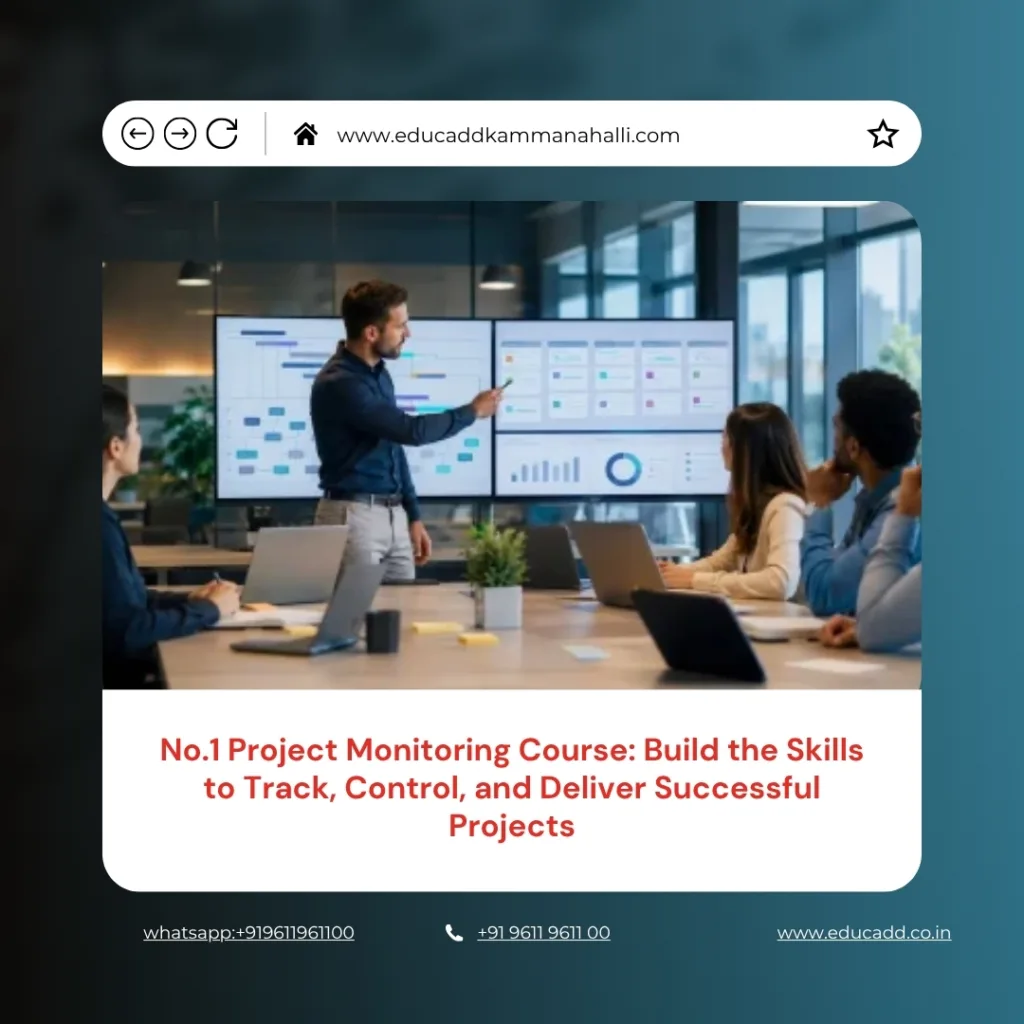
No.1 Project Monitoring Course: Build the Skills to Track, Control, and Deliver Successful Projects
Every successful project depends on effective planning, accurate tracking, and timely decision-making. Whether you work in construction, engineering, manufacturing, infrastructure, or information technology, project monitoring plays a vital role in achieving project goals. It helps organizations stay on schedule, control costs, manage resources, and reduce risks throughout the project lifecycle. As industries continue to adopt digital project management practices, professionals with strong monitoring skills are becoming highly valuable. The No.1 Project Monitoring Training Course equips aspiring professionals, project engineers, site engineers, planners, and project managers with practical knowledge and industry-relevant techniques to monitor projects confidently.
Project Monitoring Training Course
Why Project Monitoring Has Become an Essential Professional Skill
Organizations today manage multiple projects simultaneously, making proper monitoring more important than ever. Every project involves deadlines, budgets, manpower, equipment, and client expectations. Without proper monitoring, even well-planned projects can face unexpected delays and financial losses.
The No.1 Project Monitoring Training Course helps professionals understand how to monitor every stage of a project efficiently. Learners gain practical knowledge of tracking project progress, identifying performance gaps, and ensuring that every activity aligns with organizational objectives. These skills improve productivity while supporting successful project completion.
Understanding the Complete Project Monitoring Process
Project monitoring is much more than checking completed tasks. It involves continuously measuring project performance against predefined plans, schedules, budgets, and quality standards. Effective monitoring allows project teams to detect deviations early and respond before they affect project delivery.
During the No.1 Project Monitoring Training Course, students learn how each monitoring activity contributes to project success. They understand planning baselines, performance indicators, reporting systems, forecasting techniques, and progress evaluation methods. This comprehensive approach enables professionals to maintain better control throughout the project lifecycle.
Learning to Track Project Schedules Effectively
Time management remains one of the biggest challenges in project execution. Missing deadlines often increases costs and affects client satisfaction. Therefore, monitoring schedules accurately has become an essential responsibility for every project professional.
The No.1 Project Monitoring Course teaches learners how to compare planned schedules with actual progress using practical monitoring tools. Students also understand milestone tracking, activity sequencing, critical path identification, and delay analysis. These skills help organizations complete projects within planned timelines.
Managing Project Costs Through Continuous Monitoring
Budget overruns create serious challenges for organizations. Even minor cost variations can significantly affect project profitability if they remain unnoticed. Continuous financial monitoring helps project teams identify issues before expenses become unmanageable.
The No.1 Project Monitoring Course introduces learners to cost tracking methods, budget comparisons, expenditure analysis, and performance measurement. Professionals learn how to evaluate financial data regularly and recommend corrective actions that keep projects financially stable throughout execution.
Improving Resource Utilization Across Projects
Resources include manpower, machinery, materials, equipment, and financial investments. Efficient resource utilization directly influences project productivity and overall success. Poor resource planning often leads to idle time, unnecessary expenses, and delayed deliverables.
Through the No.1 Project Monitoring Training Course, learners understand how to monitor resource allocation and optimize productivity. They develop practical skills to identify shortages, prevent resource conflicts, and ensure that every resource contributes effectively to project objectives.
Risk Monitoring for Better Project Outcomes
Every project carries uncertainties that may affect schedules, budgets, quality, or safety. Identifying risks during planning is important, but continuously monitoring those risks throughout execution is equally essential. Proactive monitoring reduces unexpected disruptions.
The No.1 Project Monitoring Course teaches learners how to recognize warning signs, evaluate project risks, update mitigation plans, and monitor changing project conditions. This systematic approach enables professionals to minimize negative impacts while maintaining project stability.
Using Performance Indicators to Measure Project Success
Performance indicators help organizations evaluate whether projects are progressing according to expectations. Instead of relying on assumptions, project teams use measurable data to assess productivity, efficiency, quality, and overall project health. Clear performance metrics also support faster decision-making and improve communication among stakeholders.
The No.1 Project Monitoring Course teaches learners how to establish meaningful Key Performance Indicators (KPIs) and interpret project data effectively. Students learn to analyze schedule performance, cost performance, resource efficiency, and quality benchmarks. These practical skills enable professionals to identify trends early and implement improvements before challenges affect project outcomes.
Creating Accurate Progress Reports for Better Decision-Making
Project reports provide valuable insights that help managers, clients, and stakeholders understand current project performance. Well-structured reports summarize completed work, highlight ongoing activities, identify risks, and recommend corrective actions. Clear reporting strengthens transparency and improves project accountability.
During the No.1 Project Monitoring Training Course, learners gain hands-on experience in preparing professional progress reports using industry practices. They learn how to present project information clearly through dashboards, charts, status updates, and performance summaries. As a result, decision-makers receive reliable information that supports faster and more confident project decisions.
Technology and Digital Tools in Modern Project Monitoring
Technology has transformed the way organizations monitor projects. Digital solutions provide real-time updates, automate reporting, improve collaboration, and simplify project tracking across multiple teams and locations. These innovations help organizations improve productivity while reducing manual errors.
The No.1 Project Monitoring Course introduces learners to widely used project monitoring software and digital reporting systems. Students understand how technology supports schedule tracking, resource management, cost monitoring, document control, and performance analysis. Familiarity with these tools increases professional efficiency and enhances employability across various industries.
Career Opportunities After Completing Project Monitoring Training
The growing demand for efficient project management has created excellent career opportunities for trained professionals. Construction companies, infrastructure firms, manufacturing industries, consulting organizations, IT companies, and engineering service providers actively seek individuals who can monitor projects effectively and maintain operational efficiency.
After completing the No.1 Project Monitoring Course, learners become eligible for roles such as Project Monitoring Engineer, Project Coordinator, Planning Engineer, Project Control Engineer, Site Engineer, Project Scheduler, Cost Control Engineer, and Assistant Project Manager. The practical skills acquired during the course improve career growth while increasing opportunities for higher-paying positions.
Why Practical Training Makes a Significant Difference
Learning project monitoring through practical applications delivers far better results than studying theoretical concepts alone. Real-world case studies, live projects, scheduling exercises, reporting activities, and monitoring simulations prepare learners to handle actual workplace challenges with confidence.
The No.1 Project Monitoring Course emphasizes hands-on learning through practical assignments and industry-oriented exercises. Students practice monitoring project performance, analyzing reports, identifying project deviations, and recommending corrective actions. This experience strengthens technical knowledge while building confidence for professional responsibilities from the very beginning.
Choosing the Right Project Monitoring Course for Long-Term Success
Selecting the right training program directly influences career growth. A high-quality course should provide experienced trainers, practical learning, updated industry practices, software exposure, certification, placement assistance, and continuous learning support. These features help students develop skills that employers value across industries.
When choosing the No.1 Project Monitoring Training Course, learners should also evaluate the institution’s industry reputation, training methodology, infrastructure, and placement record. A comprehensive course prepares students not only to secure employment but also to build long-term careers in project planning, monitoring, and management.
Conclusion
Project monitoring has become one of the most valuable skills in today’s project-driven industries. Organizations expect professionals to monitor schedules, control costs, optimize resources, manage risks, prepare accurate reports, and ensure projects remain aligned with business objectives. As industries continue adopting advanced project management practices, skilled monitoring professionals will remain in high demand across construction, engineering, manufacturing, infrastructure, and technology sectors.
The No.1 Project Monitoring Training Course provides the practical knowledge, technical expertise, and industry-focused training needed to excel in this competitive field. By mastering modern monitoring techniques, performance analysis, digital tools, and reporting practices, learners become capable of contributing to successful project execution from day one. Whether you are a student, a working professional, or someone looking to advance your career, investing in a professional project monitoring course is a smart step toward long-term professional growth, greater career opportunities, and lasting success.

