
No. 1 BIM Project Management: The Ultimate Blueprint for Delivering Smarter Construction Projects
Building Information Modeling (BIM) has transformed the construction industry by bringing innovation, accuracy, and collaboration into every stage of a project. Today, BIM Project Management Benefits is more than just a technical process. It has become the foundation for planning, coordinating, monitoring, and successfully delivering modern construction projects. From residential developments to complex commercial structures, organizations rely on BIM to improve communication, reduce risks, and complete projects on time and within budget.
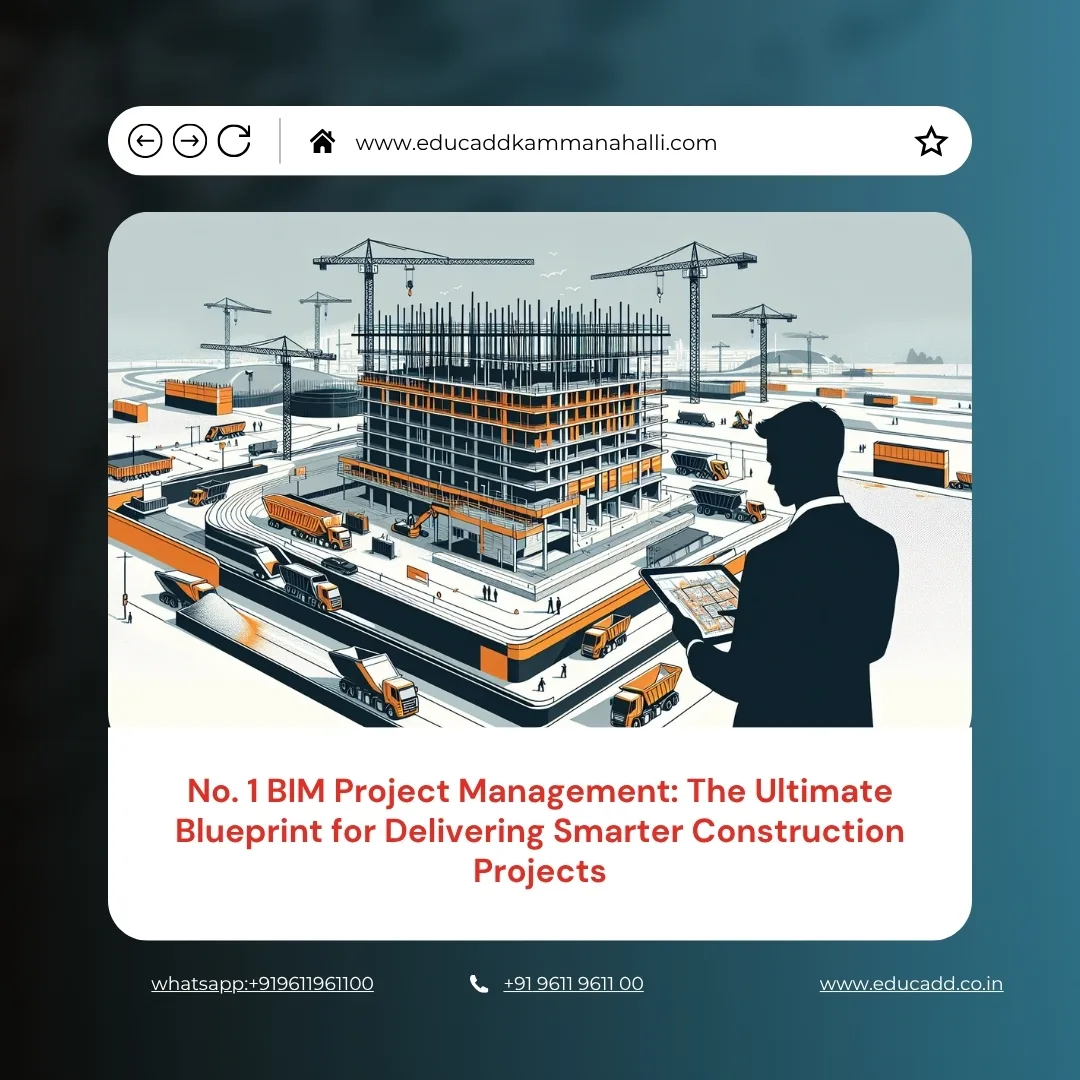
BIM Project Management Benefits
As digital transformation continues to reshape the Architecture, Engineering, and Construction (AEC) industry, professionals with expertise in BIM Project Management are in high demand. This guide explores how BIM Project Management enhances project efficiency, streamlines workflows, and creates better outcomes for clients, contractors, and stakeholders alike.
Understanding BIM Project Management
BIM Project Management Benefits combines traditional project management principles with Building Information Modeling technology to create a collaborative and data-driven construction process. Instead of relying on isolated drawings and documents, project teams work with an intelligent digital model that contains valuable information about every aspect of a building.
This approach improves planning, communication, scheduling, and decision-making throughout the project lifecycle. Furthermore, it enables architects, engineers, contractors, and clients to access real-time information, reducing misunderstandings and improving project coordination.
Why BIM Project Management Is Transforming Construction
Construction projects often involve multiple teams working simultaneously. Without effective coordination, delays, design conflicts, and unexpected costs can quickly arise. BIM Project Management solves these challenges by creating a centralized platform where every stakeholder collaborates using accurate and updated project information.
As a result, project managers gain greater visibility into progress, identify potential risks early, and make informed decisions before issues become costly. Consequently, organizations achieve higher productivity, improved quality, and better client satisfaction.
The Core Principles of BIM Project Management
Successful BIM Project Management Benefits depends on several essential principles that guide project execution from start to finish. Collaboration remains the most important element because every stakeholder contributes to a shared digital model. Transparency also plays a significant role, allowing teams to monitor project changes instantly.
Additionally, accurate data management ensures that every decision is based on reliable information. These principles help reduce confusion, improve accountability, and support smooth communication across all project phases.
The Role of a BIM Project Manager
A BIM Project Manager oversees the planning, implementation, and coordination of BIM processes throughout a construction project. This professional ensures that project standards are followed while maintaining collaboration among architects, structural engineers, MEP engineers, contractors, and clients.
Moreover, the BIM Project Manager monitors project models, resolves coordination issues, manages documentation, and supports digital workflows. Strong leadership, technical expertise, and communication skills enable these professionals to keep projects moving efficiently while maintaining high-quality standards.
Key Technologies Supporting BIM Project Management
Modern BIM Project Management Benefits relies on advanced software solutions that improve collaboration and project execution. Digital modeling platforms enable teams to create intelligent 3D models, while cloud-based collaboration tools allow stakeholders to access project information from anywhere.
Coordination software detects design clashes before construction begins, reducing costly site modifications. In addition, project scheduling and cost estimation tools integrate seamlessly with BIM models, giving project managers greater control over budgets, timelines, and resource allocation.
Improving Collaboration Across Project Teams
One of the greatest advantages of BIM Project Management is its ability to unite multidisciplinary teams within a shared digital environment. Architects, engineers, consultants, contractors, and facility managers work together using the same project model, ensuring everyone has access to current information.
Therefore, communication becomes more efficient, design changes are tracked accurately, and misunderstandings decrease significantly. This collaborative workflow improves trust among stakeholders while supporting faster decision-making and more successful project delivery.
Enhancing Project Planning Through Digital Intelligence
Effective planning forms the backbone of every successful construction project, and BIM Project Management strengthens this phase through intelligent digital modeling. Project managers can visualize every component before construction begins, making it easier to identify scheduling conflicts, resource shortages, and design inconsistencies.
Moreover, teams can evaluate different construction approaches without affecting the actual project. This proactive planning reduces uncertainty and creates a clear roadmap for execution. As a result, organizations minimize delays, improve productivity, and deliver projects with greater confidence.
Reducing Design Conflicts and Construction Risks
Construction errors often occur when different disciplines work independently. BIM Project Management addresses this issue by integrating architectural, structural, and MEP models into one coordinated environment. Consequently, clash detection tools identify conflicts before work starts on-site. Engineers and designers can resolve these issues during the planning stage, saving valuable time and resources.
Additionally, project managers gain better visibility into potential risks, enabling them to implement preventive measures instead of reacting to unexpected problems during construction.
Better Cost Management and Budget Control
Managing project costs requires accurate information and timely decision-making. BIM Project Management Benefits provides both by linking digital models with quantity takeoffs, material estimates, and project schedules. Therefore, cost calculations become more precise and easier to update whenever design changes occur. This real-time visibility helps project managers monitor expenditures, optimize resource allocation, and avoid unnecessary spending. Furthermore, clients receive transparent financial reports that improve confidence and support informed investment decisions throughout the project lifecycle.
Streamlining Construction Scheduling
Time management remains one of the most challenging aspects of construction projects. With BIM Project Management, schedules become more dynamic and reliable because project timelines connect directly with digital building models. This process, commonly known as 4D BIM, enables teams to visualize construction sequences before work begins.
Consequently, project managers identify scheduling conflicts, coordinate subcontractors more effectively, and improve workflow efficiency. Better scheduling also reduces idle time, enhances productivity, and ensures that project milestones are achieved according to plan.
Improving Quality and Project Accuracy
Quality assurance becomes significantly stronger when organizations adopt BIM Project Management practices. Every project component is developed using accurate digital information, reducing manual errors and inconsistencies.
Additionally, standardized workflows ensure that project documentation remains consistent across all disciplines. Project managers can review design quality, monitor compliance with specifications, and verify construction progress using the BIM model. Therefore, completed projects meet higher quality standards while reducing the need for expensive rework and corrective actions.
Supporting Sustainable Construction Practices
Sustainability has become an important priority in the modern construction industry, and BIM Project Management plays a vital role in achieving environmental goals. Digital models allow project teams to evaluate energy performance, material usage, and environmental impact before construction begins.
Furthermore, designers can optimize building orientation, improve energy efficiency, and reduce material waste through accurate simulations. These sustainable practices not only lower operational costs but also contribute to environmentally responsible construction and long-term building performance.
Future Trends in BIM Project Management
The future of BIM Project Management continues to evolve with emerging technologies such as artificial intelligence, digital twins, cloud collaboration, machine learning, and the Internet of Things. These innovations provide deeper insights into project performance and support predictive decision-making.
As automation becomes more advanced, project managers will gain powerful tools for monitoring progress, forecasting risks, and improving resource utilization. Organizations that embrace these technologies will strengthen their competitive advantage while delivering smarter, faster, and more efficient construction projects.
Conclusion
BIM Project Management Benefits has become an essential strategy for organizations aiming to deliver high-quality construction projects with greater efficiency, collaboration, and accuracy. By integrating intelligent digital models with project planning, scheduling, cost management, and quality control, BIM empowers teams to make informed decisions throughout every stage of the project lifecycle.
Moreover, it minimizes risks, improves communication, enhances sustainability, and increases overall project success. As the construction industry continues its digital transformation, professionals who develop expertise in BIM Project Management will unlock outstanding career opportunities and help shape the future of modern construction. Investing in BIM knowledge today is an investment in smarter project delivery, stronger collaboration, and long-term professional growth.

