
Transform Spaces into Careers: Find the Best Residential Interior Design Course Near Me
A beautiful home is more than furniture, colours, and decorations. It reflects personality, lifestyle, comfort, and individual taste. This is why residential interior design has become an exciting career choice for creative students and aspiring professionals. If you have been searching for a Residential Interior Design Course Near Me, you are already taking the first step toward turning your creative ideas into practical design skills. A professional course can teach you how to plan spaces, select materials, prepare layouts, understand lighting, and create attractive interiors. Moreover, structured training helps you understand real project requirements instead of learning only through theory.
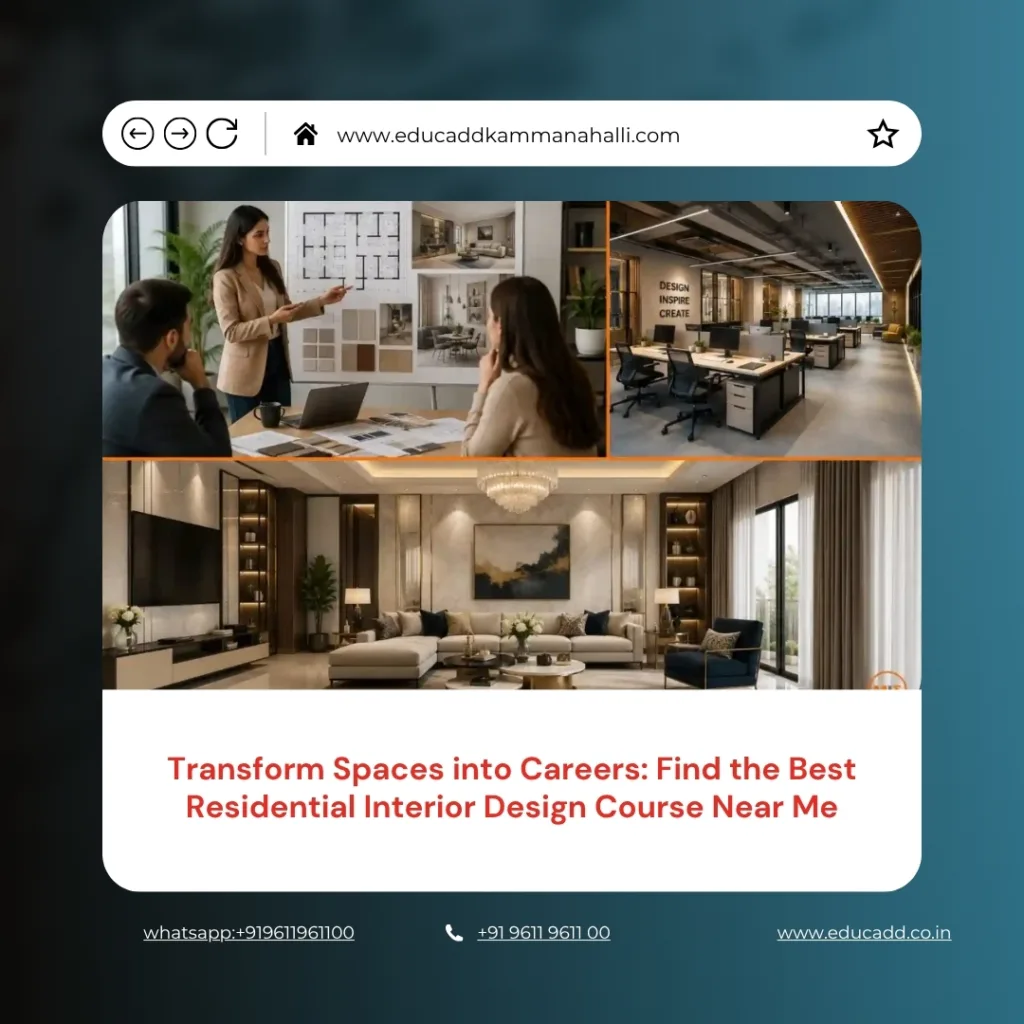
Residential Interior Design Course
At the same time, interior design offers opportunities across homes, apartments, villas, studios, and renovation projects. With the right technical knowledge, you can work with design firms, architects, builders, and individual clients. Therefore, choosing a course that combines creativity with practical training can make your learning journey more valuable. Whether you are a graduate, student, career changer, or design enthusiast, the right training can help you build a strong foundation for a rewarding interior design career.
Learn the Fundamentals of Residential Interior Design
A professional interior design journey starts with strong fundamentals. A quality Residential Interior Design Course Near Me should introduce learners to essential concepts such as space planning, colour theory, furniture placement, materials, textures, lighting, and design principles. These concepts help students understand why certain spaces feel balanced, spacious, comfortable, or visually appealing. Instead of randomly selecting decorative elements, learners begin to make decisions based on functionality and design logic.
In addition, fundamentals create a foundation for advanced projects. Students learn how different rooms require different approaches. A bedroom needs privacy and comfort, while a kitchen requires efficient movement and storage. Similarly, living rooms often need a balance between social interaction and visual appeal. By understanding these differences, learners can develop designs that are both attractive and practical. This foundation becomes useful when working on real residential projects.
Develop Professional Space Planning Skills
Space planning is one of the most important skills for an interior designer. A good designer must know how to use available space effectively without making the room feel crowded. During a professional course, students learn to study room dimensions, circulation paths, furniture positions, entrances, windows, and functional zones. These skills allow them to create layouts that support everyday activities while maintaining visual balance.
Furthermore, space planning requires careful observation and logical thinking. A designer must consider how people move through a room and how different areas connect with one another. For example, a family living space may need comfortable seating, entertainment areas, storage, and clear movement paths. Therefore, practical training helps students understand how to transform measurements into functional layouts. This experience can significantly improve their confidence when handling residential design projects.
Master Interior Design Software and Digital Tools
Modern interior design depends heavily on digital technology. Designers use software to create floor plans, detailed drawings, three-dimensional models, presentations, and realistic visualisations. A good Residential Interior Design Course Near Me should therefore provide practical exposure to relevant design software. Learning these tools can help students communicate ideas more clearly and prepare professional project presentations.
Moreover, software skills can improve productivity. Instead of explaining an idea only through sketches, designers can create digital drawings that clients can easily understand. Three-dimensional views can also help clients visualise furniture arrangements, colours, materials, and lighting before implementation. As a result, software knowledge can become an important advantage when applying for jobs or working independently. Regular practice is essential because professional confidence develops through hands-on projects.
Understand Colour, Materials, and Textures
Colours, materials, and textures have a major influence on residential interiors. A designer needs to understand how these elements work together to create a specific atmosphere. A professional course introduces students to colour combinations, finishes, fabrics, flooring, wall treatments, furniture materials, and decorative surfaces. These lessons help learners make informed choices instead of depending only on personal preferences.
For instance, lighter colours can create an open visual effect, while deeper shades can add warmth and character. Similarly, wood, glass, metal, fabric, stone, and laminates can produce different visual and tactile experiences. However, material selection must also consider durability, maintenance, budget, and suitability. Therefore, students should learn to balance appearance with practical requirements. This approach helps them create interiors that remain attractive and functional over time.
Explore Lighting Design for Better Interiors
Lighting can completely change the appearance and mood of a residential space. It can highlight architectural features, improve functionality, and create a comfortable environment. Through professional training, students can learn about natural lighting, ambient lighting, task lighting, accent lighting, and decorative fixtures. They can also understand how lighting choices influence colours and materials.
In addition, lighting planning must match the purpose of each room. Kitchens may require focused task lighting, while bedrooms often benefit from softer illumination. Living areas can use multiple lighting layers to support different activities. Therefore, interior designers need both creative understanding and technical awareness. Practical projects allow learners to experiment with lighting concepts and understand how different solutions affect the overall design.
Gain Practical Knowledge Through Real Projects
Theory provides essential knowledge, but practical projects help students apply that knowledge. A strong Residential Interior Design Course Near Me should include project-based learning wherever possible. Students can work on bedrooms, living rooms, kitchens, dining areas, offices within homes, and complete residential concepts. Such assignments encourage learners to think like professional designers.
Additionally, projects can teach students how to manage design decisions from beginning to end. They may start with client requirements and site measurements before developing concepts, layouts, materials, and presentations. This process introduces them to real design challenges. It also encourages problem-solving and attention to detail. As students complete more projects, they can gradually build a portfolio that demonstrates their abilities to potential employers or clients.
Learn How to Understand Client Requirements
Successful interior designers do not simply create attractive spaces. They create spaces that meet client expectations. Understanding client requirements is therefore an essential professional skill. Training can help students learn how to ask appropriate questions about lifestyle, preferences, budget, family needs, functionality, and design expectations.
Furthermore, effective communication can prevent misunderstandings during a project. Designers need to explain concepts clearly and listen carefully to feedback. They must also know when to suggest alternatives based on budget or practical limitations. By developing these communication skills, learners can become more confident when interacting with homeowners. This combination of creativity and communication can make a significant difference in professional success.
Build a Strong Portfolio for Your Career
A portfolio is one of the most valuable assets for an aspiring interior designer. It provides evidence of creativity, technical knowledge, presentation skills, and project understanding. During a Residential Interior Design Course Near Me, students can create portfolio projects that demonstrate their ability to develop complete residential concepts.
A strong portfolio should include different types of work. For example, learners can showcase floor plans, furniture layouts, mood boards, colour palettes, material selections, elevations, three-dimensional views, and completed design concepts. Each project should communicate a clear design idea. In addition, students should focus on presentation quality because clients and employers often judge design capabilities through visual communication. A carefully prepared portfolio can support interviews, freelance opportunities, internships, and future business development.
Discover Career Opportunities in Residential Interior Design
Residential interior design offers several career possibilities. After completing professional training, learners can explore roles such as interior designer, junior designer, design assistant, 3D visualiser, space planner, CAD designer, or interior consultant. Some professionals also work with furniture companies, architectural studios, construction firms, and property developers.
Moreover, interior design can support entrepreneurial opportunities. Experienced designers can eventually provide independent consultation and residential design services. They may work on renovation projects, apartment interiors, villas, rental properties, or customised home solutions. However, career growth depends on skill development, portfolio quality, communication, and project experience. Therefore, students should view their course as the beginning of a continuous professional learning journey rather than the final step.
Learn Budgeting and Material Planning
Design creativity must work within a realistic budget. Homeowners often have specific financial limits, and designers must create solutions accordingly. A professional course can introduce students to basic budgeting, material selection, quantity considerations, and cost-conscious design decisions. This knowledge helps designers avoid recommending attractive but impractical solutions.
Similarly, material planning can influence the success of a project. Designers must consider quality, availability, maintenance, durability, and installation requirements. They should also understand that every design decision can affect the total project cost. Therefore, learning to balance aesthetics and budget is an important professional capability. With practice, students can develop practical solutions that deliver strong visual results without unnecessary expenses.
Improve Your Technical Drawing and Documentation Skills
Interior designers need accurate documentation to communicate their ideas to contractors and other professionals. Technical drawings can include floor plans, furniture layouts, elevations, sections, ceiling plans, and detailed drawings. A professional course helps learners understand how these drawings support project execution.
Additionally, accurate documentation reduces confusion during implementation. Contractors need clear information about dimensions, materials, positions, and design elements. Even a small drawing error can create problems at the execution stage. Therefore, students should develop precision along with creativity. Regular technical drawing practice can improve attention to detail and help learners become more confident with professional documentation.
Learn Sustainable and Modern Interior Concepts
Sustainability is becoming increasingly relevant in residential design. Homeowners are showing greater interest in energy efficiency, durable materials, natural finishes, responsible sourcing, and healthier living environments. An updated Residential Interior Design Course Near Me can help learners understand these changing expectations and incorporate sustainable ideas into their concepts.
Furthermore, modern interiors often combine functionality, technology, comfort, and minimalism. Designers may need to consider smart lighting, efficient storage, multifunctional furniture, natural ventilation, and flexible spaces. Learning about these trends can help students create designs that respond to contemporary lifestyles. However, trends should not replace functionality. A successful designer understands current styles while creating spaces that remain useful and comfortable for the client.
Choose Training That Supports Career Growth
Selecting the right institute is an important decision for anyone searching for a Residential Interior Design Course Near Me. Before joining, students should evaluate the course structure, practical training, software exposure, project work, faculty experience, portfolio development, and learning environment. A course should provide more than basic theoretical information. It should help learners understand how professional interior projects are planned and presented.
In addition, students should consider whether the training supports their long-term career goals. A well-structured program can help beginners develop skills progressively. Practical assignments can strengthen technical abilities, while project presentations can improve communication. Therefore, comparing course content carefully can help learners choose training that offers genuine value. The right learning environment can make the transition from student to professional smoother and more confident.
Start Building Your Interior Design Career Today
Choosing a Residential Interior Design Course Near Me can be an important step toward a creative and rewarding career. With structured training, students can develop skills in space planning, technical drawings, digital design, materials, colours, lighting, client communication, and project presentation. These skills can create a strong foundation for employment, freelancing, or entrepreneurship in the interior design industry.
Most importantly, success in interior design comes from consistent practice. Learners should observe spaces, study design principles, experiment with concepts, and develop their portfolios regularly. They should also stay updated with technology and changing client expectations. With dedication and professional guidance, creative ideas can become practical design solutions. A focused learning journey can therefore open the door to exciting possibilities in residential interior design.
Conclusion
Residential interior design combines creativity, technology, planning, communication, and practical problem-solving. If you have a passion for transforming ordinary spaces into comfortable and attractive environments, professional training can help turn that passion into a career. Searching for a Residential Interior Design Course Near Me is not simply about finding a nearby classroom. It is about finding an opportunity to develop industry-relevant skills, build a strong portfolio, and understand the complete design process.
With the right training and consistent practice, you can move from learning basic design concepts to developing professional residential projects. You can explore opportunities with design firms, architectural companies, construction organisations, furniture brands, or even build your own design practice. Start by choosing a course that combines practical learning, technical knowledge, software training, and project experience. Your journey toward becoming a confident residential interior designer can begin with the right learning decision today.

