
Build Tomorrow’s Construction Career with an Online BIM Certification Course in India
The architecture, engineering, and construction industry is changing rapidly with digital technology. Today, companies expect professionals to understand advanced tools that improve design, planning, coordination, and project delivery. Building Information Modeling, or BIM, has become an important part of this transformation. It helps teams create, manage, and share detailed digital information throughout a project lifecycle. As a result, students, engineers, architects, and working professionals are increasingly choosing an Online BIM Certification India to build practical skills and improve their career opportunities. Online learning also makes professional training more accessible. Learners can study from home while developing industry-relevant knowledge and technical confidence.
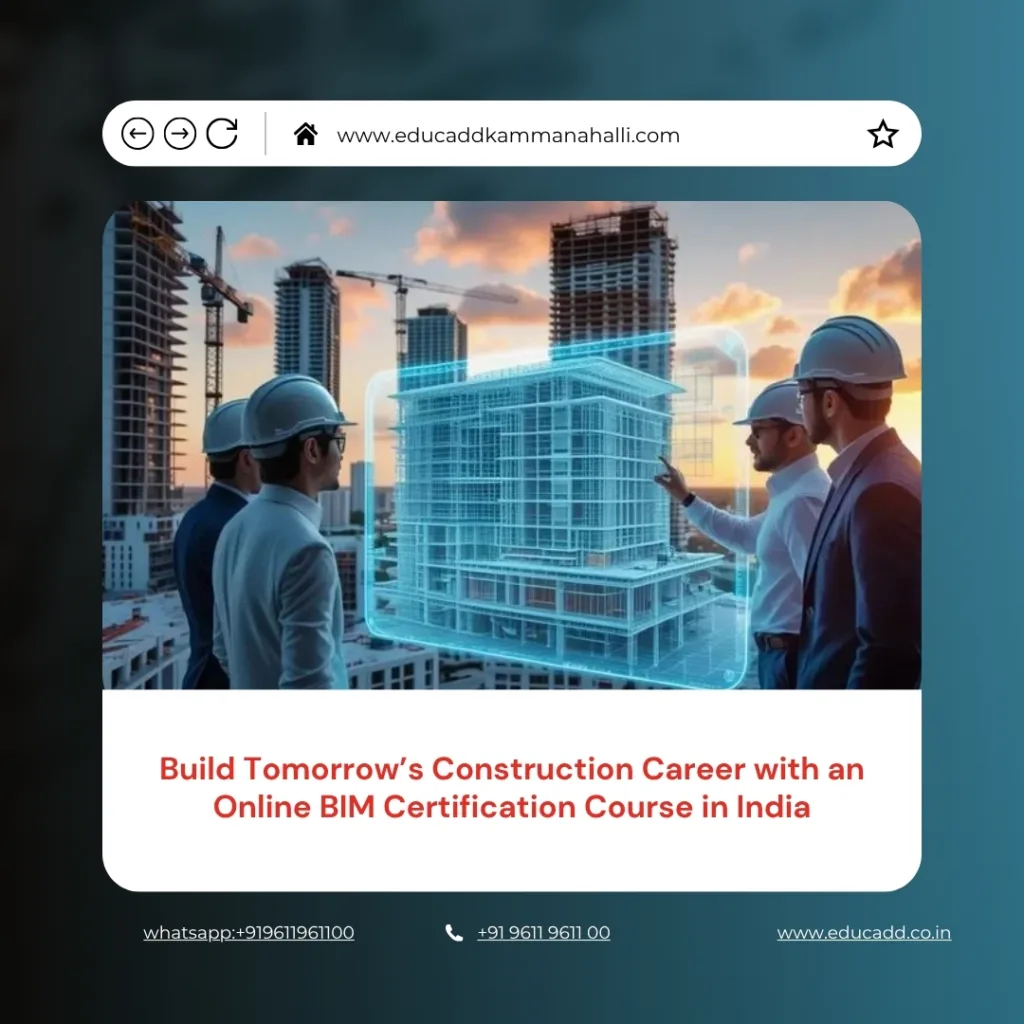
Online BIM Certification India
Why BIM Has Become Essential in Modern Construction
Traditional construction methods often depend on separate drawings, manual coordination, and disconnected project information. BIM brings these elements together within a coordinated digital environment. Professionals can use BIM models to understand building components before construction begins. This approach helps identify design conflicts, improve communication, and support better decision-making. Therefore, BIM skills have become valuable across architecture, structural engineering, MEP services, and construction management. An Online BIM Certification India can introduce learners to this modern workflow without requiring them to attend physical classes every day.
BIM also supports better collaboration between different project teams. Architects, structural engineers, MEP professionals, contractors, and project managers can work with shared project information. This reduces misunderstandings and supports smoother project execution. Moreover, BIM can help teams visualize complex designs in three dimensions. Professionals can review building elements before work begins on-site. Consequently, organizations can improve coordination and reduce avoidable errors. Learning these methods gives aspiring professionals a stronger foundation for working on technology-driven construction projects.
What You Can Learn Through BIM Certification Training
A quality BIM certification program should cover more than basic software commands. Learners need to understand how BIM fits into real project workflows. Training can introduce concepts such as 3D modeling, project coordination, documentation, visualization, quantity information, and collaborative working. Depending on the course structure, students may also explore architectural, structural, and MEP workflows. An Online BIM Certification Course in India can combine theoretical concepts with practical exercises so learners can gradually develop confidence.
Practical learning plays an important role in BIM education. Students should get opportunities to create models, modify building components, prepare documentation, and understand project coordination. Regular assignments can help learners apply concepts instead of simply memorizing commands. Furthermore, project-based training can demonstrate how BIM tools support actual industry requirements. This approach makes learning more meaningful. It also allows students to identify areas that need improvement before they enter professional projects.
Learn Valuable BIM Software Skills From Anywhere
BIM involves several digital tools that professionals use for different stages of project development. Popular platforms can support architectural modeling, structural design, MEP coordination, visualization, documentation, and project management. The exact software covered depends on the training program. However, learners should select a course that provides relevant tools and practical exposure. Choosing the right Online BIM Certification India can therefore make a significant difference in the quality of technical training.
Online learning offers another major advantage: flexibility. Students can access lessons from different locations and manage their study schedules around other responsibilities. Working professionals can continue their careers while upgrading their technical skills. Similarly, students can learn additional industry tools without disrupting their regular education. Recorded lessons, digital resources, assignments, and instructor-led sessions can make online training convenient. With consistent practice, learners can build technical skills at a comfortable pace.
How BIM Certification Can Support Career Growth
BIM knowledge can create opportunities across several construction-related roles. Depending on their education and experience, professionals may explore positions such as BIM Modeler, BIM Coordinator, BIM Engineer, Architectural BIM Specialist, Structural BIM Professional, or MEP BIM Specialist. These roles involve different responsibilities and skill requirements. Certification alone does not guarantee employment, but structured training can strengthen a candidate’s technical foundation. An Online BIM Certification Course in India can help learners prepare for these career paths by introducing them to practical BIM workflows.
Career growth also depends on how effectively professionals apply their knowledge. Employers often value candidates who can understand project requirements and work efficiently with digital tools. Therefore, learners should focus on practical projects, accuracy, coordination, and problem-solving. A strong portfolio can further demonstrate technical ability. Students can include selected academic projects, models, drawings, and coordination exercises in their portfolios. This evidence can help them communicate their capabilities during interviews and professional discussions.
BIM Skills for Architecture and Engineering Professionals
Architects can use BIM to develop detailed digital building models and coordinate design information. Structural professionals can use it to represent structural elements and improve coordination with architectural models. MEP professionals can model systems and identify potential clashes before installation. Each discipline has its own workflow, but BIM encourages teams to work within a connected project environment. This makes BIM training useful for professionals who want to strengthen their existing technical expertise.
The benefits also extend to project managers and construction professionals. BIM can provide useful information for planning, coordination, quantity assessment, scheduling, and project communication. When teams understand the model and its associated information, they can make better-informed decisions. In addition, BIM can support communication with clients and stakeholders through visual presentations. This makes technical information easier to understand. As the construction sector continues to adopt digital methods, professionals with multidisciplinary BIM awareness can gain an advantage.
Why Online BIM Learning Is a Practical Choice
Online education has changed how professionals access technical training. Learners no longer need to travel long distances for every class. They can attend sessions from a convenient location and access digital learning materials when required. This flexibility can be especially useful for working professionals and students with busy schedules. A well-designed Online BIM Certification Course in India can provide structured learning while allowing participants to manage their personal and professional commitments.
However, learners should evaluate online programs carefully before enrolling. Course duration, curriculum, trainer experience, practical assignments, project exposure, software training, and learner support all matter. A program should provide clear learning objectives and regular opportunities for practice. Instructor interaction is also valuable because students may need guidance when working on complex models. Therefore, the best online learning experience combines flexibility with structured mentorship and practical application.
Build a Strong Professional BIM Portfolio
A certification can demonstrate that a learner completed structured training, but a portfolio can show what the learner can actually do. This makes project work an important part of BIM education. Students can create models based on residential, commercial, industrial, or infrastructure concepts. They can also document their workflow and explain the decisions made during the project. These examples can help employers understand a candidate’s technical capabilities.
Portfolio development should focus on quality rather than quantity. A few well-developed projects can create a stronger impression than numerous incomplete exercises. Learners should showcase accurate modeling, clear documentation, coordinated elements, and professional presentation. They can also highlight problem-solving skills demonstrated during their projects. By combining certification with practical work, students can present themselves as job-ready candidates rather than simply course completers.
Improve Collaboration and Project Coordination Skills
One of BIM’s biggest strengths is collaboration. Construction projects involve multiple professionals who must exchange information accurately. A small design change can affect structural elements, MEP systems, quantities, schedules, and construction activities. BIM workflows can help teams understand these relationships more effectively. Learning coordination practices can therefore improve a professional’s ability to contribute to multidisciplinary projects.
Communication skills also matter. BIM professionals must explain technical issues clearly to colleagues and project stakeholders. They may need to discuss clashes, design changes, model updates, or coordination requirements. Strong technical knowledge becomes more useful when professionals can communicate it effectively. For this reason, learners should treat collaboration and communication as important parts of their BIM development. These skills can complement software knowledge and support long-term professional growth.
Choosing the Right BIM Certification Program
Not every training program offers the same learning experience. Before selecting a course, learners should examine the curriculum carefully. The program should cover concepts that match current industry practices. It should also provide practical assignments and project-based learning. Trainer expertise is another important consideration because experienced instructors can explain complex workflows using real-world examples. These factors can help learners select an Online BIM Certification India that aligns with their career goals.
Learners should also consider the level of support provided throughout the course. Doubt-clearing sessions, project feedback, technical guidance, and learning resources can improve the training experience. The course format should match the learner’s schedule and preferred learning style. Most importantly, students should understand what they want to achieve before enrolling. A clear career objective makes it easier to select the right specialization, software, and training level.
Prepare for a Technology-Driven Construction Industry
The construction industry continues to move toward digital workflows. BIM is closely connected with this transformation because it supports collaboration, visualization, data management, and project coordination. Professionals who understand digital processes can adapt more easily as organizations adopt new technologies. Learning BIM today can therefore support continuous professional development in the future.
Technology will continue to evolve, so BIM professionals should also maintain a learning mindset. Certification should be viewed as a starting point rather than the final destination. Learners can continue developing their skills through advanced projects, specialized software, coordination practices, and emerging digital tools. By consistently improving their knowledge, professionals can remain relevant in a competitive industry. This approach can turn technical training into a long-term career development strategy.
Start Your BIM Learning Journey With Confidence
Choosing BIM training is an important step for anyone who wants to build a career in the digital construction industry. The right program can provide knowledge, practical experience, and greater confidence with professional workflows. Students can develop technical abilities while working on realistic projects and assignments. Working professionals can also use the training to strengthen existing skills and explore new career opportunities. An Online BIM Certification Course in India offers a convenient way to begin this journey while maintaining flexibility.
Success, however, depends on consistent practice and genuine interest in learning. Students should actively participate in training sessions, complete assignments, ask questions, and develop project portfolios. They should also follow industry developments and continue improving their software knowledge. With dedication, structured training, and practical exposure, BIM can become a valuable addition to a professional skill set. The journey becomes even more rewarding when learners connect their training with clear career objectives.
Take the Next Step Toward a BIM-Focused Career
BIM is no longer simply a new technology used by a limited group of professionals. It has become an important digital approach for planning, designing, coordinating, and delivering construction projects. This growing importance creates opportunities for learners who are ready to develop relevant technical skills. Whether you are a student, architect, engineer, designer, or working professional, structured BIM training can help you understand modern project workflows and improve your professional capabilities.
The right Online BIM Certification India can provide the foundation needed to explore BIM-related career opportunities. However, your results will depend on the quality of your training, the effort you invest, and your ability to apply what you learn. Focus on practical projects, build a strong portfolio, improve communication, and keep learning beyond certification. With the right approach, BIM education can become a powerful step toward a future-ready career in architecture, engineering, and construction.
Conclusion
The future of construction belongs to professionals who can combine technical expertise with digital capabilities. BIM helps organizations improve coordination, visualize projects, manage information, and make informed decisions. As adoption continues to grow, trained professionals can find opportunities across architecture, engineering, construction, and project management. An Online BIM Certification India provides a flexible pathway for learners who want to develop these skills from anywhere. Choose training that emphasizes practical learning, expert guidance, industry-relevant tools, and project experience. Then, transform your knowledge into a professional portfolio and keep developing your expertise. With consistent learning and the right direction, BIM can become more than a certification—it can become a strong foundation for your long-term career growth.

