
How APIs Power Modern Web and Mobile Applications: The Invisible Engine Driving Digital Innovation
Every time you book a cab, order food, scroll through social media, or make an online payment, something powerful works behind the scenes. Modern digital platforms look simple on the surface. However, they rely on complex systems that communicate constantly. That communication happens through APIs Power Modern Applications.
Understanding how APIs power modern web and mobile applications is essential for developers, business owners, and technology enthusiasts. APIs enable systems to exchange data quickly and securely. They connect services, streamline operations, and create seamless user experiences. Without APIs, most digital platforms would not function as they do today.
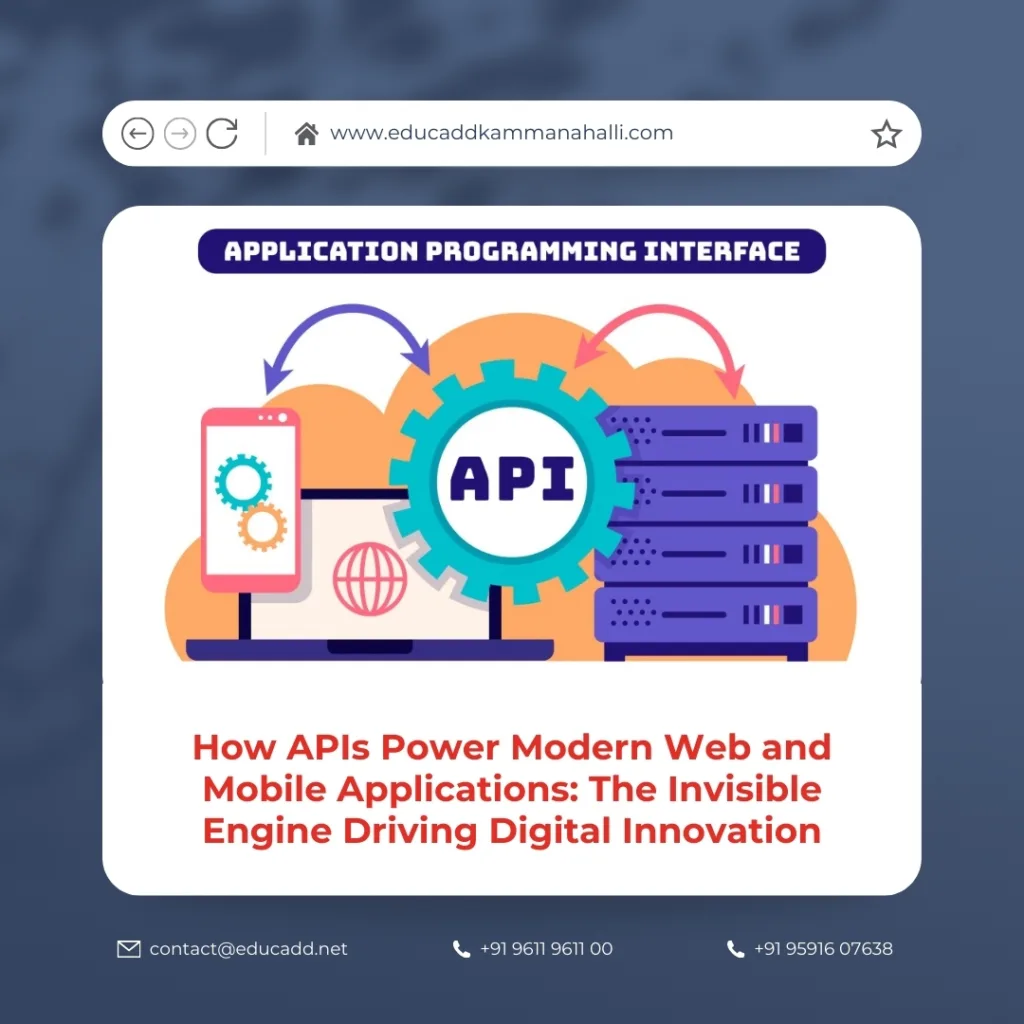
APIs Power Modern Applications
In this comprehensive guide, we will explore how APIs power modern web and mobile applications in depth. We will examine their structure, importance, architecture, security, scalability, and real-world applications. By the end, you will clearly understand why APIs form the backbone of today’s digital ecosystem.
1. Understanding APIs: The Foundation of Modern Connectivity
To understand how APIs Power Modern Applications, you must first grasp what an API is. API stands for Application Programming Interface. It acts as a bridge that allows two software systems to communicate.
Instead of exposing internal code, an API provides defined endpoints. These endpoints accept requests and return responses. Therefore, developers can access data or functionality without modifying the core system.
For example, when a mobile app retrieves weather data, it does not store global weather information locally. Instead, it sends a request to a weather service API. The API processes the request and sends the required data back. This simple exchange demonstrates how APIs power modern web and mobile applications by enabling external services to integrate smoothly.
Moreover, APIs promote modular development. Developers can build separate services and connect them efficiently. As a result, teams work faster and innovate continuously.
2. The Evolution of APIs in Digital Development
Initially, software systems operated independently. Early applications ran on isolated servers with minimal integration. However, as digital needs expanded, companies required systems that could interact.
Web APIs emerged to meet that demand. With the rise of HTTP protocols, developers could build services accessible over the internet. Later, RESTful APIs became dominant because they simplified communication.
Today, APIs Power Modern Applications play a strategic role in every major digital platform. They support microservices, cloud computing, and mobile ecosystems. Therefore, when we examine how APIs power modern web and mobile applications, we see a continuous evolution toward flexibility and scalability.
Furthermore, API-first development has become a standard approach. Companies design APIs before building applications. This strategy ensures consistent communication across platforms and devices.
3. APIs and Web Applications: Creating Dynamic User Experiences
Web applications depend heavily on APIs. Modern websites no longer rely on static pages. Instead, they fetch data dynamically from servers through API calls.
For instance, e-commerce websites retrieve product listings, pricing, and inventory data through backend APIs. When users add items to a cart, the application sends API requests to update databases instantly.
Consequently, APIs power modern web and mobile applications by enabling real-time updates. They ensure smooth transactions, personalized recommendations, and instant notifications.
Additionally, APIs allow front-end frameworks to function effectively. JavaScript applications communicate with backend servers through APIs to display interactive content. This separation of front-end and back-end systems enhances performance and maintainability.
4. APIs in Mobile Applications: Driving Seamless Connectivity
Mobile applications rely even more on APIs. Smartphones have limited storage and processing power compared to servers. Therefore, mobile apps use APIs to offload heavy tasks.
When you log into a social media app, the app sends credentials to an authentication API. The server verifies the information and returns a response. This secure exchange highlights how APIs power modern web and mobile applications in authentication processes.
Moreover, mobile apps integrate third-party APIs for maps, payments, messaging, and analytics. Instead of building every feature from scratch, developers connect external services. As a result, development cycles shorten and innovation accelerates.
APIs also enable cross-platform functionality. Whether users access an app on Android, iOS, or web browsers, APIs maintain consistent data flow across all devices.
5. REST, GraphQL, and Modern API Architectures
Different APIs Power Modern Applications serve different needs. REST remains widely used due to its simplicity and scalability. It uses standard HTTP methods like GET, POST, PUT, and DELETE.
However, GraphQL offers a more flexible approach. It allows clients to request specific data fields. Therefore, it reduces unnecessary data transfer. This efficiency improves performance in mobile environments.
Additionally, microservices architecture depends heavily on APIs. Instead of building monolithic systems, companies create independent services that communicate through APIs. Consequently, businesses scale individual components without affecting the entire system.
These architectural advancements further demonstrate how APIs power modern web and mobile applications by enabling modular and scalable design.
6. APIs and Cloud Computing Integration
Cloud computing transformed digital infrastructure. Services such as AWS, Azure, and Google Cloud provide APIs for managing storage, computing, and networking.
Applications interact with cloud services through APIs to upload files, process data, and deploy updates. Therefore, businesses no longer manage physical servers. They leverage scalable cloud APIs instead.
This integration shows how APIs power modern web and mobile applications in distributed environments. Developers deploy global applications that scale automatically based on demand.
Furthermore, serverless architectures rely entirely on APIs. Functions trigger through API requests and execute in the cloud. This model improves efficiency and reduces operational complexity.
7. Security and Authentication in API Ecosystems
Security remains a critical aspect of API implementation. Since APIs handle sensitive data, developers must protect them effectively.
Authentication methods such as OAuth and JWT ensure secure access. When users log in, the system generates tokens. Applications include these tokens in subsequent API requests. Consequently, servers verify identity before granting access.
Encryption also plays a key role. HTTPS secures data during transmission. Therefore, unauthorized parties cannot intercept sensitive information.
By implementing robust security measures, organizations reinforce how APIs power modern web and mobile applications safely and reliably. Without strong protection, API-driven systems would face significant vulnerabilities.
8. APIs and Real-Time Data Exchange
Modern users expect instant responses. APIs enable real-time communication between systems.
For example, ride-sharing apps update driver locations continuously through APIs. Financial applications display live stock prices using market data APIs. These real-time capabilities enhance user engagement.
Additionally, WebSocket APIs allow persistent connections. Instead of sending repeated requests, clients maintain an open channel with servers. This approach reduces latency and improves performance.
Therefore, real-time data exchange clearly illustrates how APIs power modern web and mobile applications in dynamic environments.
9. Third-Party Integrations and Digital Ecosystems
APIs allow platforms to integrate external services seamlessly. Payment gateways, social logins, analytics tools, and messaging platforms all rely on APIs.
When businesses integrate payment APIs, they simplify transactions for users. Social media APIs enable content sharing across platforms. Analytics APIs provide insights into user behavior.
As a result, APIs create interconnected digital ecosystems. Companies collaborate through API partnerships rather than building isolated systems. This collaboration highlights how APIs power modern web and mobile applications by fostering innovation and connectivity.
10. Scalability and Performance Optimization
Scalability defines the success of modern applications. APIs support horizontal scaling through load balancing and distributed services.
When traffic increases, additional servers handle API requests. This distribution prevents system overload. Moreover, caching mechanisms reduce repeated data processing.
Rate limiting also protects systems from abuse. By controlling request frequency, APIs maintain stability during high demand.
Through these techniques, developers ensure that APIs power modern web and mobile applications efficiently under varying workloads.
11. API Management and Monitoring
Effective API management enhances reliability. Organizations use API gateways to control traffic, enforce security policies, and monitor usage.
Monitoring tools track response times, error rates, and traffic patterns. Therefore, teams identify issues quickly and resolve them proactively.
Documentation also plays a crucial role. Clear API documentation accelerates development and reduces errors.
By implementing structured management practices, companies optimize how APIs power modern web and mobile applications in production environments.
12. APIs and Artificial Intelligence Integration
Artificial intelligence services rely heavily on APIs. Developers integrate machine learning models through API endpoints.
For example, applications use AI APIs for speech recognition, image analysis, and language translation. Instead of building complex algorithms, developers access ready-made AI services.
This approach reduces development time significantly. Moreover, AI APIs continuously improve as providers update models.
Consequently, APIs power modern web and mobile applications by embedding intelligent capabilities without extensive infrastructure investment.
13. Business Benefits of API-Driven Development
APIs provide strategic advantages beyond technical benefits. They accelerate product launches and encourage innovation.
Businesses monetize APIs by offering them to partners and developers. This strategy creates new revenue streams.
Additionally, API-driven ecosystems strengthen partnerships. Companies collaborate through secure data sharing. Therefore, they expand their digital reach effectively.
Understanding how APIs power modern web and mobile applications helps organizations remain competitive in rapidly evolving markets.
14. The Future of APIs in Digital Transformation
The role of APIs will continue to expand. Emerging technologies such as IoT, blockchain, and edge computing depend on APIs for communication.
Smart devices interact with cloud platforms through APIs. Blockchain networks expose APIs for transaction processing. Edge computing services provide APIs for localized data analysis.
As digital transformation accelerates, APIs will become even more central. They will enable faster integration, improved automation, and seamless interoperability across industries.
Therefore, when we examine future trends, it becomes clear that APIs power modern web and mobile applications at the core of innovation.
Conclusion
APIs serve as the invisible engine behind modern digital experiences. They connect systems, enable real-time communication, and support scalable architectures.
Throughout this guide, we explored how APIs Power Modern Applications across web platforms, mobile ecosystems, cloud environments, security frameworks, AI integrations, and business strategies.
Without APIs, seamless user experiences would not exist. Applications would operate in isolation. Innovation would slow significantly.
However, with robust API strategies, organizations build flexible, secure, and scalable systems. They respond quickly to market changes and technological advancements.
In the digital era, APIs do not simply support applications. They define how applications function, evolve, and succeed.

