
Master Industrial Automation with the Best PLC and SCADA Course for a High-Growth Engineering Career
Industrial automation has become the backbone of modern manufacturing, energy production, infrastructure, and smart industries. Organizations across the world are investing in automated systems to improve productivity, reduce operational costs, and maintain consistent product quality. As a result, the demand for professionals who understand industrial automation technologies has increased significantly across multiple engineering sectors. If you want to build a rewarding career in automation, enrolling in the Best PLC SCADA Course is one of the smartest decisions you can make.
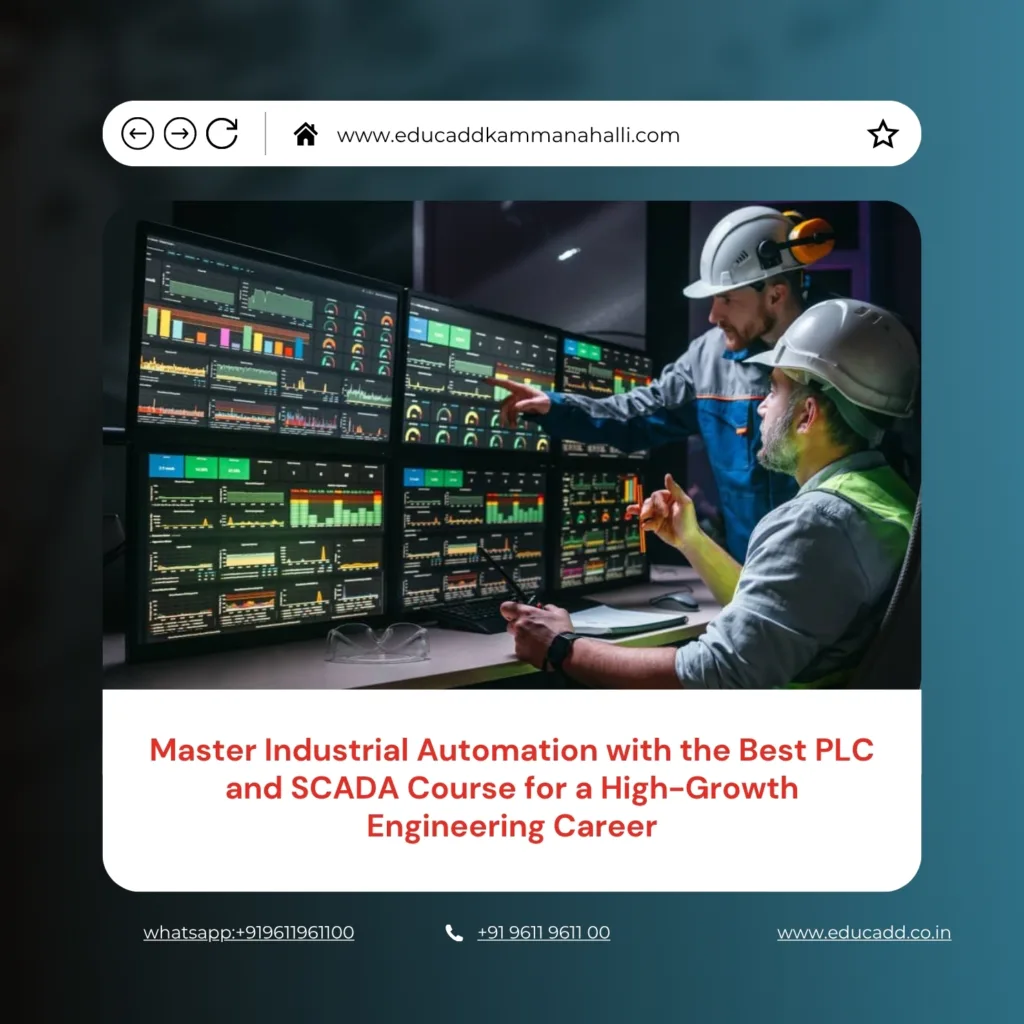
Best PLC SCADA Course
Whether you are a student preparing for your first job or a working professional planning to upgrade your technical expertise, this course provides practical knowledge that matches industry expectations. It combines theoretical concepts with hands-on training, allowing learners to understand real industrial applications while gaining confidence to work on automation projects.
Why Industrial Automation Is the Future of Engineering
Industrial automation is transforming manufacturing plants, production facilities, and process industries by replacing manual operations with intelligent automated systems. Companies are increasingly adopting automation because it improves production speed, minimizes downtime, enhances safety, and delivers consistent product quality. Consequently, industries are actively searching for professionals who possess automation skills and can contribute from the very first day.
The Best PLC SCADA Course prepares learners to meet these industry requirements through structured learning and practical exposure. Instead of focusing only on theoretical knowledge, the course emphasizes real-world industrial scenarios that help students understand how automation systems operate in manufacturing environments. Therefore, learners become confident while working on live industrial applications.
Understanding PLC and SCADA Technologies
Programmable Logic Controllers, commonly known as PLCs, are specialized industrial computers designed to automate machinery and industrial processes. They receive input signals, process the programmed logic, and control output devices with remarkable speed and accuracy. Because PLCs are reliable and efficient, they have become an essential part of almost every automated production system.
SCADA, which stands for Supervisory Control and Data Acquisition, works alongside PLC systems by monitoring, controlling, and collecting data from industrial equipment. Together, PLC and SCADA create intelligent automation systems that allow engineers to supervise complete production lines from centralized control stations. The Best PLC SCADA Course explains these concepts through practical demonstrations that make learning easier and more engaging.
Why Choose the Best PLC and SCADA Course
Selecting the right training program plays a crucial role in your career development. A quality automation course goes beyond classroom lectures by offering practical exercises, industrial projects, and expert guidance that prepare students for professional responsibilities. As industries continue to embrace digital transformation, employers prefer candidates who possess practical automation knowledge.
The Best PLC SCADA Course offers a balanced learning approach that combines theoretical understanding with extensive laboratory practice. Students gain experience in programming PLCs, designing SCADA interfaces, troubleshooting industrial systems, and understanding automation architecture. Moreover, experienced trainers provide continuous support to ensure every learner develops confidence in handling industrial automation tasks.
Comprehensive Course Features and Curriculum
A well-designed curriculum ensures learners develop complete automation knowledge from fundamental concepts to advanced industrial applications. The training begins with basic electrical and control system concepts before gradually introducing PLC programming techniques, ladder logic, industrial communication protocols, sensors, actuators, HMI development, and SCADA configuration. This structured progression helps learners understand each concept thoroughly before moving to advanced topics.
The Best PLC SCADA Course also includes practical laboratory sessions where students configure automation systems, simulate industrial processes, monitor equipment, and solve real-world engineering challenges. Furthermore, project-based learning strengthens technical skills while improving analytical thinking and problem-solving abilities that employers highly value.
Practical Training That Builds Real Industry Skills
Practical learning remains one of the most important aspects of automation education because industries expect professionals to work confidently with industrial equipment. Reading textbooks alone cannot prepare learners for complex industrial environments. Therefore, extensive hands-on practice becomes essential for developing practical competence.
The Best PLC and SCADA Course focuses heavily on laboratory exercises that replicate real manufacturing processes. Students practice PLC programming, create HMI screens, develop SCADA applications, configure industrial networks, and troubleshoot automation systems under expert supervision. Consequently, learners acquire valuable experience before entering the professional workforce.
Career Opportunities After Completing the Course
Automation professionals enjoy excellent career opportunities across manufacturing, automotive, pharmaceuticals, oil and gas, food processing, power generation, infrastructure, and smart factory sectors. As industries continue investing in Industry 4.0 technologies, automation experts remain in high demand across national and international markets.
Completing the Best PLC and SCADA Course opens doors to roles such as PLC Programmer, SCADA Engineer, Automation Engineer, Control System Engineer, Instrumentation Engineer, Maintenance Engineer, Commissioning Engineer, Process Control Engineer, and Industrial Automation Specialist. These positions offer attractive salary packages, career stability, and continuous opportunities for professional growth.
Benefits for Students and Fresh Graduates
Engineering and diploma students often face challenges while entering the job market because employers seek practical skills alongside academic qualifications. Therefore, specialized automation training provides an excellent advantage during campus placements and technical interviews. Practical exposure also helps students understand industrial workflows more effectively.
The Best PLC and SCADA Course bridges the gap between classroom education and industrial expectations by providing practical assignments, live demonstrations, and project-based learning. As a result, fresh graduates become more confident during interviews and improve their employability in automation-driven industries.
Advantages for Working Professionals
Technology continues evolving rapidly, making continuous skill development essential for career advancement. Working professionals who upgrade their automation knowledge often receive better responsibilities, higher salaries, and greater career opportunities. Learning modern automation tools also increases professional versatility across different industries.
The Best PLC and SCADA Course enables experienced engineers and technicians to strengthen their technical expertise without disrupting their professional commitments. Practical assignments help participants immediately apply newly acquired knowledge in their workplaces, resulting in improved productivity and enhanced career prospects.
Importance of Hands-On Projects
Project-based learning allows students to integrate theoretical concepts with practical implementation. Instead of memorizing programming instructions, learners develop complete automation solutions that simulate industrial production environments. This practical experience strengthens technical confidence while enhancing troubleshooting capabilities.
During the Best PLC and SCADA Course, learners work on industrial automation projects involving conveyor systems, motor control, level monitoring, temperature control, process automation, alarm management, and production monitoring. These projects help students build professional portfolios that demonstrate their capabilities to potential employers.
Industry-Relevant Software and Tools Covered
Modern automation industries utilize various software platforms and industrial hardware to develop reliable control systems. Learning these technologies prepares students to work confidently in diverse industrial environments. Familiarity with industrial software significantly improves workplace readiness.
The Best PLC and SCADA Course introduces learners to widely used PLC programming environments, SCADA software, Human Machine Interface development tools, communication protocols, industrial sensors, relays, drives, and networking concepts. Consequently, students graduate with practical knowledge that aligns with current industrial standards.
Skills You Will Develop During the Training
Successful automation engineers require more than programming knowledge. They must understand industrial processes, electrical systems, troubleshooting techniques, communication protocols, documentation standards, and safety procedures. Developing these competencies enhances both technical performance and career progression.
The Best PLC and SCADA Course strengthens logical thinking, analytical abilities, programming skills, system integration knowledge, industrial communication expertise, fault diagnosis techniques, project execution capabilities, and teamwork skills. Therefore, graduates become well-prepared for challenging automation roles across various engineering sectors.
Why Employers Prefer Certified Automation Professionals
Professional certification demonstrates dedication to continuous learning while validating technical competence. Employers often prioritize certified candidates because structured training reflects practical knowledge and industry readiness. Certification also increases credibility during interviews and career advancement opportunities.
The Best PLC and SCADA Course equips learners with practical skills, project experience, and technical confidence that employers appreciate. Since the curriculum closely follows industrial practices, certified professionals become valuable assets capable of contributing effectively to automation projects from the beginning of their careers.
Choosing the Right Training Institute
Finding the right training institute significantly influences learning outcomes and career success. Prospective students should evaluate trainer experience, laboratory infrastructure, practical exposure, placement assistance, industry-oriented curriculum, and student support before selecting any automation program. These factors collectively determine the quality of education received.
The Best PLC and SCADA Course should provide experienced faculty members, advanced automation laboratories, project-based learning, updated curriculum, flexible learning options, interview preparation, certification, and dedicated placement support. Choosing a reputed institute ensures learners receive industry-relevant education that supports long-term professional growth.
Conclusion
Industrial automation continues to reshape engineering industries by creating smarter, faster, and more efficient production environments. Consequently, professionals with strong PLC and SCADA knowledge remain highly valuable across manufacturing, infrastructure, energy, pharmaceuticals, and numerous other industrial sectors. Investing in specialized automation training today creates excellent opportunities for career growth tomorrow.
The Best PLC SCADA Course offers the ideal combination of theoretical understanding, practical laboratory training, industry-oriented curriculum, live projects, and career-focused skill development. Whether you are a student beginning your engineering journey or a working professional seeking career advancement, this course equips you with the expertise required to succeed in today’s competitive automation industry. Enroll in a comprehensive PLC and SCADA training program and take the first step toward building a successful, future-ready engineering career.

