
From Beginner to Expert: The Ultimate BIM Career Path for Freshers and Professionals
The construction and infrastructure industry is evolving faster than ever, driven by digital transformation and smart technologies. One of the most influential innovations shaping this change is Building Information Modeling (BIM). Whether you are a fresher exploring career options or an experienced professional aiming to upskill, understanding the BIM Career Path Guide can open doors to exciting opportunities.
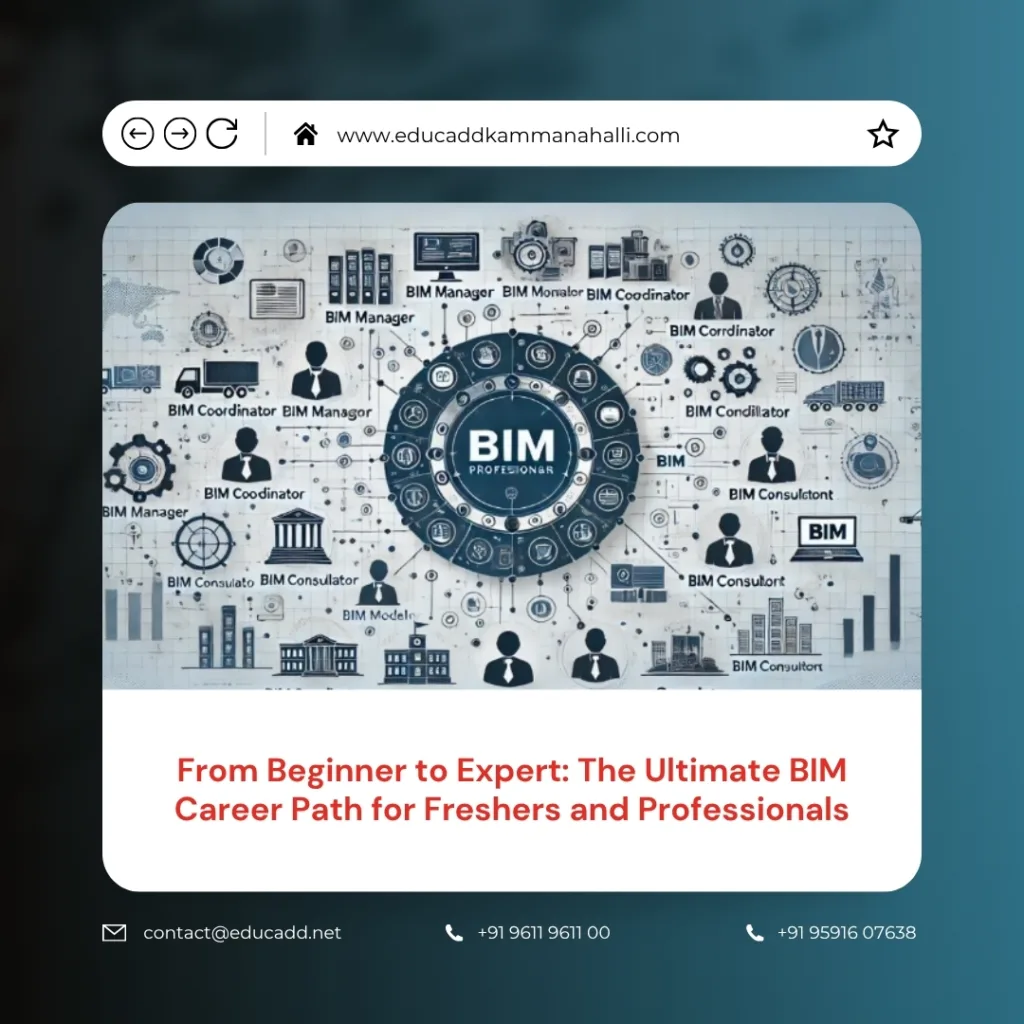
BIM Career Path Guide
Today, BIM is not just a tool but a complete process that integrates design, construction, and project management into a unified workflow. As a result, professionals with BIM expertise are in high demand across the globe. This guide walks you through every stage of a BIM Career Path Guide, from entry-level roles to advanced leadership positions, helping you build a strong and future-ready profession.
1. Understanding What BIM Really Means
Building Information Modeling is much more than 3D modeling. It involves creating intelligent digital representations of physical structures. These models include detailed data about design, materials, cost, and scheduling. Because of this, BIM enables better collaboration among architects, engineers, and contractors.
Moreover, BIM reduces errors, improves efficiency, and enhances project outcomes. As industries shift towards digital workflows, professionals with BIM knowledge are becoming indispensable. Therefore, understanding the fundamentals is the first step in building a successful career in this field.
2. Why BIM is a Game-Changer for Careers
The demand for BIM professionals has increased significantly due to rapid urbanization and infrastructure development. Companies now prefer candidates who can handle digital tools and manage integrated workflows efficiently.
Additionally, BIM offers global career opportunities. Professionals can work on international projects without relocating. This flexibility makes BIM an attractive career option. As industries continue adopting BIM standards, the demand will only grow stronger.
3. BIM Career Opportunities for Freshers
Fresh graduates can enter the BIM industry through various entry-level roles. These positions focus on learning software tools and understanding project workflows. With proper training, freshers can quickly build a strong foundation.
Some common entry-level roles include:
- BIM Modeler
- CAD Technician
- Junior Design Engineer
These roles allow freshers to gain hands-on experience and develop technical skills. Over time, they can move into more specialized and higher-paying positions.
4. Essential Skills Required to Start in BIM
To succeed in BIM, a combination of technical and soft skills is required. First, professionals must learn software such as Revit, Navisworks, and AutoCAD. These tools are widely used in BIM projects.
In addition, communication and teamwork are crucial. Since BIM involves collaboration, professionals must work effectively with different teams. Problem-solving skills also play a key role in handling complex project challenges.
5. BIM Career Path Progression Explained
A BIM career typically follows a structured path. Initially, professionals start as modelers or technicians. Then, they move into roles such as BIM Coordinators, where they manage project workflows.
Later, experienced professionals can become BIM Managers or Consultants. These roles involve strategic decision-making and team leadership. Therefore, continuous learning and experience are essential for career growth.
6. Role of BIM Modeler: The First Step
The BIM Modeler role is the starting point for most professionals. In this position, individuals create detailed 3D models based on design specifications. They also ensure accuracy and consistency in the models.
This role helps professionals understand project requirements and workflows. As a result, it lays a strong foundation for future career advancement.
7. Moving Ahead as a BIM Coordinator
After gaining experience, professionals can transition into BIM Coordinator roles. These roles involve managing project data and ensuring coordination between different teams.
Key responsibilities include:
- Clash detection and resolution
- Coordinating between architects, engineers, and contractors
This position requires both technical expertise and leadership skills. It also serves as a stepping stone to managerial roles.
8. Advancing to BIM Manager Roles
BIM Managers oversee entire projects and ensure successful implementation of BIM processes. They develop strategies, manage teams, and ensure project efficiency.
This role demands strong leadership and deep technical knowledge. Professionals must also stay updated with industry trends and standards. As a result, BIM Managers are highly valued in the industry.
9. Specialized BIM Roles You Can Explore
As professionals gain experience, they can specialize in specific areas. Specialization enhances career growth and increases earning potential.
Popular specialization areas include:
- BIM for MEP (Mechanical, Electrical, Plumbing)
- Structural BIM
- Architectural BIM
Each specialization offers unique opportunities and challenges. Therefore, choosing the right path depends on individual interests and skills.
10. Importance of BIM Certifications
Certifications play a crucial role in building credibility. They validate your skills and make you stand out in the job market. Many employers prefer certified professionals for BIM roles.
Moreover, certifications help professionals stay updated with the latest tools and technologies. Investing in certification programs can significantly boost career prospects.
11. Software Tools Every BIM Professional Must Learn
BIM professionals must be proficient in various software tools. These tools help in designing, analyzing, and managing projects efficiently.
Commonly used tools include:
- Autodesk Revit
- Navisworks
- AutoCAD
- BIM 360
Learning these tools enhances productivity and increases job opportunities. Therefore, mastering software skills is essential for success.
12. Challenges in a BIM Career and How to Overcome Them
Like any career, BIM also comes with challenges. Professionals may face difficulties in adapting to new technologies or managing complex projects. However, these challenges can be overcome with the right approach.
Continuous learning and practical experience are key. Additionally, staying updated with industry trends helps professionals remain competitive. With dedication, these challenges can be turned into opportunities.
13. Future Scope of BIM Careers
The future of BIM looks extremely promising. With the rise of smart cities and digital construction, BIM will play a central role in project execution. Governments and organizations are increasingly adopting BIM standards.
As a result, job opportunities will continue to grow. Professionals with advanced BIM skills will be in high demand. Therefore, investing in a BIM career today ensures long-term success.
14. Tips to Build a Successful BIM Career
Building a successful BIM career requires strategic planning and consistent effort. First, focus on learning the fundamentals. Then, gain practical experience through projects and internships.
Networking also plays a vital role. Connecting with industry professionals can open new opportunities. Finally, continuous learning ensures long-term growth in this dynamic field.
Conclusion
A BIM Career Path Guide offers immense opportunities for both freshers and experienced professionals. From entry-level roles to leadership positions, BIM provides a clear and rewarding career path. As industries continue to embrace digital transformation, the demand for skilled BIM professionals will only increase.
By developing the right skills, gaining practical experience, and staying updated with industry trends, anyone can build a successful career in BIM. Whether you are just starting or looking to advance, now is the perfect time to step into the world of BIM and shape a future filled with growth, innovation, and global opportunities.

