
BIM Standards and Workflows: The Complete Guide to Delivering Accurate, Efficient, and Collaborative Construction Projects
The construction and infrastructure industry has changed dramatically over the last decade, and digital transformation now plays a central role in every stage of a project. Among the many technologies shaping this evolution, BIM Standards and Workflows have become the backbone of successful planning, design, construction, and facility management. Organizations that implement structured BIM practices experience improved collaboration, reduced project risks, better communication, and higher productivity.
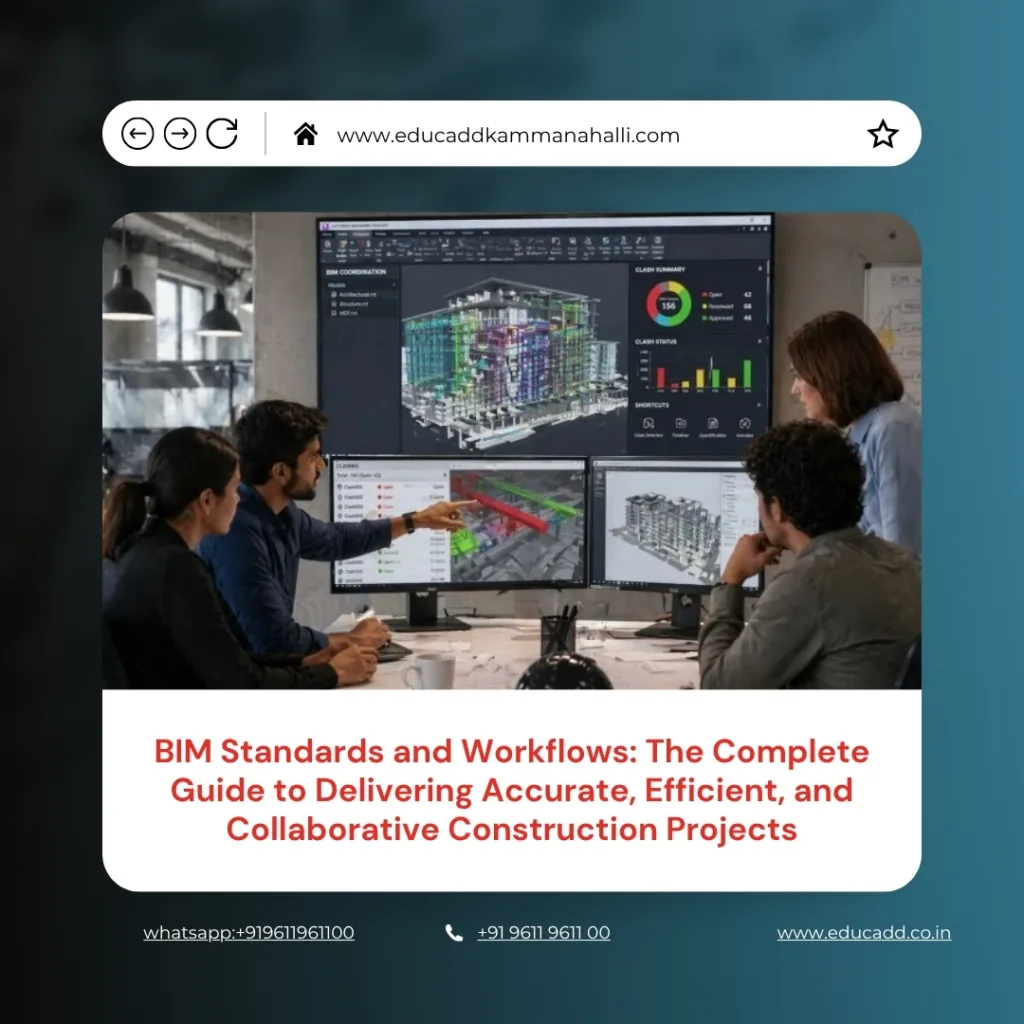
BIM Standards and Workflows
Instead of relying on disconnected drawings and manual coordination, professionals now work within an intelligent digital environment where information flows seamlessly across every discipline. This guide explains the importance of BIM standards, explores effective workflows, and highlights how companies can use them to achieve consistent project success.
Understanding BIM Standards and Workflows
BIM Standards and Workflows refer to the rules, processes, documentation methods, and collaboration practices that govern Building Information Modeling projects. These standards ensure that architects, structural engineers, MEP consultants, contractors, and facility managers work using the same framework throughout the project lifecycle. Without standardized workflows, project teams often create inconsistent models, duplicate information, and face communication gaps. However, when organizations adopt well-defined BIM standards, every stakeholder understands naming conventions, file structures, modeling practices, and information exchange procedures. As a result, projects become more organized, transparent, and efficient from concept to completion.
Why BIM Standards Matter in Modern Construction
Construction projects involve multiple disciplines working simultaneously, making coordination a challenging task. BIM standards provide a common language that helps every team member understand project expectations. They establish uniform modeling practices, define project responsibilities, and improve communication among all participants. Furthermore, standardized processes reduce confusion during design revisions and construction updates. Teams can also identify issues earlier because everyone follows the same documentation methods. Consequently, projects achieve greater accuracy while reducing delays, unexpected costs, and costly design conflicts that commonly occur in traditional construction workflows.
The Role of BIM Workflows in Project Success
An effective BIM workflow outlines how information moves from one project stage to another. Every phase begins with planning and gradually progresses through design development, coordination, construction, handover, and facility management. Instead of treating each phase separately, BIM workflows create continuous information sharing throughout the project lifecycle. Designers update models regularly, engineers coordinate systems efficiently, and contractors receive accurate construction data before work begins. Therefore, project teams spend less time resolving conflicts on-site and more time focusing on quality, productivity, and timely project completion.
Essential Components of BIM Standards
Every successful BIM implementation relies on several essential components that maintain consistency across projects. These include modeling guidelines, naming conventions, file management procedures, object libraries, level of development (LOD), data classification systems, quality control processes, and documentation requirements. Organizations also establish approval procedures and revision management systems to ensure information remains accurate throughout the project. Moreover, standardized templates help new team members adapt quickly while maintaining consistent deliverables. These components collectively create a structured environment where every project follows the same professional standards regardless of its size or complexity.
Common BIM Workflow Stages
A well-structured BIM workflow generally starts with project planning and requirement analysis. During this stage, stakeholders define project goals, BIM execution plans, responsibilities, and collaboration methods. The next phase focuses on conceptual design, followed by detailed architectural, structural, and MEP modeling. Afterward, coordination meetings identify and resolve clashes before construction begins. Construction teams then use coordinated models for scheduling, quantity estimation, and site execution. Finally, the completed model supports facility management by providing accurate asset information for maintenance and future renovations. Each workflow stage contributes to a smoother and more predictable project delivery process.
BIM Execution Plan as the Foundation
The BIM Execution Plan, commonly called the BEP, serves as the roadmap for every BIM project. It defines project objectives, software platforms, communication protocols, deliverables, quality standards, and stakeholder responsibilities. A comprehensive BEP also explains information exchange schedules and establishes expectations for every project participant. Since every team member understands the agreed procedures, collaboration improves significantly. Furthermore, project managers can monitor progress more effectively because every milestone follows predefined standards. This structured approach reduces misunderstandings while supporting efficient decision-making throughout the project lifecycle.
Collaboration and Information Sharing
One of the greatest strengths of BIM Standards and Workflows is the ability to improve collaboration among different disciplines. Architects, structural engineers, mechanical engineers, electrical consultants, plumbing designers, contractors, and clients can all work on shared project data. Cloud-based collaboration platforms further enhance communication by allowing real-time model updates and document sharing. As a result, every stakeholder accesses the latest project information without relying on outdated files. Better collaboration also minimizes design conflicts, shortens approval cycles, and improves overall project transparency from beginning to end.
Clash Detection and Quality Assurance
Clash detection represents one of the most valuable benefits of BIM workflows. Before construction starts, BIM software identifies physical conflicts between architectural, structural, and MEP systems. Engineers review these clashes, make necessary adjustments, and update coordinated models before site execution begins. Consequently, construction teams avoid expensive rework and unnecessary project delays. Quality assurance processes also ensure that models comply with organizational standards and project requirements. Regular model reviews, validation procedures, and automated quality checks further strengthen project accuracy while maintaining consistent deliverables across every discipline.
International BIM Standards Used Worldwide
Many organizations adopt internationally recognized standards to improve project consistency and global collaboration. The ISO 19650 series has become one of the most widely accepted frameworks for managing information throughout the lifecycle of built assets using BIM. Other guidelines include national BIM standards developed by various countries to address local construction practices and regulatory requirements. Following recognized standards helps organizations participate in international projects while maintaining high-quality documentation. Moreover, compliance with established standards builds trust among clients and enhances professional credibility in the competitive construction industry.
Technology Supporting BIM Workflows
Modern BIM workflows rely on advanced software solutions that enable intelligent modeling, coordination, scheduling, and project management. Architectural design tools, structural analysis software, MEP modeling applications, cloud collaboration platforms, and project management systems work together to create an integrated digital ecosystem. Automation further improves productivity by reducing repetitive tasks and improving model consistency. Additionally, technologies such as artificial intelligence, digital twins, virtual reality, and augmented reality continue to enhance BIM capabilities. These innovations allow project teams to visualize designs, simulate construction activities, and make informed decisions before physical construction begins.
Challenges in Implementing BIM Standards
Although BIM offers significant advantages, organizations often encounter challenges during implementation. Resistance to change, inadequate training, inconsistent modeling practices, limited software knowledge, and poor communication can affect project success. Smaller organizations may also face budget constraints when investing in software, hardware, and employee training. Nevertheless, these challenges can be addressed through proper planning, continuous education, and strong leadership. Companies that establish clear BIM standards, invest in professional development, and encourage collaboration usually overcome implementation barriers more effectively while achieving long-term operational improvements.
Best Practices for Effective BIM Standards and Workflows
Organizations should begin by developing clear BIM objectives that align with project requirements and business goals. Creating standardized templates, maintaining consistent naming conventions, and documenting workflows help ensure quality across multiple projects. Regular training sessions keep employees updated with the latest BIM technologies and industry practices. Frequent coordination meetings encourage collaboration and resolve issues before they become costly problems. In addition, continuous quality reviews improve model accuracy and maintain compliance with project standards. By following these best practices, companies create reliable workflows that deliver consistent project outcomes while supporting sustainable business growth.
Future Trends in BIM Standards and Workflows
The future of BIM Standards and Workflows continues to evolve alongside emerging digital technologies. Artificial intelligence will automate repetitive modeling tasks and improve design optimization. Digital twins will provide real-time building performance data throughout the operational lifecycle. Cloud computing will strengthen global collaboration by enabling instant information sharing across distributed teams. Sustainability requirements will also encourage greater integration of energy analysis, carbon assessment, and lifecycle management within BIM environments. Consequently, organizations that embrace these advancements will remain competitive while delivering smarter, greener, and more efficient construction projects.
Conclusion
As construction projects become increasingly complex, the importance of BIM Standards and Workflows continues to grow. Standardized processes create consistency, improve collaboration, reduce project risks, and enhance overall efficiency from planning through facility management. Organizations that establish clear BIM guidelines benefit from better communication, accurate information sharing, effective clash detection, and higher-quality project delivery. Furthermore, continuous training and the adoption of modern technologies ensure that BIM workflows remain relevant in an evolving digital landscape. By investing in robust BIM standards and structured workflows today, construction professionals can achieve greater productivity, stronger client satisfaction, and long-term success in an increasingly competitive industry.

