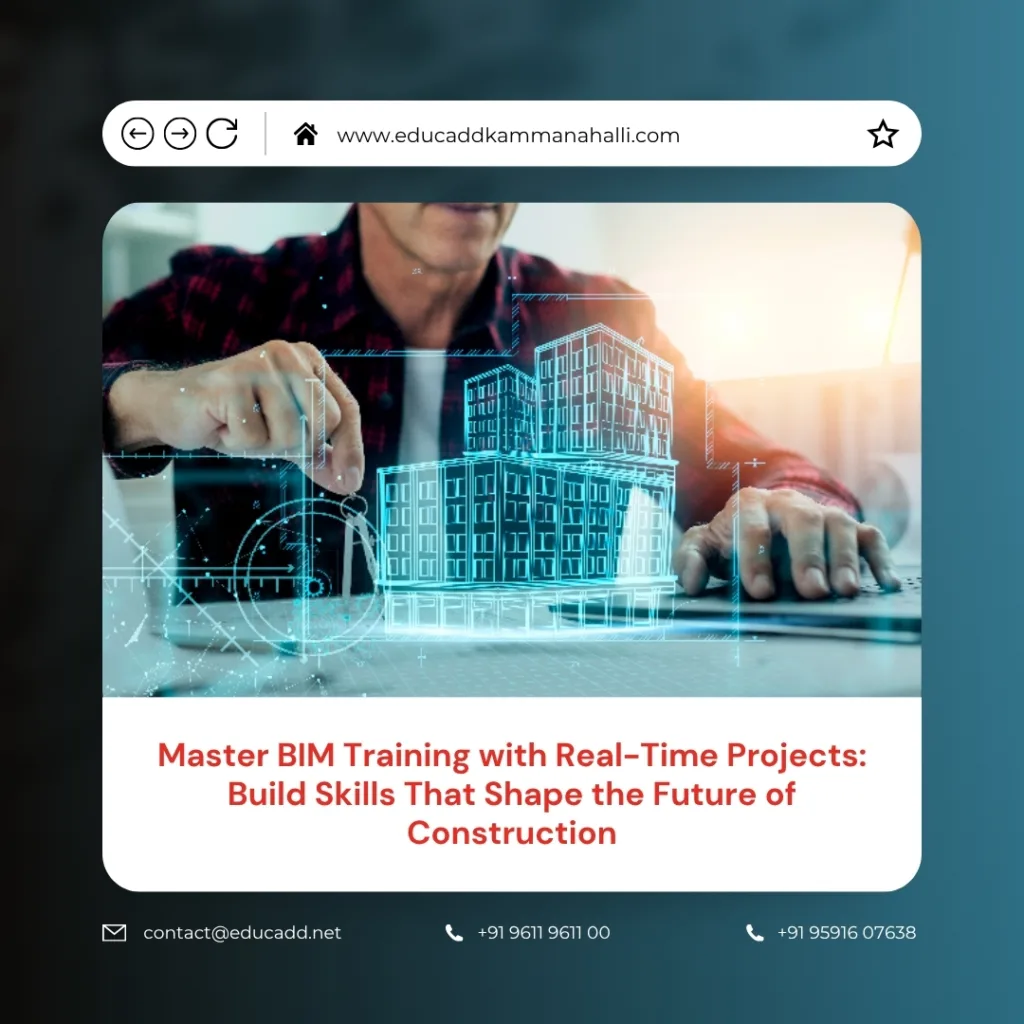
Master BIM Training with Real-Time Projects: Build Skills That Shape the Future of Construction
The construction and infrastructure industry is rapidly evolving with digital transformation at its core. Traditional design and project execution methods are being replaced by smarter, data-driven approaches that improve efficiency, reduce errors, and enhance collaboration. One of the most impactful innovations leading this transformation is Building Information Modeling (BIM). For aspiring civil engineers, architects, and construction professionals, enrolling in BIM Training Real Projects is no longer optional—it is essential.
BIM Training Real Projects
This blog explores how BIM Training Real Projects combined with practical exposure can elevate your career. It explains the importance of hands-on learning, industry relevance, and how real-time projects help bridge the gap between theory and application. If you want to future-proof your career and stand out in a competitive market, this comprehensive guide will help you understand why BIM training is the right choice.
1. What is BIM and Why It Matters Today
Building Information Modeling is a digital process that involves creating and managing information about a construction project throughout its lifecycle. Unlike traditional drafting, BIM integrates 3D models with data, allowing professionals to visualize, analyze, and optimize projects before actual construction begins.
BIM is important because it improves collaboration between architects, engineers, and contractors. It reduces costly errors and enhances project efficiency. As infrastructure demands grow worldwide, companies are actively seeking professionals who are skilled in BIM tools and workflows.
2. The Growing Demand for BIM Professionals
The global construction industry is embracing digitalization, and BIM is at the center of this shift. Governments and private organizations are mandating BIM for large-scale projects, making it a must-have skill for professionals.
With urbanization increasing rapidly, the demand for skilled BIM professionals continues to rise. Companies are looking for individuals who can manage digital models, coordinate teams, and ensure project accuracy. This demand creates excellent career opportunities with high salary potential.
3. Why Real-Time Projects Are Essential in BIM Training
Learning BIM through theory alone is not enough. Real-time projects provide practical exposure that helps learners understand how concepts are applied in actual construction scenarios. They simulate real industry challenges and teach problem-solving skills.
When you work on live projects, you gain confidence and hands-on experience. This experience makes you job-ready and gives you a competitive advantage in the job market.
4. Bridging the Gap Between Theory and Industry Practice
Many students struggle to apply theoretical knowledge in real-world situations. BIM training with real-time projects bridges this gap effectively. It allows learners to understand workflows, project coordination, and data management.
By working on practical assignments, learners become familiar with industry standards. They also develop the ability to handle complex project requirements, which is highly valued by employers.
5. Key Skills You Gain from BIM Training
BIM training equips you with a wide range of technical and soft skills that are essential for success in the construction industry.
- 3D modeling and visualization skills
- Project coordination and collaboration techniques
In addition to these, you learn software tools, data management, and problem-solving strategies that make you industry-ready.
6. Popular BIM Tools You Will Learn
BIM training programs include learning advanced software tools that are widely used in the industry. These tools help in designing, modeling, and analyzing construction projects.
Some commonly used tools include Autodesk Revit, Navisworks, and AutoCAD. Mastering these tools enhances your technical expertise and increases your employability.
7. Real-Time Project Exposure Enhances Confidence
Working on real-time projects builds confidence and improves your ability to handle challenges. It allows you to experience real project scenarios, deadlines, and teamwork.
This exposure helps you understand how different teams collaborate and how projects are executed from start to finish. As a result, you become more confident in your skills and decision-making abilities.
8. Industry-Relevant Curriculum for Better Learning
A well-structured BIM training program focuses on industry requirements. It includes modules that cover design, modeling, coordination, and project management.
The curriculum is designed to ensure that learners gain practical knowledge. It also keeps them updated with the latest trends and technologies in the construction industry.
9. Career Opportunities After BIM Training
BIM training opens up a wide range of career opportunities in various sectors, including construction, architecture, and engineering.
- BIM Modeler
- BIM Coordinator
Other roles include BIM Manager, Project Engineer, and Design Consultant. These roles offer excellent growth prospects and competitive salaries.
10. How BIM Improves Project Efficiency
BIM significantly improves project efficiency by reducing errors and enhancing coordination. It allows teams to identify issues before construction begins, saving time and cost.
With accurate data and visualization, decision-making becomes easier. This leads to better project outcomes and increased client satisfaction.
11. The Role of BIM in Sustainable Construction
Sustainability is becoming a key focus in the construction industry. BIM plays a crucial role in designing energy-efficient and environmentally friendly buildings.
It helps in analyzing materials, energy consumption, and environmental impact. As a result, projects become more sustainable and cost-effective in the long run.
12. Advantages of Learning BIM with Practical Exposure
Learning BIM with real-time projects offers several advantages. It prepares you for real-world challenges and enhances your problem-solving skills.
You gain hands-on experience, understand industry workflows, and develop confidence. These advantages make you a valuable asset to any organization.
13. Tips to Choose the Right BIM Training Institute
Choosing the right training institute is crucial for your success. Look for institutes that offer real-time project exposure, experienced trainers, and updated curriculum.
Ensure that the institute provides placement support and practical training. This will help you gain the skills and confidence needed to succeed in your career.
14. Future Scope of BIM in Construction Industry
The future of BIM is extremely promising. With advancements in technology, BIM is expected to become more advanced and widely used.
Integration with artificial intelligence and virtual reality will further enhance its capabilities. Professionals with BIM expertise will continue to be in high demand globally.
Conclusion
BIM Training Real Projects is a powerful way to build a successful career in the construction and engineering industry. It not only provides technical knowledge but also equips you with practical skills that are essential for real-world applications. As the industry continues to evolve, professionals who are trained in BIM will have a significant advantage over others.
Investing in BIM training is a smart decision for anyone looking to grow in the construction field. With the right training and hands-on experience, you can unlock numerous career opportunities and become a valuable contributor to modern infrastructure development.

