
Transform Your Career from Anywhere with BIM Virtual Classroom Training
The construction, architecture, and engineering industries are evolving at an unprecedented pace. Digital technologies now play a central role in project planning, coordination, and execution. Among these technologies, BIM Virtual Classroom Training has emerged as one of the most effective ways for students and professionals to develop industry-relevant skills. Unlike traditional learning methods, virtual BIM education allows learners to access expert guidance, practical exercises, and real-world projects from any location.
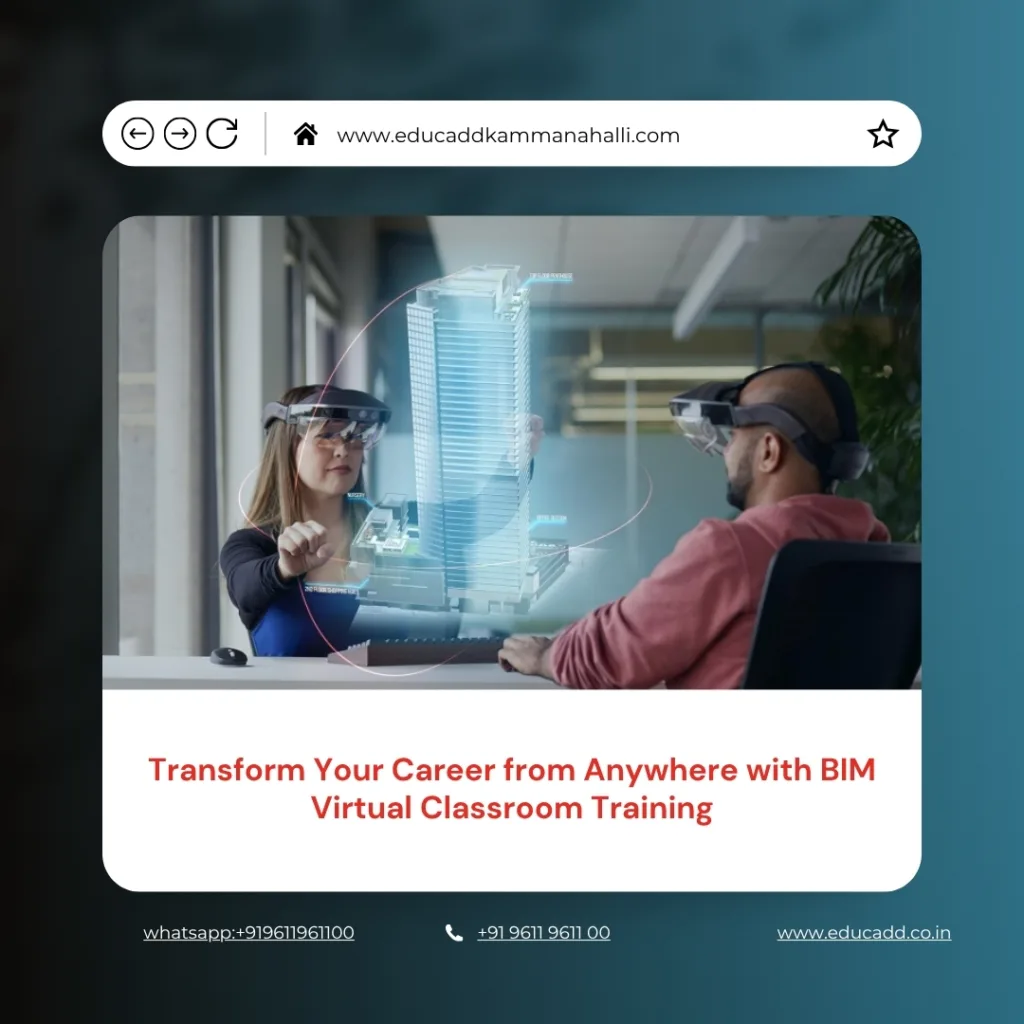
BIM Virtual Classroom Training
As organizations increasingly adopt Building Information Modeling for project management and collaboration, the demand for trained BIM professionals continues to rise. Therefore, enrolling in BIM Virtual Classroom Training can open doors to rewarding career opportunities while offering flexibility, convenience, and access to cutting-edge industry knowledge.
The Growing Importance of BIM in Modern Construction
Building Information Modeling has transformed the way construction projects are planned and executed. Rather than relying solely on traditional drawings, BIM creates intelligent digital representations of buildings and infrastructure. These models contain valuable information related to design, materials, schedules, costs, and maintenance requirements. As a result, project stakeholders can collaborate more effectively and identify potential issues before construction begins.
Today, governments, construction companies, architects, and engineering firms increasingly require BIM expertise. Consequently, professionals who understand BIM workflows enjoy a competitive advantage in the job market. Through structured virtual training, learners gain the technical knowledge needed to meet these industry expectations while developing practical skills that employers actively seek.
Understanding How BIM Virtual Classroom Training Works
Virtual classroom training combines live instructor-led sessions with digital learning tools. Students attend classes online through interactive platforms where they can communicate directly with trainers, participate in discussions, and complete hands-on exercises. Unlike pre-recorded courses, live virtual training creates a classroom environment that encourages engagement and collaboration.
The learning experience often includes software demonstrations, project assignments, assessments, and doubt-clearing sessions. In addition, students receive guidance while working on practical BIM projects. This approach helps learners understand theoretical concepts while applying them in realistic scenarios. Consequently, they develop confidence in using BIM software and methodologies within professional environments.
Flexibility That Supports Every Learner
One of the biggest advantages of virtual BIM education is flexibility. Many students struggle to attend traditional classroom sessions due to work commitments, travel limitations, or personal responsibilities. Virtual learning removes these barriers by allowing participants to access training from home or office.
Learners can save valuable commuting time and focus more on skill development. Moreover, many training institutes provide recorded sessions that can be reviewed later. This feature helps students revisit complex topics and strengthen their understanding. As a result, learning becomes more convenient and effective without compromising educational quality.
Industry-Relevant Skills Developed Through BIM Training
Modern BIM programs focus on practical competencies that align with current industry requirements. Students learn how to create intelligent 3D models, manage project data, coordinate multidisciplinary teams, and generate construction documentation efficiently.
Key skills often covered include:
- 3D modeling and visualization techniques
- Project coordination and clash detection
These capabilities enable professionals to contribute effectively to construction projects from conceptual design through facility management. Furthermore, employers value candidates who possess both technical expertise and collaborative problem-solving abilities. Therefore, BIM training serves as a strong foundation for long-term career growth.
Learning Popular BIM Software Applications
A comprehensive BIM training program introduces learners to widely used software platforms that support various aspects of project delivery. These tools help professionals create, manage, and analyze building information throughout the project lifecycle.
Students typically gain experience with software used for architectural modeling, structural design, MEP coordination, project management, and visualization. Through guided practice sessions, learners understand software functionality while developing workflows that improve productivity. Consequently, they become capable of handling real-world project requirements with greater efficiency and accuracy.
Real-Time Interaction with Experienced Trainers
Virtual classrooms provide opportunities for direct communication with industry experts. Instead of learning independently through recorded content alone, students can ask questions, seek clarification, and receive personalized feedback during live sessions.
This interaction significantly enhances the learning experience because instructors can address specific challenges faced by participants. Furthermore, trainers often share industry insights, practical tips, and professional experiences that go beyond textbook knowledge. Such exposure helps students understand workplace expectations and prepares them for actual project environments.
Enhancing Collaboration Skills in Digital Environments
Construction projects involve architects, engineers, contractors, consultants, and project managers working together toward common goals. Effective collaboration is essential for project success. BIM methodologies support this collaboration by enabling stakeholders to share information through centralized digital models.
Virtual classroom training emphasizes collaborative workflows that mirror real project scenarios. Students learn how different disciplines interact within BIM environments and how information is exchanged efficiently. Consequently, they develop teamwork and communication skills that are highly valued in modern construction organizations.
Career Opportunities After Completing BIM Training
The demand for BIM professionals continues to expand across multiple sectors. As more organizations embrace digital construction practices, qualified individuals can explore a wide range of career paths. BIM expertise is no longer limited to architects or engineers. Instead, professionals from diverse educational backgrounds can benefit from BIM knowledge.
Common career opportunities include:
- BIM Modeler, BIM Coordinator, and BIM Engineer
- BIM Manager, Project Coordinator, and Design Consultant
These roles offer attractive growth prospects because companies increasingly prioritize digital project delivery methods. Therefore, BIM certification and training can significantly improve employability and career advancement potential.
Improving Project Efficiency Through BIM Knowledge
Construction projects often face challenges related to delays, budget overruns, design conflicts, and communication gaps. BIM technology addresses these issues by improving coordination and providing accurate project information throughout the lifecycle.
Virtual BIM training helps learners understand how digital models support informed decision-making. By identifying clashes before construction begins, teams can reduce costly rework and avoid unnecessary delays. Additionally, BIM facilitates better resource planning and project monitoring. Consequently, trained professionals contribute directly to improved project outcomes and organizational efficiency.
The Cost-Effectiveness of Virtual BIM Education
Traditional classroom programs often involve additional expenses such as transportation, accommodation, and printed materials. Virtual training eliminates many of these costs while delivering comparable educational value. Students can access high-quality instruction without relocating or disrupting their professional responsibilities.
Furthermore, organizations can train multiple employees simultaneously through online platforms, reducing training expenditures. Because virtual programs are scalable and accessible, they provide an economical solution for both individuals and companies seeking skill development. As a result, BIM education becomes more affordable and widely available.
Building a Strong Professional Portfolio
Employers increasingly evaluate candidates based on practical experience rather than theoretical knowledge alone. Therefore, developing a professional portfolio during training can significantly enhance career prospects. Many BIM courses include project-based assignments that allow students to showcase their capabilities.
Through these projects, learners demonstrate proficiency in modeling, coordination, documentation, and visualization. Additionally, completed assignments provide tangible evidence of technical competence. A strong portfolio not only supports job applications but also helps professionals distinguish themselves in a competitive marketplace.
Keeping Pace with Industry Trends and Innovations
Technology continues to reshape the construction industry through automation, cloud collaboration, digital twins, artificial intelligence, and smart infrastructure solutions. BIM serves as a foundation for many of these innovations. Consequently, professionals who understand BIM are better positioned to adapt to future industry developments.
Virtual training programs frequently update their curriculum to reflect emerging technologies and best practices. This ensures that learners remain aligned with current market requirements. Moreover, exposure to evolving digital workflows prepares students for future opportunities in an increasingly technology-driven industry.
Why BIM Virtual Classroom Training Is the Future of Learning
The future of professional education lies in accessibility, flexibility, and practical relevance. BIM virtual classroom training successfully combines all these elements within a single learning environment. Students receive expert instruction, hands-on experience, and industry-focused knowledge without geographical limitations.
As remote collaboration becomes increasingly common across industries, virtual learning environments mirror the way modern teams operate. Therefore, participants not only learn BIM concepts but also gain experience working within digital ecosystems. This dual advantage strengthens their readiness for professional roles and enhances long-term career prospects.
Developing Confidence Through Practical BIM Projects
Confidence plays a crucial role in professional success. Many learners possess theoretical knowledge but struggle when faced with real project challenges. Practical BIM assignments bridge this gap by allowing students to apply concepts within realistic situations. Throughout virtual training, participants work on projects that simulate actual industry workflows, helping them understand project coordination, documentation standards, and model management.
Additionally, project-based learning encourages critical thinking and problem-solving. Students learn how to analyze issues, evaluate solutions, and make informed decisions using BIM tools. Over time, repeated practice strengthens technical competence and builds confidence. Consequently, graduates enter the workforce prepared to contribute effectively from the very beginning of their careers.
Conclusion
The construction industry continues to embrace digital transformation, making BIM expertise more valuable than ever before. BIM Virtual Classroom Training provides a flexible, accessible, and industry-focused pathway for acquiring these essential skills. Through live instruction, practical projects, software training, and collaborative learning experiences, students gain the knowledge needed to succeed in modern construction environments. Whether you are a student seeking career opportunities, a working professional aiming for advancement, or an organization investing in workforce development, BIM training offers significant long-term benefits.
By choosing the right virtual learning program today, you can build the expertise, confidence, and professional credibility required to thrive in the future of construction and infrastructure development.

