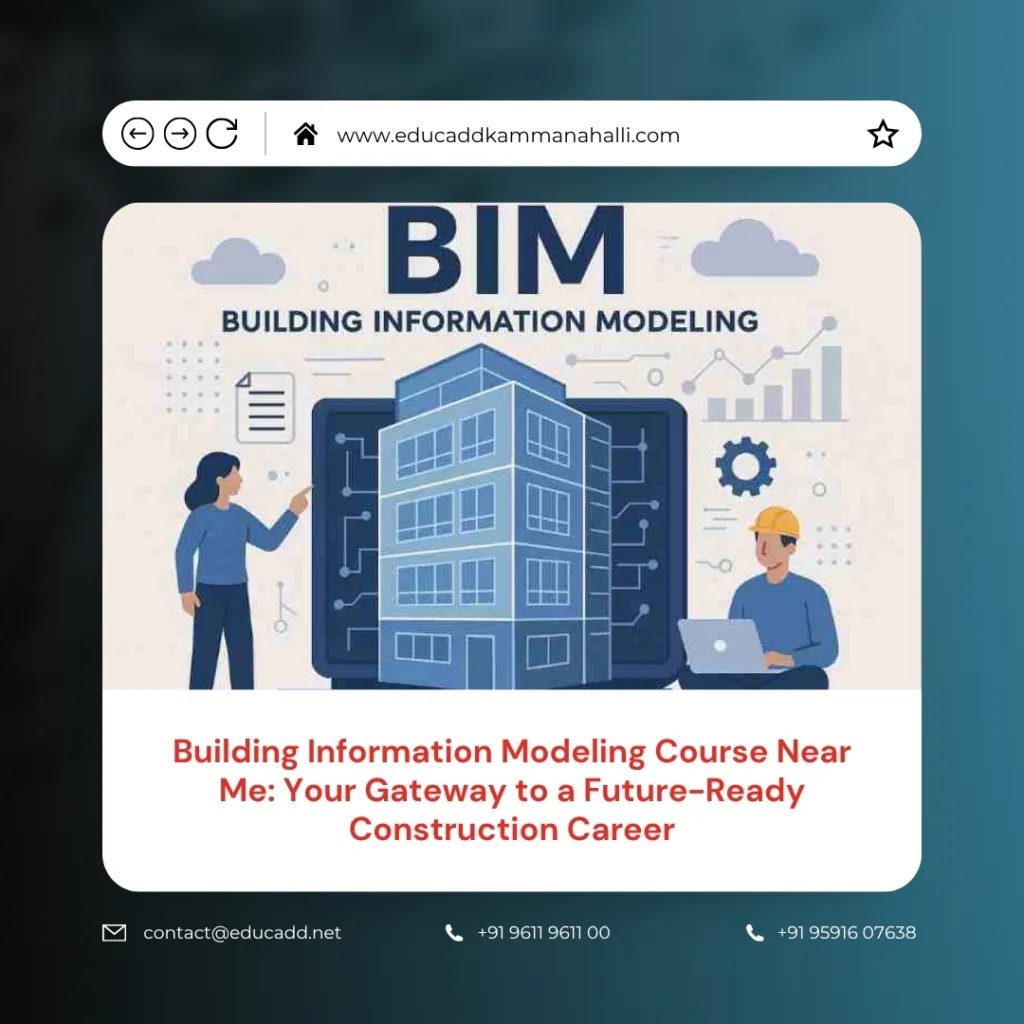
Building Information Modeling Course Near Me: Your Gateway to a Future-Ready Construction Career
The construction industry is rapidly evolving, and professionals are expected to adapt to smarter, faster, and more efficient workflows. One of the most transformative innovations driving this change is Building Information Modeling (BIM). If you have been searching for a “Building Information Modeling Course,” you are already on the right path toward a high-growth career. BIM is no longer just a technical skill—it has become a core requirement for engineers, architects, and construction managers who want to stay competitive.
Building Information Modeling Course
In today’s digital era, projects are becoming increasingly complex, requiring seamless collaboration and real-time data integration. BIM bridges this gap by enabling professionals to create intelligent 3D models that go beyond simple design. A well-structured BIM course equips you with practical knowledge, industry tools, and real-world applications that can significantly enhance your career opportunities.
What is Building Information Modeling (BIM)?
Building Information Modeling is a digital representation of the physical and functional characteristics of a building. It allows professionals to plan, design, construct, and manage buildings efficiently using advanced software tools like Autodesk Revit and Navisworks.
Unlike traditional 2D drafting, BIM integrates multiple dimensions such as time, cost, and sustainability into a single model. This helps stakeholders visualize the entire lifecycle of a project before construction even begins. As a result, errors are reduced, costs are controlled, and project timelines are optimized.
Why Choose a BIM Course Near You?
Searching for a BIM course near you offers several advantages. Local training institutes often provide hands-on sessions, real-time project exposure, and personalized guidance. This ensures better understanding compared to online-only learning formats.
Additionally, attending a nearby institute allows you to interact with industry experts and peers, which enhances your learning experience. Networking opportunities also increase, helping you build connections that may lead to job placements or collaborations.
Growing Demand for BIM Professionals
The demand for BIM professionals is growing rapidly across the globe. Infrastructure projects, smart cities, and sustainable construction initiatives are driving the need for skilled BIM experts. Countries like the USA, UK, and even India are adopting BIM standards for large-scale projects.
Organizations now prefer candidates who are proficient in BIM tools and workflows. This trend indicates that enrolling in a BIM course is not just beneficial—it is essential for long-term career growth.
Key Skills You Will Learn in a BIM Course
A comprehensive BIM course focuses on both technical and practical skills. You will learn how to create detailed 3D models, manage project data, and collaborate with different teams.
- 3D modeling and visualization techniques
- Clash detection and project coordination
These skills are crucial for ensuring that construction projects run smoothly without delays or cost overruns.
Software Tools Covered in BIM Training
BIM courses typically include training on industry-standard software tools. These tools are widely used by professionals across architecture, engineering, and construction sectors.
Some of the most popular tools include Autodesk Revit, AutoCAD, and Navisworks Manage. Learning these tools gives you a competitive advantage and increases your employability in the global market.
Career Opportunities After BIM Training
Completing a BIM course opens doors to a variety of career opportunities. You can work as a BIM modeler, BIM coordinator, or BIM manager, depending on your expertise and experience level.
- BIM Modeler
- BIM Coordinator
These roles are in high demand and offer attractive salary packages along with international job opportunities.
Benefits of Learning BIM Locally
Choosing a BIM course near your location ensures that you receive practical training with access to advanced labs and experienced instructors. This helps you gain real-world exposure and build confidence in using BIM tools.
Moreover, local institutes often collaborate with construction companies, which increases your chances of getting internships or job placements after course completion.
How BIM Improves Project Efficiency
BIM significantly improves project efficiency by enabling better planning and coordination. It allows stakeholders to identify potential issues before construction begins, reducing errors and rework.
With BIM, project timelines are streamlined, and resources are utilized more effectively. This results in faster project completion and higher client satisfaction.
Importance of BIM in Sustainable Construction
Sustainability is becoming a key focus in modern construction. BIM plays a vital role in designing energy-efficient buildings and reducing environmental impact.
By using BIM tools, professionals can analyze energy consumption, optimize material usage, and minimize waste. This contributes to greener and more sustainable construction practices.
Choosing the Right BIM Course
Selecting the right BIM course is crucial for your career growth. Look for institutes that offer comprehensive training, experienced faculty, and placement support.
It is also important to check the course curriculum to ensure it covers all essential BIM tools and concepts. A well-structured course will help you gain both theoretical knowledge and practical skills.
Duration and Certification of BIM Courses
BIM courses vary in duration depending on the level of training. Short-term courses may last a few weeks, while advanced programs can extend up to several months.
Certification plays an important role in validating your skills. Recognized certifications add value to your resume and increase your chances of getting hired by top companies.
Future Scope of BIM Technology
The future of BIM is extremely promising. With advancements in technology, BIM is being integrated with artificial intelligence, virtual reality, and cloud computing.
These innovations are expected to further enhance the capabilities of BIM, making it an indispensable tool in the construction industry. Professionals who invest in BIM training today will be well-prepared for future challenges.
How to Get Started with a BIM Course Near You
Getting started is simple. Begin by researching institutes in your area that offer BIM training. Compare their course content, fees, and placement records before making a decision.
You can also attend demo sessions or workshops to get a better understanding of the course structure. This will help you choose the right program that aligns with your career goals.
Conclusion
Enrolling in a Building Information Modeling Course is a smart investment in your future. As the construction industry continues to evolve, BIM skills are becoming increasingly valuable. A well-designed BIM course not only enhances your technical knowledge but also prepares you for real-world challenges.
By gaining expertise in BIM tools and workflows, you position yourself as a future-ready professional capable of handling complex projects with efficiency and precision. Whether you are a student, engineer, or working professional, now is the perfect time to embrace BIM and unlock new career opportunities in the ever-growing construction industry.

