
From Classroom to Construction Site: Master Civil CAD with Real-Time Projects That Shape Your Career
The construction and infrastructure industry is evolving rapidly, driven by technology, precision, and efficiency. Among the most essential skills in this transformation is Civil CAD, a powerful tool that enables engineers, architects, and designers to bring ideas to life with accuracy and clarity. Learning Civil CAD is no longer just an added advantage; it has become a core requirement for professionals who want to stay competitive and relevant in today’s job market. A Civil CAD Real-Time Projects offers far more than theoretical knowledge.
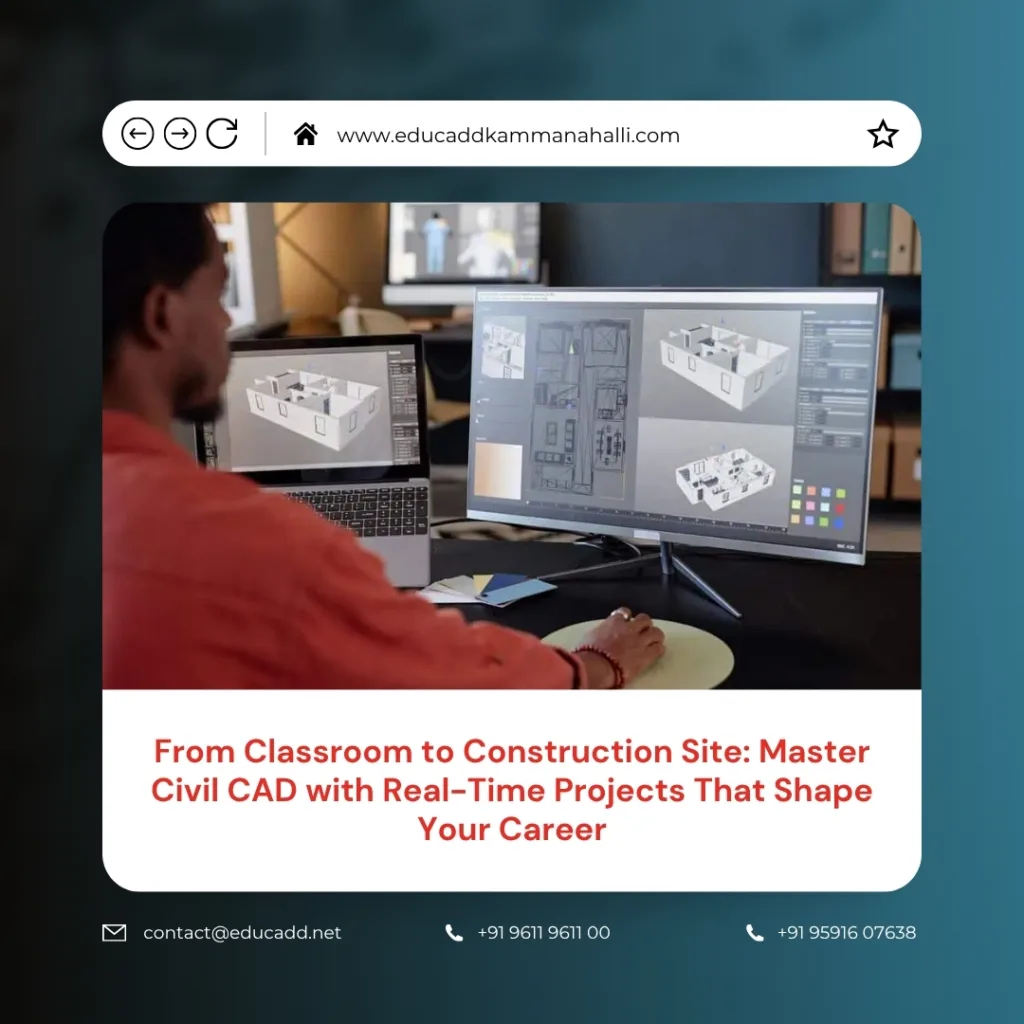
Civil CAD Real-Time Projects
It bridges the gap between classroom learning and industry expectations. By working on practical assignments that simulate real-world scenarios, learners develop not only technical skills but also problem-solving abilities and confidence. This blog explores how a Civil CAD Real-Time Projects can transform your career, enhance your skills, and open doors to exciting opportunities in the construction and design industry.
1. Understanding Civil CAD and Its Importance
Civil CAD refers to computer-aided design tools specifically used in civil engineering projects. These tools help professionals create detailed drawings, layouts, and plans for infrastructure such as roads, bridges, buildings, and drainage systems. Unlike traditional drafting methods, CAD software ensures precision, reduces errors, and speeds up the design process.
The importance of Civil CAD lies in its ability to simplify complex engineering concepts into visual representations. Engineers can analyze designs, make modifications, and optimize structures efficiently. As infrastructure projects become more complex, the demand for skilled Civil CAD professionals continues to rise, making it a valuable skill for aspiring engineers.
2. Why Choose a Civil CAD Course with Real-Time Projects
A course that integrates real-time projects provides a hands-on learning experience that goes beyond textbooks. Instead of just learning commands and tools, students work on actual design challenges that mimic industry scenarios. This approach helps in understanding how concepts are applied in real projects.
Real-time projects also prepare learners for workplace expectations. Employers prefer candidates who can contribute from day one. By working on practical assignments, students gain exposure to industry standards, project workflows, and problem-solving techniques, making them job-ready upon course completion.
3. Bridging the Gap Between Theory and Practice
One of the biggest challenges in technical education is the gap between theoretical knowledge and practical application. Civil CAD courses with real-time projects effectively bridge this gap. Students not only learn design principles but also understand how to apply them in real-world situations.
For example, designing a residential building layout in class becomes more meaningful when it is based on actual project requirements. Learners must consider factors such as space utilization, structural integrity, and compliance with standards. This practical exposure builds confidence and enhances learning outcomes.
4. Key Software Tools Covered in Civil CAD
A comprehensive Civil CAD course introduces learners to industry-standard software tools. These tools are widely used in construction and design projects, making them essential for career growth.
- AutoCAD for drafting and 2D design
- Civil 3D for infrastructure and land development projects
Mastering these tools enables students to handle various aspects of civil engineering design, from basic layouts to complex infrastructure planning. Familiarity with such software increases employability and opens up diverse career opportunities.
5. Learning Through Real-Time Project Simulations
Real-time project simulations are the backbone of practical learning in Civil CAD courses. These projects are designed to replicate actual industry challenges, allowing students to work on tasks such as site planning, road design, and structural layouts.
Through these simulations, learners understand project timelines, design constraints, and client requirements. They also learn how to collaborate with team members, manage deadlines, and deliver accurate results. This experience is invaluable when transitioning from training to professional work.
6. Enhancing Problem-Solving Skills
Working on real-time projects helps students develop strong problem-solving skills. In real-world scenarios, challenges are inevitable, and engineers must find effective solutions quickly. Civil CAD training encourages learners to think critically and approach problems logically.
Instead of following step-by-step instructions, students are given design objectives and must determine the best approach to achieve them. This process enhances creativity, analytical thinking, and decision-making abilities, which are essential for a successful career in civil engineering.
7. Building a Strong Portfolio
A well-structured portfolio plays a crucial role in securing job opportunities. Civil CAD courses with real-time projects allow students to create a collection of practical work that showcases their skills and expertise.
- Demonstrates hands-on experience to employers
- Highlights ability to handle real-world design challenges
A strong portfolio not only increases chances of getting hired but also helps candidates stand out in a competitive job market. It serves as proof of practical knowledge and technical proficiency.
8. Industry-Relevant Curriculum
An effective Civil CAD course is designed to meet industry requirements. The curriculum is regularly updated to include the latest tools, techniques, and standards used in construction and design projects.
By focusing on current trends and technologies, the course ensures that learners are equipped with relevant skills. This alignment with industry needs enhances job prospects and prepares students for future advancements in the field.
9. Career Opportunities After Civil CAD Training
Completing a Civil CAD course opens up a wide range of career opportunities. Skilled professionals are in demand across various sectors, including construction, infrastructure, and urban planning.
Graduates can work as CAD designers, civil draftsmen, site engineers, or project coordinators. With experience, they can also move into higher roles such as design engineers or project managers. The versatility of Civil CAD skills allows professionals to explore multiple career paths.
10. Importance of Accuracy and Precision
Accuracy is critical in civil engineering projects, as even minor errors can lead to significant issues. Civil CAD tools ensure high levels of precision, reducing the chances of mistakes in design and execution.
Through real-time projects, students learn the importance of accuracy and attention to detail. They understand how precise measurements and correct designs contribute to the success of a project. This focus on precision builds a strong foundation for professional work.
11. Improving Productivity and Efficiency
Civil CAD significantly improves productivity by automating repetitive tasks and simplifying complex processes. Designers can create, modify, and analyze drawings بسرعة and efficiently.
In a real-time project environment, students learn how to use these tools effectively to save time and improve output quality. Increased efficiency not only benefits individual professionals but also contributes to the overall success of projects.
12. Collaboration and Teamwork Skills
Modern construction projects involve collaboration among multiple teams, including architects, engineers, and contractors. Civil CAD training emphasizes the importance of teamwork and communication.
By working on group projects, students learn how to share ideas, coordinate tasks, and resolve conflicts. These skills are essential for working in a professional environment and ensuring smooth project execution.
13. Staying Updated with Industry Trends
The field of civil engineering is constantly evolving, with new technologies and methodologies emerging regularly. A Civil CAD course with real-time projects helps learners stay updated with these changes.
Students gain exposure to modern practices such as digital design workflows and integrated project management. Staying updated with industry trends ensures long-term career growth and adaptability in a dynamic environment.
14. Boosting Confidence and Job Readiness
Practical training plays a crucial role in building confidence among learners. When students work on real-time projects, they gain hands-on experience that prepares them for actual job roles.
By the end of the course, learners feel confident in their abilities to handle design tasks, solve problems, and meet project requirements. This confidence makes them job-ready and capable of contributing effectively from the beginning of their careers.
Conclusion
A Civil CAD Real-Time Projects is more than just a training program; it is a pathway to a successful and fulfilling career in civil engineering and design. By combining theoretical knowledge with practical experience, such courses equip learners with the skills needed to excel in the industry. From mastering software tools to developing problem-solving abilities and building a strong portfolio, the benefits are extensive and impactful.
As the demand for skilled professionals continues to grow, investing in a Civil CAD course can be a strategic decision for anyone looking to enter or advance in the construction and infrastructure sector. With the right training and hands-on experience, you can transform your career, contribute to meaningful projects, and become a valuable asset in the world of civil engineering.

