
Master Your Future in Engineering: The Ultimate Guide to Civil CADD Certification Course Success
In today’s fast-evolving construction and infrastructure industry, technical expertise alone is no longer enough. Employers seek professionals who can combine engineering knowledge with advanced design tools to deliver accurate, efficient, and innovative solutions. This is where a Civil CADD Certification Course becomes a powerful career catalyst. It bridges the gap between theoretical learning and practical application, enabling aspiring civil engineers and professionals to thrive in a competitive environment.
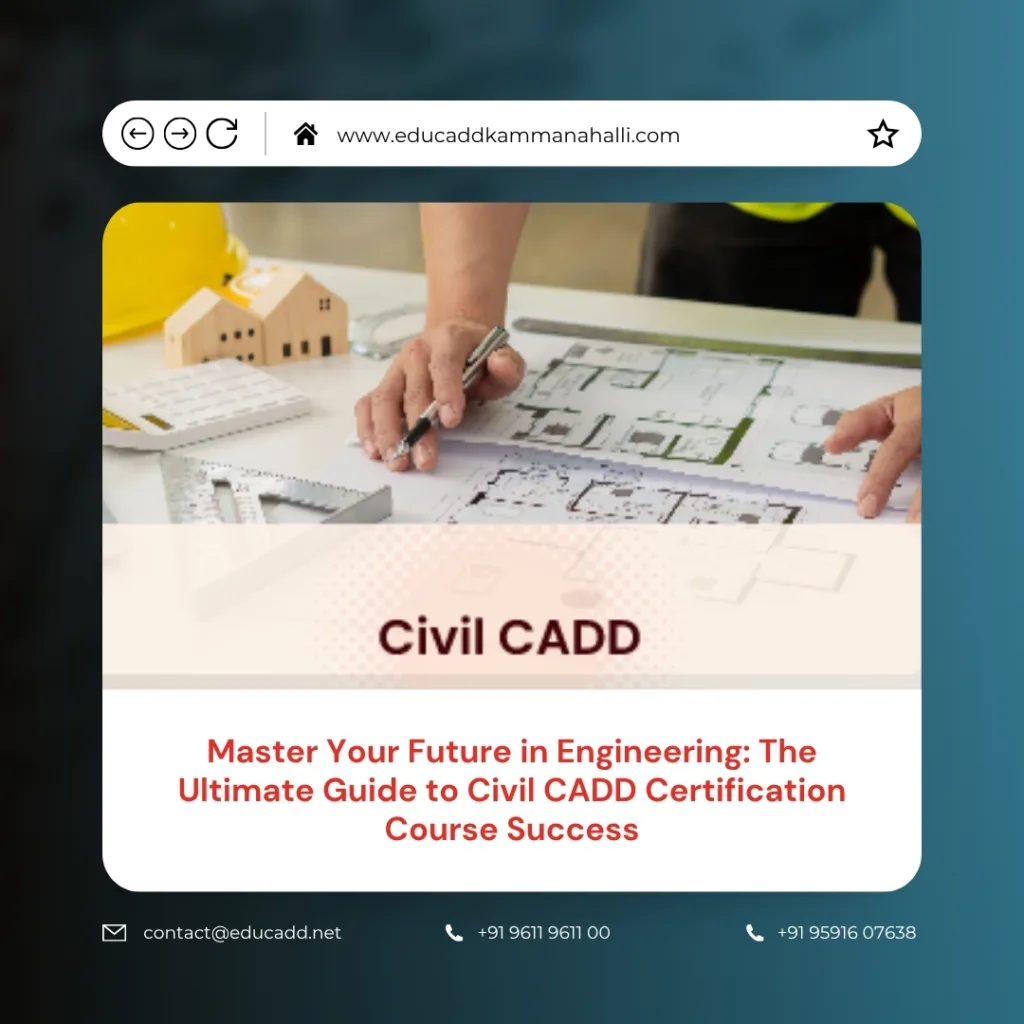
Civil CADD Certification Course
Civil CADD (Computer-Aided Design and Drafting) has transformed the way projects are planned, designed, and executed. From designing complex structures to drafting precise layouts, CADD tools ensure speed, accuracy, and cost efficiency. As infrastructure projects grow more sophisticated, the demand for certified CADD professionals continues to rise across the globe. This blog explores everything you need to know about Civil CADD certification, from its importance and benefits to career opportunities and future scope.
1. Understanding Civil CADD Certification
Civil CADD certification is a professional course that focuses on teaching software tools and drafting techniques used in civil engineering projects. It equips learners with practical skills in designing layouts, plans, and structural components using digital tools.
The course typically includes training in software like AutoCAD, STAAD Pro, and other industry-relevant applications. Students learn how to convert manual drawings into digital formats, ensuring accuracy and ease of modification. This certification not only enhances technical proficiency but also builds confidence in handling real-world engineering challenges.
2. Why Civil CADD Skills Are in High Demand
The construction industry is undergoing a digital transformation. Traditional drafting methods are being replaced by advanced software solutions that save time and reduce errors. As a result, companies are actively seeking professionals who are skilled in Civil CADD.
Moreover, infrastructure development projects are increasing rapidly, especially in developing countries. This growth has created a consistent demand for skilled designers and drafters. Civil CADD professionals play a crucial role in ensuring that projects are completed efficiently and within budget.
3. Key Modules Covered in Civil CADD Courses
A comprehensive Civil CADD certification course covers a wide range of topics designed to build both foundational and advanced skills.
Some of the major modules include:
- AutoCAD for 2D drafting and detailing
- 3D modeling and visualization techniques
- Structural analysis basics
- Project planning and design fundamentals
These modules ensure that learners gain a holistic understanding of design processes, making them industry-ready upon completion.
4. Benefits of Enrolling in a Civil CADD Certification Course
Enrolling in a Civil CADD course offers numerous advantages for students and working professionals alike. Firstly, it enhances employability by equipping candidates with in-demand technical skills. Secondly, it provides hands-on experience, which is highly valued by employers.
Additionally, certified professionals often enjoy better salary packages compared to non-certified candidates. The course also opens doors to international job opportunities, as CADD skills are recognized globally.
5. Career Opportunities After Civil CADD Certification
Civil CADD certification unlocks a wide range of career opportunities across various sectors. Graduates can work in construction companies, design firms, infrastructure projects, and government organizations.
Some popular job roles include:
- CAD Designer
- Civil Draftsman
- Structural Designer
- Project Engineer
Each of these roles offers growth potential and the opportunity to work on large-scale projects that shape modern infrastructure.
6. Role of Civil CADD in Modern Construction
Modern construction projects rely heavily on precision and efficiency. Civil CADD plays a vital role in achieving these goals by enabling accurate design and planning.
With the help of CADD software, engineers can visualize projects before execution. This reduces the chances of errors and ensures better resource management. As a result, projects are completed faster and with improved quality standards.
7. Skills You Gain from Civil CADD Training
A Civil CADD certification course helps learners develop a diverse set of skills that are essential for success in the engineering field.
These skills include:
- Technical drawing and drafting
- Software proficiency
- Analytical thinking
- Attention to detail
Such skills not only improve job performance but also increase career growth opportunities.
8. Importance of Practical Training in Civil CADD
Practical training is a crucial component of any Civil CADD course. It allows students to apply theoretical knowledge to real-world scenarios, thereby enhancing their understanding.
During practical sessions, learners work on live projects and case studies. This hands-on experience prepares them for industry challenges and boosts their confidence. Furthermore, practical exposure ensures that students are job-ready from day one.
9. Choosing the Right Civil CADD Institute
Selecting the right training institute is essential for gaining quality education. A good institute provides experienced faculty, updated course content, and practical training facilities.
Before enrolling, students should consider factors such as course duration, certification validity, and placement support. A reputed institute can significantly impact career growth by providing the right guidance and opportunities.
10. Duration and Eligibility of Civil CADD Courses
Civil CADD certification courses are designed to be flexible and accessible. The duration typically ranges from 3 to 6 months, depending on the course level and institute.
Eligibility criteria are usually minimal. Students pursuing civil engineering, diploma holders, and even working professionals can enroll. This flexibility makes the course suitable for individuals at different stages of their careers.
11. Salary Prospects After Civil CADD Certification
One of the major advantages of Civil CADD certification is the attractive salary prospects. Freshers can expect competitive starting salaries, which increase with experience and expertise.
Experienced professionals often secure high-paying roles in reputed organizations. Additionally, freelancers with strong CADD skills can earn substantial income by working on independent projects.
12. Future Scope of Civil CADD Professionals
The future of Civil CADD professionals looks promising as the demand for skilled designers continues to grow. Emerging technologies such as Building Information Modeling (BIM) are further enhancing the scope of CADD.
Professionals who continuously upgrade their skills can explore advanced roles and leadership positions. The integration of technology in construction ensures long-term career stability for CADD experts.
13. How Civil CADD Enhances Project Efficiency
Civil CADD significantly improves project efficiency by streamlining design processes. It reduces manual errors and enables quick modifications, saving both time and resources.
Additionally, digital designs allow for better collaboration among team members. Engineers, architects, and contractors can work together seamlessly, ensuring smooth project execution.
14. Tips to Succeed in a Civil CADD Certification Course
Success in a Civil CADD course requires dedication, practice, and a proactive learning approach. Students should focus on mastering software tools and understanding design principles.
Here are a few tips for success:
- Practice regularly to improve speed and accuracy
- Stay updated with the latest industry trends
- Work on real-world projects whenever possible
- Seek guidance from experienced professionals
By following these strategies, learners can maximize the benefits of their certification and build a strong career foundation.
Conclusion
Civil CADD Certification Course is more than just a course; it is a gateway to a successful and rewarding career in the construction and engineering industry. It equips individuals with the technical skills and practical knowledge needed to excel in modern project environments. As the demand for skilled professionals continues to rise, obtaining a Civil CADD certification can provide a significant competitive advantage.
Whether you are a student, a recent graduate, or a working professional looking to upgrade your skills, this certification offers immense value. With the right training, dedication, and continuous learning, you can unlock numerous career opportunities and achieve long-term success in the dynamic world of civil engineering.

