
How Civil CADD Drives Accurate Quantity Calculations for Better Project Success
In modern construction and infrastructure development, Civil CADD Quantity Calculations play a vital role in ensuring project success. Every construction project, whether small or large, depends on precise measurements and material estimates to stay within budget and meet deadlines. Even minor errors in quantity estimation can result in cost overruns, resource wastage, project delays, and reduced profitability. This is where Civil CADD emerges as a powerful solution. Civil CADD combines computer-aided design technology with civil engineering workflows to help professionals create detailed drawings, calculate quantities efficiently, and manage projects with greater confidence.
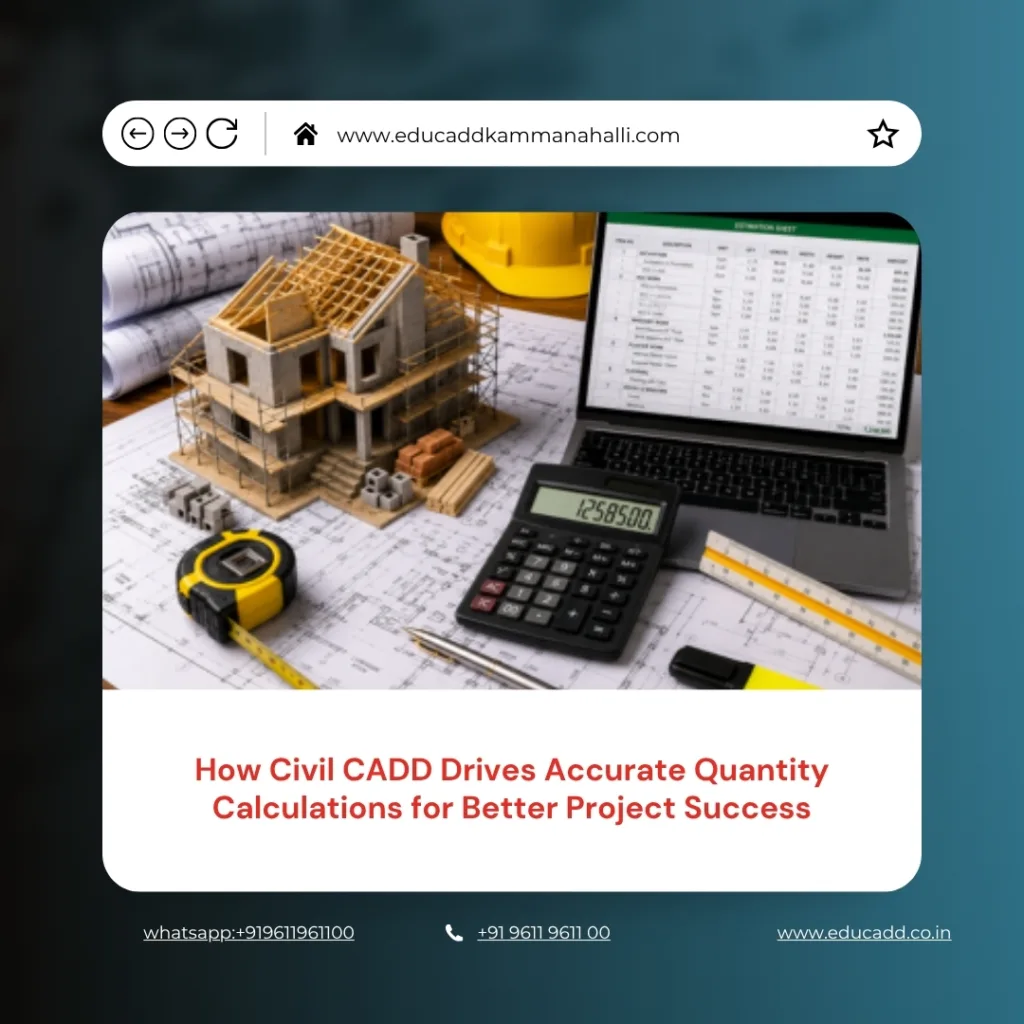
Civil CADD Quantity Calculations
By automating several complex calculations and reducing manual errors, Civil CADD enables engineers, surveyors, contractors, and project managers to make informed decisions throughout the project lifecycle. As construction projects continue to become more complex, the need for reliable quantity estimation tools becomes increasingly important, making Civil CADD an indispensable asset in the industry.
Understanding the Importance of Quantity Calculations in Construction
Civil CADD Quantity Calculations form the foundation of every successful construction project. Before any physical work begins, engineers and planners must determine the exact amount of materials, labor, and resources required. These calculations influence budgeting, procurement, scheduling, and project execution. When quantities are estimated accurately, project stakeholders can allocate resources effectively and avoid unnecessary expenses. On the other hand, inaccurate calculations can lead to shortages, excess inventory, and significant financial losses. Civil CADD simplifies this process by providing digital tools that generate precise measurements directly from engineering drawings. As a result, professionals can achieve higher accuracy and improve project planning from the very beginning.
How Civil CADD Eliminates Manual Calculation Errors
Traditional quantity estimation methods often rely on manual measurements and calculations. Although experienced professionals can perform these tasks effectively, manual processes remain vulnerable to human error. A small mistake in dimensions or calculations can affect the entire project estimate. Civil CADD minimizes these risks by automating calculations based on design data. The software extracts measurements directly from drawings and converts them into usable quantity reports. Since calculations are performed digitally, consistency improves significantly. Furthermore, engineers can update designs without repeating the entire estimation process, saving valuable time and effort while maintaining accuracy.
Enhancing Project Planning Through Precise Measurements
Effective project planning depends heavily on reliable data. Civil CADD provides engineers with accurate geometric information that supports better planning decisions. Whether calculating road lengths, earthwork volumes, drainage systems, or structural components, the software delivers detailed measurements quickly. These precise measurements help project teams forecast material requirements, allocate budgets, and establish realistic timelines. Consequently, project managers gain greater control over project execution. Better planning also reduces uncertainty, allowing teams to respond more effectively to changing project conditions and client requirements.
Supporting Earthwork Quantity Estimation
Earthwork estimation represents one of the most critical aspects of civil engineering projects. Road construction, land development, and infrastructure projects require Civil CADD Quantity Calculations of cut-and-fill volumes to ensure proper site preparation. Civil CADD assists engineers by generating detailed terrain models and calculating earthwork quantities with remarkable precision. The software evaluates existing ground levels and proposed design levels to determine excavation and filling requirements. This capability eliminates guesswork and provides reliable data that supports efficient site management. As a result, contractors can optimize equipment usage and reduce unnecessary operational costs.
Improving Material Management and Procurement
Material procurement becomes much easier when Civil CADD Quantity Calculations are accurate. Civil CADD allows project teams to determine exact material requirements before construction begins. This proactive approach helps prevent both shortages and over-ordering. Effective material management offers several advantages:
- Reduces unnecessary inventory costs and material wastage.
- Ensures timely availability of resources during project execution.
By providing detailed quantity reports, Civil CADD helps procurement teams negotiate better contracts and manage supplier relationships more efficiently. Consequently, projects experience fewer disruptions caused by material shortages or delivery delays.
Increasing Cost Estimation Accuracy
Construction budgets rely heavily on accurate quantity estimates. Every material, labor component, and equipment requirement must be quantified before cost calculations can be completed. Civil CADD enhances cost estimation by generating reliable quantity takeoffs directly from project drawings. These detailed quantities serve as the basis for accurate budgeting and tender preparation. Since the software reduces human error, cost estimates become more dependable and realistic. This accuracy enables project stakeholders to make informed financial decisions and minimize the risk of unexpected expenses during construction.
Facilitating Road and Highway Design Calculations
Road and highway projects involve complex geometric designs and extensive quantity calculations. Engineers must determine pavement layers, embankments, drainage structures, and earthwork volumes while maintaining compliance with design standards. Civil CADD simplifies these tasks by integrating design and quantity estimation within a single platform. The software calculates quantities automatically as design modifications occur, ensuring that estimates remain current throughout the project. This seamless integration improves productivity and enables engineers to focus more on design optimization rather than repetitive calculations.
Streamlining Infrastructure Development Projects
Large-scale infrastructure projects often involve multiple disciplines working together. Accurate coordination among teams becomes essential for maintaining project efficiency. Civil CADD provides a centralized environment where engineers can develop designs, generate quantities, and share information across departments. This collaborative approach reduces communication gaps and ensures consistency in project data. Since all stakeholders work from the same design information, quantity calculations remain aligned with project objectives. Consequently, infrastructure projects can progress more smoothly from planning to completion.
Enhancing Productivity Through Automation
Automation is one of the greatest strengths of Civil CADD. Instead of spending countless hours performing repetitive calculations, engineers can rely on software-generated results. This automation delivers several important benefits:
- Accelerates project workflows and reduces estimation time.
- Allows professionals to focus on analysis, design improvements, and project management.
By eliminating routine manual tasks, Civil CADD increases overall productivity while maintaining high levels of accuracy. Faster quantity calculations also enable organizations to handle more projects without compromising quality.
Supporting Better Decision-Making Across Project Stages
Construction projects require continuous decision-making from concept development to final execution. Accurate quantity information provides a solid foundation for these decisions. Civil CADD generates detailed reports that help stakeholders evaluate project feasibility, compare alternatives, and identify potential risks. Project managers can assess the impact of design changes before implementation, reducing uncertainty and preventing costly mistakes. This data-driven approach strengthens project control and contributes to better outcomes across all project phases.
Enabling Efficient Revision and Design Updates
Design modifications are common in construction projects. Changes may arise due to client requests, regulatory requirements, site conditions, or engineering improvements. In traditional workflows, even minor revisions can require extensive recalculations. Civil CADD addresses this challenge by updating quantity calculations automatically whenever design changes occur. Engineers can instantly review revised estimates and assess their impact on project costs and schedules. This flexibility improves responsiveness and ensures that project information remains accurate throughout the design process.
Improving Transparency and Documentation
Accurate documentation is essential for project accountability and compliance. Civil CADD generates comprehensive reports that clearly outline quantity calculations and supporting data. These reports create a transparent record of project estimates, making it easier for stakeholders to review and verify information. Contractors, consultants, and clients can access consistent documentation that supports decision-making and dispute resolution. Improved transparency also strengthens trust among project participants and contributes to smoother project management.
Supporting Sustainable Construction Practices
Sustainability has become a major priority in the construction industry. Efficient resource utilization plays a critical role in reducing environmental impact. Civil CADD contributes to sustainable construction by enabling precise quantity estimation and minimizing material waste. When projects use only the required amount of materials, resource consumption decreases significantly. Accurate calculations also reduce unnecessary transportation, storage, and disposal activities. As organizations strive to achieve sustainability goals, Civil CADD provides valuable support by promoting efficient planning and responsible resource management.
The Future of Quantity Estimation with Civil CADD
As technology continues to evolve, quantity estimation processes are becoming increasingly sophisticated. Civil CADD is adapting to these advancements by incorporating automation, intelligent design tools, and enhanced data management capabilities. Future developments will likely offer even greater accuracy, faster processing speeds, and improved integration with other construction technologies. These innovations will empower engineers and project managers to handle complex projects with greater efficiency and confidence. Organizations that embrace advanced quantity estimation solutions will be better positioned to remain competitive in the rapidly changing construction landscape.
Conclusion
Civil CADD has transformed the way construction professionals perform Civil CADD Quantity Calculations. By automating measurements, reducing human error, and providing detailed quantity reports, the software enhances every stage of project planning and execution. From earthwork estimation and material procurement to budgeting and infrastructure development, Civil CADD delivers the precision needed for successful project outcomes. Its ability to support design revisions, improve productivity, and promote sustainable construction further strengthens its value in modern engineering practices. As construction projects continue to grow in complexity, Civil CADD will remain an essential tool for achieving accuracy, efficiency, and long-term project success.

