
How Civil CADD Transforms Structural Design Accuracy and Minimizes Costly Engineering Mistakes
Civil CADD Structural Accuracy projects demand extreme precision because even minor design miscalculations can lead to safety risks, budget overruns, and project delays. Modern infrastructure development relies heavily on digital tools that improve accuracy while accelerating workflows. Among these tools, Civil CADD stands out as a practical and powerful solution that helps engineers create reliable designs with greater confidence. By combining drafting automation, intelligent modeling, and error-checking capabilities, Civil CADD supports professionals throughout the planning and execution stages. Engineers can visualize structures clearly, detect conflicts early, and maintain consistent standards across project components.
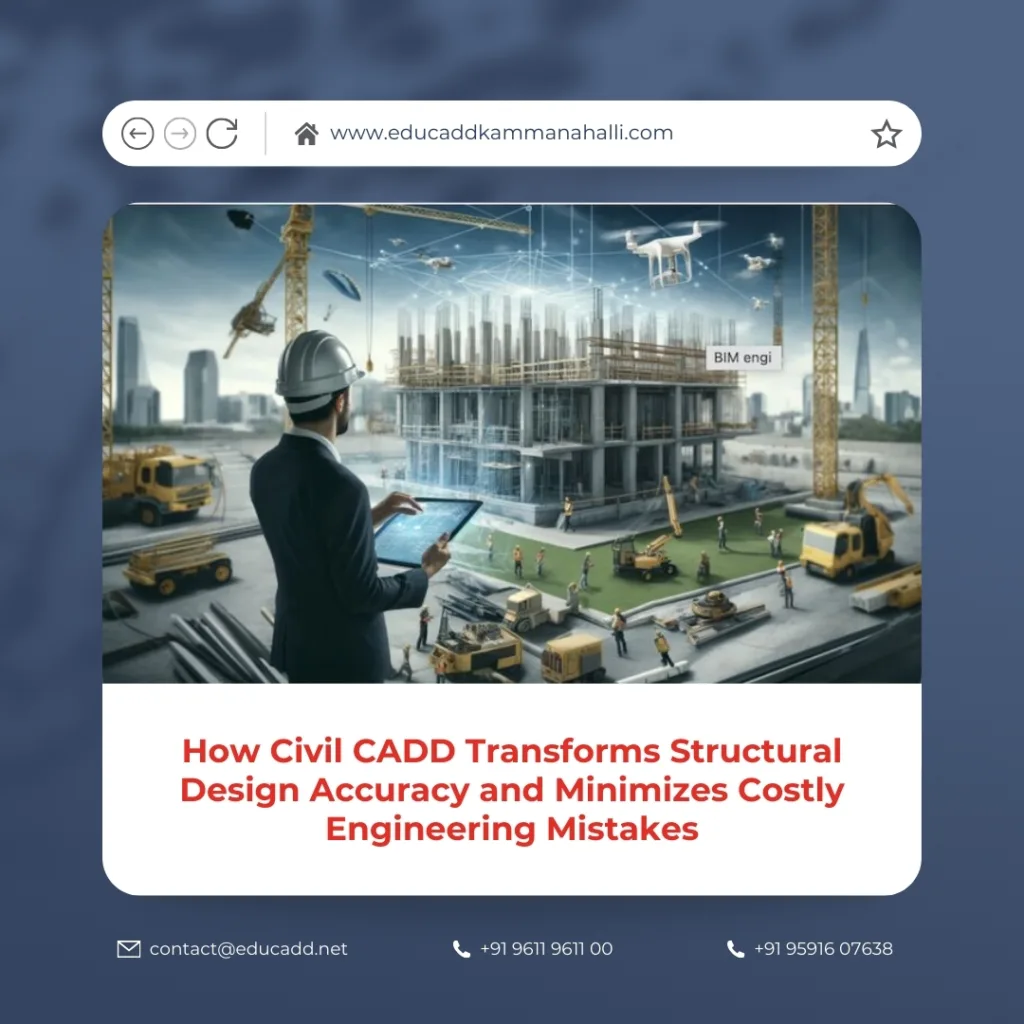
Civil CADD Structural Accuracy
These capabilities significantly reduce the chances of structural misinterpretations that traditionally occurred in manual drafting processes. As project complexity increases, dependable design software becomes essential for delivering safe and cost-effective structures. Civil CADD provides that reliability through precision-focused features tailored for civil and structural applications. This article explains how Civil CADD reduces structural design errors, enhances collaboration, and improves project outcomes through systematic digital workflows.
1. Improved Drafting Precision Through Intelligent Tools
Civil CADD Structural Accuracy enables engineers to create highly accurate structural drawings using intelligent drafting tools that minimize human intervention. Manual drafting often results in scaling mistakes, dimension mismatches, and alignment errors. Civil CADD automates measurement calculations and maintains consistent proportions throughout the drawing process. Engineers can define parameters precisely, and the software ensures every component follows those specifications. This precision significantly reduces discrepancies between design intent and actual implementation. The snapping tools, alignment guides, and coordinate input systems allow designers to position structural elements accurately. As a result, beams, columns, foundations, and reinforcements align perfectly within the layout. The reduction of manual input decreases the likelihood of typographical errors and numerical inconsistencies. Civil CADD also maintains drawing consistency when modifications occur, ensuring revisions do not disturb overall structural balance. These capabilities make Civil CADD an essential solution for maintaining drafting precision across complex engineering projects.
2. Automated Calculations That Minimize Human Error
Structural design involves extensive numerical calculations that influence load distribution, material strength, and dimensional stability. Performing these calculations manually increases the possibility of arithmetic mistakes and incorrect data entries. Civil CADD integrates automated calculation tools that deliver precise results within seconds. Engineers can rely on built-in computational features to determine distances, areas, volumes, and gradients accurately. This automation removes repetitive manual work and prevents miscalculations that often lead to structural weaknesses. Civil CADD also allows real-time recalculations when design parameters change, ensuring updated values remain consistent across all drawings. By eliminating dependency on external spreadsheets, engineers maintain centralized and accurate project data. Automated processes also reduce mental fatigue, which commonly contributes to human error during long design sessions. Civil CADD ensures reliable mathematical outputs, allowing professionals to focus on engineering judgment rather than routine arithmetic tasks.
3. Standardized Templates for Consistent Structural Design
Inconsistent formatting and varying design practices often create confusion during construction. Civil CADD provides standardized templates that maintain uniformity across structural drawings. Engineers can follow predefined formats for dimensions, symbols, annotations, and layer management. These standards ensure that every team member interprets drawings correctly without ambiguity. Consistency also reduces the likelihood of miscommunication between architects, engineers, and site supervisors. Civil CADD allows organizations to create customized templates that align with national and international engineering codes. This feature ensures compliance with regulatory requirements and professional guidelines. Standardization improves document clarity, enabling contractors to understand specifications without repeated clarifications. Civil CADD also supports uniform layer naming conventions that simplify file navigation. As a result, teams avoid structural errors caused by inconsistent drawing presentations and documentation gaps.
4. Real-Time Error Detection and Design Validation
Civil CADD Structural Accuracy incorporates intelligent validation tools that detect design inconsistencies before project execution. Early detection of structural conflicts prevents expensive rework and construction delays. Engineers can identify overlapping elements, improper alignments, and incorrect measurements instantly. Civil CADD highlights design irregularities visually, making them easy to correct during the drafting stage. Real-time validation ensures structural components maintain proper spatial relationships. This capability reduces the risk of foundation mismatches and reinforcement conflicts. Civil CADD also supports rule-based design checks that verify compliance with predefined engineering standards. Engineers can review warnings and resolve them before finalizing layouts. Continuous validation reduces the accumulation of hidden errors that typically surface during construction. Civil CADD transforms quality control into an ongoing process rather than a final review step.
5. Enhanced Visualization for Better Structural Understanding
Complex structural systems are difficult to interpret through traditional 2D drawings. Civil CADD enhances visualization by enabling clear and detailed representations of structural components. Engineers can zoom, rotate, and inspect designs closely to evaluate intricate areas. Improved visibility allows professionals to detect misalignments and irregular shapes quickly. Civil CADD also helps designers understand spatial relationships between structural elements. This clarity reduces misinterpretations that commonly occur during manual drawing reviews. Engineers can simulate layouts more realistically, ensuring accurate structural planning. Enhanced visualization also supports better communication with non-technical stakeholders. Contractors and clients can interpret designs more easily, reducing misunderstandings that lead to implementation errors. Civil CADD strengthens design comprehension, resulting in improved structural reliability.
6. Seamless Design Modifications Without Data Loss
Design revisions are common in structural engineering projects due to evolving client requirements and site conditions. Manual modification processes often introduce inconsistencies that compromise structural accuracy. Civil CADD allows engineers to modify dimensions, layouts, and components without disturbing related elements. Changes automatically reflect across the entire drawing, maintaining proportional relationships. This synchronization eliminates the need for repetitive corrections in multiple sections. Civil CADD preserves design integrity while accommodating necessary updates. Engineers can experiment with alternatives safely without risking permanent data loss. The software maintains version histories, enabling easy comparison between revisions. Efficient modification workflows reduce stress and minimize the risk of oversight. Civil CADD ensures that updated structural plans remain accurate and reliable throughout project development.
7. Layer Management for Organized Structural Components
Structural drawings contain numerous components that require systematic organization. Poor layer management leads to confusion, overlapping elements, and visibility issues. Civil CADD offers advanced layer control features that categorize structural elements logically. Engineers can assign specific layers to foundations, reinforcements, columns, and utility systems. This organized structure prevents accidental modifications to unrelated components. Civil CADD allows designers to isolate layers, enabling focused editing and detailed inspection. Controlled visibility reduces visual clutter and improves drafting efficiency. Proper layer management also simplifies error tracking during quality checks. Engineers can quickly identify problematic sections without reviewing the entire drawing. Civil CADD promotes disciplined project organization that significantly reduces structural design mistakes.
8. Accurate Scaling and Dimension Control
Incorrect scaling and dimension inconsistencies are common causes of structural inaccuracies. Civil CADD maintains precise scaling throughout the design process, ensuring measurements remain accurate across drawing sheets. Engineers can define unit systems and scale ratios that apply consistently. This control eliminates distortions that arise during manual resizing. Civil CADD Structural Accuracy adjusts dimensions when structural components change, preventing mismatched measurements. Accurate scaling ensures that contractors interpret drawings correctly during execution. Dimension control features also maintain clarity in densely detailed layouts. Civil CADD reduces errors that originate from misread measurements and inconsistent unit conversions. Reliable dimension management enhances structural precision and prevents costly on-site corrections.
9. Integration With Survey and Site Data
Structural designs must align with real-world site conditions to ensure safety and feasibility. Civil CADD integrates survey data directly into design workflows, allowing engineers to reference accurate terrain information. This integration minimizes discrepancies between planned structures and existing landscapes. Engineers can design foundations, drainage systems, and support elements that match site elevations precisely. Civil CADD ensures that structural components adapt to environmental constraints effectively. Accurate data alignment reduces risks related to uneven ground and load distribution. Engineers can also analyze slopes and contours to design stable support systems. Civil CADD bridges the gap between theoretical planning and practical implementation. This alignment significantly lowers the likelihood of structural miscalculations caused by inaccurate site assumptions.
10. Streamlined Collaboration Across Engineering Teams
Structural projects involve multidisciplinary coordination among engineers, architects, and contractors. Communication gaps often lead to conflicting design interpretations. Civil CADD improves collaboration by providing universally readable digital drawings. Teams can share files easily and maintain synchronized project data. Engineers can incorporate feedback quickly without recreating entire layouts. Civil CADD supports standardized annotations that communicate technical details clearly. This transparency reduces misunderstandings that may compromise structural integrity. Collaborative workflows allow experts to identify potential design weaknesses collectively. Civil CADD strengthens coordination and ensures every stakeholder works with accurate information. Effective teamwork reduces structural design errors significantly.
11. Reduced Dependency on Manual Documentation
Traditional documentation methods require extensive paperwork that increases administrative workload. Manual record-keeping introduces filing errors and version confusion. Civil CADD digitizes documentation processes, ensuring secure and organized file storage. Engineers can retrieve project data quickly without searching through physical archives. Digital documentation minimizes duplication and prevents outdated drawing usage. Civil CADD maintains centralized information systems that improve project traceability. Accurate records help teams verify design decisions efficiently. Reduced paperwork also accelerates approval workflows and regulatory submissions. Civil CADD enhances documentation reliability while minimizing clerical mistakes that affect structural accuracy.
12. Faster Project Turnaround With Fewer Revisions
Design errors often cause repeated revisions that delay project completion. Civil CADD accelerates drafting processes through automation and intelligent design aids. Engineers complete layouts faster while maintaining precision. Quick validation tools identify issues early, reducing rework cycles. Civil CADD also streamlines repetitive tasks such as dimensioning and labeling. Time savings allow engineers to dedicate more attention to design optimization. Faster completion does not compromise structural safety because automated checks maintain accuracy. Reduced revision frequency lowers project costs and resource wastage. Civil CADD supports efficient engineering workflows that deliver high-quality structural designs within tight deadlines.
13. Compliance With Engineering Codes and Standards
Structural safety depends on adherence to engineering regulations and construction standards. Civil CADD supports code-compliant drafting through standardized design frameworks. Engineers can align drawings with national safety guidelines using predefined settings. Civil CADD reduces the likelihood of regulatory violations caused by oversight. Compliance features also help professionals prepare approval documents accurately. Engineers can verify load specifications, spacing requirements, and reinforcement details systematically. Civil CADD simplifies regulatory reviews by maintaining organized and transparent design documentation. Accurate compliance reduces project approval delays and structural safety risks.
14. Long-Term Accuracy Through Digital Design Preservation
Paper drawings degrade over time and become difficult to interpret. Civil CADD preserves structural designs digitally, ensuring long-term accessibility and clarity. Engineers can store files securely and retrieve them without quality loss. Digital preservation supports future renovations, expansions, and structural assessments. Civil CADD prevents information gaps that arise from faded prints and misplaced documents. Accurate historical records help engineers evaluate structural performance effectively. Reliable archives also assist in maintenance planning and safety inspections. Civil CADD ensures structural design data remains precise and usable for decades.
Conclusion
Civil CADD Structural Accuracy demands accuracy, consistency, and efficient collaboration to deliver safe and durable infrastructure. Civil CADD plays a vital role in minimizing structural design errors by automating calculations, standardizing documentation, and improving visualization. Engineers benefit from precise drafting tools, intelligent validation systems, and seamless modification capabilities that preserve design integrity. Civil CADD also enhances teamwork, ensures regulatory compliance, and accelerates project completion without compromising safety. By reducing dependency on manual processes, the software eliminates common sources of human error. Organizations that adopt Civil CADD gain long-term advantages through reliable documentation and improved design workflows. As infrastructure projects become increasingly complex, Civil CADD remains an essential solution for achieving structural accuracy and operational efficiency.

