
Build the Future with a Career-Ready Civil Engineering Design Course
Introduction
Civil engineering shapes the places where people live, work, travel, and grow. From residential buildings to highways, bridges, commercial spaces, and large infrastructure projects, skilled civil engineers play a major role in modern development. However, a strong engineering career needs more than academic knowledge. Professionals must also understand design software, project workflows, construction drawings, and industry practices. This is where a Civil Engineering Design Course can make a real difference. The right training helps students turn engineering concepts into practical designs while building confidence with industry-used tools. It also prepares learners for the changing needs of the construction and infrastructure sector. With practical training, software skills, and project exposure, aspiring professionals can take a stronger step toward a rewarding civil engineering career.
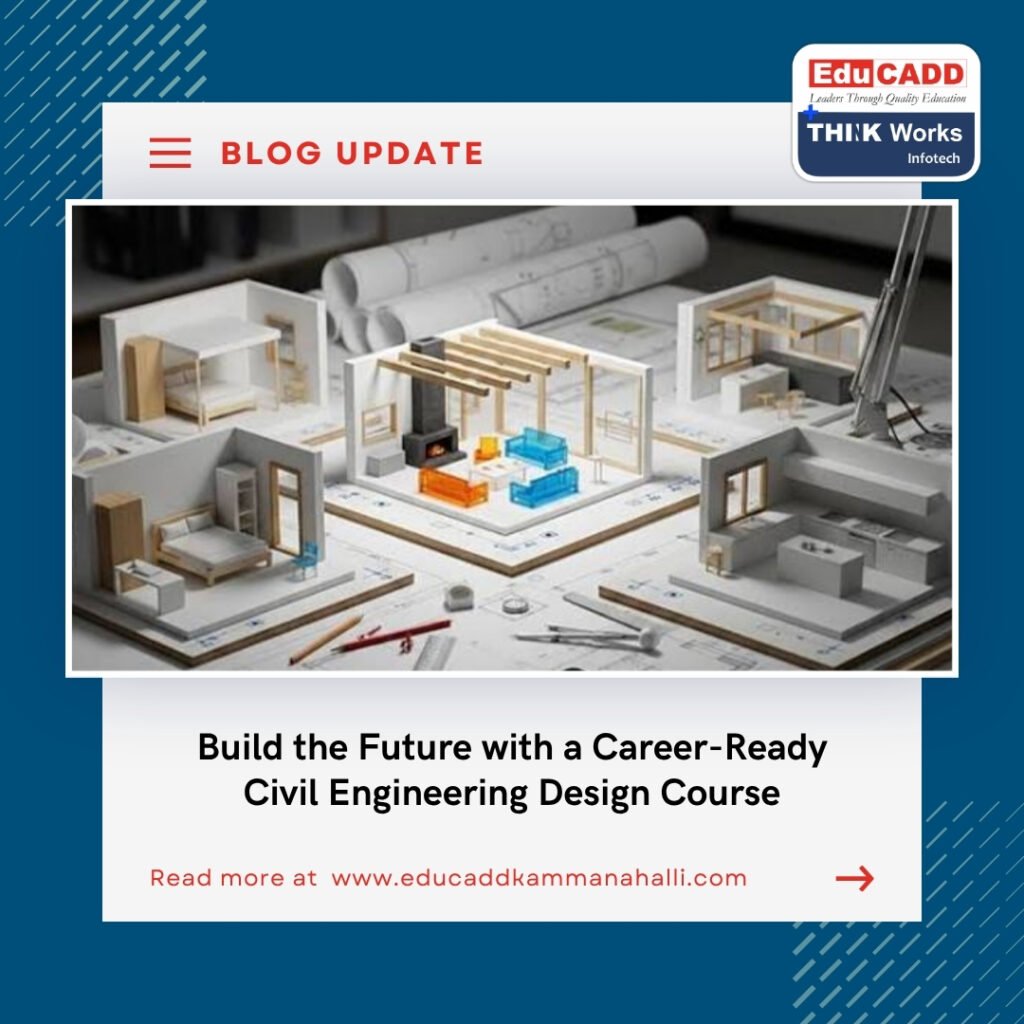
Civil Engineering Design Course
Why Civil Engineering Design Skills Matter Today
The construction industry is becoming more technology-driven every year. Traditional drawing methods have gradually moved toward digital design and modelling. As a result, companies now look for professionals who can create accurate drawings and work with modern design platforms. Therefore, learning civil engineering design has become an important part of career preparation.
A good Civil Engineering Design Course connects classroom concepts with practical applications. Students can learn how buildings and structures are planned before construction begins. They can also understand how architectural plans, structural drawings, measurements, and technical details work together.
Moreover, digital design improves accuracy. It helps engineers identify design issues earlier and make changes before construction starts. This can save time, reduce material waste, and support better project coordination. Consequently, professionals with strong design skills can bring more value to engineering teams.
What You Can Learn in a Civil Engineering Design Course
A structured course can cover several areas of civil engineering design. The exact syllabus may differ between training institutes. However, students should look for a program that combines software training with practical engineering knowledge.
Key learning areas may include:
- AutoCAD for creating accurate 2D civil and construction drawings
- Revit Architecture for building information modelling
- Structural design concepts and documentation
- ETABS for structural analysis and building design
- STAAD Pro for structural modelling and analysis
- SketchUp for creating three-dimensional concepts
- 3ds Max for advanced visualization and presentation
- BIM concepts for coordinated project workflows
- Quantity estimation and construction documentation
- Project planning and management fundamentals
These skills can help learners understand the complete design process. Instead of focusing only on one software application, students can develop a broader understanding of how different tools support a construction project.
Master AutoCAD for Professional Civil Drawings
AutoCAD remains one of the most useful design tools for civil engineering professionals. It helps users create detailed technical drawings with accuracy and consistency. Students can learn how to prepare floor plans, elevations, sections, layouts, and other construction drawings.
During a Civil Engineering Design Course, learners can practice creating drawings from basic concepts. They can understand layers, dimensions, annotations, blocks, templates, and plotting. With regular practice, these skills can become part of their everyday design workflow.
Furthermore, AutoCAD knowledge can help freshers build a stronger portfolio. Instead of showing only academic certificates, they can present practical drawings and projects. This gives employers a better idea of their technical abilities.
Explore BIM and Modern Building Design
Building Information Modelling has changed how construction teams manage design information. BIM allows different project elements to be represented digitally. It can also improve coordination between architects, structural engineers, MEP professionals, contractors, and project managers.
Learning BIM through a Civil Engineering Design Course can give students valuable exposure to modern project workflows. They can understand how a digital building model connects different areas of a project. This knowledge is becoming increasingly useful as construction companies adopt technology-based processes.
BIM can also help professionals identify clashes and design problems before construction. Therefore, students who understand BIM workflows can develop skills that extend beyond traditional drafting.
Develop Structural Design Knowledge
Structural engineering requires precision and strong technical understanding. Buildings must be designed to handle different loads and conditions. For this reason, students should learn the fundamentals behind structural analysis and design.
Software such as ETABS and STAAD Pro can help engineers analyse structural systems. A structured Civil Engineering Design Course can introduce learners to these tools while explaining the concepts behind the software.
Students can learn about structural elements such as:
- Beams and columns
- Slabs and foundations
- Load calculations
- Structural modelling
- Building frames
- Analysis and design principles
- Structural drawings and documentation
Practical exercises can make these concepts easier to understand. Learners can work on sample buildings and gradually move toward more detailed projects. This approach helps connect theoretical knowledge with real engineering applications.
Why Practical Training Makes a Difference
Reading about design software is not enough. Students need opportunities to use the tools themselves. Practical training allows learners to understand how software works in real situations.
For example, a student may understand the purpose of a floor plan from a textbook. However, creating that plan in AutoCAD requires a different level of understanding. The learner must apply dimensions, layers, annotations, and design standards correctly.
Therefore, practical projects should be an important part of any Civil Engineering Design Course. Students should get opportunities to create drawings, models, structural designs, and project documentation.
Hands-on learning can also improve problem-solving skills. When learners make mistakes, they can identify the issue and try different solutions. Over time, this process builds confidence and technical independence.
Build a Strong Career Portfolio
A portfolio can help civil engineering students demonstrate their practical abilities. It gives employers something more useful than marks alone. A well-organized portfolio can show how a learner applies software and engineering concepts.
Students can include projects such as residential floor plans, structural models, BIM projects, 3D building models, and technical drawings. They can also add details about the software used and the role they performed.
A Civil Engineering Design Course with project-based learning can make portfolio development easier. Learners can use their training projects as starting points. Later, they can improve those projects and present them professionally during interviews.
A strong portfolio should be clear and simple. It should focus on quality rather than including too many unrelated designs. Each project should explain the objective, software used, and final result.
Career Opportunities After Civil Design Training
Civil engineering design skills can open doors to different career paths. The right opportunity depends on a learner’s education, skills, experience, and specialization.
Possible job roles include:
- Civil CAD Designer
- AutoCAD Civil Drafter
- Structural CAD Designer
- BIM Modeler
- Revit Technician
- Structural Design Assistant
- Junior Civil Designer
- BIM Coordinator
- Design Engineer
- Quantity Estimation Assistant
These roles can exist across construction companies, architectural firms, engineering consultancies, infrastructure organizations, and design service providers.
Additionally, professionals can specialize as they gain experience. Some may focus on structural design, while others may move toward BIM, infrastructure planning, project coordination, or advanced modelling.
How to Choose the Right Civil Engineering Design Course
Choosing a training program requires careful consideration. Not every course offers the same level of practical exposure. Students should compare the syllabus, software coverage, training method, project work, and overall learning support.
Before enrolling, consider these factors:
- Industry-relevant software training
- Experienced trainers
- Practical classroom sessions
- Realistic project assignments
- Updated course content
- Portfolio development support
- Interview preparation
- Internship opportunities
- Placement assistance
- Flexible learning options
A good course should not simply teach software commands. It should explain why and when each tool is used. That practical understanding can help learners become more confident in professional environments.
Who Can Join a Civil Engineering Design Course?
These courses can benefit students and professionals at different stages of their careers. Civil engineering graduates can use design training to strengthen their technical skills. Diploma holders can also improve their software knowledge and expand their career options.
Students who have recently completed their education may find practical training especially useful. It can help them bridge the gap between academic learning and workplace expectations.
Working professionals can also benefit from advanced training. Learning BIM, structural software, or new design workflows can help them stay competitive. Therefore, a Civil Engineering Design Course can support both career starters and professionals who want to upgrade their skills.
Improve Your Confidence with Project-Based Learning
Confidence develops through practice. When students complete several projects, they become more comfortable with design software and technical tasks. They also learn how to approach problems in a structured way.
Project-based learning can simulate the type of work performed in professional environments. Students may receive a basic requirement and then develop drawings or models based on that requirement. They can review their work, correct errors, and improve the final output.
This process creates valuable habits. Learners begin to check dimensions carefully, organize files, follow drawing standards, and present their work clearly. These habits can support better performance when they enter the workplace.
Stay Ready for the Future of Construction
Technology will continue to influence the construction industry. Digital modelling, BIM, automation, cloud collaboration, and advanced visualization are becoming increasingly important. Professionals who understand these technologies can adapt more easily to changing project requirements.
For this reason, students should view a Civil Engineering Design Course as more than software training. It can be a foundation for continuous professional development.
Learning should continue even after completing a course. Professionals can explore advanced BIM workflows, new software features, sustainability concepts, project management, and specialized design areas. This approach can help them remain relevant throughout their careers.
Turn Technical Knowledge into Career Skills
Academic knowledge provides the foundation for civil engineering. However, employers often expect candidates to demonstrate practical abilities as well. They need professionals who can understand drawings, use design software, communicate technical information, and contribute to project teams.
A quality Civil Engineering Design Course can bring these areas together. Students can learn technical concepts while applying them through practical assignments. They can also develop communication, problem-solving, and presentation skills.
As a result, learners can approach job interviews with greater confidence. They can discuss their projects, explain their design decisions, and demonstrate their software knowledge. This practical preparation can create a stronger impression on potential employers.
Why Start Your Training Today?
Civil engineering offers opportunities across residential construction, commercial development, infrastructure, structural design, and digital construction. However, competition can be strong. Building relevant skills early can give students a valuable advantage.
A well-planned Civil Engineering Design Course can help learners develop software knowledge, practical experience, and industry awareness. It can also provide a structured path for students who are unsure where to begin.
Instead of waiting until a job requires advanced design skills, learners can start developing those abilities during their training. With consistent practice and the right guidance, even beginners can gradually become more comfortable with professional design tools.
Conclusion
A successful civil engineering career requires a combination of technical knowledge, practical skills, and continuous learning. Modern construction projects depend heavily on digital design, modelling, analysis, and collaboration. Therefore, professionals must be prepared to work with the tools and workflows used by today’s industry.
Choosing the right Civil Engineering Design Course can help students build this foundation. From AutoCAD and Revit to ETABS, STAAD Pro, BIM, and 3D visualization, practical training can open the door to many areas of civil engineering design. More importantly, project-based learning can help learners build confidence and create a professional portfolio.
If you want to move from classroom concepts to practical engineering skills, now is a good time to start. With focused training, regular practice, and industry-oriented learning, you can take a stronger step toward becoming a confident and career-ready civil engineering professional.

