
Commercial Interior Design Standards That Transform Modern Spaces
Commercial Interior Design Standards are no longer just functional environments—they have become strategic assets that influence productivity, brand identity, and customer experience. Whether it’s an office, retail outlet, hospitality venue, or healthcare facility, the way a space is designed directly affects how people interact, perform, and perceive a business. This is where commercial interior design standards play a critical role.
These standards provide a structured framework to ensure safety, efficiency, sustainability, and aesthetics are properly balanced. They guide designers, architects, and business owners in creating spaces that are not only visually appealing but also compliant with regulations and optimized for usability. From lighting and ergonomics to materials and accessibility, every element must align with these established benchmarks.
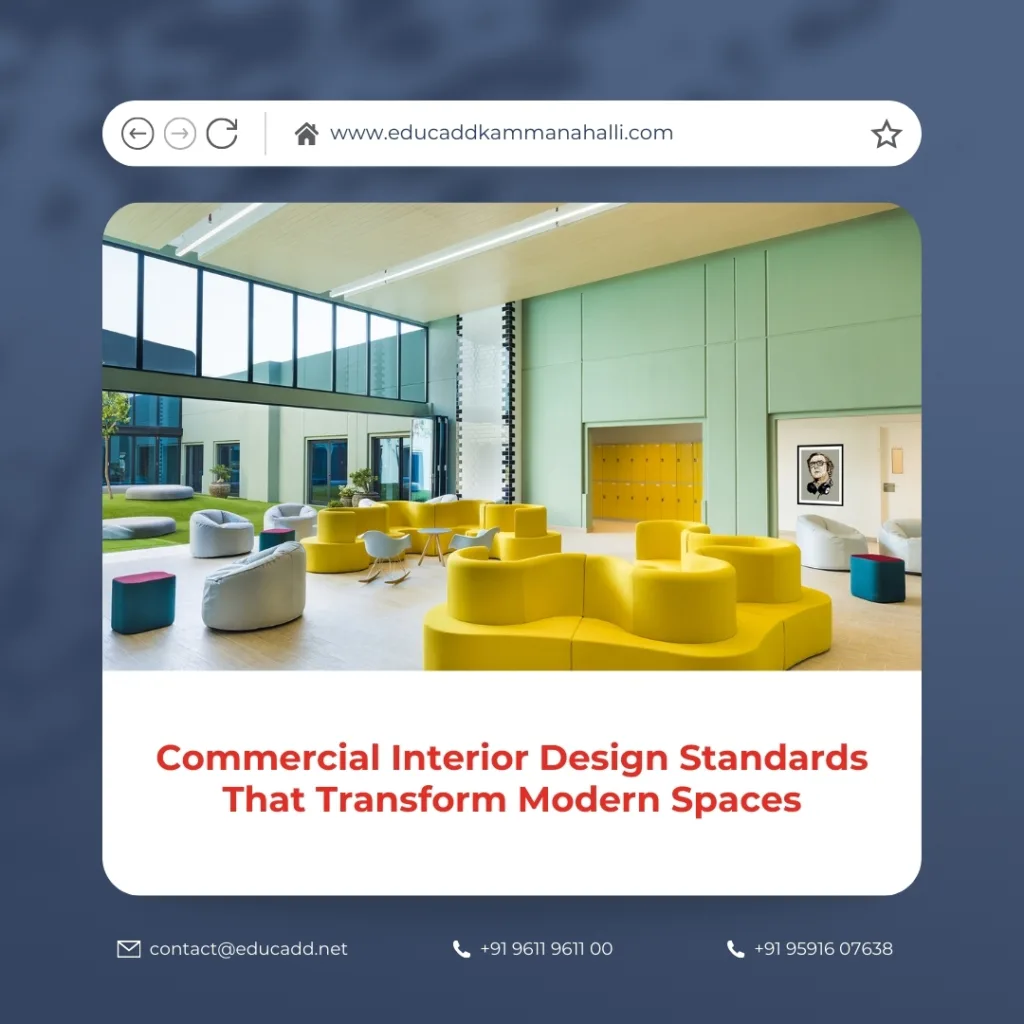
Commercial Interior Design Standards
In this comprehensive guide, you will explore the essential principles, guidelines, and best practices that define commercial interior design standards. Understanding these concepts will help you create spaces that are functional, safe, and future-ready.
1. Understanding Commercial Interior Design Standards
Commercial Interior Design Standards refer to a set of guidelines that ensure spaces meet safety, functionality, and aesthetic requirements. These standards are developed based on building codes, industry practices, and user needs. They are essential because commercial spaces serve a wide range of people with diverse expectations.
These standards also ensure consistency across projects. For example, offices must provide proper lighting, ventilation, and ergonomics, while retail stores must focus on layout efficiency and customer flow. As a result, businesses can maintain quality and compliance without compromising creativity.
Moreover, these standards help reduce risks. When properly followed, they minimize hazards, improve accessibility, and enhance user comfort. This ultimately leads to better employee productivity and customer satisfaction.
2. Importance of Space Planning in Commercial Design
Space planning is one of the most crucial aspects of commercial interior design. It involves organizing the layout to ensure optimal use of available space. A well-planned layout improves movement, accessibility, and overall efficiency.
Effective space planning also enhances functionality. For instance, in an office, workstations should be arranged to promote collaboration while maintaining privacy. Similarly, in retail spaces, the layout should guide customers naturally through the store.
Additionally, proper space planning supports scalability. Businesses can easily adapt their spaces for future growth without major redesigns. This makes it a long-term investment rather than a short-term solution.
3. Building Codes and Regulatory Compliance
Every Commercial Interior Design Standards project must comply with local building codes and regulations. These rules are established to ensure safety and structural integrity. They cover aspects such as fire safety, electrical systems, plumbing, and occupancy limits.
Compliance is not optional. It is mandatory for obtaining permits and approvals. Failure to meet these standards can result in legal issues, penalties, or even closure of the business.
Furthermore, regulatory compliance ensures that the space is safe for occupants. Proper fire exits, emergency lighting, and ventilation systems must be integrated into the design. Therefore, designers must stay updated with evolving regulations.
4. Accessibility and Universal Design Principles
Accessibility is a key component of commercial interior design standards. Spaces must be designed to accommodate individuals of all abilities. This includes people with disabilities, elderly individuals, and those with temporary limitations.
Universal design principles focus on creating environments that are usable by everyone without the need for adaptation. Features such as ramps, wide doorways, and accessible restrooms are essential.
In addition, accessible design improves inclusivity. Businesses can serve a broader audience while demonstrating social responsibility. As a result, accessibility becomes both a legal requirement and a competitive advantage.
5. Lighting Standards for Commercial Spaces
Lighting plays a significant role in shaping the ambiance and functionality of a space. Commercial interior design standards specify the type, intensity, and placement of lighting fixtures to ensure optimal visibility and comfort.
Natural lighting should be maximized wherever possible. It enhances mood, reduces energy consumption, and creates a welcoming environment. However, artificial lighting must also be carefully planned to avoid glare and shadows.
Good lighting design also impacts productivity. In workplaces, proper illumination reduces eye strain and improves focus. Therefore, lighting is not just a decorative element but a functional necessity.
6. Material Selection and Durability
The choice of materials is critical in commercial interior design. Materials must be durable, easy to maintain, and suitable for high-traffic environments. This ensures longevity and cost-effectiveness.
For example, flooring materials should be resistant to wear and tear, while wall finishes should be easy to clean. Additionally, materials must meet safety standards, such as fire resistance and non-toxicity.
Sustainability is also becoming a major consideration. Eco-friendly materials not only reduce environmental impact but also enhance brand reputation. As a result, material selection must balance durability, aesthetics, and sustainability.
7. Ergonomics and User Comfort
Ergonomics focuses on designing spaces that support human comfort and efficiency. In commercial settings, this is especially important for workplaces where employees spend long hours.
Proper ergonomic design includes adjustable furniture, adequate desk height, and supportive seating. These elements reduce physical strain and prevent injuries.
-
Improves employee productivity and efficiency
-
Reduces workplace-related health issues
By prioritizing ergonomics, businesses can create a healthier and more productive environment. This leads to higher employee satisfaction and better performance.
8. Acoustic Design and Noise Control
Noise levels can significantly impact the functionality of a commercial space. Acoustic design aims to control sound and create a comfortable auditory environment.
In offices, excessive noise can reduce concentration and productivity. Therefore, sound-absorbing materials, partitions, and ceiling treatments are often used.
In hospitality and retail spaces, acoustics influence customer experience. A well-balanced sound environment creates a pleasant atmosphere. Consequently, acoustic design is an essential part of commercial interior standards.
9. HVAC and Indoor Air Quality Standards
Heating, ventilation, and air conditioning (HVAC) systems play a vital role in maintaining indoor comfort. Proper ventilation ensures a constant supply of fresh air while removing pollutants.
Good indoor air quality is essential for health and well-being. Poor ventilation can lead to discomfort, fatigue, and health issues. Therefore, HVAC systems must be designed according to established standards.
Energy efficiency is another important factor. Modern HVAC systems are designed to minimize energy consumption while maintaining optimal performance. This reduces operational costs and environmental impact.
10. Fire Safety and Emergency Preparedness
Fire safety is a critical aspect of commercial interior design standards. Spaces must be equipped with fire detection systems, alarms, and suppression systems.
Emergency exits must be clearly marked and easily accessible. Additionally, evacuation plans should be integrated into the design.
-
Installation of fire-resistant materials
-
Proper placement of extinguishers and alarms
By incorporating these measures, businesses can ensure the safety of occupants and comply with regulations. Fire safety should never be overlooked in any commercial project.
11. Branding and Aesthetic Consistency
Commercial Interior Design Standards should reflect the brand identity of the business. Design elements such as colors, materials, and layouts must align with the brand’s image.
Consistency in design helps create a memorable experience for customers. For example, a retail store should have a layout and ambiance that resonates with its target audience.
Moreover, aesthetics influence perception. A well-designed space can enhance credibility and attract more customers. Therefore, branding must be integrated into every aspect of interior design.
12. Technology Integration in Modern Interiors
Technology has become an integral part of commercial interior design. Smart systems, automation, and digital tools are now commonly used to enhance functionality.
For instance, smart lighting and climate control systems improve energy efficiency. Digital displays and interactive elements enhance customer engagement.
Technology also supports flexibility. Spaces can be easily adapted to changing needs through modular designs and smart solutions. As a result, technology integration is a key trend in modern commercial interiors.
13. Sustainability and Green Design Standards
Sustainability is no longer optional—it is a necessity. Green design standards focus on reducing environmental impact and promoting resource efficiency.
This includes the use of renewable materials, energy-efficient systems, and waste reduction practices. Sustainable design also improves indoor air quality and occupant well-being.
Businesses that adopt green design practices can enhance their reputation and reduce operational costs. Therefore, sustainability is a win-win approach for both the environment and the business.
14. Maintenance and Lifecycle Considerations
Commercial Interior Design Standards must be designed with maintenance in mind. Easy-to-clean surfaces, durable materials, and accessible systems reduce long-term costs.
Lifecycle planning ensures that the design remains functional over time. This includes considering future upgrades and renovations.
Regular maintenance also preserves the aesthetic appeal of the space. Therefore, designers must think beyond the initial setup and plan for long-term usability.
Conclusion
Commercial Interior Design Standards are the foundation of successful and functional spaces. They ensure that every aspect of a design—from safety and compliance to aesthetics and sustainability—is carefully considered and executed. By following these standards, businesses can create environments that support productivity, enhance customer experience, and reflect their brand identity.
As commercial spaces continue to evolve, the importance of these standards will only grow. Designers and business owners must stay informed and adaptable to meet changing needs and expectations. Ultimately, a well-designed commercial space is not just about appearance—it is about creating a meaningful and efficient environment that delivers long-term value.

