
Build Smarter, Lead Better: How a Construction Management Course Shapes Future Industry Professionals
Introduction
The construction industry is changing faster than ever. Modern projects now require better planning, digital tools, cost control, safety practices, and strong leadership. As projects become larger and more complex, companies need professionals who can manage different stages of construction with confidence. This is where a Construction Management Course can make a valuable difference.
Construction management brings together technical knowledge, project planning, resource management, budgeting, scheduling, safety, and team coordination. It helps learners understand what happens before, during, and after a construction project. More importantly, it develops practical skills that can support long-term career growth in the construction sector.
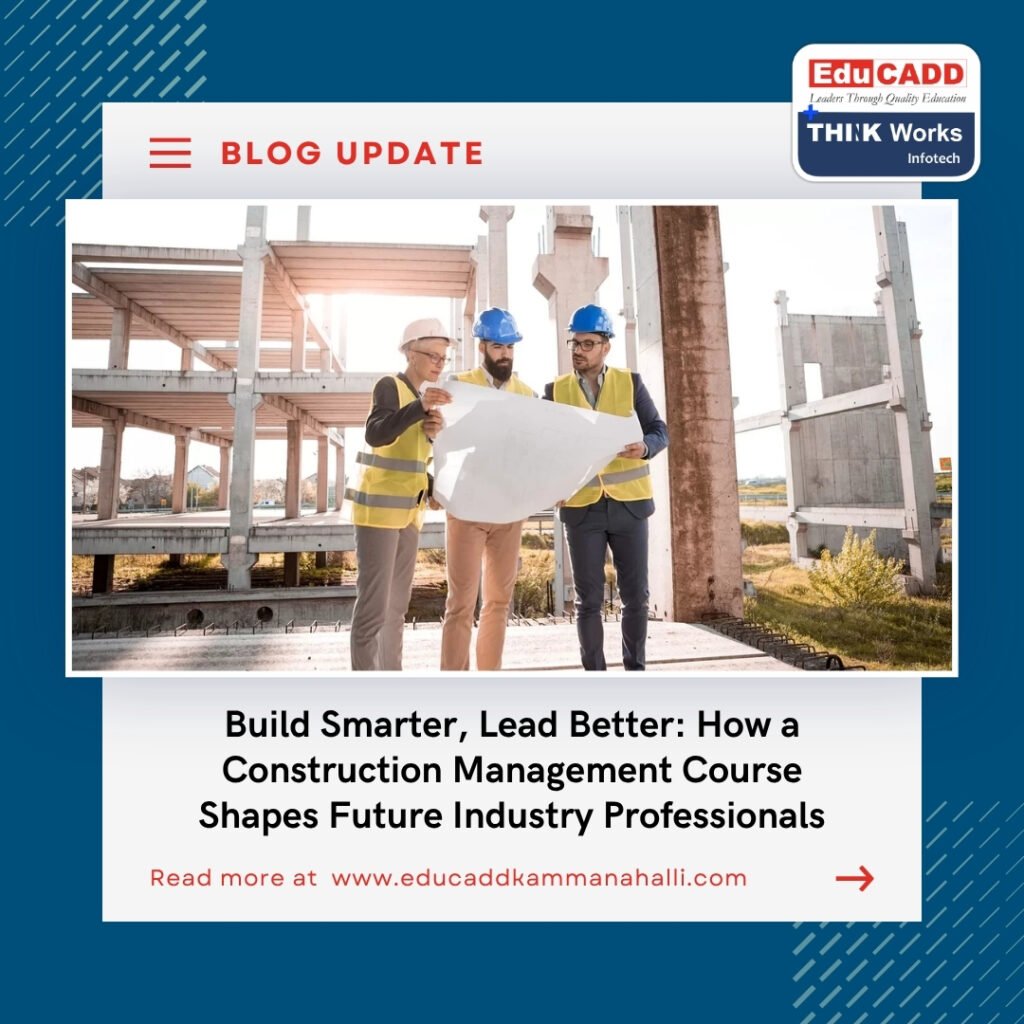
Construction Management Course
Today, employers look for professionals who can combine technical understanding with management skills. A structured Construction Management Course can help students build this combination through practical learning, project-based activities, and exposure to modern construction practices.
Why Construction Management Matters in Modern Projects
A construction project involves many moving parts. Architects, engineers, contractors, suppliers, consultants, workers, and clients must work together. Even a small delay in one area can affect the entire project.
Construction managers help coordinate these activities. They monitor schedules, manage resources, track costs, communicate with teams, and identify project risks. Their decisions can influence project quality, productivity, and timely completion.
Furthermore, construction companies are adopting digital technologies to improve project performance. Building Information Modeling, project management software, scheduling tools, and data-driven processes are becoming common across the industry.
Because of this shift, professionals need more than basic construction knowledge. They need to understand how technology and management principles work together.
A Construction Management Course introduces learners to these important areas and helps them understand how professional construction teams operate.
What Does a Construction Management Course Teach?
A well-designed course covers several areas of construction management. The learning usually combines management principles with technical concepts.
Students can explore topics such as:
- Construction planning and project coordination
- Project scheduling and time management
- Cost estimation and budget control
- Resource and material management
- Construction safety and risk management
- Quality control and quality assurance
- Contract and documentation management
- Building Information Modeling concepts
- Construction project monitoring
- Site management and team coordination
These subjects create a strong foundation for managing construction projects. In addition, practical exercises can help students understand how these concepts work in real situations.
For example, learners may study how to prepare a project schedule. They can also explore how delays affect resources, costs, and completion dates. This practical approach makes the learning process more useful for future workplace situations.
Develop Strong Construction Planning Skills
Planning is one of the most important parts of any construction project. Before work begins, professionals must understand project requirements, available resources, timelines, costs, and possible risks.
Poor planning can result in delays, material shortages, budget problems, and workflow issues. Therefore, construction managers need to create realistic plans and monitor them throughout the project.
A Construction Management Course can introduce students to different planning methods. Learners can understand how project activities are organized and how individual tasks depend on one another.
They can also learn how to:
- Define project activities
- Establish realistic timelines
- Allocate resources
- Monitor project milestones
- Identify potential delays
- Adjust plans when conditions change
This knowledge can help future professionals approach projects in a more organized way.
Learn Project Scheduling and Time Management
Time plays a major role in construction. Every project has deadlines, milestones, and contractual requirements. Delays can increase labor costs and material expenses.
Project scheduling helps teams understand what needs to happen, when it should happen, and which activities require priority.
Modern construction professionals may work with tools such as Primavera P6, Microsoft Project, and other project planning platforms. Learning these tools can improve a student’s ability to understand project timelines.
During a Construction Management Course, students can gain an understanding of scheduling concepts such as work breakdown structures, critical activities, dependencies, and project milestones.
Strong scheduling knowledge can also improve communication. When every team understands the project timeline, it becomes easier to coordinate work and identify potential problems early.
Understand Cost and Resource Management
Cost control is another major responsibility in construction management. Every project operates within a budget. Materials, labor, equipment, transportation, and other expenses must be monitored carefully.
A small cost variation may appear insignificant at first. However, repeated variations can create a major impact on the final project budget.
Construction management education can help learners understand basic cost planning and resource allocation. Students can explore how resources are assigned to different activities and how project costs are monitored.
Important areas may include:
- Budget planning
- Material estimation
- Labor management
- Equipment utilization
- Cost tracking
- Resource allocation
- Expense monitoring
With these skills, professionals can better understand the financial side of construction projects.
Build Knowledge of Construction Safety
Safety is a critical part of construction management. Construction sites involve machinery, electrical systems, heavy materials, elevated work areas, and many other potential hazards.
Managers must help create safe working environments while ensuring that teams follow established safety procedures.
A professional Construction Management Course can introduce students to construction safety principles, risk identification, site procedures, and preventive practices.
Students can learn why safety planning should begin before construction starts. They can also understand how safety requirements influence site operations.
Strong safety awareness can support better project management. It can reduce disruptions and help teams maintain safer working conditions.
Explore Digital Tools Used in Construction
Technology has transformed construction workflows. Digital platforms now support planning, documentation, design coordination, scheduling, monitoring, and communication.
One important technology is Building Information Modeling, commonly known as BIM. BIM allows project teams to work with digital representations of building information and improve coordination between different disciplines.
Other digital tools can support:
- Project scheduling
- Quantity estimation
- Site monitoring
- Design coordination
- Documentation
- Cost management
- Team communication
A modern Construction Management Course should help learners understand how digital technology supports construction operations.
This knowledge can also help students adapt to changing industry expectations.
Gain Practical Project Management Knowledge
Construction management is not only about theory. Professionals must make decisions while dealing with real project conditions.
For instance, a material delivery may arrive late. A design change may affect the schedule. A subcontractor may face a resource shortage. Weather conditions may also affect site activities.
These situations require quick thinking and organized decision-making.
Practical learning can help students understand how managers respond to such challenges. Case studies and project exercises can provide useful exposure to common construction scenarios.
Therefore, learners should look for a Construction Management Course that combines classroom concepts with practical activities and project-based learning.
Develop Leadership and Communication Skills
Construction managers work with people from different professional backgrounds. They need to communicate with engineers, architects, contractors, suppliers, clients, and site teams.
Technical knowledge alone may not be enough. Professionals also need leadership, communication, coordination, and problem-solving skills.
A strong course can help learners develop these abilities through presentations, group activities, project discussions, and practical assignments.
Good communication can reduce misunderstandings. It can also improve coordination between different teams.
Furthermore, effective leadership helps professionals handle project responsibilities with greater confidence.
Career Opportunities After Construction Management Training
Construction management skills can open doors to several roles within the construction and infrastructure sector. Career opportunities can vary based on education, experience, technical skills, location, and employer requirements.
Potential career paths include:
- Construction Project Coordinator
- Site Coordinator
- Project Planning Executive
- Construction Supervisor
- Project Management Executive
- Quantity and Cost Control Professional
- Construction Planning Engineer
- Project Coordinator
- Site Management Professional
- BIM and Construction Coordination Professional
Graduates can explore opportunities with construction companies, infrastructure organizations, real estate firms, engineering consultancies, contractors, and project management companies.
Over time, professionals can build specialized expertise in planning, cost management, BIM coordination, project controls, or site operations.
Who Should Consider This Course?
A Construction Management Course can suit learners from different educational backgrounds. Civil engineering graduates and diploma holders can use it to strengthen their management knowledge.
It can also benefit working professionals who want to move from technical roles into coordination or management positions.
The course may be useful for:
- Civil engineering graduates
- Civil diploma holders
- Architecture professionals
- Construction professionals
- Site engineers
- Project coordinators
- Planning professionals
- Individuals interested in construction management
Learners should consider their career goals before selecting a program. A course with practical training, industry-focused content, and modern software exposure can provide broader learning opportunities.
Why Practical Training Makes a Difference
Practical learning helps students connect concepts with real project situations. Reading about construction planning is useful, but applying planning concepts to a project provides deeper understanding.
For example, students can create a basic construction schedule. They can assign resources and monitor project milestones. They can also study how changes affect project timelines.
This type of practice encourages problem-solving and improves confidence.
Additionally, practical assignments can help learners develop project portfolios. A portfolio can demonstrate the skills they have developed during training.
Therefore, when selecting a Construction Management Course, students should look beyond the syllabus. They should also examine the practical training approach, software exposure, project work, and industry relevance.
How to Choose the Right Construction Management Course
Several training programs are available today. However, not every program offers the same learning experience.
Before enrolling, students should evaluate important factors such as:
- Course curriculum
- Practical training
- Industry-focused projects
- Software training
- Faculty experience
- Course duration
- Certification
- Learning format
- Career support
- Project-based assignments
It is also useful to understand whether the program covers modern construction practices. A course should ideally provide a balanced combination of management principles, technical concepts, and practical applications.
Students can also review the learning methodology before making a decision. Practical exposure can make the training more relevant to workplace requirements.
Build a Future-Ready Construction Career
The construction industry needs professionals who can manage projects efficiently while adapting to new technologies. Traditional construction knowledge remains important, but digital skills and management abilities are becoming increasingly valuable.
A Construction Management Course can help learners develop this combination. It introduces project planning, scheduling, cost management, safety, quality control, resource management, and construction technology.
Moreover, the skills gained through construction management training can support different career directions. Professionals can gradually specialize in areas that match their interests and career goals.
Continuous learning is also important. Construction technologies and project workflows continue to evolve. Professionals who keep upgrading their knowledge can adapt more effectively to industry changes.
Conclusion
Construction projects require more than technical execution. They need careful planning, effective coordination, cost awareness, strong communication, safety management, and timely decision-making. These responsibilities make construction management an important part of the modern construction industry.
A Construction Management Course can provide learners with a structured pathway to understand these essential areas. From project scheduling and cost control to construction safety and digital technologies, the right training can build a strong foundation for professional development.
For students and working professionals interested in construction, infrastructure, planning, or project coordination, developing management skills can add significant value to their existing knowledge. With practical learning, industry-focused training, and continuous skill development, learners can prepare themselves for the changing demands of the construction sector.
Ultimately, successful construction management is about bringing people, resources, technology, time, and budgets together. Building these skills today can help aspiring professionals take confident steps toward a future in construction and project management.

