
Construction Project Planning with Primavera: The Smart Blueprint for Delivering Projects on Time and Within Budget
Construction projects involve countless moving parts, including labor, materials, equipment, budgets, timelines, and stakeholder expectations. Managing these elements without a structured planning system often leads to delays, cost overruns, and communication gaps. That is why Construction Project Planning Primavera has become an essential practice for construction companies, project managers, engineers, and contractors. Primavera provides a reliable platform to create detailed schedules, monitor progress, allocate resources, and minimize project risks. It supports informed decision-making while keeping every project phase aligned with business objectives.
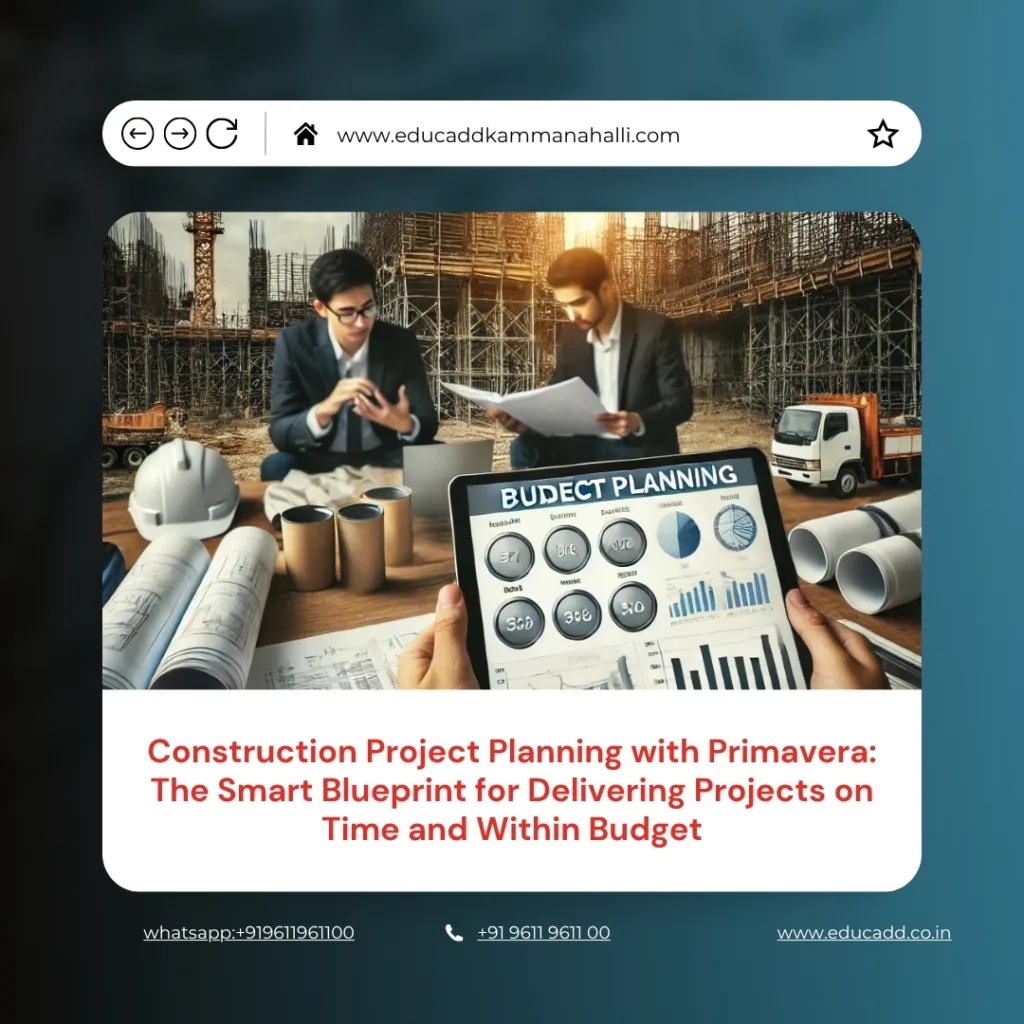
Construction Project Planning Primavera
Whether the project is a residential building, commercial complex, highway, or industrial facility, Primavera helps teams stay organized from start to finish. Understanding how to use this powerful software can significantly improve project performance and ensure successful completion.
Why Construction Project Planning with Primavera Matters
Construction projects require careful coordination among multiple teams and departments. Even a minor delay in one activity can affect the entire project timeline. Construction Project Planning Primavera helps project managers develop accurate schedules that clearly define every task and milestone. This structured approach reduces uncertainty and improves accountability. Moreover, Primavera enables managers to identify dependencies between activities and prepare contingency plans before problems arise. As a result, projects move forward with better efficiency and fewer interruptions. Organizations that implement Primavera often experience improved productivity, stronger communication, and greater client satisfaction because everyone works toward the same schedule and objectives.
Building a Strong Project Schedule from Day One
A successful construction project always begins with a realistic and detailed schedule. Primavera allows project managers to break down complex projects into manageable activities using a Work Breakdown Structure (WBS). Every task receives a planned start date, finish date, duration, and responsibility. Consequently, the project becomes easier to manage throughout its lifecycle. Instead of relying on assumptions, managers use data-driven planning to create achievable schedules. This organized framework helps every stakeholder understand project priorities and expected outcomes. Strong scheduling also supports better coordination between contractors, suppliers, consultants, and clients.
Managing Resources Effectively Throughout the Project
Resource management plays a critical role in construction success. Labor shortages, equipment conflicts, and material delays can significantly impact project completion. Construction Project Planning Primavera offers advanced resource allocation tools that help managers assign the right resources to the right activities. Managers can monitor resource availability, identify overutilization, and make timely adjustments whenever necessary. Furthermore, Primavera supports efficient workforce planning by balancing workloads across teams. This proactive approach minimizes idle time while maximizing productivity. As a result, construction companies achieve better resource utilization and maintain consistent project progress.
Tracking Progress with Real-Time Project Monitoring
Monitoring project performance is just as important as creating the initial schedule. Primavera provides powerful tracking capabilities that compare planned progress with actual performance. Project managers receive clear insights into completed activities, delayed tasks, and upcoming milestones. Therefore, corrective actions can begin immediately before delays become major issues. Regular updates also improve transparency among project stakeholders. Clients appreciate accurate progress reports because they provide confidence in project execution. Continuous monitoring ensures that projects remain aligned with original goals while maintaining schedule integrity.
Improving Cost Control and Budget Management
Construction costs often fluctuate because of material prices, labor expenses, and unexpected project changes. Primavera helps organizations maintain better financial control by integrating project schedules with cost management. Managers can estimate budgets, monitor expenditures, and compare actual costs against planned values. Consequently, they identify budget deviations early and implement corrective measures before financial problems escalate. Better cost visibility also supports informed decision-making during every project phase. Companies that use Primavera effectively reduce unnecessary spending while improving overall profitability and financial accountability.
Reducing Project Risks Through Better Planning
Every construction project involves uncertainties that can affect timelines, budgets, and quality. Weather conditions, design revisions, supply chain disruptions, and labor shortages create significant risks. Construction Project Planning Primavera helps identify these risks during the planning stage. Managers can analyze critical activities, evaluate possible delays, and prepare mitigation strategies in advance. This proactive planning reduces surprises during project execution. Additionally, Primavera highlights critical path activities that require special attention. By focusing on these essential tasks, project teams improve project stability and reduce the likelihood of costly disruptions.
Enhancing Collaboration Across Construction Teams
Construction projects involve architects, engineers, contractors, consultants, suppliers, and clients working together. Effective communication among these stakeholders determines project success. Primavera creates a centralized project environment where everyone accesses updated schedules and project information. Consequently, misunderstandings decrease while collaboration improves. Team members understand their responsibilities and project deadlines more clearly. Furthermore, shared project visibility encourages faster decision-making because accurate information remains available at every stage. Better collaboration strengthens teamwork and contributes to smoother project execution from beginning to completion.
Supporting Large and Complex Infrastructure Projects
Modern infrastructure projects involve thousands of interconnected activities across multiple locations. Managing such complexity manually becomes nearly impossible. Primavera provides scalable planning tools that support projects of every size. Whether managing airports, highways, bridges, hospitals, manufacturing plants, or commercial buildings, Primavera organizes every activity into a structured framework. Managers can oversee multiple projects simultaneously while maintaining visibility across the entire portfolio. This flexibility makes Primavera one of the preferred planning solutions for large construction organizations worldwide.
Using Critical Path Analysis for Better Decision-Making
Critical Path Method (CPM) remains one of Primavera’s strongest planning features. It identifies the sequence of activities that directly determines project completion. Any delay in these critical tasks affects the final delivery date. Primavera automatically calculates the critical path and highlights activities requiring immediate attention. Therefore, project managers can prioritize important tasks and allocate additional resources when needed. This focused approach improves schedule reliability while reducing unnecessary delays. Critical path analysis also supports better planning adjustments whenever project conditions change.
Increasing Productivity Through Data-Driven Planning
Modern construction management depends on accurate project data rather than assumptions. Primavera collects scheduling information, resource performance, cost details, and progress updates in one integrated platform. Managers analyze this information to improve planning accuracy and operational efficiency. Historical project data also helps organizations estimate future projects more effectively. Consequently, lessons learned from previous construction projects contribute to better planning decisions. Data-driven management reduces guesswork and supports continuous improvement across the entire construction process.
Career Opportunities with Primavera Skills
The growing construction industry continues to create strong demand for professionals with Primavera expertise. Project planners, scheduling engineers, planning managers, project coordinators, construction managers, and consultants frequently use Primavera in their daily responsibilities. Employers value candidates who understand project scheduling, resource planning, and project control. Learning Construction Project Planning Primavera enhances career prospects across construction, infrastructure, oil and gas, manufacturing, and engineering sectors. As digital project management becomes increasingly important, Primavera professionals enjoy greater career stability and attractive salary opportunities.
Best Practices for Successful Primavera Project Planning
Achieving excellent project outcomes requires more than simply using software. Project managers should create realistic schedules, update progress regularly, monitor resource utilization, and communicate effectively with all stakeholders. Consistent schedule reviews help identify potential issues before they become serious problems. Managers should also maintain accurate project data because reliable information supports better decision-making. Additionally, proper team training ensures everyone understands Primavera workflows and reporting methods. Following these best practices allows organizations to maximize the benefits of Construction Project Planning Primavera while improving project success rates.
The Future of Construction Planning with Primavera
Construction technology continues to evolve through automation, cloud collaboration, digital twins, artificial intelligence, and Building Information Modeling (BIM). Primavera integrates effectively with these modern technologies, creating smarter and more connected project management environments. Future construction planning will rely even more on predictive analytics, real-time reporting, and intelligent scheduling. Organizations that adopt Primavera today position themselves for long-term success in an increasingly competitive construction industry. By embracing innovation, companies improve project delivery while meeting higher standards for quality, safety, and efficiency.
Conclusion
Construction Project Planning Primavera has transformed the way construction projects are planned, managed, and completed. Its comprehensive scheduling, resource management, cost control, progress tracking, and risk management capabilities enable organizations to deliver projects more efficiently while maintaining quality and profitability. From small building projects to massive infrastructure developments, Primavera provides the structure and visibility needed to achieve consistent project success. As construction projects become more complex, the importance of skilled planning professionals and advanced project management tools will continue to grow.
Investing in Primavera knowledge not only strengthens project performance but also opens valuable career opportunities in the rapidly expanding construction and engineering industries. Organizations that integrate Primavera into their planning strategies gain a competitive advantage by delivering projects on time, within budget, and with greater confidence.

