
Content Marketing Frameworks That Drive Qualified Leads
In today’s competitive digital ecosystem, content alone is no longer enough. Businesses publish blogs, videos, emails, and social posts every day, yet only a fraction of this content attracts qualified leads. The real difference lies not in volume, but in structure. This is where Content Marketing Lead Frameworks become critical. A framework gives direction, clarity, and consistency. It ensures that every piece of content aligns with audience intent, buyer readiness, and measurable business goals.
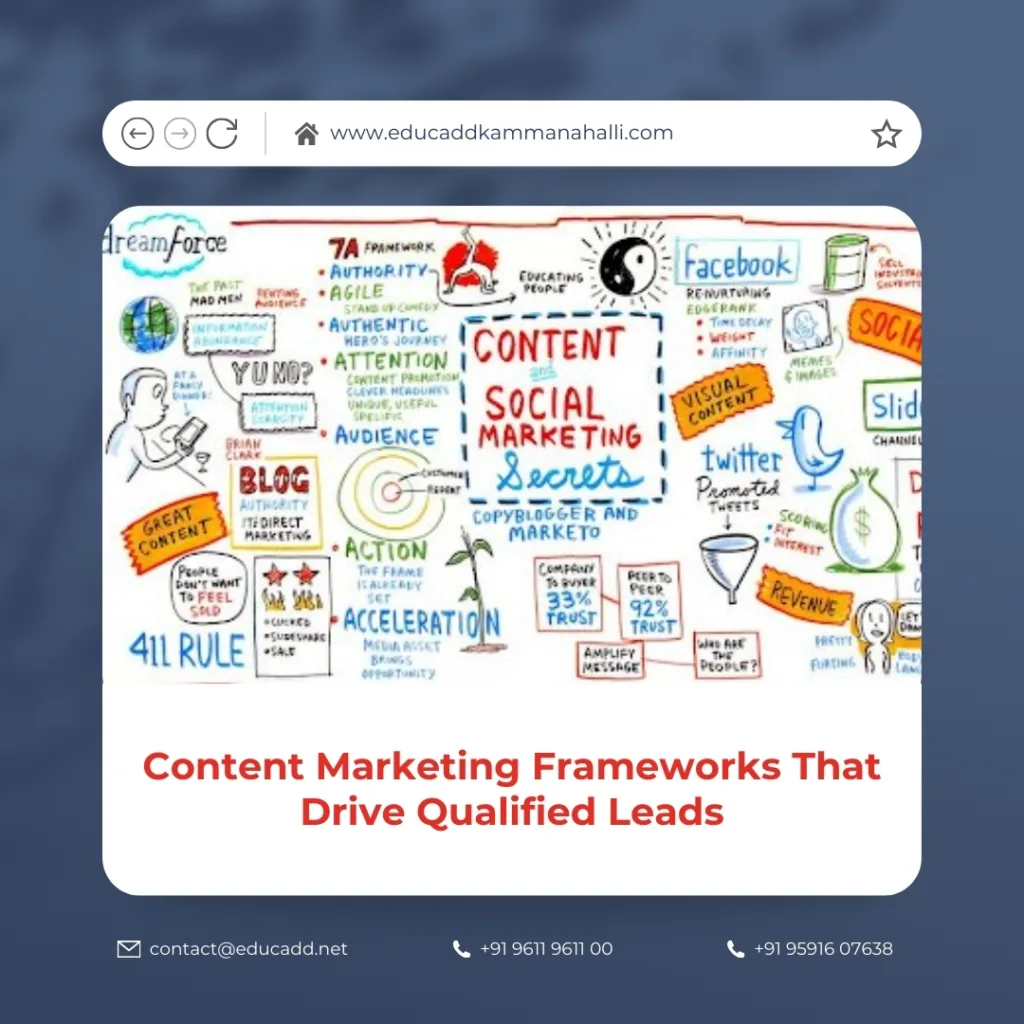
Content Marketing Lead Frameworks
Without a clear framework, content becomes scattered and reactive. With a framework, content turns into a predictable lead engine. This blog explores proven content marketing frameworks that help brands attract, nurture, and convert high-quality prospects. Each framework is explained in depth, with practical insights to improve readability, relevance, and long-term ROI.
1. The Buyer’s Journey Framework: Mapping Content to Intent
One of the most effective Content Marketing Lead Frameworks is the Buyer’s Journey Framework. This approach aligns content with how prospects think, search, and decide. Buyers rarely convert on first contact. Instead, they move through stages of awareness, consideration, and decision.
At the awareness stage, prospects seek information about their problems. Educational blogs, explainer videos, and infographics perform well here. In the consideration stage, buyers compare options. Case studies, comparison guides, and webinars help them evaluate solutions. Finally, decision-stage content such as demos, testimonials, and free trials encourages conversion.
This framework improves lead quality because it filters intent naturally. Readers who engage with decision-stage content are already closer to buying. As a result, sales teams receive warmer leads. When applied consistently, this framework ensures content meets prospects exactly where they are, increasing trust and engagement.
2. The Pillar–Cluster Framework: Building Authority and Visibility
The Pillar–Cluster Framework is essential for brands aiming to dominate search visibility while generating qualified leads. This framework organizes content around a central pillar page supported by multiple cluster articles. Each cluster explores a subtopic in detail and links back to the main pillar.
For example, a pillar page on content marketing frameworks can link to clusters covering lead nurturing, SEO strategy, buyer personas, and conversion optimization. This structure improves internal linking and enhances topical authority. Search engines reward this clarity, leading to higher rankings and sustained traffic.
From a lead generation perspective, pillar pages attract high-intent visitors. They often include gated resources such as ebooks or templates. Since readers consume multiple related articles, engagement deepens. This framework not only drives traffic but also attracts leads who are genuinely interested in the topic.
3. The TOFU–MOFU–BOFU Framework: Qualifying Leads Gradually
The TOFU–MOFU–BOFU framework remains one of the most reliable Content Marketing Lead Frameworks that drive qualified leads. It categorizes content into Top of Funnel, Middle of Funnel, and Bottom of Funnel assets. Each layer serves a specific purpose in lead qualification.
TOFU content focuses on reach and awareness. Blog posts, social content, and SEO articles work well here. MOFU content educates and nurtures. Email sequences, whitepapers, and guides help prospects evaluate solutions. BOFU content pushes for action using case studies, pricing pages, and consultations.
This framework ensures that leads are nurtured before sales engagement. As a result, conversions increase and churn reduces. When content flows smoothly across funnel stages, prospects feel supported rather than pressured, improving brand perception and trust.
4. The Jobs-to-Be-Done Framework: Solving Real Problems
The Jobs-to-Be-Done (JTBD) Framework shifts focus from demographics to motivations. Instead of asking who the buyer is, it asks why they hire a solution. This approach creates content that resonates deeply and attracts qualified leads with clear intent.
Using JTBD, content addresses real-life scenarios, challenges, and desired outcomes. For instance, instead of promoting a tool’s features, content explains how it helps users save time, reduce errors, or grow revenue. This relevance increases engagement and reduces bounce rates.
When content reflects the buyer’s true motivations, leads feel understood. They are more likely to convert because the messaging aligns with their goals. This framework is particularly effective for B2B and high-consideration products.
5. The Content Flywheel Framework: Sustaining Lead Momentum
The Content Flywheel Framework focuses on momentum rather than one-time campaigns. Each content asset feeds the next stage of growth. Blogs attract traffic, emails nurture subscribers, and customer stories create advocacy. This continuous cycle compounds results over time.
Unlike linear funnels, flywheels emphasize retention and loyalty. Existing customers consume advanced content, share insights, and refer new leads. This reduces acquisition costs and improves lead quality organically.
By reusing and repurposing content, marketers maintain consistency while reducing effort. Over time, the flywheel builds a self-sustaining system that continuously generates qualified leads and strengthens brand authority.
6. The StoryBrand Framework: Clarifying the Message
The StoryBrand Framework uses storytelling principles to simplify messaging. It positions the customer as the hero and the brand as the guide. Content created with this framework becomes clear, relatable, and emotionally engaging.
When messaging is simple, qualified leads self-identify. Confused visitors leave, while interested prospects stay. This clarity improves conversion rates across blogs, landing pages, and emails.
Story-driven content builds trust faster than feature-heavy messaging. As trust grows, leads move confidently through the funnel. This makes StoryBrand one of the most impactful content marketing frameworks that drive qualified leads.
7. The Problem–Agitate–Solution Framework: Driving Action
The Problem–Agitate–Solution (PAS) Framework focuses on emotional triggers. It highlights a problem, intensifies its impact, and then presents a solution. This structure captures attention and motivates action.
Content using PAS feels personal and urgent. Readers recognize their challenges and feel compelled to seek relief. When the solution aligns with their needs, conversions follow naturally.
This framework works exceptionally well for landing pages, sales emails, and case studies. It attracts leads who are already aware of their pain points and are actively searching for solutions.
8. The Educational Authority Framework: Teaching to Convert
The Educational Authority Framework positions brands as trusted teachers. Instead of selling aggressively, content educates deeply. Tutorials, masterclasses, and in-depth blogs demonstrate expertise and credibility.
When prospects learn from a brand, trust builds organically. Qualified leads emerge because they already believe in the brand’s knowledge. This reduces resistance during sales conversations.
Education-driven content also supports long-term SEO growth. As authority increases, organic traffic improves, creating a steady stream of high-intent leads.
9. The Data-Driven Content Framework: Optimizing for Performance
The Data-Driven Content Framework relies on analytics to guide decisions. Content topics, formats, and distribution channels are chosen based on performance insights. This reduces guesswork and improves ROI.
By analyzing engagement metrics, marketers refine content to attract better leads. Low-quality traffic decreases, while conversion rates increase. Continuous optimization ensures relevance over time.
This framework supports scalability. As data accumulates, content becomes more precise and effective, consistently driving qualified leads.
10. The Personalization Framework: Speaking to Individuals
Personalization enhances relevance. This framework uses behavioral data, segmentation, and automation to deliver tailored content experiences. Emails, landing pages, and recommendations adapt to user behavior.
When content feels personal, engagement rises. Prospects feel valued and understood. As a result, lead quality improves significantly.
Personalization also shortens the sales cycle. Relevant content accelerates decision-making and strengthens relationships.
11. The Community-Led Content Framework: Trust Through Belonging
Community-led content leverages user-generated insights, discussions, and feedback. Forums, social groups, and testimonials create social proof. Prospects trust peers more than brands.
This framework attracts leads who are already aligned with the brand’s values. Engagement within communities signals high intent and loyalty.
Over time, communities become powerful lead sources. They nurture relationships naturally and drive consistent conversions.
12. The Repurposing Framework: Maximizing Reach and Impact
The Repurposing Framework extends content lifespan. A single blog becomes videos, podcasts, social posts, and emails. This ensures consistent messaging across channels.
By meeting audiences where they prefer to consume content, reach expands. Qualified leads discover the brand through multiple touchpoints.
Repurposing also maintains efficiency. Teams produce less but achieve more, sustaining lead generation without burnout.
13. The Trust-Building Framework: Reducing Friction
Trust is essential for qualified leads. This framework focuses on transparency, credibility, and social proof. Reviews, certifications, and case studies reduce hesitation.
Content that addresses objections openly builds confidence. Prospects feel reassured and informed. This increases conversion rates and reduces drop-offs.
Trust-based content strengthens long-term relationships, not just short-term wins.
14. The Conversion-Focused Framework: Turning Attention into Action
The final framework prioritizes clear calls to action. Content guides readers toward the next step using strategic CTAs, optimized landing pages, and lead magnets.
Conversion-focused content balances value and direction. Readers know what to do next and why it matters. This clarity improves lead capture quality.
When combined with nurturing strategies, this framework ensures that attention transforms into measurable business outcomes.
Conclusion
Content without structure struggles to deliver results. Content Marketing Lead Frameworks that drive qualified leads provide clarity, consistency, and purpose. Each framework discussed plays a unique role in attracting, nurturing, and converting the right audience.
When used together, these frameworks create a powerful ecosystem. They improve visibility, build trust, and enhance conversions. More importantly, they align content with real business goals.
By investing in structured frameworks rather than isolated tactics, brands can transform content marketing into a scalable, predictable lead generation engine that delivers lasting growth.

