
Design the Future with a Creo Parametric Course: Your Gateway to Modern Product Engineering
Every successful product begins with a great design, and every great design starts with the right skills. As industries continue to embrace digital product development, companies actively seek professionals who can create accurate 3D models, detailed assemblies, and manufacturing-ready drawings. A Creo Parametric Course Training provides the practical knowledge required to meet these expectations while preparing learners for rewarding careers in mechanical design and product engineering.
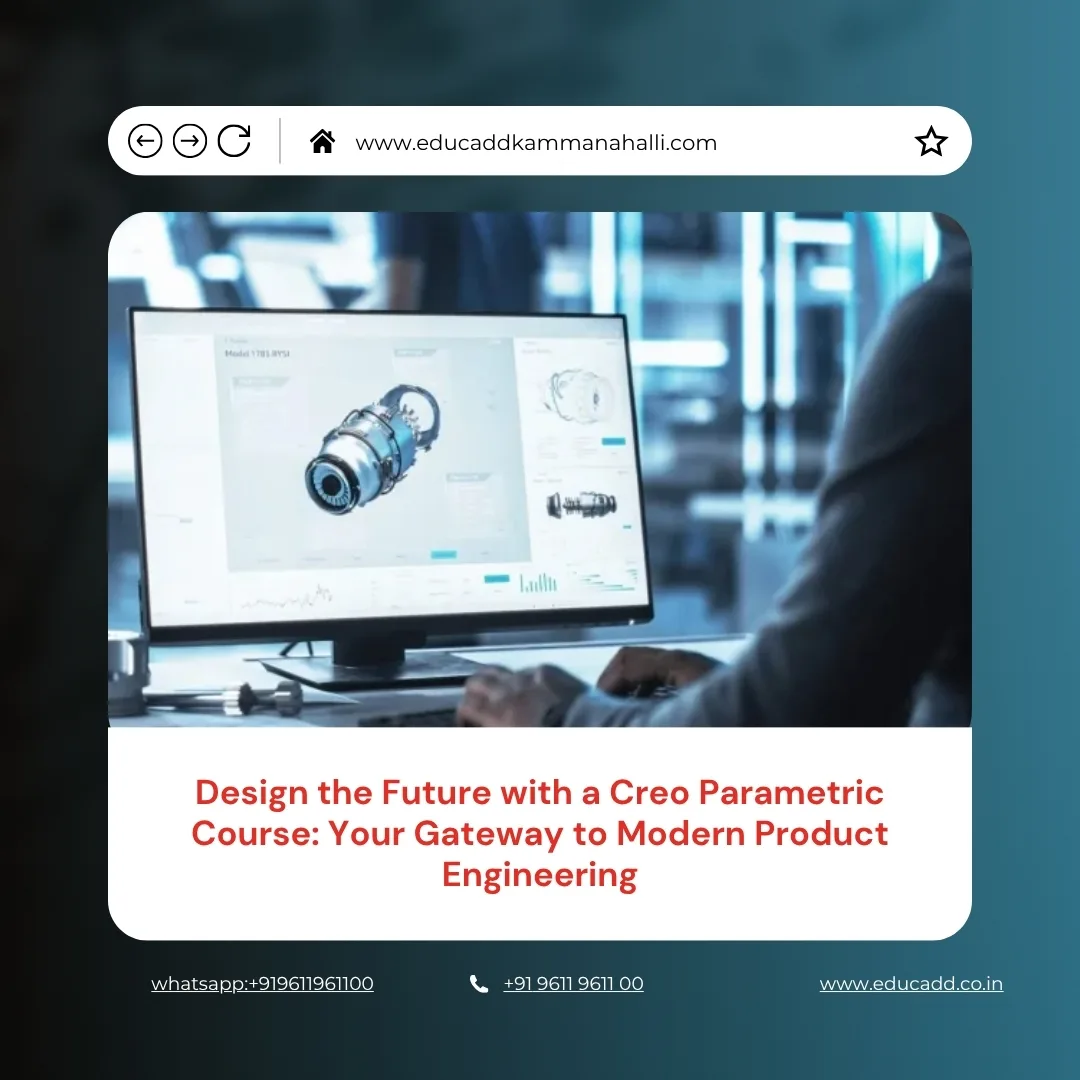
Creo Parametric Course Training
Whether you are a student, a working professional, or someone planning a career switch, learning Creo Parametric can open doors to exciting opportunities across automotive, aerospace, industrial equipment, consumer products, and manufacturing industries. With powerful modeling tools and industry-standard workflows, this software helps designers transform innovative ideas into real-world products with speed and precision.
Why a Creo Parametric Course Is the Right Career Choice
Technology has transformed product design, making computer-aided engineering an essential skill in today’s manufacturing world. A Creo Parametric Course Training equips learners with advanced modeling techniques that help create complex mechanical components with confidence. Unlike traditional drafting methods, Creo allows engineers to modify designs quickly without rebuilding the entire model. As industries demand faster product development cycles, professionals with Creo expertise become valuable assets for engineering organizations. Therefore, mastering this software significantly improves employability while building a strong technical foundation.
Learn Industry-Standard 3D Modeling Skills
One of the biggest advantages of joining a Creo Parametric Course Training is learning professional 3D modeling from the ground up. Students begin with sketch creation and gradually move toward advanced part modeling, surface design, sheet metal components, and solid modeling techniques. Every concept builds upon previous lessons, allowing learners to understand design logic clearly.
Moreover, hands-on practice strengthens confidence while improving design accuracy. This structured learning approach ensures that students gain both theoretical knowledge and practical experience.
Build Complex Assemblies with Ease
Modern products consist of hundreds or even thousands of individual components working together. A comprehensive Creo Parametric Course Training teaches students how to assemble these components efficiently while maintaining design relationships. Learners understand constraints, assembly structures, exploded views, interference checking, and motion analysis. Consequently, they develop the ability to design complete mechanical systems rather than individual parts. These skills become highly valuable in industries where precision engineering directly impacts product quality and manufacturing success.
Master Engineering Drawings and Documentation
Engineering drawings remain an essential part of manufacturing despite the rise of digital modeling. A Creo Parametric Course Training provides complete training in creating detailed production drawings that comply with industrial standards. Students learn dimensioning, tolerancing, annotations, sectional views, auxiliary views, and bill of materials preparation.
Furthermore, they discover how drawing updates automatically reflect model changes, saving considerable time during product revisions. This capability improves workflow efficiency while reducing documentation errors.
Understand Parametric Design for Better Flexibility
Parametric modeling is one of Creo’s strongest features, allowing designers to modify dimensions without rebuilding entire models. During a Creo Parametric Course Training, learners understand how design parameters control geometry and maintain relationships between features. As a result, engineers can experiment with multiple design alternatives quickly while preserving model integrity. This flexibility becomes especially useful during product development, where customer requirements often change before final manufacturing approval.
Gain Practical Experience Through Real-Time Projects
Learning software becomes meaningful only when students apply their knowledge to practical situations. Therefore, a professional Creo Parametric Course includes real-world projects that simulate industrial design challenges. Students design machine components, mechanical assemblies, sheet metal products, industrial equipment, and manufacturing parts using professional workflows.
These projects improve analytical thinking while helping learners understand production requirements. Additionally, project-based learning creates an impressive portfolio that strengthens job applications during campus placements or interviews.
Explore Advanced Features Used in Modern Industries
Beyond basic modeling, a Creo Parametric Course introduces several advanced tools that improve productivity and design quality. Students learn surface modeling, family tables, skeleton models, top-down design, simplified representations, flexible components, and design automation techniques. Moreover, they understand how simulation tools help verify product performance before manufacturing begins. These advanced skills prepare learners for challenging engineering roles where innovation and efficiency remain top priorities.
Improve Career Opportunities Across Multiple Industries
Mechanical design professionals enjoy career opportunities across diverse industrial sectors. Completing a Creo Parametric Course enables candidates to apply for positions in automotive companies, aerospace organizations, heavy engineering firms, consumer electronics manufacturers, industrial machinery companies, and product development organizations.
Employers actively seek engineers who understand digital product design and manufacturing processes. Consequently, certified Creo professionals often receive better career growth opportunities compared to candidates without specialized CAD skills.
Enhance Manufacturing Knowledge Alongside Design Skills
Design and manufacturing work together throughout product development. A well-designed Creo Parametric Course introduces students to manufacturing concepts that influence engineering decisions. Learners understand design for manufacturability, material selection, machining considerations, assembly planning, and production optimization. Therefore, they create practical designs that meet manufacturing requirements while minimizing production costs. This broader understanding makes engineers more valuable within multidisciplinary project teams.
Develop Problem-Solving and Analytical Thinking
Engineering involves much more than creating attractive models. Designers must solve technical challenges while balancing functionality, cost, safety, and manufacturability. A Creo Parametric Course strengthens logical thinking by encouraging students to analyze design problems systematically. Throughout practical exercises, learners identify errors, optimize component structures, and improve design performance. As they complete increasingly complex assignments, their confidence grows alongside their engineering decision-making abilities.
Prepare for Certification and Professional Success
Industry-recognized certification increases credibility during recruitment and career advancement. Many institutes offering a Creo Parametric Course prepare students for certification examinations while aligning training with current industrial requirements. Certified professionals demonstrate technical competence and commitment to continuous learning. Besides certification, students receive interview preparation, resume guidance, and portfolio development support. These additional benefits improve placement readiness while helping candidates perform confidently during technical interviews.
Stay Updated with Modern Product Development Trends
Engineering software continues evolving to meet changing industrial demands. A modern Creo Parametric Course introduces learners to the latest design methodologies, collaborative engineering practices, and digital product lifecycle concepts. Students understand how Creo integrates with simulation, product data management, additive manufacturing, and smart manufacturing technologies. Consequently, they remain prepared for future engineering challenges while adapting quickly to technological advancements within global manufacturing industries.
Choose the Right Training Institute for Maximum Learning
Selecting the right institute plays a crucial role in your learning journey. Before enrolling in a Creo Parametric Course, evaluate the curriculum, trainer experience, lab facilities, project exposure, placement assistance, certification support, and industry reputation. Practical sessions should receive greater emphasis than theoretical lectures because engineering software requires continuous hands-on practice. Furthermore, experienced trainers provide valuable industrial insights that help students understand real workplace expectations and professional standards.
Conclusion
A Creo Parametric Course Training is much more than software training because it builds the technical expertise required for successful engineering careers. From 3D modeling and assembly creation to engineering drawings and manufacturing concepts, the course develops comprehensive design skills that industries actively demand.
Moreover, practical projects, industry-oriented training, and certification preparation help students become job-ready professionals. As manufacturing continues embracing digital transformation, Creo Parametric remains one of the most trusted CAD solutions for product development. Investing in this course today can create long-term career opportunities, strengthen technical confidence, and position you for success in the competitive world of mechanical design and engineering.

