
Storytelling Techniques for Digital Brand Engagement That Captivate, Convert, and Create Loyal Communities
In today’s hyper-connected landscape, brands compete for seconds of attention. Consumers scroll, swipe, and skim through endless content every day. Amid this noise, only messages that feel human, relevant, and emotionally meaningful truly stand out. This is where storytelling becomes a powerful strategic tool. Digital Brand Storytelling Strategies for digital brand engagement help businesses build authentic relationships instead of pushing promotional messages. Rather than focusing solely on features and offers, brands can shape narratives that resonate with audience values, aspirations, and challenges. As a result, engagement deepens, trust grows, and long-term loyalty develops.
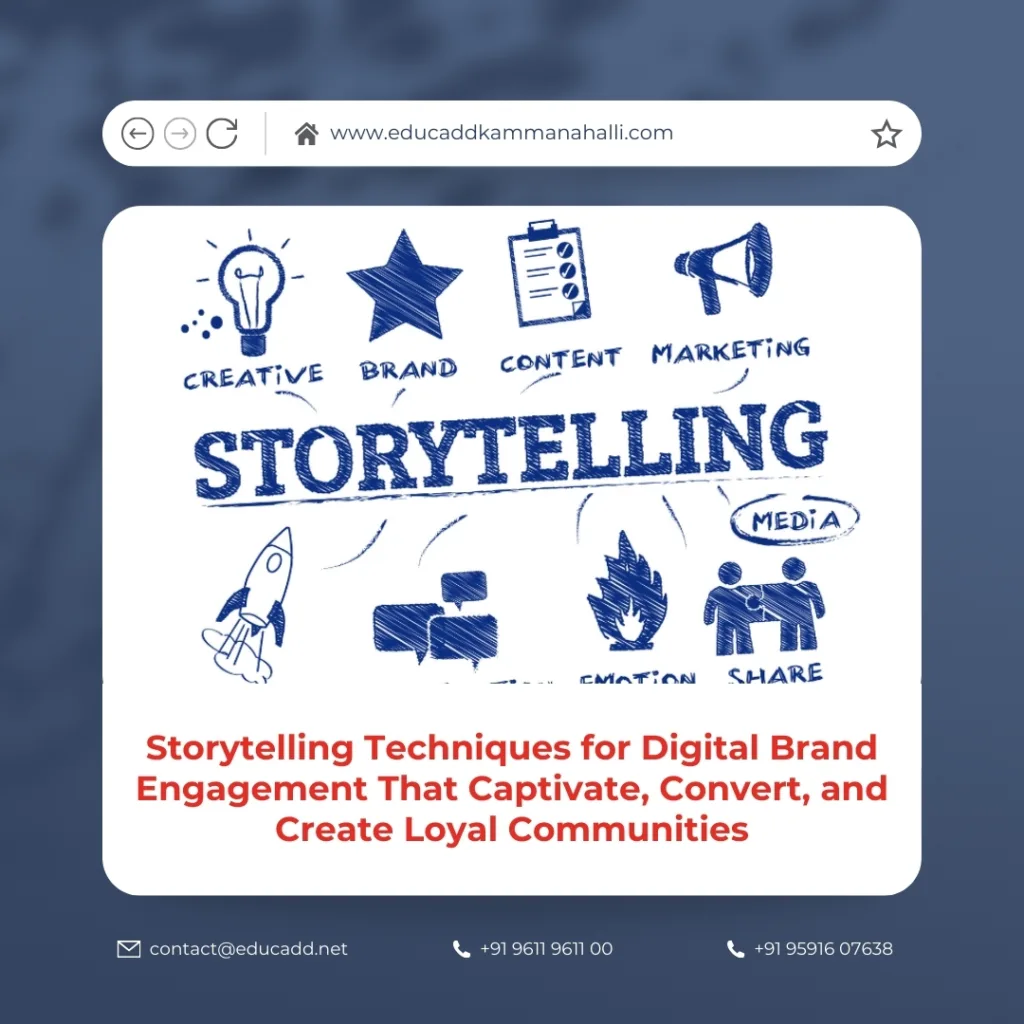
Digital Brand Storytelling Strategies
When applied Digital Brand Storytelling Strategies from transactional communication into emotional connection. It aligns brand identity with audience experience. Moreover, it drives measurable impact across social media, websites, email campaigns, and content platforms. In this comprehensive guide, you will explore advanced storytelling techniques for digital brand engagement and learn how to implement them effectively in your marketing strategy.
1. Understanding the Psychology Behind Brand Storytelling
Every powerful story activates emotion before logic. Human brains respond strongly to narratives because stories stimulate imagination and empathy. Consequently, audiences remember stories longer than isolated facts or statistics.
Storytelling techniques for digital brand engagement work because they mirror how people naturally communicate. When a brand shares a journey, challenge, or transformation, it invites the audience into a relatable experience. Instead of broadcasting a message, the brand creates a shared emotional space.
Furthermore, emotional triggers such as hope, belonging, inspiration, and curiosity increase audience retention. When these emotions are embedded within digital content, engagement metrics improve significantly. Click-through rates rise, shares increase, and conversations start organically.
Therefore, understanding emotional drivers is the foundation of effective storytelling. Brands that recognize what motivates their audience can craft narratives that inspire action without aggressive persuasion.
2. Crafting a Clear Brand Narrative Framework
Before publishing content, brands must define a clear narrative framework. Without structure, storytelling feels inconsistent and confusing. A strong narrative framework aligns mission, voice, tone, and values into one cohesive identity.
Digital Brand Storytelling Strategies engagement require consistency across platforms. Your website, social media, emails, and advertisements should reinforce the same core message. While formats may differ, the central story must remain unified.
To build this framework, begin by defining:
-
The brand’s origin story
-
The mission and long-term vision
-
The audience’s core problem
-
The transformation your solution offers
Once this structure is established, every piece of content becomes a chapter within a larger narrative. As a result, audiences begin to recognize patterns, themes, and values that define the brand.
Consistency builds familiarity. Familiarity builds trust. Trust builds engagement.
3. Positioning the Customer as the Hero
One of the most effective storytelling techniques for digital brand engagement is shifting the spotlight from the brand to the customer. Too many businesses frame themselves as the hero. However, in compelling narratives, the audience should see themselves as the protagonist.
In this approach, the brand acts as a guide, not the center of attention. Think of your product or service as a tool that empowers the customer’s journey. The customer faces challenges, seeks growth, and achieves transformation.
For example, instead of saying, “Our software improves productivity,” frame it as, “Entrepreneurs reclaimed 10 hours a week and focused on growth after adopting this system.” This subtle shift enhances relatability and emotional investment.
As a result, audiences engage more deeply because they imagine their own success within the story.
4. Creating Emotional Hooks in Digital Content
Attention spans are short. Therefore, the first few seconds of any digital content must create curiosity or emotional tension. Strong emotional hooks drive initial engagement and prevent scrolling.
Digital Brand Storytelling Strategies engagement often begin with a relatable pain point, a bold statement, or an unexpected insight. This hook should align with audience experience and encourage further exploration.
For instance, beginning with a question like, “Why do most digital campaigns fail within 30 days?” triggers curiosity. Similarly, presenting a quick transformation story captures attention instantly.
However, emotional hooks must connect directly to the brand message. If they feel disconnected or exaggerated, trust declines. Authenticity ensures that engagement remains sustainable rather than temporary.
5. Using Data and Stories Together
Data builds credibility, but stories build connection. When combined strategically, they create powerful persuasion. Many brands rely heavily on numbers, assuming that statistics alone drive decisions. However, audiences respond more strongly when data supports a narrative.
Storytelling techniques for digital brand engagement integrate proof within transformation stories. Instead of listing percentages in isolation, present them within context. For example, “After implementing our strategy, conversion rates increased by 45% within three months.”
This approach delivers both emotional impact and logical validation. Moreover, it strengthens trust because audiences see measurable outcomes within real-life scenarios.
Balanced storytelling ensures that marketing remains both inspiring and credible.
6. Leveraging Visual Storytelling in Digital Platforms
Digital audiences process visuals faster than text. Therefore, visual storytelling significantly enhances engagement. Images, short videos, graphics, and animations communicate emotion instantly.
Storytelling techniques for digital brand engagement should incorporate consistent visual themes. Colors, typography, and imagery must align with brand personality. When visuals reinforce narrative tone, audience recognition improves.
Additionally, short-form video content allows brands to showcase behind-the-scenes stories, customer journeys, and real-time experiences. These formats humanize the brand and increase relatability.
Visual storytelling does not replace written narratives. Instead, it amplifies them. When both elements work together, engagement multiplies across platforms.
7. Building Episodic Content for Long-Term Engagement
Single pieces of content generate temporary interaction. However, episodic storytelling creates anticipation and ongoing engagement. By releasing content in structured sequences, brands maintain consistent audience interest.
Storytelling techniques for digital brand engagement become more effective when narratives unfold over time. For example, a multi-part series about customer success stories encourages viewers to return for updates.
Moreover, episodic content strengthens brand recall. Audiences begin to associate specific themes or series formats with your brand identity. This familiarity increases loyalty and repeat engagement.
Consistency remains crucial. A predictable publishing schedule ensures sustained interest and trust.
8. Encouraging User-Generated Stories
Modern digital audiences value participation. They prefer brands that invite collaboration rather than broadcast messages. Encouraging customers to share their experiences creates authentic engagement.
Storytelling techniques for digital brand engagement thrive when user-generated content becomes part of the brand narrative. Testimonials, reviews, and social media mentions provide social proof while strengthening community bonds.
When brands feature customer stories, they demonstrate appreciation and inclusivity. This approach fosters emotional connection and brand advocacy. Furthermore, user-generated narratives often resonate more deeply because they feel genuine and relatable.
By amplifying audience voices, brands create shared ownership of their story.
9. Maintaining Authenticity Across Channels
Authenticity remains the foundation of sustainable engagement. Digital audiences quickly detect exaggerated claims or inconsistent messaging. Therefore, storytelling must reflect real values and transparent communication.
Storytelling techniques for digital brand engagement require alignment between brand promises and actual delivery. If marketing narratives promise transformation, customer experience must validate those claims.
Moreover, tone consistency across platforms enhances credibility. Whether communicating through blogs, social posts, or email campaigns, the voice should remain recognizable.
When authenticity guides storytelling, engagement evolves into trust-based relationships rather than short-term interactions.
10. Integrating Storytelling Into Social Media Strategy
Social media platforms provide ideal spaces for narrative-driven content. However, each platform demands tailored storytelling approaches.
Storytelling techniques for digital brand engagement on social media often include micro-stories, real-time updates, and interactive polls. These formats encourage participation while reinforcing brand themes.
For example, short captions that highlight customer wins or brand milestones build emotional resonance. Additionally, live sessions allow brands to share authentic experiences and respond directly to audience questions.
Interactive storytelling strengthens digital presence and deepens community engagement.
11. Aligning Storytelling With Brand Purpose
Purpose-driven brands often achieve stronger emotional engagement. When storytelling reflects a meaningful mission, audiences connect at a deeper level.
Storytelling techniques for digital brand engagement should clearly communicate why the brand exists beyond profit. Highlighting social impact, innovation goals, or community initiatives enhances brand perception.
Purpose does not require grand gestures. Even small commitments to quality, transparency, or empowerment can shape compelling narratives.
When audiences align with brand values, loyalty strengthens organically.
12. Measuring the Impact of Storytelling Strategies
Engagement should be measurable. While storytelling feels creative, its impact can be analyzed through data. Key performance indicators include time on page, shares, comments, click-through rates, and conversion rates.
Storytelling techniques for digital brand engagement become more refined when insights guide improvements. If certain narratives generate higher engagement, analyze patterns and replicate successful elements.
Moreover, qualitative feedback such as comments and direct messages provides valuable insight into audience perception.
Measurement ensures that storytelling remains strategic rather than purely artistic.
13. Adapting Stories for Different Stages of the Buyer Journey
Audiences interact with brands at various stages of awareness. Therefore, storytelling must adapt accordingly.
Storytelling techniques for digital brand engagement should align with awareness, consideration, and decision phases. Early-stage content focuses on relatable challenges and educational insights. Mid-stage narratives highlight solutions and benefits. Late-stage storytelling emphasizes testimonials and proven outcomes.
When stories match audience intent, engagement increases naturally. Additionally, alignment enhances conversion rates because content addresses specific needs at each stage.
Strategic adaptation ensures that storytelling remains relevant throughout the customer journey.
14. Creating a Sustainable Storytelling Culture
Effective storytelling requires internal alignment. Teams must understand and embrace the brand narrative. Without collaboration, messaging becomes fragmented.
Storytelling techniques for digital brand engagement thrive when marketing, sales, and leadership share unified messaging goals. Regular strategy sessions and content planning workshops help maintain cohesion.
Furthermore, documenting storytelling guidelines ensures consistency as teams grow. Clear tone guidelines, visual standards, and messaging frameworks protect brand identity over time.
A storytelling culture transforms digital engagement from a campaign tactic into a long-term strategic advantage.
Conclusion
In an increasingly competitive digital environment, Digital Brand Storytelling Strategies engagement offer a sustainable path to meaningful connection. Rather than focusing solely on promotional messaging, brands can build narratives that inspire, educate, and empower their audiences.
When storytelling aligns with authentic values, strategic structure, and measurable goals, engagement transforms into loyalty. Customers begin to see themselves within the brand’s journey. They interact more frequently, share experiences willingly, and advocate organically.
Ultimately, storytelling is not just a marketing tactic. It is a strategic framework that humanizes digital communication and strengthens long-term brand relationships. By mastering these storytelling techniques for digital brand engagement, businesses can rise above noise, capture attention with purpose, and build communities that grow alongside the brand.

