
Lighting Layout & Lux Calculation Using Electrical CADD: Designing Spaces That Perform, Comply, and Inspire
Lighting is no longer treated as a basic utility in modern buildings. Instead, it plays a decisive role in comfort, productivity, safety, and energy efficiency. Whether the project involves residential apartments, commercial offices, healthcare facilities, or industrial plants, a well-planned lighting layout determines how effectively a space functions. Poor lighting design can cause eye strain, increase energy costs, and even reduce operational efficiency. This is where Electrical CADD Lighting Design becomes indispensable.
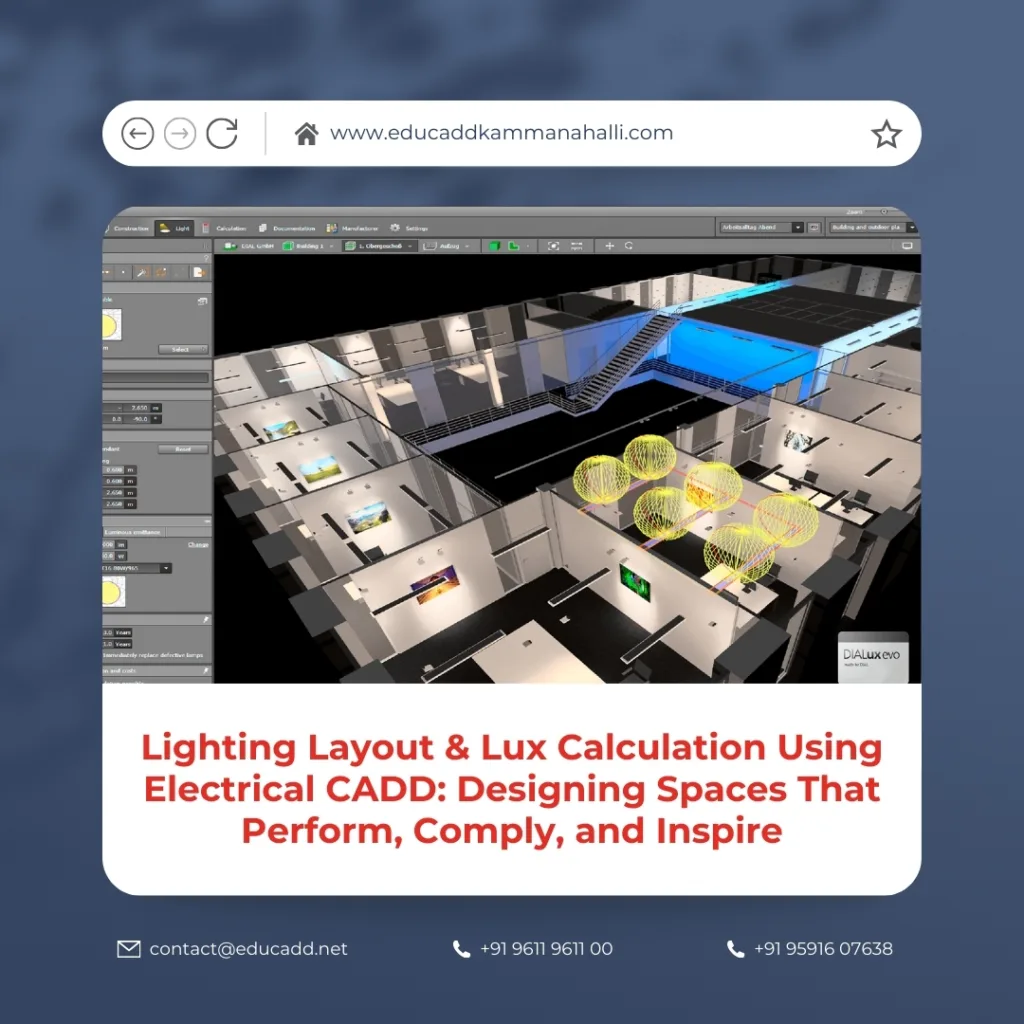
Electrical CADD Lighting Design
By combining engineering precision with digital drafting tools, Electrical CADD Lighting Design to create accurate lighting layouts that meet illumination standards while optimizing cost and performance. This blog explores the complete process, importance, methods, and advantages of lighting layout and lux calculation using Electrical CADD in a structured and in-depth manner.
1. Understanding Lighting Layout in Electrical Design
Lighting layout refers to the systematic placement of light fixtures within a defined space to achieve uniform and functional illumination. In electrical design, lighting layout goes beyond aesthetics and focuses on engineering accuracy. Designers must consider room dimensions, ceiling height, furniture placement, task areas, and building usage. Electrical CADD allows designers to translate these requirements into precise digital drawings. By using layers, symbols, and standardized blocks, lighting layouts can be drafted with clarity and consistency. As a result, errors during execution are reduced, and coordination with other services becomes smoother.
2. What Is Lux and Why Lux Calculation Matters
Lux is the unit of measurement used to define illuminance, which indicates how much light falls on a surface. Different spaces require different lux levels based on their function. For example, a classroom requires higher lux levels than a corridor, while a hospital operation theatre demands extremely precise illumination. Lux calculation ensures that lighting designs comply with national and international standards such as IS, IEC, and IES guidelines. When lux levels are calculated accurately using Electrical CADD, designers can avoid both under-lighting and over-lighting. This balance improves visual comfort while controlling energy consumption.
3. Role of Electrical CADD in Modern Lighting Design
Electrical CADD has transformed traditional lighting design methods. Manual calculations and hand-drawn layouts often consumed time and increased the risk of errors. Electrical CADD introduces automation, precision, and flexibility into the process. Designers can quickly modify layouts, test multiple lighting scenarios, and update drawings without rework. Additionally, Electrical CADD supports integration with architectural plans, which improves coordination. As a result, lighting layout and lux calculation using Electrical CADD become faster, more accurate, and highly reliable.
4. Key Components of a Lighting Layout Drawing
A professional lighting layout drawing created using Electrical CADD includes several essential components. These include lighting fixture symbols, circuiting details, switching arrangements, mounting heights, and legends. Each element is clearly defined to ensure easy interpretation by electricians and contractors. Moreover, spacing between fixtures is calculated based on required lux levels and room geometry. Electrical CADD enables designers to maintain uniform spacing and alignment, which enhances both functionality and visual appeal. Therefore, clarity in lighting layout drawings directly influences execution quality.
5. Standards and Guidelines for Lux Calculation
Lux calculation is guided by well-defined standards. Organizations such as the Illuminating Engineering Society (IES) and Bureau of Indian Standards (BIS) provide recommended illuminance levels for different spaces. Electrical designers must follow these benchmarks to ensure compliance and safety. Electrical CADD simplifies this process by allowing designers to reference standards directly during layout preparation. When lighting layout and lux calculation using Electrical CADD align with standards, approval processes become smoother and client confidence increases.
6. Step-by-Step Process of Lux Calculation Using Electrical CADD
The lux calculation process begins with understanding the space and its usage. Designers first determine the required illuminance level. Next, room dimensions, ceiling height, and surface reflectance values are considered. Fixture type, lumen output, and light distribution patterns are then selected. Electrical CADD allows these parameters to be incorporated into calculations seamlessly. Once values are entered, designers can validate whether the proposed layout meets the required lux levels. If not, fixture quantity or placement can be adjusted easily within the software.
7. Selection of Lighting Fixtures for Optimal Performance
Choosing the right lighting fixture is critical in achieving accurate lux levels. Factors such as luminaire efficiency, beam angle, color temperature, and mounting type must be evaluated. Electrical CADD libraries provide access to standardized fixture symbols and data, which simplifies selection. By aligning fixture specifications with lux calculation results, designers ensure consistent illumination. Consequently, lighting layout and lux calculation using Electrical CADD help achieve both functional and aesthetic goals.
8. Energy Efficiency and Sustainable Lighting Design
Energy efficiency has become a top priority in electrical design. Over-illumination wastes energy, while poor lighting reduces productivity. Electrical CADD supports energy-efficient lighting design by enabling precise lux calculations and optimized layouts. Designers can reduce fixture count without compromising illumination levels. Additionally, LED lighting systems can be integrated effectively. As sustainability becomes essential, lighting layout and lux calculation using Electrical CADD contribute to green building certifications and long-term operational savings.
9. Integration with Architectural and Interior Plans
Lighting design does not exist in isolation. It must align with architectural elements, ceiling designs, and interior layouts. Electrical CADD enables seamless integration with architectural drawings. Designers can overlay lighting layouts onto floor plans, ensuring alignment with furniture and structural components. This coordination prevents clashes during installation. As a result, lighting layout and lux calculation using Electrical CADD enhance collaboration across disciplines and improve project outcomes.
10. Common Mistakes Avoided Through Electrical CADD
Several common mistakes occur in traditional lighting design, including uneven illumination, incorrect fixture spacing, and non-compliance with standards. Electrical CADD minimizes these risks through precision drafting and validation. Designers can visualize layouts before execution, reducing guesswork. Lux calculation errors are also minimized through structured workflows. Therefore, lighting layout and lux calculation using Electrical CADD significantly improve accuracy and reliability.
11. Application of Lighting Layout in Different Building Types
Different buildings demand different lighting strategies. Offices require balanced lighting to improve productivity. Hospitals demand precise illumination for patient safety. Industrial spaces require high-lux levels for operational accuracy. Electrical CADD allows designers to customize lighting layouts for each building type. By adjusting parameters and fixtures, designers can meet diverse requirements effectively. Thus, lighting layout and lux calculation using Electrical CADD remain versatile across sectors.
12. Importance of Documentation and Presentation
Clear documentation is vital in electrical projects. Electrical CADD ensures that lighting layout drawings are well-organized and professionally presented. Legends, notes, and schedules are generated systematically. This clarity helps contractors understand requirements without confusion. When lighting layout and lux calculation using Electrical CADD are documented properly, project execution becomes faster and more efficient.
13. Career Importance of Learning Lighting Design Using Electrical CADD
With growing demand for smart and energy-efficient buildings, skilled electrical designers are in high demand. Knowledge of lighting layout and lux calculation using Electrical CADD enhances employability. Professionals who master these skills can contribute effectively to design consultancies, construction firms, and infrastructure projects. Therefore, learning Electrical CADD is a valuable investment for electrical engineers and designers.
14. Future Trends in Lighting Design and Electrical CADD
The future of lighting design is evolving rapidly. Smart lighting systems, automation, and IoT integration are becoming common. Electrical CADD continues to adapt by supporting advanced design requirements. Designers can now plan lighting layouts that integrate controls and sensors. As technology advances, lighting layout and lux calculation using Electrical CADD will remain a core competency in electrical engineering.
Conclusion
Lighting design influences how people experience a space every day. Accuracy, compliance, and efficiency are essential in delivering successful projects. Electrical CADD Lighting Design provides the tools and methodology needed to achieve these goals. By combining technical knowledge with digital precision, designers can create lighting systems that enhance comfort, reduce energy consumption, and meet standards. As buildings become smarter and more sustainable, mastering lighting layout and lux calculation using Electrical CADD is no longer optional but essential for modern electrical design professionals.

