
Electrical Design and Drafting Course: Build Your Future in the World of Electrical Engineering
Introduction: Turn Your Electrical Engineering Knowledge into Industry-Ready Skills
Electricity powers almost every part of modern life, from homes and commercial buildings to factories, hospitals, and large industrial facilities. Behind every reliable electrical system, skilled professionals plan circuits, prepare technical drawings, select electrical components, and ensure that installations meet safety standards. As construction and industrial projects continue to grow, companies need professionals who can transform electrical concepts into accurate, practical designs. This creates exciting career opportunities for individuals with the right technical knowledge and software skills. An Electrical Design Drafting Course helps students and working professionals develop these essential abilities and prepare for real-world engineering projects.
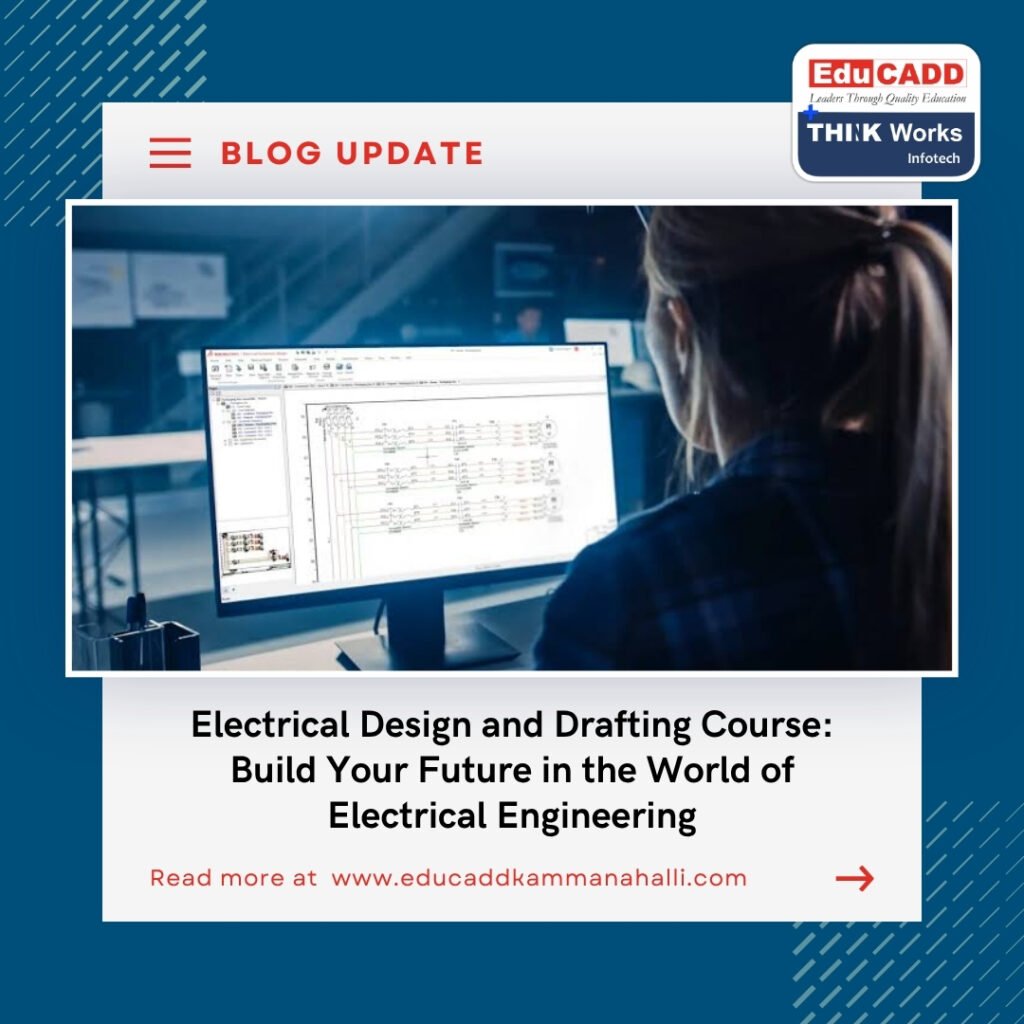
Electrical Design Drafting Course
Traditional electrical knowledge provides a strong foundation, but modern industries also expect professionals to understand computer-aided design tools, electrical layouts, wiring diagrams, load calculations, and technical documentation. Therefore, learning Electrical Design Drafting Course can help you move beyond theoretical concepts and gain practical skills that employers value. Whether you are an electrical engineering graduate, a diploma holder, a working technician, or someone looking to upgrade your technical abilities, this training can help you understand how electrical systems are designed and documented. With structured learning and practical exercises, you can build confidence, improve your technical accuracy, and explore career opportunities in electrical engineering.
What Is Electrical Design and Drafting?
Electrical Design Drafting Course is the process of planning, developing, and documenting electrical systems through technical calculations, layouts, schematics, and computer-generated drawings. Electrical designers use engineering principles to determine how power should flow through a building or facility. Drafters then represent these systems through clear and accurate drawings that electricians, engineers, contractors, and project managers can understand.
Electrical design focuses on the technical decisions behind a system. These decisions may include estimating electrical loads, selecting cables, planning distribution boards, determining circuit protection requirements, and positioning electrical equipment. Drafting focuses on presenting this information in a standardised visual format. Both activities work together to support safe installation, efficient maintenance, and smooth project execution.
For example, consider a commercial office building. The electrical design team must plan lighting, power outlets, emergency lighting, distribution boards, and equipment connections. The drafting team converts these requirements into detailed drawings that guide installation teams. Through an Electrical Design and Drafting Course, learners can understand this process and develop the skills required to contribute to similar projects.
Why Choose an Electrical Design and Drafting Course?
The engineering industry increasingly depends on digital design tools and accurate technical documentation. Employers need professionals who can interpret project requirements, prepare drawings, coordinate with other departments, and identify design issues before installation begins. As a result, practical training in electrical design can strengthen your technical profile.
An Electrical Design and Drafting Course introduces learners to the connection between electrical engineering principles and modern design software. Instead of focusing only on classroom theory, quality training helps you apply concepts through drawing exercises, design assignments, and project-based learning.
There are several reasons to consider this career-focused training:
-
Develop practical skills: Learn to prepare electrical layouts, wiring diagrams, and schematic drawings.
-
Understand industry software: Gain experience with computer-aided drafting and relevant electrical design tools.
-
Improve technical accuracy: Practise drawing interpretation, component identification, and design documentation.
-
Explore career opportunities: Prepare for roles in electrical design, drafting, building services, and industrial projects.
-
Strengthen your portfolio: Use practical assignments to demonstrate your capabilities to potential employers.
-
Upgrade your qualifications: Add job-relevant software and design knowledge to your existing engineering background.
Moreover, practical training can help you approach engineering tasks with greater confidence. When you understand both the design process and the software behind it, you can contribute more effectively to project teams.
Essential Skills You Will Learn During the Course
A good training programme should develop technical knowledge alongside practical design abilities. Learners need to understand why electrical systems require particular components and how to represent those systems correctly in drawings. The exact syllabus may vary by institute, software, and course duration, but several core topics form the foundation of electrical design and drafting.
Electrical Engineering Fundamentals
Before preparing professional drawings, you need a clear understanding of basic electrical concepts. These include voltage, current, resistance, power, energy, single-phase and three-phase systems, and basic circuit principles. You should also understand how electrical loads affect system performance.
These fundamentals support everyday design decisions. For instance, a designer must consider the expected load before selecting suitable cables and protective devices. Similarly, knowledge of electrical distribution helps you understand how power moves from the incoming supply to different areas of a facility.
A strong foundation makes software training more meaningful because you can understand the purpose behind each drawing element rather than simply copying commands.
Computer-Aided Design and Drafting
Computer-aided design software allows professionals to create, modify, and organise technical drawings with precision. During training, learners may study tools such as AutoCAD for drafting electrical layouts, circuit diagrams, and installation drawings. Depending on the syllabus, the course may also introduce specialised electrical design applications.
You can learn to create drawing sheets, manage layers, use standard symbols, apply dimensions, organise annotations, and prepare layouts for printing. These skills help maintain consistency across project documents.
In addition, digital drafting makes revisions easier. When a project requirement changes, designers can update drawings without recreating the entire document. Consequently, software proficiency can improve productivity and support better collaboration between project teams.
Electrical Layouts and Wiring Diagrams
Electrical layouts show the planned locations of electrical components within a building or facility. These drawings may include lighting fixtures, switches, sockets, distribution boards, cable routes, and equipment connections.
Wiring diagrams and schematic drawings explain how electrical components connect and function together. They help installation and maintenance teams understand circuit arrangements and trace connections when troubleshooting problems.
Through practical exercises, learners can develop the ability to read existing drawings and create new ones based on project requirements. They also learn why clear symbols, correct labels, and consistent drawing standards matter.
Electrical Load Calculation and Cable Selection
Electrical load calculation helps designers estimate the power demand of a building or industrial system. The results influence decisions about distribution equipment, circuit arrangements, cable sizing, and protective devices.
Cable selection requires consideration of factors such as current capacity, installation conditions, voltage drop, insulation, and applicable electrical standards. Designers must also account for relevant safety requirements and project specifications.
An Electrical Design and Drafting Course that includes these topics helps learners understand the engineering principles behind electrical drawings. However, calculations and final design decisions should always follow applicable codes, project requirements, and qualified engineering review.
Important Software Used in Electrical Design and Drafting
Modern electrical projects rely on digital tools to create accurate drawings and manage technical information. Learning suitable software can help students become more comfortable with the methods used in engineering offices.
AutoCAD for Electrical Drawings
AutoCAD is widely used for creating two-dimensional technical drawings. Electrical design learners can use it to prepare lighting layouts, power layouts, wiring diagrams, schematic drawings, and equipment arrangements.
The software supports precise geometry, reusable blocks, layers, dimensions, and drawing templates. These features help maintain an organised workflow and make technical documents easier to review.
AutoCAD Electrical
AutoCAD Electrical provides specialised features for electrical control design and schematic documentation. Depending on the project, these features can support component libraries, electrical symbols, circuit numbering, and wire-related documentation.
Learners interested in industrial control panels, machine wiring, and control circuit design may find this software particularly useful. Its suitability depends on the type of electrical work they plan to pursue.
Other Design and Documentation Tools
Some programmes introduce additional software for building services, power systems, or electrical engineering analysis. The tools covered depend on the institute’s curriculum and the intended career pathway.
Before enrolling, review the syllabus carefully. Make sure it includes the software relevant to your goals, and check whether the programme provides practical computer-based assignments rather than demonstrations alone.
Practical Projects That Prepare You for Industry
Practical projects help learners connect electrical concepts with real design requirements. They also provide opportunities to identify mistakes, improve drawing quality, and develop a structured approach to technical work.
A well-planned Electrical Design and Drafting Course may include exercises such as:
-
Residential electrical layouts covering lighting, switches, and power outlets.
-
Commercial building drawings for lighting, power distribution, and equipment locations.
-
Single-line diagrams showing the main stages of an electrical distribution system.
-
Basic control circuit diagrams for understanding electrical connections.
-
Distribution board schedules and circuit identification documents.
-
Cable routing and electrical equipment layout exercises.
-
Drawing revision tasks that simulate changes in project requirements.
These projects allow students to practise the complete process, from interpreting a design brief to preparing a finished drawing. They also help learners understand how different documents support one another.
Furthermore, project work encourages attention to detail. A missing label or incorrect connection can create confusion during installation. Therefore, learners should develop a habit of checking symbols, annotations, dimensions, circuit references, and drawing consistency before submitting their work.
Career Opportunities After Electrical Design and Drafting Training
Electrical design and drafting skills can support several career paths across construction, infrastructure, manufacturing, and industrial engineering. The opportunities available to each learner depend on their educational qualifications, practical ability, software knowledge, and experience.
Electrical Design Engineer
Electrical design engineers help plan electrical systems, evaluate technical requirements, perform calculations, and coordinate design decisions. Depending on the role, they may work on power distribution, lighting, equipment selection, and project documentation.
Engineering qualifications and a strong understanding of electrical principles are generally important for these positions. Drafting training can complement that background by improving design software proficiency.
Electrical CAD Drafter
Electrical CAD drafters prepare and revise technical drawings based on engineering information and project specifications. Their responsibilities may include layouts, schematic diagrams, drawing sheets, and documentation updates.
This role suits people who enjoy detailed technical work and want to develop strong computer-aided drafting skills.
Electrical Design Technician
Electrical design technicians assist engineers with drawing preparation, design documentation, equipment schedules, and technical coordination. Their daily tasks depend on the company and the type of project.
Practical training can help candidates understand technical drawings and contribute to routine design activities more efficiently.
Building Services Electrical Designer
Building services electrical designers work on electrical systems within residential, commercial, and institutional buildings. Their responsibilities may include lighting, small power, distribution boards, emergency systems, and coordination with other building services.
This career path can appeal to learners interested in construction projects and building infrastructure.
Industrial Electrical Design Professional
Industrial electrical design professionals may support control panels, machinery connections, industrial power distribution, and equipment documentation. Some roles require additional knowledge of automation, instrumentation, motor control, or industrial safety.
Therefore, learners should select further training based on the particular industrial sector they want to enter.
Who Should Enrol in an Electrical Design and Drafting Course?
This training can benefit people who want to develop practical electrical design skills or improve their existing technical knowledge. However, the most suitable course depends on the learner’s education and career objectives.
It may be appropriate for:
-
Electrical engineering graduates seeking practical software experience.
-
Diploma holders who want to strengthen their drafting and design capabilities.
-
Electrical technicians interested in technical office-based responsibilities.
-
Working professionals who want to update their computer-aided design skills.
-
Students preparing for entry-level opportunities in electrical design.
-
Professionals working in construction or industrial projects who need better drawing knowledge.
Beginners should look for a programme that starts with electrical fundamentals and gradually introduces software tools. Learners with previous experience may prefer advanced modules covering design calculations, specialised applications, or project coordination.
How to Choose the Right Electrical Design and Drafting Training Institute
Selecting the right institute can make a meaningful difference to your learning experience. Course titles alone do not guarantee practical training, so compare the curriculum, teaching approach, software access, and project work before making a decision.
Look for an institute that provides:
-
Industry-relevant curriculum: Topics should reflect the type of electrical design work you want to pursue.
-
Practical software training: Students should receive enough time to practise independently.
-
Experienced trainers: Instructors should explain technical concepts clearly and connect them with practical examples.
-
Project-based learning: Assignments should cover realistic electrical drawings and documentation tasks.
-
Doubt-clearing support: Learners should be able to ask questions and correct mistakes during training.
-
Portfolio development: The course should help you organise suitable project samples for interviews.
-
Career guidance: Interview preparation and job-search support can be valuable additions.
You should also ask about course duration, batch timings, software versions, certification requirements, and any additional fees. If possible, review a sample class or speak with former students before enrolling.
Most importantly, choose a programme that matches your current skill level. A course that balances theory, guided practice, and independent assignments can provide a stronger learning experience than one that focuses only on software commands.
Tips to Build a Successful Career in Electrical Design
Completing an Electrical Design and Drafting Course is an important step, but continuous practice helps you turn that training into professional competence. Employers often look for candidates who can apply their knowledge, understand instructions, and produce accurate technical documents.
Start by practising basic electrical drawings regularly. Work on different layouts, study schematic diagrams, and learn to recognise common electrical symbols. As your confidence improves, move towards larger projects that combine several drawing types.
Build a small portfolio containing your best work. Include suitable electrical layouts, schematic diagrams, and sample documentation that you created during training. Keep the drawings organised and ensure that they represent your own skills accurately.
You should also develop communication and coordination skills. Electrical design professionals often work with architects, civil engineers, mechanical engineers, contractors, and project managers. Clear communication helps reduce misunderstandings and supports timely project delivery.
Finally, stay updated on relevant software features, electrical standards, and industry practices. Learn how to interpret project specifications and check your work carefully. Over time, these habits can help you become a more dependable and capable professional.
The Future of Electrical Design and Drafting
Electrical systems continue to evolve as buildings become smarter, industries adopt automation, and energy efficiency receives greater attention. These developments create new design considerations for professionals who plan electrical infrastructure.
Modern projects may involve energy-efficient lighting, backup power systems, renewable energy integration, electric vehicle charging infrastructure, and intelligent building technologies. Each application requires careful planning, suitable equipment selection, and accurate technical documentation.
Digital collaboration is also changing how engineering teams manage drawings. Cloud-based platforms, coordinated design environments, and structured document management can help teams review information and communicate changes more effectively.
As these practices develop, professionals who combine sound electrical fundamentals with software proficiency and a willingness to learn can remain adaptable. An Electrical Design and Drafting Course provides a starting point for building these capabilities, although advanced projects may require additional specialised training and professional experience.
Conclusion: Take the Next Step Towards an Electrical Design Career
Electrical engineering offers a wide range of opportunities for people who enjoy technical problem-solving, precise drawings, and practical design work. By learning electrical fundamentals, computer-aided drafting, schematic development, layout preparation, and design documentation, you can build skills that support several career pathways.
An Electrical Design Drafting Course can help you bridge the gap between academic knowledge and practical industry requirements. With the right training, regular software practice, and a portfolio of completed projects, you can prepare for opportunities in electrical CAD drafting, building services, industrial design support, and related engineering fields.
The key is to choose a course that focuses on practical learning and matches your career goals. Develop your technical foundation, practise consistently, and keep improving your design accuracy. Every well-prepared drawing and completed project can bring you closer to your professional ambitions in electrical engineering.
Start building your electrical design skills today and take a confident step towards a future in engineering design and drafting.

