
Freelancing Opportunities in Interior Design: Build a Profitable Creative Career on Your Terms
Freelancing Opportunities in Interior Design is no longer limited to traditional studio jobs or large architectural firms. Today, creative professionals are building independent careers by offering design services directly to homeowners, real estate developers, startups, hospitality brands, and commercial clients. The shift toward remote collaboration, digital tools, and flexible work models has opened powerful freelancing opportunities in interior design. Designers now connect with clients across cities and even countries without stepping outside their workspace.
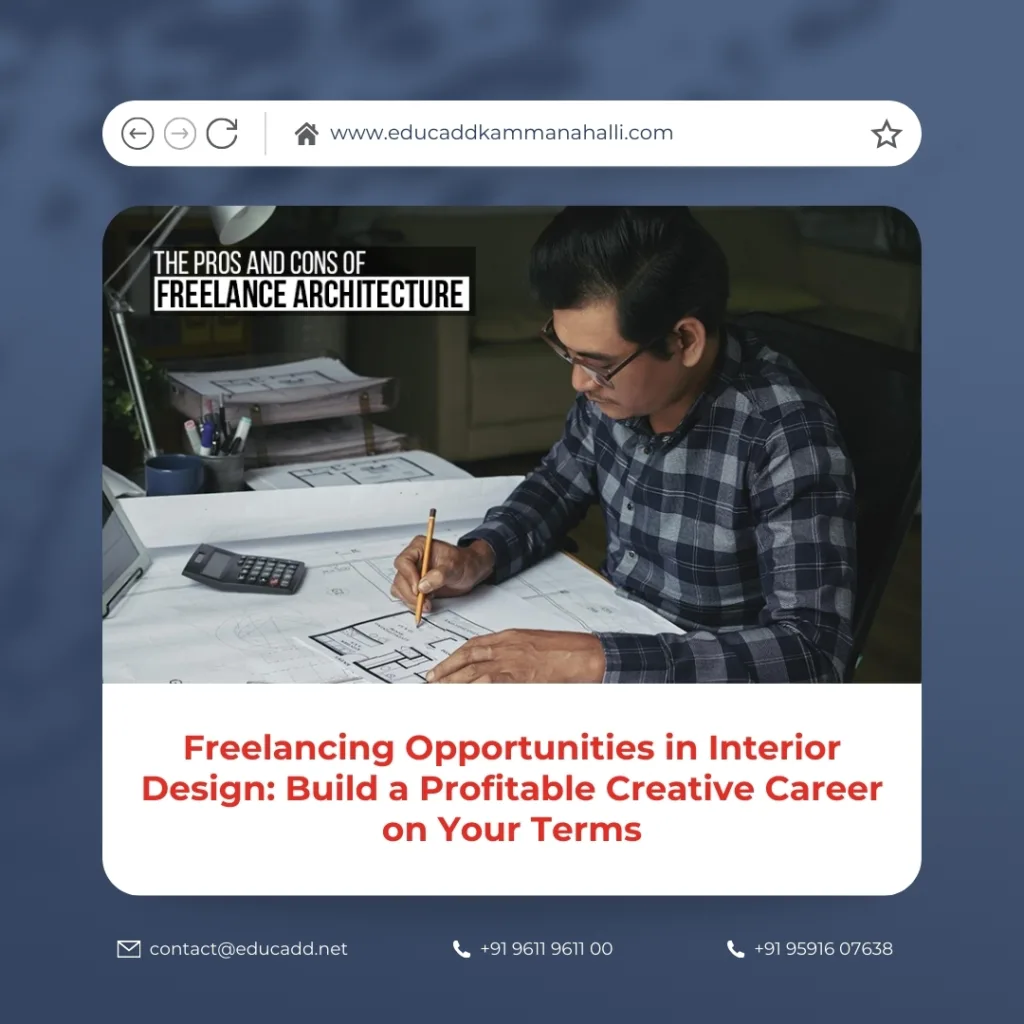
Freelancing Opportunities in Interior Design
Freelancing in interior design offers freedom, flexibility, and financial potential. However, it also demands business skills, marketing knowledge, and consistent professional growth. Many designers hesitate because they fear irregular income or client uncertainty. Yet those who plan strategically often build thriving independent practices. This comprehensive guide explores how interior designers can create sustainable freelance careers, identify profitable niches, attract premium clients, manage projects efficiently, and scale income over time. If you want creative freedom combined with professional success, this guide will help you move forward confidently.
1. Why Freelancing Opportunities in Interior Design is Growing Rapidly
The demand for personalized spaces continues to rise. Homeowners seek functional yet aesthetic living environments. Businesses invest in workspace design to improve productivity. Hospitality brands compete through unique interior experiences. As a result, freelancing opportunities in interior design are expanding steadily.
Several factors drive this growth. First, digital communication makes remote design services practical. Designers conduct consultations via video calls, share mood boards online, and deliver 3D visualizations digitally. Second, social media platforms allow designers to showcase portfolios and attract clients globally. Third, many clients prefer hiring freelance designers because they offer flexibility and cost efficiency compared to large firms.
Moreover, the gig economy encourages professionals to work independently. Talented designers now choose freelancing to control their schedules and income. They select projects that align with their style and values. Consequently, freelancing in interior design has transformed from a side option into a mainstream career path.
2. Essential Skills Required for Interior Design Freelancing
Creative ability alone does not guarantee success. Freelancing opportunities in interior design reward professionals who combine design talent with business competence.
First, strong design fundamentals are essential. Designers must understand space planning, color psychology, lighting design, materials, furniture selection, and layout optimization. Clients expect practical solutions, not just attractive concepts.
Second, software proficiency enhances credibility. Knowledge of AutoCAD, SketchUp, 3ds Max, Revit, or similar tools improves project visualization. Clients feel confident when they see realistic renderings.
Third, communication skills play a crucial role. Freelancers interact directly with clients, vendors, contractors, and consultants. Clear communication prevents misunderstandings and builds trust.
Additionally, time management and budgeting skills ensure project success. Designers must deliver on deadlines while maintaining cost control. When freelancers master these skills, they create repeat business and referrals, which strengthen long-term growth.
3. Popular Niches in Freelance Interior Design
Not every designer must serve every market. In fact, specialization often increases profitability. Freelancing opportunities in interior design expand when designers focus on a specific niche.
Residential interior design remains the most popular segment. Designers create layouts, furniture plans, and décor concepts for apartments and villas. This niche suits professionals who enjoy personalized client interaction.
Commercial interior design targets offices, retail stores, and coworking spaces. Businesses invest heavily in design because it influences brand identity and employee satisfaction.
Hospitality design includes hotels, cafés, and restaurants. This niche demands creativity and trend awareness.
Additionally, sustainable interior design attracts environmentally conscious clients. Designers who use eco-friendly materials and energy-efficient solutions often command premium fees.
Virtual interior design services also represent a fast-growing niche. Designers offer remote consultations and digital design packages without on-site visits. This model reduces overhead and expands geographic reach.
4. How to Start a Freelance Interior Design Career
Starting Freelancing Opportunities in Interior Design requires strategic planning. Many designers rush into freelancing without preparation, which leads to instability. However, structured planning increases success probability.
First, build a strong portfolio. Include completed projects, concept boards, 3D renders, and before-and-after images. If you lack client work, create sample projects to demonstrate your skills.
Next, define your services clearly. Offer packages such as consultation-only, full-service design, or virtual design solutions. Transparent offerings make decision-making easier for clients.
Then, set competitive pricing. Research local market rates and position yourself strategically. Avoid underpricing, as it may reduce perceived value.
Additionally, register your business legally and create professional contracts. Written agreements protect both you and your clients.
Finally, develop an online presence. A professional website and social media portfolio enhance credibility. Once these foundations are established, freelancing opportunities in interior design become easier to access.
5. Finding Clients as a Freelance Interior Designer
Client acquisition determines sustainability. Without consistent clients, freelancing becomes unstable. Therefore, designers must actively seek freelancing opportunities in interior design through multiple channels.
Social media marketing works effectively. Platforms like Instagram and Pinterest allow designers to showcase projects visually. Consistent posting builds brand awareness.
Freelancing marketplaces also provide opportunities. Websites connect designers with clients who seek specific services.
Networking remains equally important. Collaborate with architects, real estate agents, contractors, and furniture suppliers. These professionals often refer clients.
Moreover, content marketing attracts organic leads. Writing blog posts about interior trends or sharing design tips establishes authority.
Finally, client testimonials strengthen trust. When satisfied clients share feedback, potential clients feel confident in hiring you.
6. Pricing Strategies for Maximum Profitability
Freelancers often struggle with pricing. However, effective pricing ensures financial growth. Freelancing Opportunities in Interior Design become profitable when designers charge appropriately.
Hourly pricing suits consultation-based projects. However, it limits income scalability.
Flat-fee pricing works well for defined project scopes. Clients appreciate transparency in total cost.
Percentage-based pricing applies in large projects where designers charge a percentage of total project cost.
Value-based pricing often generates higher revenue. Instead of charging for time, designers charge based on the transformation and value delivered.
To improve profitability, designers should track expenses, calculate operating costs, and set income goals. Clear financial planning reduces stress and improves confidence.
7. Building a Strong Personal Brand
Branding differentiates successful freelancers from average designers. Freelancing opportunities in interior design increase when designers present a strong personal identity.
Choose a signature style. Whether modern, minimalistic, luxury, or bohemian, consistency strengthens recognition.
Create a professional logo and visual identity. Maintain consistent colors and fonts across platforms.
Share your design philosophy and process. Clients connect emotionally with designers who communicate clearly.
Additionally, invest in high-quality photography. Professional visuals elevate perceived value.
When branding aligns with target clients, marketing efforts produce better results.
8. Managing Projects Efficiently
Project management directly impacts client satisfaction. Freelancing opportunities in interior design thrive when projects run smoothly.
Start with detailed client briefs. Understand preferences, budget, and timelines clearly.
Break projects into stages such as concept development, design approval, sourcing, and execution.
Use project management tools to track tasks and deadlines.
Communicate progress regularly. Clients appreciate updates and transparency.
Moreover, handle changes professionally. When scope increases, adjust pricing accordingly.
Efficient management reduces stress and enhances professional reputation.
9. Leveraging Technology for Growth
Technology enhances efficiency and competitiveness. Freelancing opportunities in interior design expand when designers adopt digital tools.
3D rendering software helps clients visualize concepts realistically. Virtual walkthroughs improve decision-making.
Online collaboration tools simplify communication. Designers share files and feedback instantly.
E-commerce platforms enable sourcing and affiliate partnerships. Designers earn additional revenue through product recommendations.
Furthermore, online payment systems streamline transactions. Faster payments improve cash flow.
By integrating technology strategically, designers increase productivity and scalability.
10. Overcoming Challenges in Interior Design Freelancing
Freelancing offers flexibility, yet challenges exist. However, preparation reduces risks.
Income fluctuations create uncertainty. Designers should build emergency savings.
Client misunderstandings may arise. Clear contracts and communication prevent disputes.
Time management becomes difficult when handling multiple projects. Scheduling tools help maintain balance.
Isolation also affects freelancers. Networking communities provide support.
When designers anticipate challenges, they manage freelancing opportunities in interior design more effectively.
11. Expanding Income Streams
Freelancers can diversify revenue sources. Depending solely on one service limits growth.
Offer online courses or workshops for aspiring designers.
Create digital products such as mood board templates.
Provide styling consultations for real estate staging.
Collaborate with brands for sponsored content.
Sell curated furniture collections.
Diversification strengthens financial stability and enhances long-term success.
12. Scaling Your Freelance Interior Design Business
Growth requires strategy. Freelancing opportunities in interior design can evolve into a design studio.
Outsource drafting or rendering tasks to assistants.
Hire junior designers for larger projects.
Automate repetitive tasks such as invoicing.
Focus on high-value clients instead of volume.
With structured scaling, freelancers transform into business owners.
13. Legal and Financial Considerations
Professional freelancers protect their interests legally and financially.
Use detailed contracts outlining scope, timelines, and payment terms.
Maintain proper invoices and tax documentation.
Consider professional liability insurance.
Separate personal and business finances.
Strong financial systems support sustainable freelancing opportunities in interior design.
14. Future Trends Shaping Interior Design Freelancing
The future looks promising. Sustainable design continues gaining importance. Smart home integration increases demand for tech-friendly layouts. Remote consultations expand global reach. Additionally, virtual reality enhances design presentations.
As client expectations evolve, adaptable designers will thrive. Continuous learning ensures relevance.
Freelancing opportunities in interior design will continue growing as digital transformation accelerates.
Conclusion
Freelancing Opportunities in Interior Design offers creative freedom, financial potential, and professional independence. However, success requires preparation, discipline, and continuous improvement. Designers who combine artistic skill with business strategy build sustainable careers. By selecting profitable niches, leveraging technology, building strong brands, and managing projects efficiently, freelancers unlock consistent growth.
The journey may seem challenging at first. Nevertheless, persistence and strategic planning create rewarding outcomes. As demand for personalized spaces increases worldwide, freelancing opportunities in interior design present one of the most exciting career paths in the creative industry. Those who act decisively and professionally can transform passion into a thriving independent business.

