
Integrating Cloud Services with On-Prem IT Systems: Building a Future-Ready Hybrid IT Foundation
In today’s rapidly evolving digital landscape, organizations are under constant pressure to innovate, scale faster, and remain competitive while still protecting their existing investments. Many enterprises have spent years building robust on-prem IT systems that support core business operations. At the same time, cloud services offer agility, scalability, cost efficiency, and access to advanced technologies like artificial intelligence, analytics, and automation. Hybrid Cloud Integration Strategy with on-prem IT systems has therefore become a strategic priority rather than a technical experiment. A well-designed hybrid IT environment allows businesses to combine the reliability and control of on-prem infrastructure with the flexibility and innovation of the cloud. This integration enables organizations to modernize at their own pace while minimizing disruption, risk, and unnecessary costs.
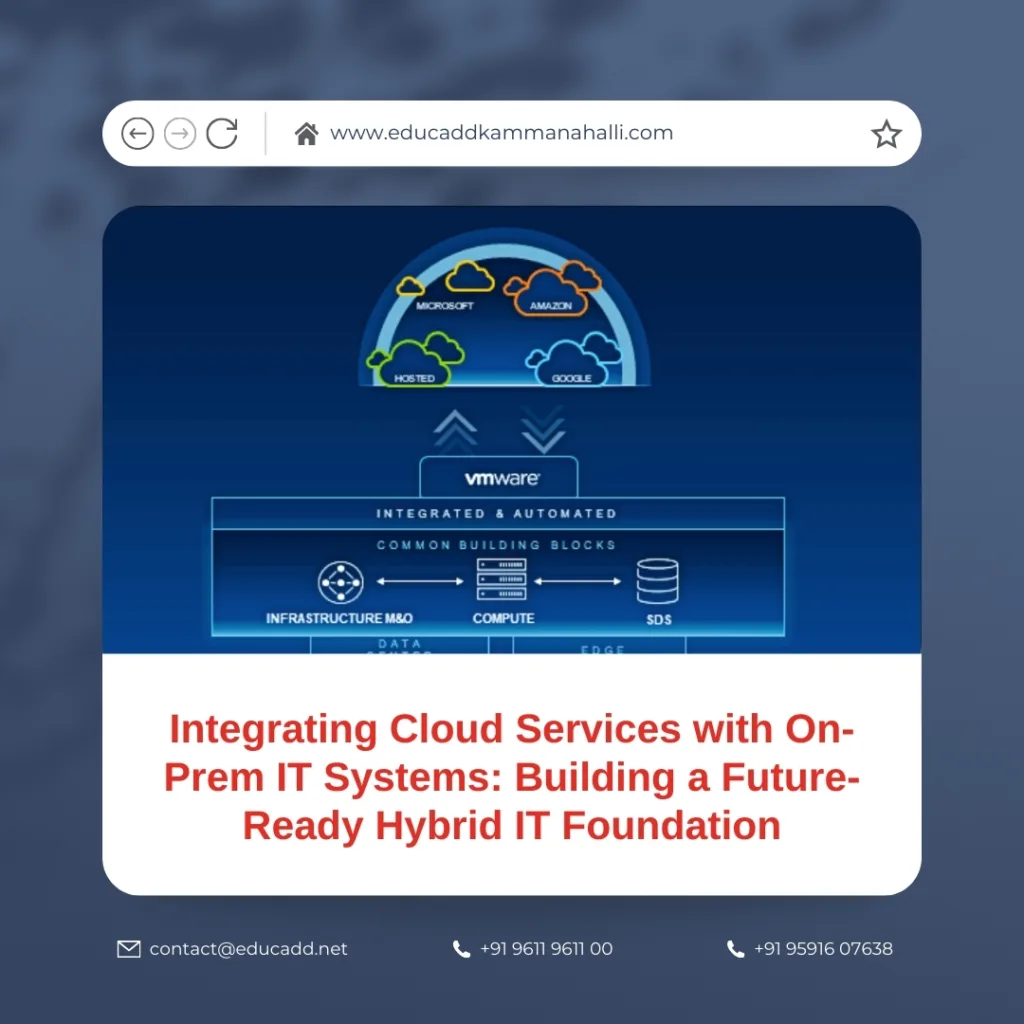
Hybrid Cloud Integration Strategy
Understanding the Concept of Cloud and On-Prem Integration
Hybrid Cloud Integration Strategy with on-prem IT systems involves creating a seamless connection between locally hosted infrastructure and cloud-based platforms. This approach allows applications, data, and workloads to move securely and efficiently across environments. Instead of replacing existing systems, organizations extend their on-prem capabilities using public, private, or hybrid cloud services. This model supports business continuity, improves performance, and ensures data availability across multiple locations. By integrating these environments, enterprises gain the ability to run mission-critical workloads on-prem while leveraging the cloud for scalability, backup, disaster recovery, and innovation. The integration process focuses on interoperability, secure connectivity, consistent management, and unified governance.
Business Drivers Behind Hybrid Cloud Adoption
Several business factors are driving the demand for integrating cloud services with on-prem IT systems. Cost optimization remains a primary motivator, as cloud platforms allow organizations to pay only for what they use while reducing capital expenditure. Scalability is another key driver, since cloud services can handle sudden spikes in demand without requiring new hardware investments. Compliance and data sovereignty requirements also play an important role, especially in regulated industries where sensitive data must remain on-prem. Additionally, organizations seek faster time-to-market for new applications and services. By adopting a hybrid approach, businesses can innovate rapidly while continuing to rely on trusted on-prem systems for stability and control.
Architectural Approaches to Hybrid IT Integration
A successful hybrid IT strategy begins with choosing the right architecture. Common approaches include cloud bursting, workload portability, and service-oriented integration. Cloud bursting allows organizations to run workloads on-prem during normal operations and shift excess demand to the cloud during peak usage. Workload portability focuses on designing applications that can move easily between environments using containers and microservices. Service-oriented integration connects cloud-based services with on-prem applications through APIs and middleware. Each approach requires careful planning to ensure performance, security, and reliability. Selecting the right architecture depends on business goals, application complexity, and existing infrastructure capabilities.
Networking and Connectivity Considerations
Reliable and secure connectivity is the backbone of integrating cloud services with on-prem IT systems. Organizations typically use virtual private networks, dedicated connections, or software-defined networking to establish communication between environments. Low latency and high availability are essential, especially for real-time applications and data synchronization. Network design must also account for redundancy, failover, and bandwidth optimization. A well-planned connectivity strategy ensures consistent performance and minimizes downtime. It also supports seamless data flow, enabling applications to function as if they were running within a single unified environment.
Data Integration and Management Strategies
Data lies at the heart of every integration effort. Managing data across cloud and on-prem environments requires consistency, accuracy, and security. Organizations must decide which data stays on-prem, which moves to the cloud, and how synchronization occurs. Data integration tools, replication services, and data lakes help maintain a single source of truth. Effective data governance ensures compliance with regulations and internal policies. By implementing clear data management strategies, businesses can avoid data silos, reduce latency, and improve decision-making across the organization.
Security and Compliance in Hybrid Environments
Security remains one of the most critical concerns when integrating cloud services with on-prem IT systems. A hybrid environment introduces new attack surfaces that require robust protection. Organizations must implement identity and access management, encryption, network security, and continuous monitoring across both environments. Compliance requirements such as data protection laws and industry standards must be enforced consistently. A unified security framework helps maintain visibility and control, reducing the risk of breaches. When security is integrated into every layer of the hybrid architecture, organizations can confidently adopt cloud services without compromising trust.
Application Integration and Modernization
Integrating applications across cloud and on-prem systems often requires modernization efforts. Legacy applications may need refactoring or re-platforming to work effectively in a hybrid environment. Middleware, APIs, and integration platforms enable communication between old and new systems. Modern application architectures such as microservices and containers improve flexibility and scalability. By modernizing applications gradually, organizations can extend their lifespan while unlocking the benefits of cloud-native capabilities. This approach ensures continuity while supporting innovation.
Role of Automation and Orchestration
Automation plays a vital role in managing hybrid IT environments efficiently. Automated provisioning, configuration management, and orchestration reduce manual effort and human error. Tools that support infrastructure as code allow organizations to deploy resources consistently across cloud and on-prem systems. Automation also enhances scalability, enabling rapid response to changing business demands. By embracing automation, IT teams can focus on strategic initiatives rather than routine maintenance tasks. This shift improves operational efficiency and accelerates digital transformation.
Monitoring, Performance, and Optimization
Maintaining optimal performance across a hybrid environment requires continuous monitoring and analysis. Organizations need visibility into application performance, network latency, and resource utilization across both environments. Monitoring tools provide real-time insights and alerts that help identify issues before they impact users. Performance optimization involves balancing workloads, adjusting configurations, and leveraging cloud scalability when needed. With proactive monitoring and optimization, businesses can ensure consistent user experiences and maximize the value of their hybrid investments.
Disaster Recovery and Business Continuity
One of the strongest advantages of integrating cloud services with on-prem IT systems is enhanced resilience. Cloud-based backup and disaster recovery solutions provide cost-effective protection against outages, hardware failures, and cyber incidents. Organizations can replicate critical data and applications to the cloud, ensuring rapid recovery when disruptions occur. A well-defined business continuity plan minimizes downtime and protects revenue. By leveraging the cloud for disaster recovery, enterprises gain peace of mind and operational stability.
Governance and Cost Management
Effective governance ensures that hybrid IT environments remain aligned with business objectives. Policies for resource usage, security, and compliance must apply consistently across cloud and on-prem systems. Cost management tools help track spending, optimize resource allocation, and prevent budget overruns. Clear governance structures empower organizations to maintain control while encouraging innovation. When governance and cost management work together, businesses can achieve sustainable growth without sacrificing accountability.
Challenges and Best Practices for Successful Integration
Despite its benefits, integrating cloud services with on-prem IT systems presents challenges. Complexity, skill gaps, and cultural resistance can slow adoption. Organizations must invest in training, clear communication, and change management to overcome these obstacles. Best practices include starting with clear objectives, adopting standardized tools, and partnering with experienced providers. Incremental implementation reduces risk and builds confidence. By learning from early successes, organizations can refine their hybrid strategy over time.
The Future of Hybrid IT Integration
The future of enterprise IT lies in flexible, integrated environments that adapt to changing needs. Advances in cloud platforms, edge computing, and artificial intelligence will further enhance hybrid integration. Organizations that embrace this evolution will gain a competitive advantage through agility and innovation. Integrating cloud services with on-prem IT systems is not a one-time project but an ongoing journey. Continuous improvement and strategic alignment will define success in the years ahead.
Conclusion
Hybrid Cloud Integration Strategy with on-prem IT systems offers organizations the best of both worlds. It enables modernization without disruption, innovation without risk, and scalability without loss of control. A thoughtfully designed hybrid strategy aligns technology with business goals, enhances resilience, and drives long-term value. By focusing on architecture, security, data management, and governance, enterprises can build a future-ready IT foundation. As digital transformation accelerates, hybrid integration will remain a cornerstone of sustainable growth and operational excellence.

