
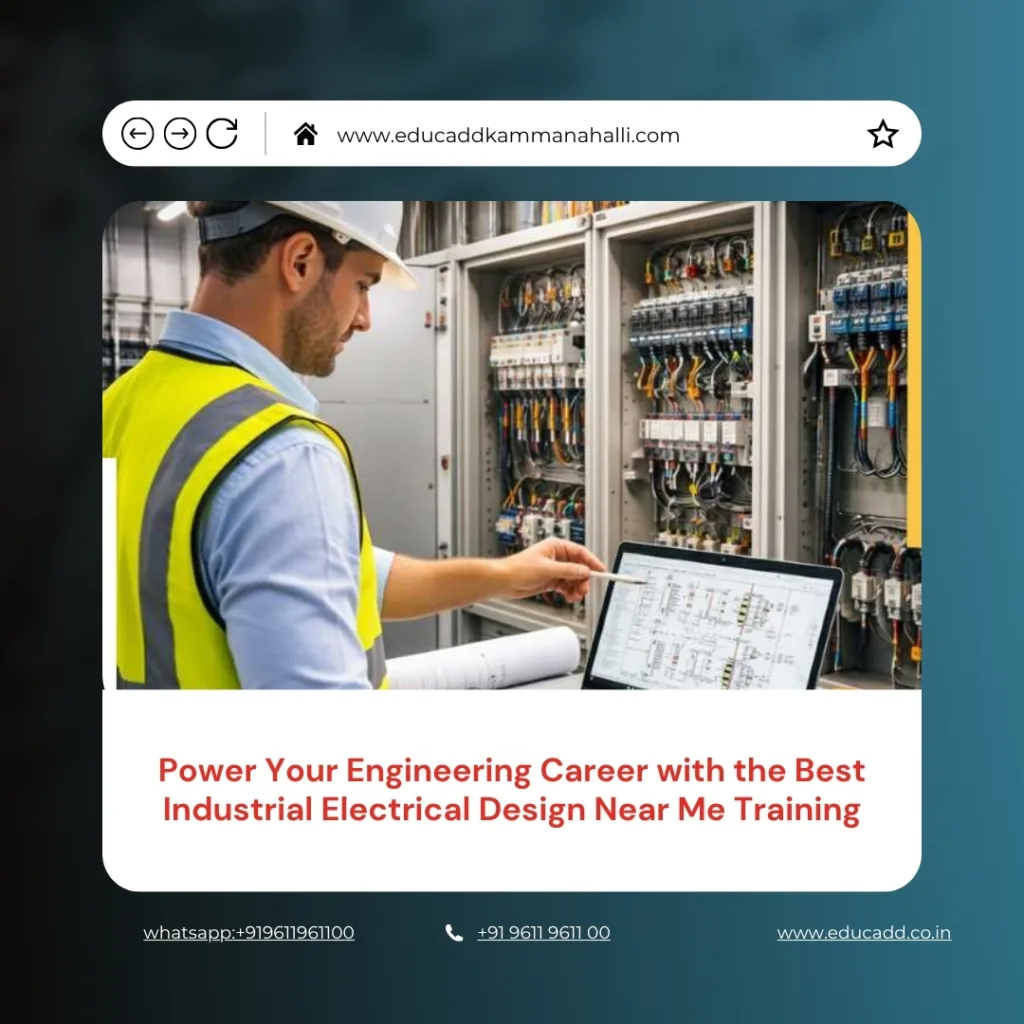
Power Your Engineering Career with the Best Industrial Electrical Design Near Me Training
Industrial automation and modern engineering depend on accurate electrical design more than ever before. Whether it is a manufacturing plant, commercial facility, power distribution network, or industrial automation project, skilled electrical designers play a vital role in creating safe and efficient systems. If you are searching for Industrial Electrical Design Training Near Me, you are likely looking for quality training that offers practical knowledge, industry-oriented software skills, and career opportunities.
Industrial Electrical Design Training
Choosing the right training institute can help you build technical expertise while preparing you for real-world engineering challenges. With expert guidance, hands-on projects, and professional certification, you can confidently step into one of the fastest-growing engineering careers.
Why Industrial Electrical Design Is in High Demand
Industrial development continues to grow across manufacturing, construction, oil and gas, renewable energy, and infrastructure sectors. As industries expand, they require qualified professionals who can create reliable electrical layouts, control systems, and distribution networks. Consequently, companies actively seek engineers and designers with practical industrial electrical design skills.
Moreover, modern factories increasingly depend on automation and smart technologies. Therefore, professionals with industrial electrical design knowledge enjoy better career opportunities, competitive salaries, and long-term job stability. Since industries cannot operate without efficient electrical systems, skilled designers remain valuable assets in every engineering project.
What Industrial Electrical Design Actually Covers
Industrial electrical design focuses on planning, designing, and documenting electrical systems for industrial facilities. Designers prepare detailed drawings, equipment layouts, wiring diagrams, control panels, and power distribution plans that ensure safe and efficient operations.
Additionally, industrial electrical design includes load calculations, cable sizing, transformer selection, motor control centers, panel schedules, grounding systems, and lighting layouts. Every design follows national and international electrical standards, ensuring that projects meet safety regulations while maximizing performance. As a result, organizations reduce operational risks and improve productivity.
Benefits of Choosing Industrial Electrical Design Near Me
Searching for Industrial Electrical Design Training Near Me offers several advantages over choosing distant training options. Local institutes provide easier access to classrooms, laboratories, experienced trainers, and practical workshops. Furthermore, students save commuting time while enjoying greater flexibility in attending regular sessions.
Local training centers also build strong relationships with nearby industries. Therefore, students often gain internship opportunities, industrial visits, placement assistance, and networking advantages. Besides that, face-to-face interaction with instructors helps learners understand complex concepts more effectively and resolve technical doubts immediately.
Essential Skills You Will Learn During Training
A professional industrial electrical design course develops both technical knowledge and software expertise. Students begin with electrical fundamentals before progressing to industrial applications. They gradually learn how to design practical electrical systems that meet industrial requirements.
The curriculum generally includes electrical drafting, circuit design, power distribution, control panel design, motor control circuits, cable routing, protection systems, and electrical documentation. In addition, students practice industry-standard software used for preparing professional engineering drawings. Consequently, graduates become job-ready with practical skills that employers highly value.
Software Knowledge Makes You Industry Ready
Today’s industries rely heavily on specialized engineering software to create accurate electrical designs. Therefore, every quality Industrial Electrical Design Near Me training program introduces students to professional design tools used worldwide.
Learners become familiar with software for electrical drafting, schematic design, panel layout creation, cable scheduling, and documentation. Moreover, software-based learning improves drawing accuracy, reduces design time, and simplifies project modifications. Since employers prefer candidates with software proficiency, mastering these applications significantly improves career prospects after course completion.
Practical Training Builds Real Engineering Confidence
Theory provides a strong foundation, but practical learning transforms students into skilled professionals. Therefore, quality industrial electrical design institutes emphasize hands-on training through live projects, industrial case studies, and laboratory exercises.
Students prepare electrical layouts, design distribution systems, create control panel drawings, and solve real engineering challenges. Furthermore, instructors explain industry practices followed during actual construction and manufacturing projects. This practical exposure develops confidence while preparing learners to handle professional responsibilities immediately after joining an organization.
Career Opportunities After Completing the Course
Industrial electrical design opens doors to multiple engineering careers across various industries. Manufacturing companies, EPC contractors, consulting firms, construction organizations, automation companies, and infrastructure developers regularly hire qualified electrical designers.
Graduates can pursue roles such as Electrical Design Engineer, Electrical CAD Designer, Control Panel Designer, Project Engineer, Electrical Draftsman, Industrial Automation Engineer, and Electrical Documentation Specialist. Additionally, professionals gain opportunities to work on domestic and international engineering projects. Consequently, career growth remains steady as experience and technical expertise increase.
Industries That Hire Industrial Electrical Designers
Electrical designers contribute to numerous industrial sectors because every facility requires efficient electrical systems. Manufacturing plants depend on accurate electrical layouts for production equipment, while commercial buildings require safe power distribution systems.
Similarly, oil and gas facilities, renewable energy projects, pharmaceutical companies, food processing industries, chemical plants, automobile manufacturers, and infrastructure developments continuously recruit electrical design professionals. As industrial expansion continues worldwide, demand for qualified designers also increases across these diverse sectors.
Why Certification Adds Value to Your Career
Professional certification demonstrates that a candidate possesses recognized technical knowledge and practical skills. Employers often consider certified professionals more reliable because certification reflects structured learning and industry-focused training.
Furthermore, certification improves resume strength and increases confidence during interviews. Many organizations also prefer certified candidates when selecting employees for electrical design projects. Consequently, completing a certified Industrial Electrical Design Near Me course helps graduates stand out in today’s competitive engineering job market.
How Experienced Trainers Make a Difference
Learning industrial electrical design becomes easier under experienced industry professionals. Trainers with practical project experience explain not only theoretical concepts but also real-world engineering challenges that students may encounter during their careers.
Moreover, experienced instructors share project-based examples, troubleshooting methods, safety practices, and professional documentation techniques. Students benefit from practical insights that textbooks alone cannot provide. Therefore, expert guidance accelerates learning while improving technical confidence and problem-solving abilities.
Placement Assistance Supports Career Success
Many students choose Industrial Electrical Design Near Me training because placement support plays an important role in career development. Quality institutes maintain strong connections with industries, recruitment agencies, and engineering companies seeking trained professionals.
Placement services often include resume preparation, mock interviews, aptitude training, technical interview sessions, and career counseling. Additionally, institutes frequently organize campus recruitment drives where employers directly interact with students. These initiatives increase employment opportunities and help graduates begin their engineering careers successfully.
Choosing the Right Institute Matters
Not every training institute offers the same quality of education. Therefore, students should carefully evaluate several factors before enrolling in any industrial electrical design program. Experienced faculty, updated curriculum, modern laboratories, practical assignments, and placement assistance should receive top priority.
Additionally, students should review certification value, industry partnerships, software training, student feedback, and project-based learning opportunities. A well-established institute consistently focuses on practical education rather than theoretical instruction alone. Consequently, graduates receive better preparation for professional engineering careers.
Future Scope of Industrial Electrical Design
The future of industrial electrical design continues to look promising because industries increasingly adopt automation, digital manufacturing, renewable energy, and smart infrastructure solutions. Every new industrial project requires skilled professionals capable of designing efficient electrical systems that support modern operations.
Furthermore, technologies such as Industry 4.0, Industrial Internet of Things, smart factories, and sustainable energy systems continue creating new career opportunities for electrical designers. Professionals who continuously upgrade their knowledge remain competitive while enjoying long-term career growth across global engineering markets.
Build a Rewarding Engineering Career Today
Searching for Industrial Electrical Design Training represents the first step toward a rewarding engineering profession filled with opportunities for growth and innovation. Quality training equips students with practical skills, software expertise, industrial knowledge, and professional confidence required to succeed in competitive industries.
Whether you are a student, diploma holder, engineering graduate, or working professional, investing in industrial electrical design education can significantly improve your career prospects. With the right institute, experienced trainers, practical projects, and recognized certification, you can confidently prepare for exciting opportunities in industrial engineering while building a stable and successful future.
Conclusion
Industrial electrical design has become one of the most valuable engineering skills in today’s technology-driven industries. As manufacturing, automation, infrastructure, and energy sectors continue expanding, the demand for qualified electrical design professionals will keep growing. Choosing the right Industrial Electrical Design Training Near Me program allows you to gain practical expertise, master industry-standard software, and develop the confidence needed to handle real engineering projects. With comprehensive training, recognized certification, and strong placement support, you can build a successful career that offers stability, continuous learning, and excellent professional growth for years to come.

