
Is Interior Design a Good Career Choice in India? A Complete Guide to Opportunities, Growth, and Success
Choosing the right career can shape your entire future. Many students today seek creative professions that also offer financial stability and long-term growth. Among the many options available, interior design stands out as a promising and dynamic field. But the key question remains: Interior Design Career India
India is experiencing rapid urban development, rising disposable incomes, and increasing awareness of aesthetics and functionality in both homes and commercial spaces. As a result, the demand for skilled interior designers continues to grow across metropolitan cities as well as emerging towns. Moreover, lifestyle changes and digital exposure have transformed how people perceive living and working environments.
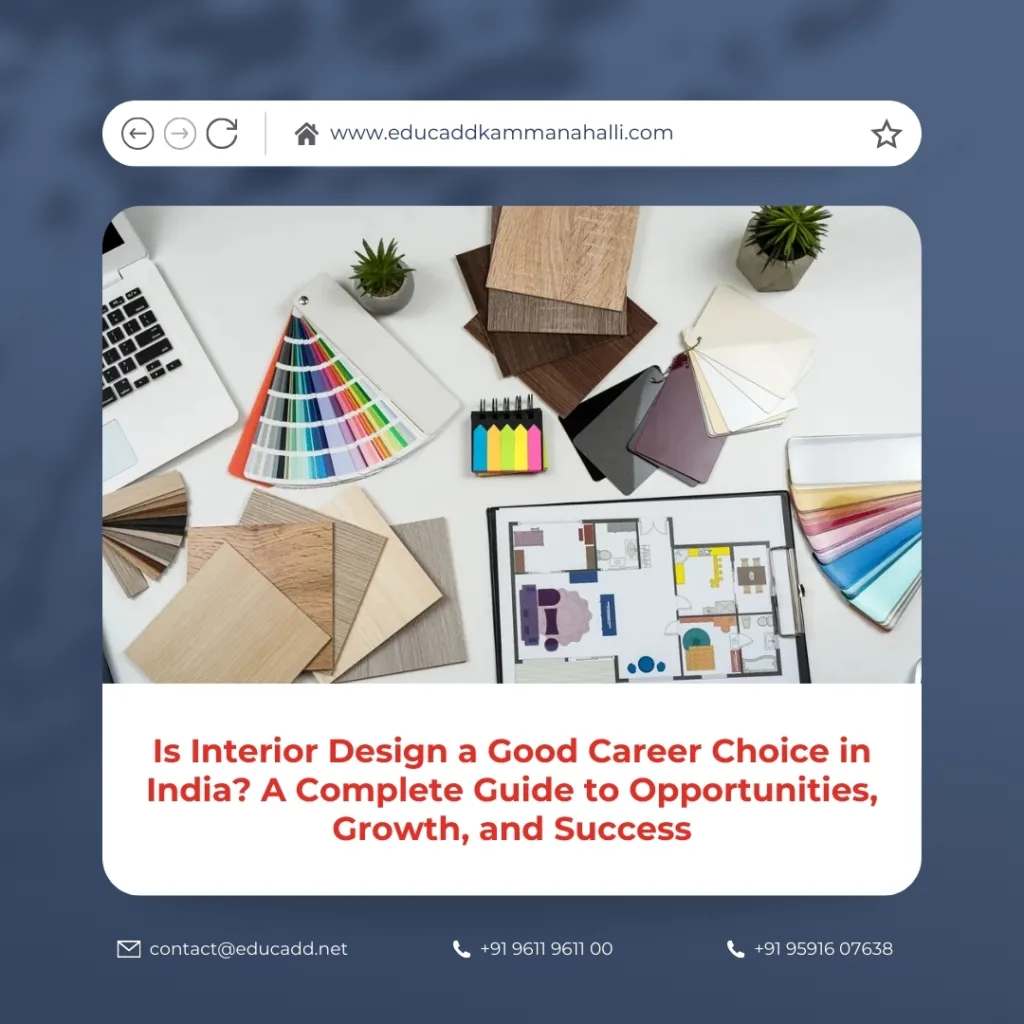
Interior Design Career India
In this detailed guide, we will explore every aspect of this profession. We will examine industry growth, required skills, salary prospects, education pathways, challenges, and long-term potential. By the end, you will clearly understand whether interior design aligns with your ambitions and whether it truly offers a rewarding career path in India.
1. Understanding the Scope of Interior Design in India
Interior Design Career India involves much more than decorating rooms. It combines creativity, technical knowledge, space planning, and project management. Designers transform empty spaces into functional and visually appealing environments.
In India, the scope of interior design has expanded significantly. Urbanization has increased the demand for residential apartments, luxury villas, office spaces, retail outlets, and hospitality projects. Each of these spaces requires professional planning and execution. Therefore, trained designers play a crucial role in shaping modern infrastructure.
Furthermore, commercial sectors such as IT, hospitality, healthcare, and retail invest heavily in interior aesthetics. Companies understand that well-designed spaces improve productivity and brand perception. Consequently, skilled professionals find diverse opportunities across industries.
When evaluating whether interior design is a good career choice in India, the broad scope of work clearly indicates strong potential. From freelance assignments to corporate roles, the career offers flexibility and growth.
2. Rapid Growth of the Indian Real Estate and Construction Industry
India’s real estate sector continues to expand at a steady pace. Government initiatives like smart cities and housing schemes have accelerated development across urban and semi-urban regions. As construction projects rise, interior planning becomes essential.
Developers now prioritize design from the initial stage of construction. Buyers also expect modern interiors with efficient layouts and contemporary aesthetics. This trend creates consistent demand for professional designers.
Additionally, commercial spaces such as co-working hubs and start-up offices require innovative layouts. Interior designers help create functional environments that encourage collaboration and creativity. Therefore, the growing construction industry directly fuels interior design opportunities.
Given these developments, interior design emerges as a practical and future-ready profession. The industry growth supports long-term career stability in India.
3. Creative Freedom and Personal Satisfaction
One of the strongest reasons many students consider interior design is creative expression. Unlike traditional desk jobs, this field allows professionals to bring imagination to life. Designers experiment with colors, textures, lighting, furniture, and materials.
Every project presents a new challenge. For example, a residential project demands comfort and personalization, while a corporate project requires functionality and branding alignment. This variation keeps the profession engaging and dynamic.
Moreover, seeing a completed space transform according to your vision provides immense satisfaction. Designers often build strong relationships with clients. They directly impact how people live and work. Therefore, emotional fulfillment plays a significant role in making interior design a rewarding career choice in India.
4. Educational Pathways and Skill Development
Students interested in Interior Design Career India can pursue diploma courses, undergraduate degrees, or specialized certifications. Many reputed institutes across India offer structured programs covering design principles, materials, CAD software, project management, and building regulations.
Practical exposure forms a vital part of training. Internships help students understand client communication, budgeting, and site supervision. Additionally, knowledge of software such as AutoCAD, SketchUp, and 3D visualization tools strengthens employability.
Communication skills also matter greatly. Designers interact with clients, contractors, and vendors daily. Therefore, strong presentation abilities and negotiation skills contribute to professional success.
With proper education and consistent practice, students can build a strong foundation. Consequently, interior design becomes a viable and professional career path in India.
5. Salary Prospects and Income Growth
Financial stability remains a key factor in career decisions. Many wonder whether interior design offers competitive earnings in India. Entry-level designers usually start with moderate salaries. However, income grows significantly with experience and expertise.
Freelancers often earn based on project size and client base. Experienced designers working on luxury projects can command high fees. Additionally, those who establish their own firms gain higher profit margins.
Moreover, metropolitan cities such as Mumbai, Delhi, Bangalore, and Hyderabad offer better salary packages due to higher project volumes. Designers who specialize in niche areas such as sustainable design or luxury interiors often secure premium clients.
Therefore, while income may start modestly, long-term earning potential makes interior design a financially rewarding career choice in India.
6. Diverse Career Opportunities Beyond Residential Projects
Interior design does not limit professionals to home decoration. The field offers diverse opportunities across multiple sectors. Designers can work in commercial interiors, retail design, hospitality projects, exhibition design, and even film set design.
Corporate offices require functional and brand-aligned interiors. Hotels demand luxurious and guest-friendly designs. Retail stores depend on layout strategies that enhance customer experience. Each sector offers unique challenges and creative satisfaction.
Furthermore, some professionals specialize in furniture design or lighting design. Others focus on sustainable and eco-friendly solutions. This diversity ensures that individuals can align their interests with specific industries.
As a result, interior design stands out as a flexible and multifaceted career option in India.
7. Rise of Sustainable and Smart Interior Solutions
Sustainability has become a global priority. In India, clients increasingly demand eco-friendly materials and energy-efficient designs. Interior designers now integrate sustainable practices into their projects.
For instance, they select recycled materials, energy-saving lighting systems, and low-emission paints. Smart home technologies also influence modern interiors. Automation systems for lighting, temperature, and security require technical planning.
Designers who stay updated with sustainable trends gain a competitive advantage. This shift toward environmentally responsible design enhances the profession’s relevance.
Therefore, the growing emphasis on sustainability further strengthens interior design as a good career choice in India.
8. Entrepreneurial Opportunities and Freelancing Freedom
Interior design offers strong entrepreneurial potential. Many professionals start their own studios after gaining experience. They build personal brands and expand through referrals and social media presence.
Freelancing provides flexibility in choosing projects and managing schedules. Designers can work with multiple clients simultaneously. However, entrepreneurship requires strong business management skills. Budgeting, marketing, and vendor coordination play critical roles.
Despite the challenges, successful interior entrepreneurs often achieve financial independence and creative autonomy. Consequently, interior design becomes an attractive career path for ambitious individuals in India.
9. Challenges in the Interior Design Profession
Every career presents challenges, and interior design is no exception. Project delays, budget constraints, and client expectations often create pressure. Designers must balance creativity with practicality.
Moreover, site supervision demands patience and attention to detail. Coordination with contractors and suppliers requires clear communication. Mistakes can lead to financial losses or client dissatisfaction.
However, professionals who develop strong problem-solving skills can overcome these obstacles effectively. Over time, experience builds confidence and resilience. Therefore, challenges should not discourage aspiring designers but rather prepare them for professional growth.
10. Impact of Technology on Interior Design Careers
Technology has transformed interior design in India. Software tools enable 3D visualization and virtual walkthroughs. Clients can see realistic previews before execution begins. This advancement improves accuracy and reduces errors.
Additionally, digital marketing allows designers to showcase portfolios online. Social media platforms help attract clients across cities and even internationally.
Virtual collaboration tools also enable remote consultations. Designers can now manage projects beyond their local regions. Therefore, technology enhances efficiency and expands opportunities within the industry.
This digital transformation strengthens the argument that interior design is a progressive and future-ready career choice in India.
11. Importance of Networking and Industry Exposure
Success in interior design often depends on strong professional networks. Designers collaborate with architects, contractors, suppliers, and real estate developers. Building relationships creates consistent project opportunities.
Attending industry events, exhibitions, and workshops helps professionals stay updated with trends. Exposure to new materials and design innovations enhances creativity.
Moreover, word-of-mouth referrals play a major role in client acquisition. Satisfied clients often recommend designers to friends and family. Therefore, networking significantly influences career growth in this field.
12. Work-Life Balance and Flexibility
Interior design offers both flexibility and demanding schedules. During peak project phases, designers may work extended hours. Site visits and deadlines require dedication.
However, freelancers and independent consultants often enjoy flexible schedules. They can plan their workload strategically. Additionally, remote design consultations provide greater control over time management.
With effective planning, professionals can maintain a balanced lifestyle. Therefore, interior design provides adaptable career options depending on personal preferences.
13. Long-Term Career Growth and Specialization
As designers gain experience, they can specialize in niche areas. Luxury residential design, commercial interiors, sustainable planning, and modular kitchens represent popular specializations in India.
Experienced professionals may become design consultants, project managers, or creative directors. Some transition into teaching or mentoring roles in design institutes.
Continuous learning ensures career advancement. Designers who update skills and adapt to trends remain competitive. Consequently, long-term growth prospects remain strong within the Indian market.
14. Is Interior Design the Right Career for You?
Determining whether interior design is a good career choice in India depends on personal interests and strengths. Individuals who enjoy creativity, spatial planning, and client interaction often thrive in this field.
Strong communication, time management, and adaptability contribute to success. Passion for aesthetics combined with technical understanding builds a powerful foundation.
If you seek a profession that blends art and practicality, interior design offers a compelling option. The expanding market, diverse opportunities, and income potential make it an attractive choice for motivated individuals.
Conclusion
Interior Design Career India has evolved into a dynamic and profitable profession. Rapid urban growth, lifestyle changes, and technological advancements continue to expand industry demand. Although challenges exist, skilled and passionate professionals can build rewarding careers.
When considering creativity, income growth, entrepreneurial potential, and industry expansion, the answer becomes clear. Interior design is indeed a good career choice in India for individuals who combine passion with dedication.
With the right education, consistent skill development, and strong networking, aspiring designers can shape not only beautiful spaces but also successful professional journeys.

